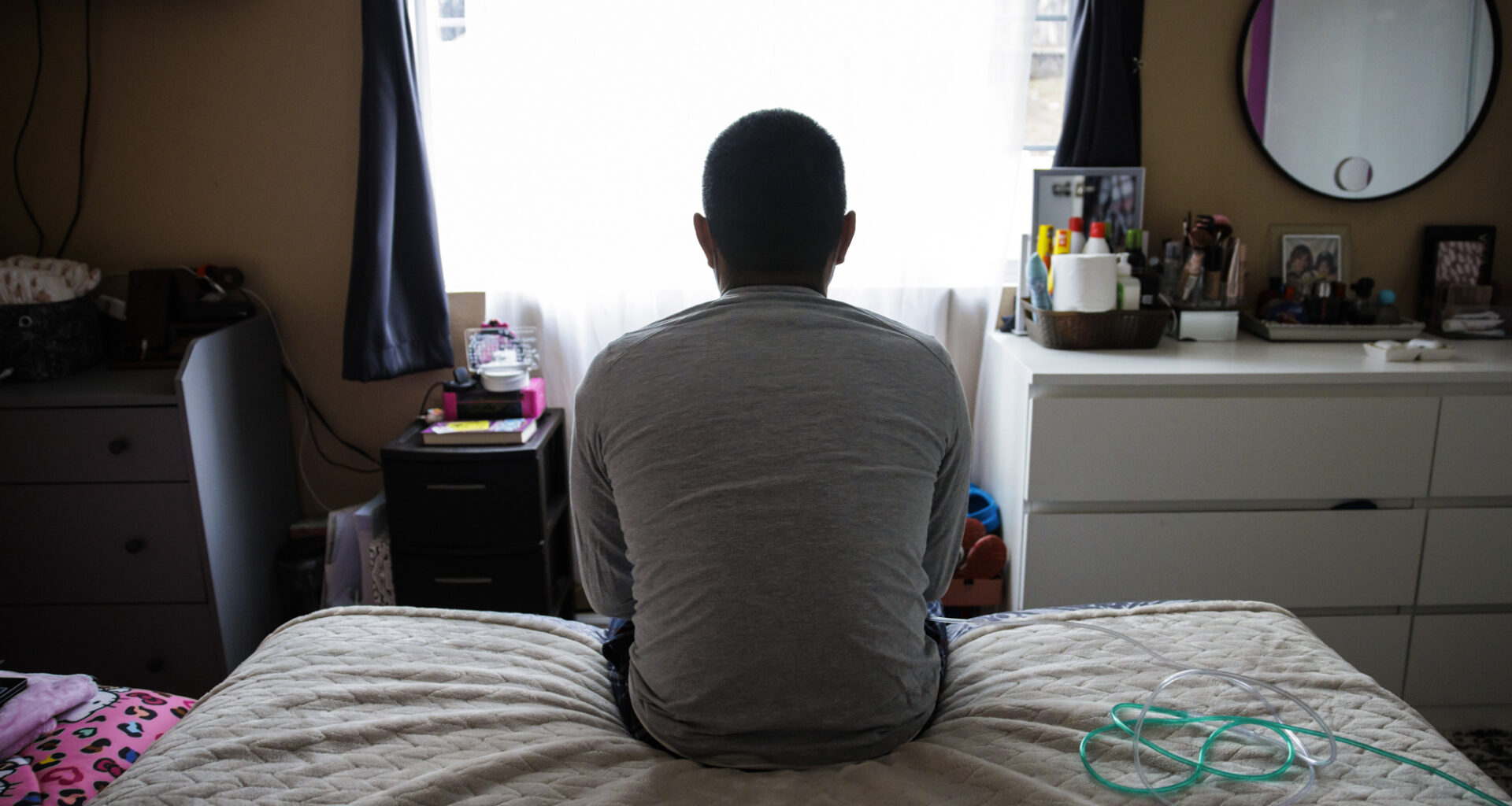
To save lives, the Governor’s Office could issue an emergency declaration pausing the processing of artificial stone until a permanent ban is pursued through rulemaking, according to a Sept. 4 memorandum obtained by KQED. Drafted by a committee of doctors, occupational safety experts and worker advocates convened by Cal/OSHA, the letter was addressed to the state board responsible for adopting new workplace safety regulations, but was not sent.
Gov. Gavin Newsom’s press office did not respond to requests for comment about his position on banning engineered stone in fabrication shops. A spokesperson with the Department of Industrial Relations, which oversees press requests for both Cal/OSHA and the Occupational Safety and Health Standards Board, said the draft had not been vetted.
“The memo referenced … is an incomplete working draft by the Silica Technical Committee and not by Cal/OSHA. None of the recommendations are final,” the spokesperson said in a statement. “Cal/OSHA continually works to protect the health and safety of California’s workers and enforces all regulations adopted by the Board.”
Several board members have publicly expressed dismay for months at the steep climb in silicosis cases, but the agenda for their next meeting on Thursday does not include decision-making on artificial stone.
Maegan Ortiz, director of the Instituto de Educacion Popular del Sur de California, said that although the state approved stricter standards nearly two years ago, California has made little progress in protecting stoneworkers still inhaling engineered stone dust on the job.
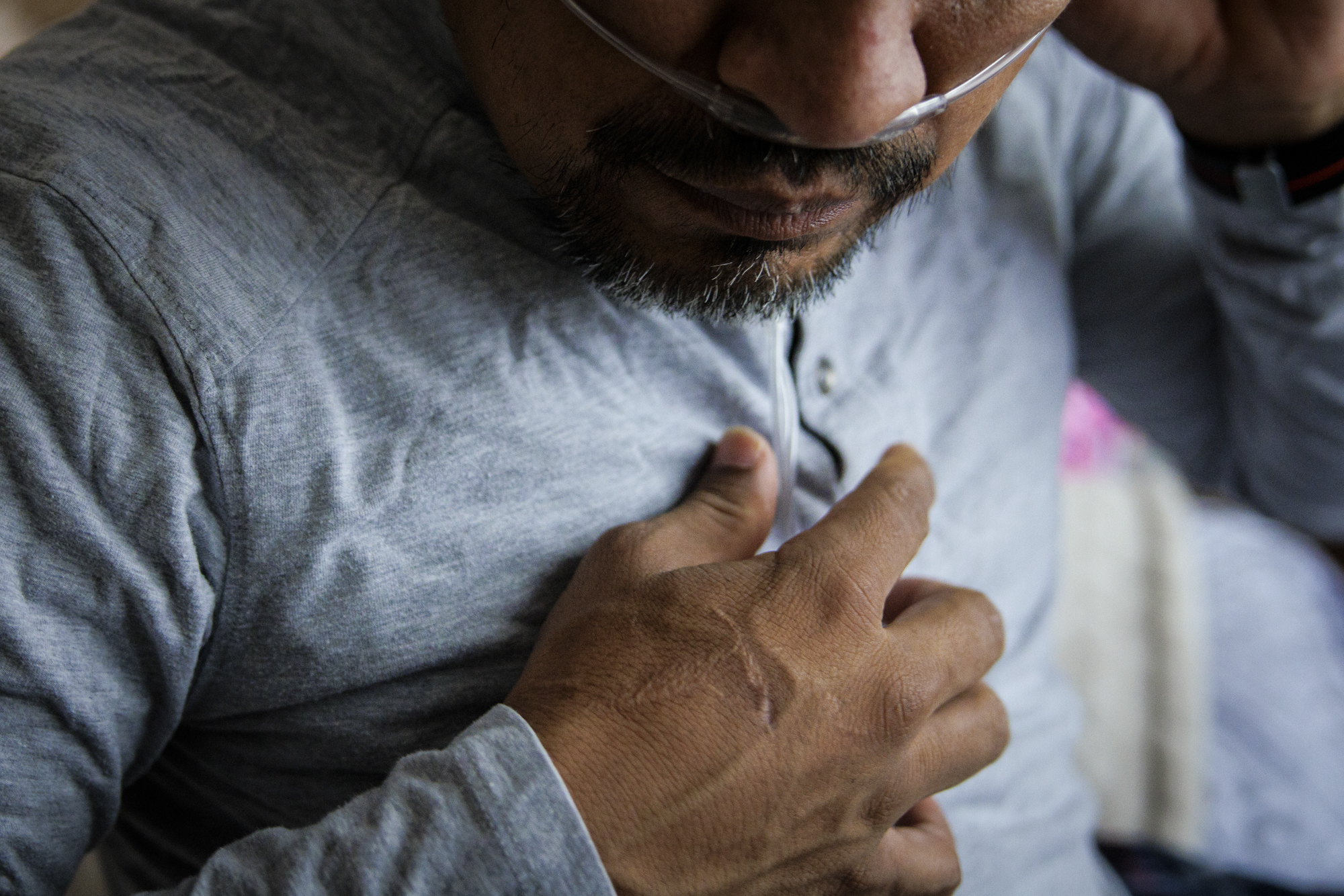 Lopez adjusts the breathing tube connected to his oxygen tank in his home in Pittsburg on Nov. 15, 2025. (Martin do Nascimento/KQED)
“We need to ban this. I think the concern is great, but it is kind of like thoughts and prayers in the face of other crises that don’t go far enough,” said Ortiz, whose organization has been surveying stoneworkers in Los Angeles County, the state’s silicosis epicenter. “We’ve seen the conditions ourselves on the ground in terms of the amount of dust that is there, even in these bigger shops that are following the regulations. Workers see the dust, they carry it on them.”
Since 2019, more than 430 workers have been confirmed with silicosis in California, including 25 who died and 48 who underwent a lung transplant, according to state public health officials tracking reported cases. Half of those sick are located in Los Angeles County. Nearly all are Latino men, some in their 20s, who said they didn’t know how dangerous artificial stone dust could be. About 40% of silicosis cases were identified this year.
Lopez said he worked in licensed shops using safety gear and methods his supervisors said would protect him. He wore filter masks and cut and polished engineered stone with machines that covered slabs with water to suppress dust. But mounting evidence shows silica particles in artificial stone dust are so small and toxic that it doesn’t take much to hurt workers. Silica can penetrate filter masks and remain on workers’ clothes and tools when water dries.
Australia tried banning drycutting of engineered stone, similar to Cal/OSHA rules in place since December 2023 and a bill Newsom signed last month, SB 20. Australia also tried additional safeguards, including full-face powered air-purifying respirators, ventilation systems and monitoring, like California’s strict regulations that go beyond federal requirements. But in both places, experts say, the sophisticated and costly measures are not realistic for an industry made up of mostly small shops with only a few workers.
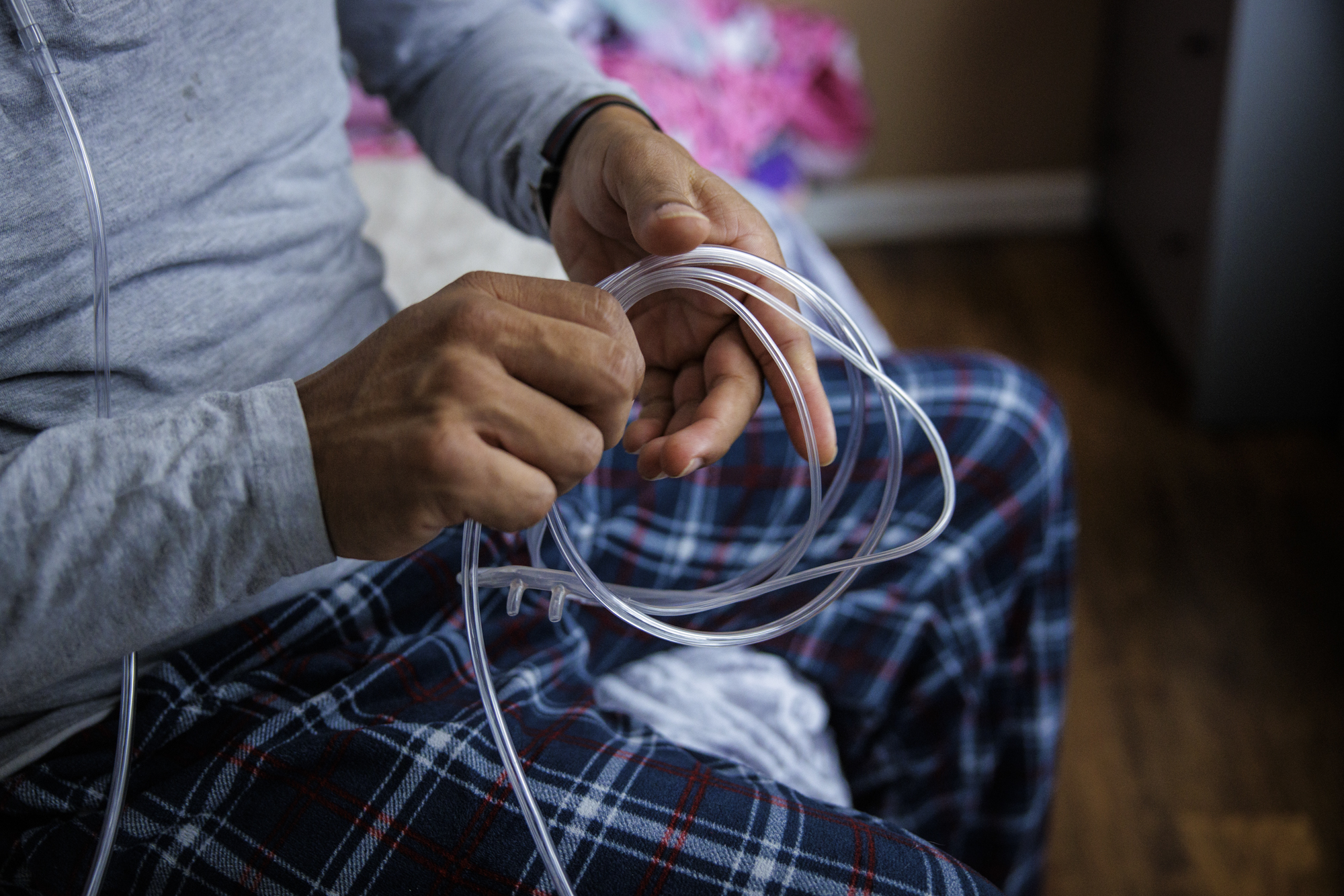 Lopez coils the breathing tube connected to his oxygen tank in his home in Pittsburg on Nov. 15, 2025. (Martin do Nascimento/KQED)
“I think it’s completely unfeasible,” said Dr. Ryan Hoy, a respiratory physician and researcher at Monash University in Melbourne, Australia. “I often use the analogy that you can work with asbestos safely, you can work with uranium safely, but you need to have in place very sophisticated control measures.”
In California, most fabrication shops are not complying with drycutting bans, respiratory protection, monitoring or other requirements. About 94% of 107 worksites investigated by Cal/OSHA had violations of the silica regulations as of Oct. 16.
Lopez’s wife said she wished her husband had more accurate information from manufacturers, vendors and employers before working with artificial stone so he could have chosen whether to take on the risk. Considering the impact of his disease on her family, the 41-year-old choked back tears.
“It’s painful because I’ve always seen him working. He’s always looked out for us. He’s the pillar of our family,” she said in Spanish, adding that her youngest son is 3. “It hurts us deeply.”
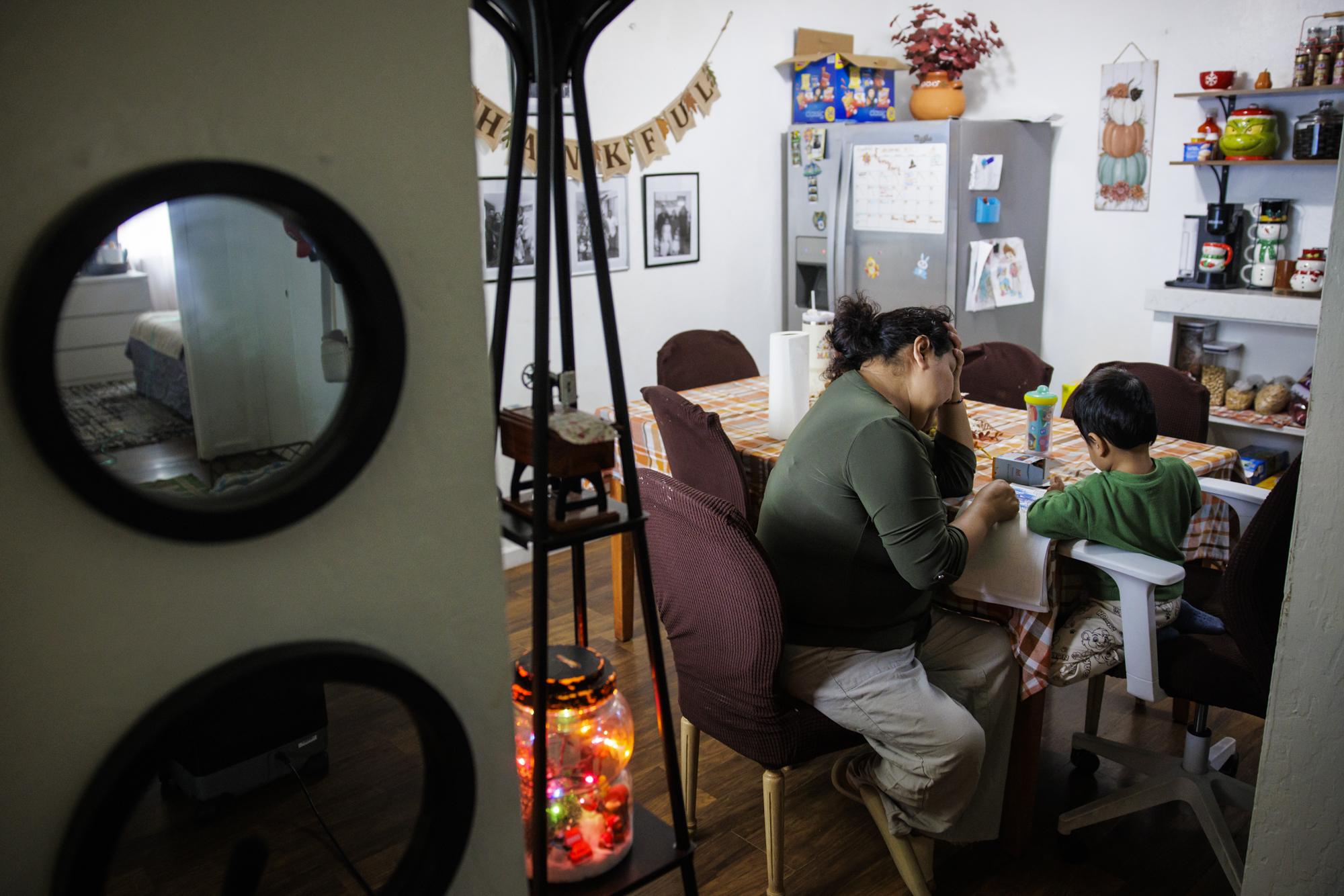 Lopez’s wife draws in a coloring book with their 3-year-old in their home in Pittsburg on Nov. 15, 2025. (Martin do Nascimento/KQED)
Lopez’s state disability benefits have run out, he said, and the family relies on financial support from their oldest daughter, a 20-year-old medical assistant. He became one of hundreds of workers in the U.S. and other countries who have sued top manufacturers of engineered stone — including Minnesota-based Cambria, Israel-based Caesarstone and Cosentino, headquartered in Spain — claiming silica-related injuries.
Caesarstone, which generated nearly half of its $303 million in revenue so far this year in the U.S. market, reported claims by more than 500 individuals in its latest financial results. The company recorded a $46 million provision for probable losses, with $24.3 million covered by insurance. But costs could grow, as most of the 320 U.S. claims are awaiting trial.
Caesarstone won one case in the U.S., which remains under appeal, and settled another this year, according to Nahum Trust, Caesarstone’s chief financial officer, during an earnings call this month. Last year, a jury awarded a 34-year-old stoneworker $52 million after finding Caesarstone and other companies liable, a decision the company has appealed.
The company developed crystalline silica-free countertop surfaces in preparation for restrictions in Australia and recently unveiled what it advertises as safer alternatives for fabrication workers in the U.S. Caesarstone’s sales were down this quarter in the U.S. and Canada, due to softness in the market and competitive pressures, according to Trust, but sales are up in Australia.
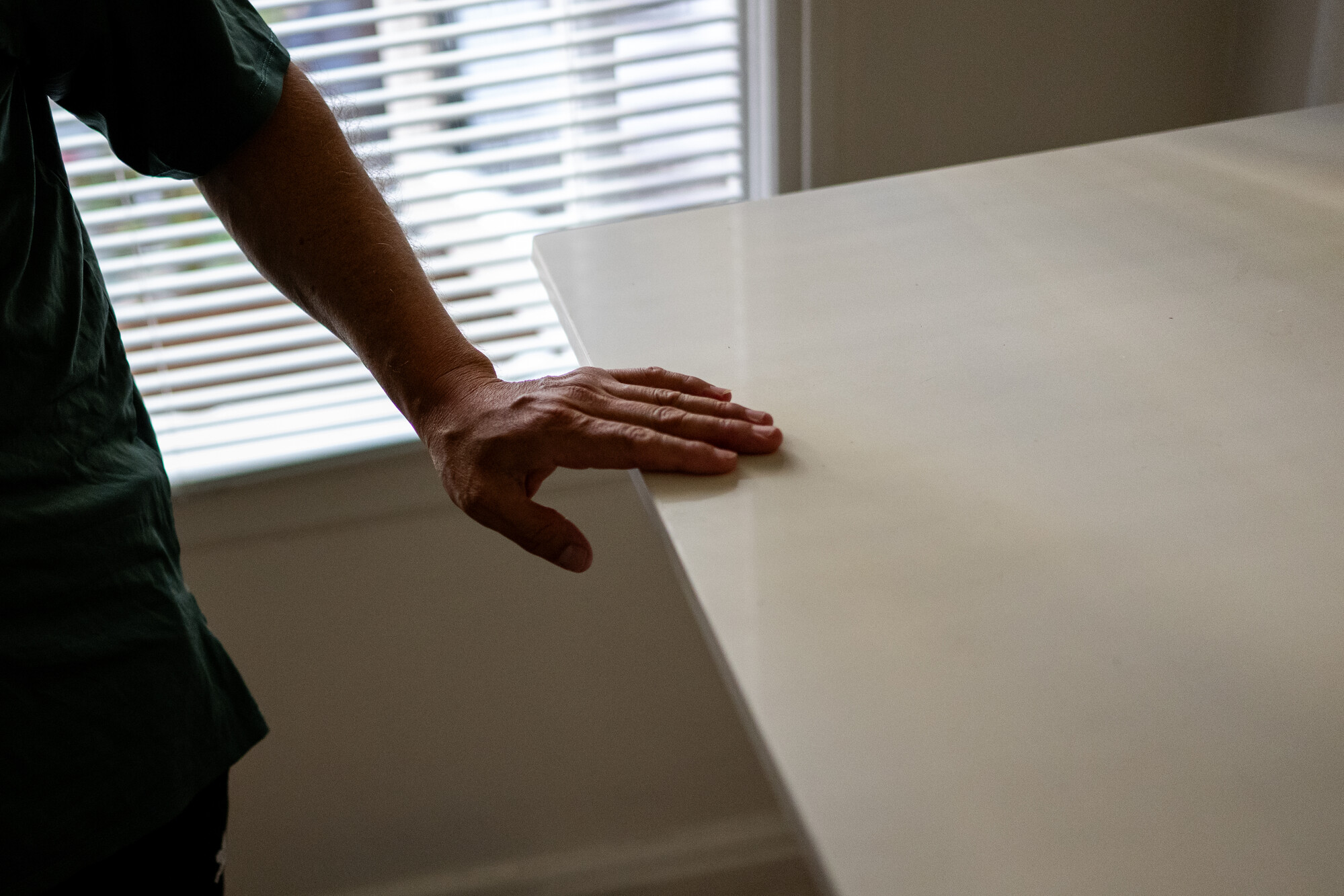 A stone fabricator places his hand on a table that he cut at his home in San Francisco on Oct. 17, 2023. (Beth LaBerge/KQED)
“Our first year of real growth in this market since the silica ban implementation,” Trust said. “This reflects early recovery and the successful launch of our zero silica collection.”
Cosentino said it has also moved to offer newer products due to safety concerns, including a new mineral-surface product with zero crystalline silica that will be available next year globally.
Cosentino, Caesarstone and associations representing manufacturers declined to comment on why they continue selling their high-silica engineered stone products in the U.S. if they have alternatives for the Australian market.
Global demand for artificial stone, a multibillion-dollar industry in the U.S., is expected to significantly grow. In California, sales are expected to increase even more due to efforts to rebuild the more than 16,000 homes and buildings destroyed by January wildfires in Los Angeles.