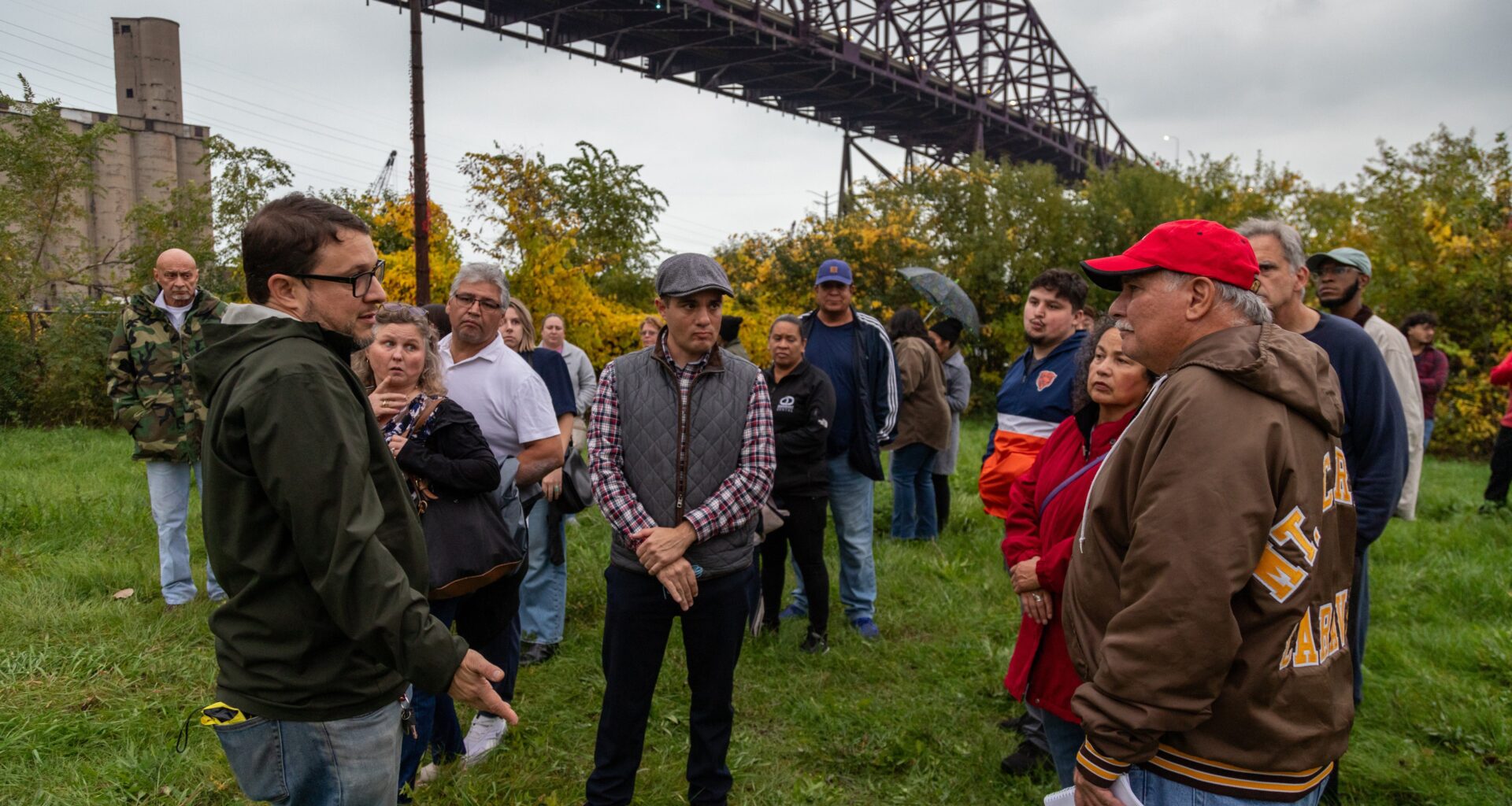
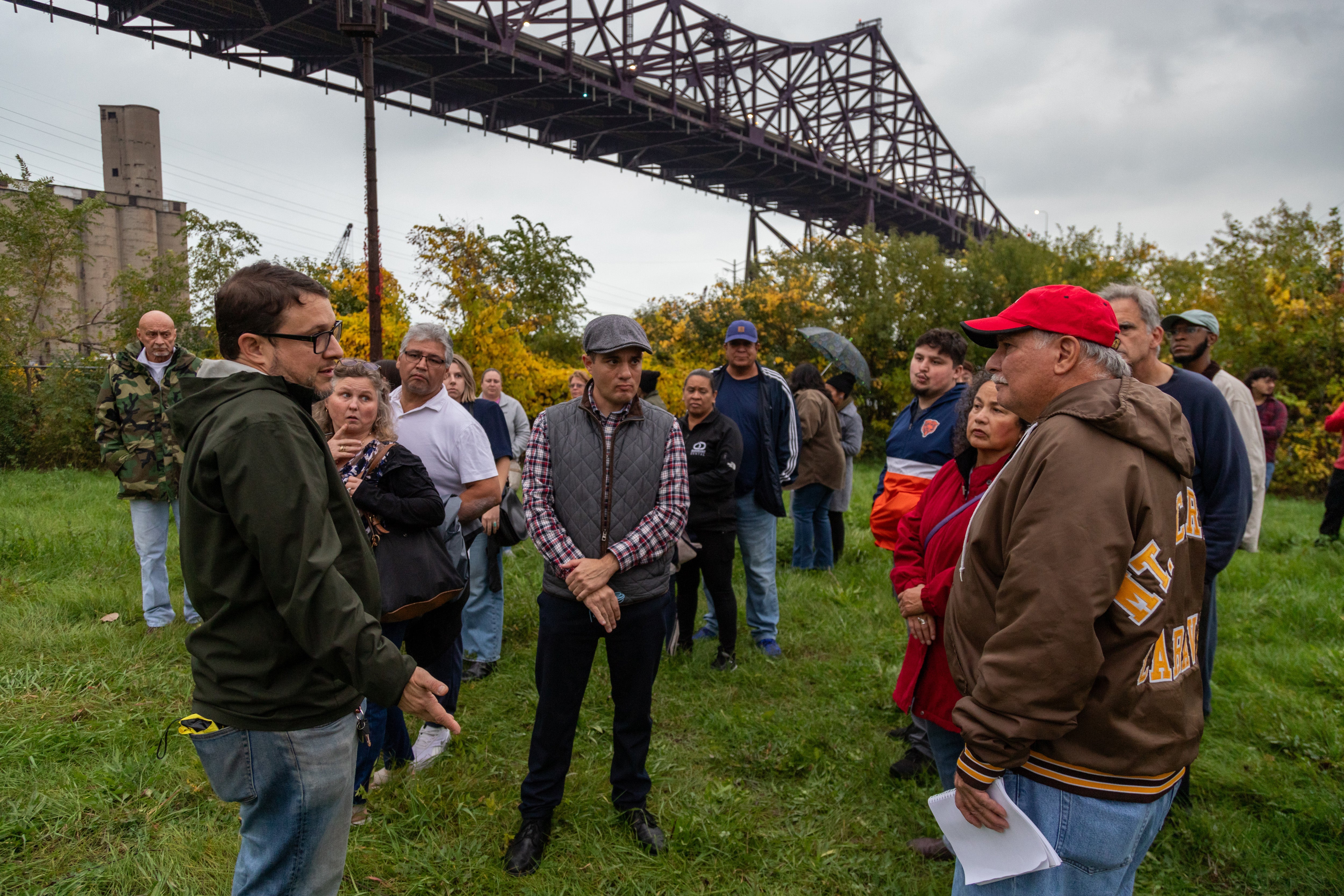
 Great Cities Institute staff lead a site visit in 2023 with community residents for the 100th Street Calumet River access project to gather their input and vision for future river access as part of participatory planning efforts. (Photo: Great Cities Institute)
Three decades ago, the University of Illinois Chicago leadership understood that UIC, as a nationally recognized research institution, had a responsibility to provide research, analysis and support to the broader Chicago community, not just its own campus.
In 1993, Chancellor James Stukel convened a 28-member advisory committee to implement the Great Cities Initiative at UIC.
“In a couple of years … if you ask someone what UIC stands for, I hope they say the Great Cities concept,” Stukel said.
The goal was far-reaching and ambitious: to make an impact in Chicago and beyond by advancing urban research and policy, developing urban communities and encouraging public participation, all in service to economic equity and community well-being.
The results of the advisory committee were the formation in 1995 of the Great Cities Institute research center and the College of Urban Planning and Public Affairs, plus the City Design Center and Health Policy Center.
On Dec. 1 this year, the institute will celebrate its 30th anniversary, marking three decades of research, advocacy and community change in the city Chicago, the state of Illinois and beyond.
“Why we started the Great Cities Initiative back in 1993 was in part to show to the state that a public university was incredibly important — for the well-being economically, culturally, socially, as well as educationally of the state and for the metropolitan region,” said founding member Wim Wiewel. “That is still true today.”
The institute has carried out hundreds of projects in those decades, from community improvements to far-reaching research. Some of their hallmark initiatives are:
- Promoting community economic development
- Revitalizing, with neighborhoods, local commercial areas
- Providing data and technical assistance to communities
- Facilitating collaboration and public engagement
- Assisting locally with mentorship and training
- Conducting policy and impact analyses
- Convening local, national and international scholars
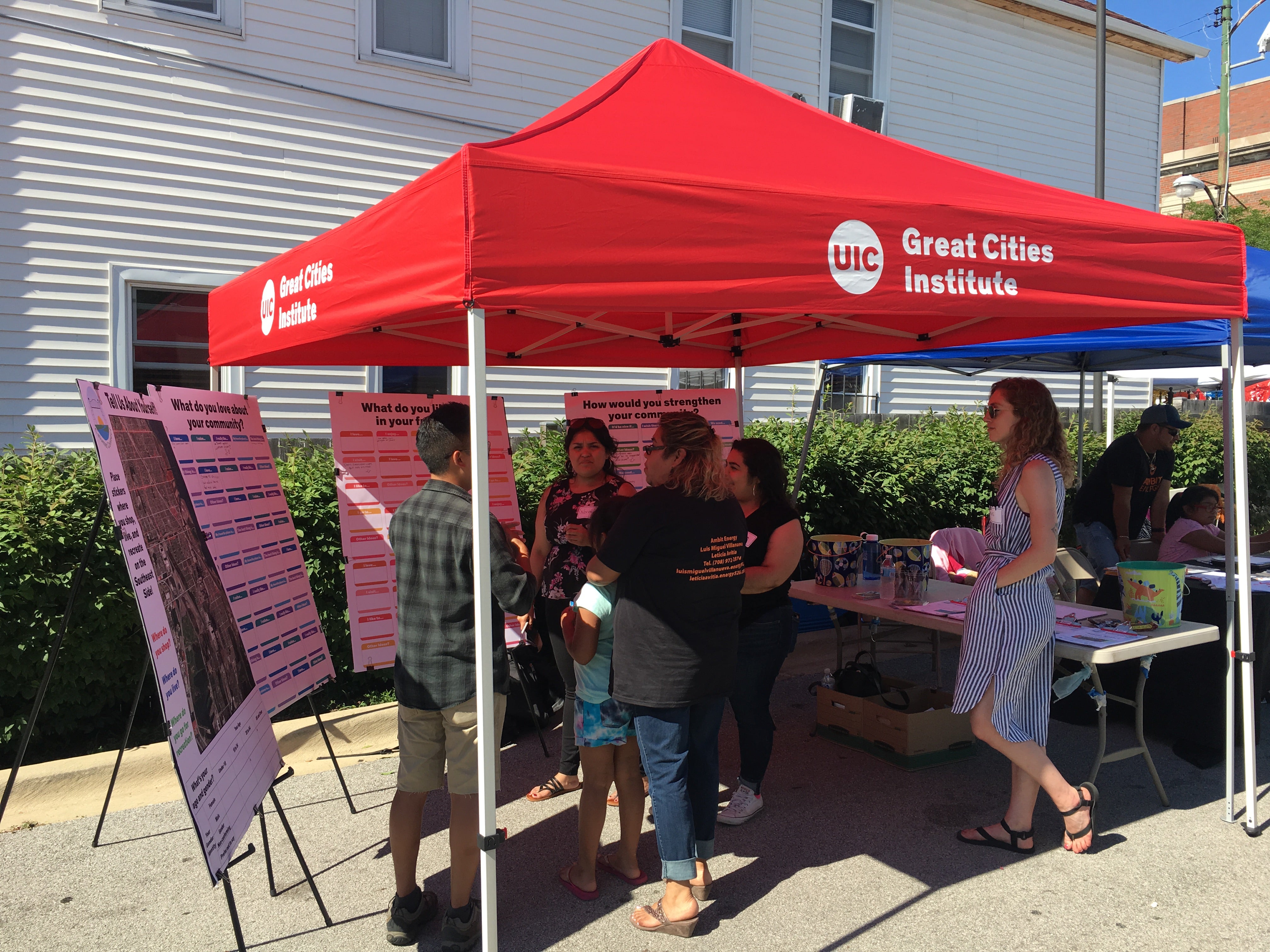 The Great Cities Institute’s Calumet Connect team talks with Chicago residents about what they wished to see in their community to shape the future of the Calumet River region. (Photo: Great Cities Institute)
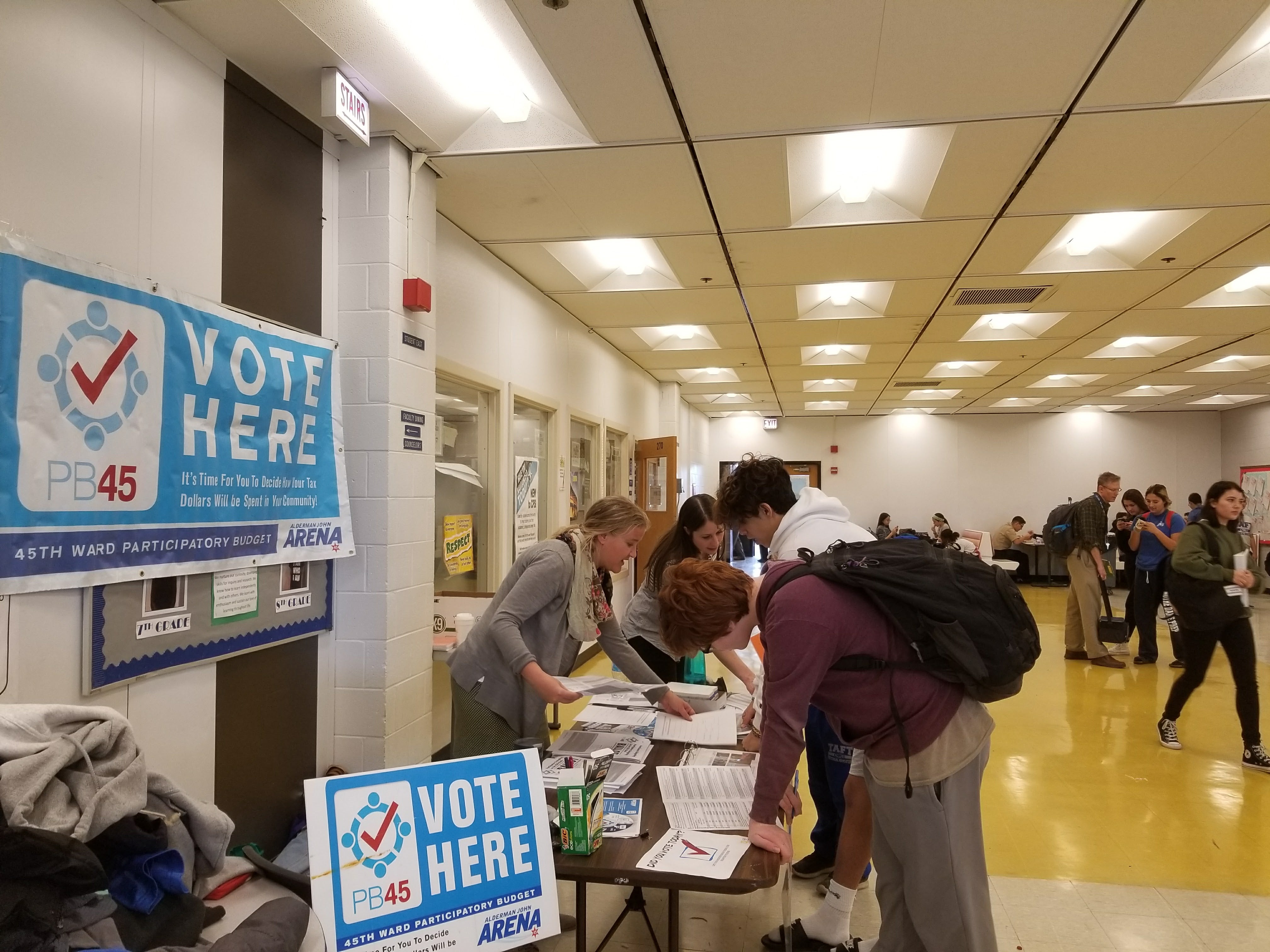 Great Cities Institute staff conduct a participatory budgeting vote at a local high school in the 45th Ward in 2017. (Photo: Great Cities Institute)
“The impact of GCI over the last 30 years has many dimensions,” said Director Teresa Cordova. “Most importantly, we have demonstrated that the research and resources of a university are of great value in working with partners to address the many challenges facing urban settlements.”
The launch of the Great Cities Initiative inspired other universities across the nation to join UIC with their own efforts to share research and encourage community development and public engagement in their home cities.
The Urban 21 were the first universities to join UIC’s Great Cities Initiative effort. This later became the Great Cities Universities and then the Coalition of Urban Serving Universities. Today, 39 public and urban universities across 27 states are members of the Coalition of Urban Serving Universities. Combined, their goal is to enhance urban university engagement with their home communities and address major challenges in their cities.
Today, the Great Cities Institute’s reach has expanded to impact the entire state, with programs such as:
The UIC Neighborhoods Initiative is the current flagship program of the Great Cities Institute. It began in 1994 with a grant from the U.S. Department of Housing and Urban Development and focused on the Pilsen and Near West Side communities. Since its debut, the program has worked with over 100 neighborhood groups on community projects, including the participatory budgeting and participatory planning projects.
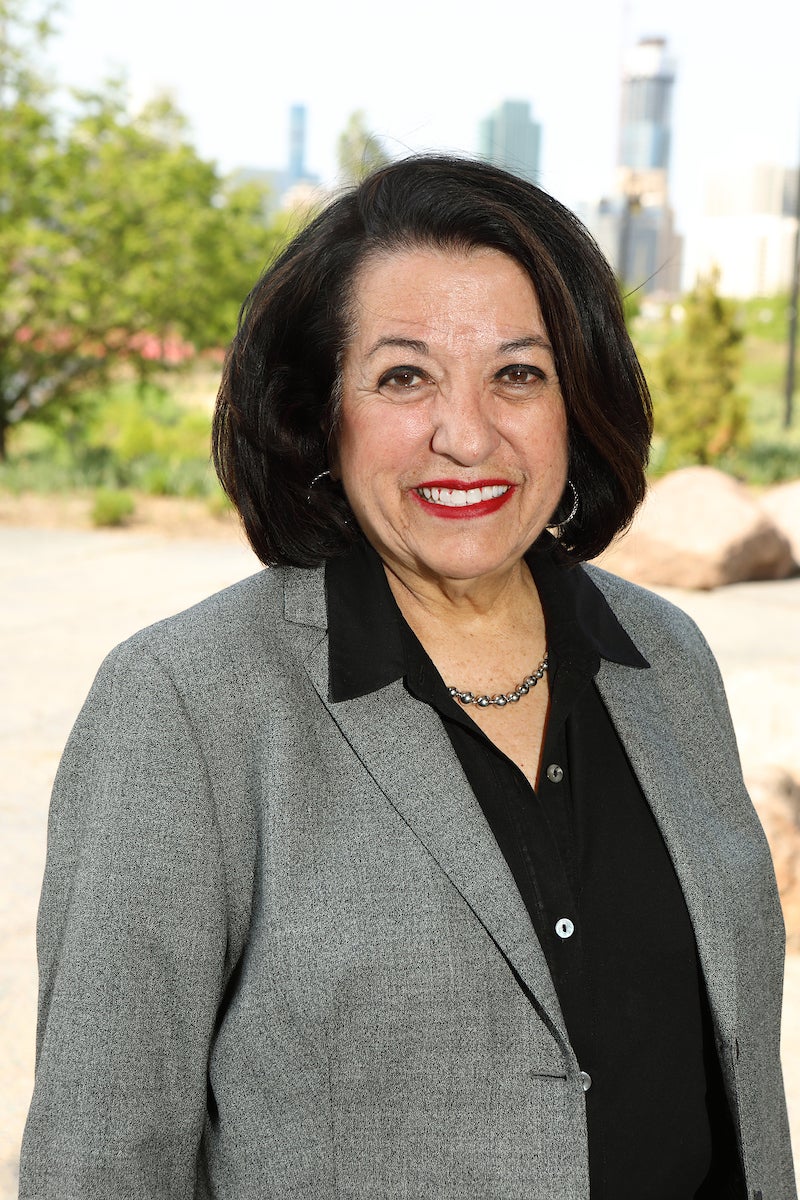 Teresa Cordova, UIC
Photo by Jenny Fontaine
On the ground, what that means is institute staff encourage local communities to get involved and make their voices heard — in planning neighborhood improvements and deciding how to spend public funding for those improvements. According to Thea Crum, associate director of Neighborhoods Initiative, it’s a group effort. “This typically includes convening resources, partners, scholars and stakeholders together to think about ways to make it happen,” Crum said.
For example, the participatory budgeting project has involved collaboration with 17 aldermen and 31 schools across Chicago. It has given more than 45,000 residents direct decision-making power over more than $50 million in public dollars.
However, Crum added, the Great Cities Institute also encourages people to be “strategic about the research that already exists and think about the best ways to use that in their communities to advocate, fundraise, partner and access resources.”
The UIC community and public are welcome at the institute’s 30th-anniversary celebration, which will include guest speakers, a panel discussion, video presentation and reception (event: 2-5 p.m., reception: 5-7 p.m. Dec. 1, Student Center East, 750 S. Halsted St.)
The UIC Great Cities Institute offers several programs throughout the year, including student workshops to learn and collaborate with programs for your community (not limited to Chicago). You can refer to their website for more information and dates for student workshops. Through these workshops, you can engage in research analysis to foster change in any community.
And looking ahead to the next 30 years? Said Cordova, “We will continue to affirm the importance of higher education institutions and the rigor of high quality, evidence-based collaborative research.”
— Kyle Hillman, Strategic Marketing and Communications
