When Laura Upson and Mercedes Hubschmitt learned that the SNAP federal nutrition assistance program had been halted, their first thoughts went to the students and families they work with who are experiencing homelessness.
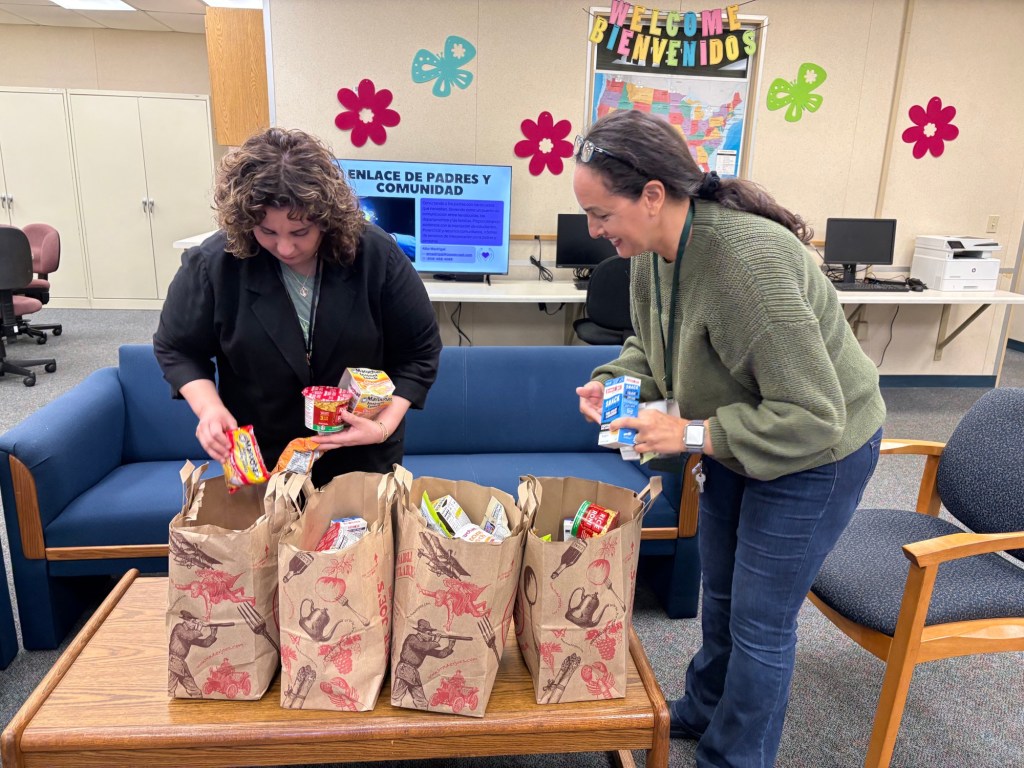
Within a few days, the two women with the Poway Unified School District’s Youth in Transition program had organized a food distribution event for their students.
“We knew we had to act fast and mobilize quickly,” said Upson, program coordinator.
The pause in funding on Nov. 1 due to the government shutdown affected families in the program along with millions of others nationwide who were no longer receiving money for food assistance.
Upson and Hubschmitt, director and homeless liaison for the district, reached out to their community partners, which include organizations and individuals who help fill the funding gaps in the program by providing food and hygiene items for the students and their families.
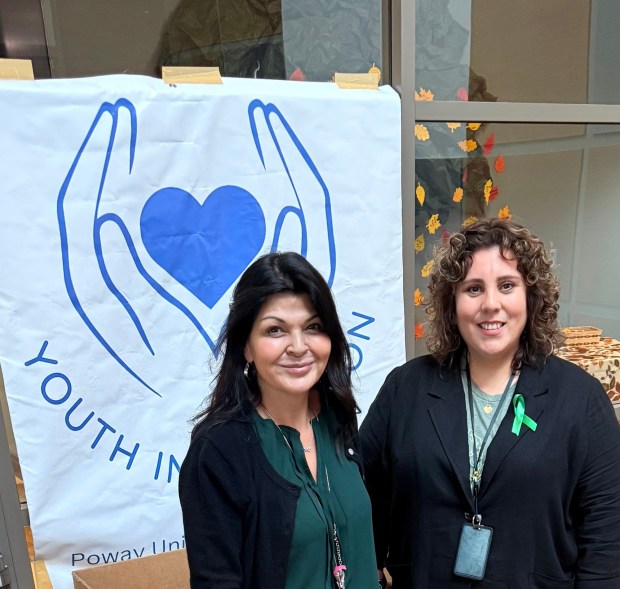 Mercedes Hubschmitt, homeless liaison and director of the Poway Unified School District’s Support Services, left, and Laura Upson, Youth in Transition coordinator, provide workshop support throughout the year to help district teachers and staff identify students in need. (Courtesy Youth in Transition)
In the end they received enough donations to give one full paper grocery bag of food to every student in the program. The bags – filled with fruit, canned chicken and tuna, a variety of soups, microwaveable cups of macaroni and cheese and juice boxes – were picked up by families at the Youth in Transition office on Twin Peaks Road.
Since federal funding for Youth in Transition only covers student enrollment and transportation to and from school, the program relies on the generosity of community members to help make it a success and provide further support, Upson said.
“Our families are having to make some really tough decisions,” said Hubschmitt. “We’ve had families tell us that because they are not receiving this support, sometimes they have to shift the funding from paying for gas to make sure their children can eat.”
Upson said it is vital that the program provides food to students.
“One bag for a family of five children is not the same as one bag for a family with one child,” she said. “We want to make sure that the students get what they need.”
Needs assessments that are regularly completed by families highlight the importance of food scarcity.
“Every time these assessments come back, 85% of our families tell us their greatest need is food,” Hubschmitt said.
The Youth in Transition program is the district’s response to the McKinney-Vento Homeless Assistance Act, a law passed in 1987 to protect school-age children regardless of housing status. Through this program, barriers to enrollment, such as the typically required proof of residence and utility bill, are removed.
The program ensures that no student is denied access to an education regardless of housing status.
Program staff work with students and families to identify and address individual student needs, which may include tutoring and emotional support.
They also provide food and hygiene assistance throughout the year at quarterly distribution events. Typically, the food distribution does not include perishable items such as fruit and dairy. However, they were able to organize the event this month with short notice due to the funding lapse and provide these extra food items.
“We feel so fortunate that we have such strong community partners overall, and we couldn’t do this without them,” Hubschmitt said.
With the government shutdown at an end, it is up to each state to fulfill SNAP benefits, which can take time. The Youth in Transition program had one more food distribution event for its students, just before the district recess for its Thanksgiving break.