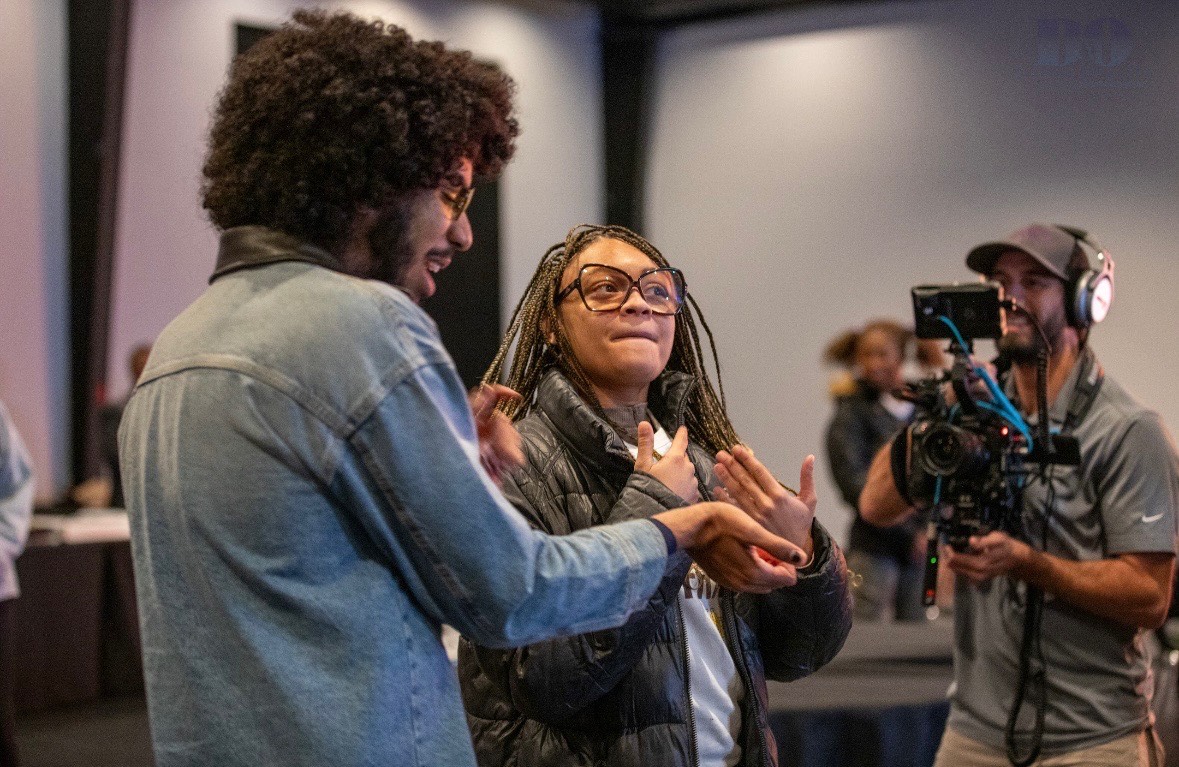
Chicago teens and young adults are getting a direct path into film and television careers thanks to the new Entertainment Industry Apprenticeship Program, a hands-on training initiative launched this year by Hollywood producer and South Side native Denita Patterson.
Through Destiny Outreach’s Dreams and Destiny curriculum, apprentices receive industry-level workshops, professional development and paid placements designed to open doors that many young creatives have long struggled to access.
“This program has been very successful, and we’re so grateful for how successful it’s been out of the gate. This is not just exposure — this apprenticeship takes it to a whole other level,” Patterson said.
Destiny Outreach was created to help young people reach their full potential in life, school and work while introducing them to careers in entertainment, technology and business. Its curriculum titled Dreams and Destiny centers on three F’s — finding, fighting for and fulfilling your dream; paired with personal, professional and workforce development. The overall Dreams and Destiny Program is the umbrella initiative and under it sits the Entertainment Industry Apprenticeship Program launched in June of this year.
Patterson began working professionally in the arts as a teen. She majored in Radio, TV, and Film with a minor in Broadcast Journalism at Northwestern University. After college, she moved to Los Angeles, working on shows like “The Fresh Prince of Bel-Air,” “Moesha” and “Thea,” as well as films including “Six Degrees of Separation” and “Bad Boys.”
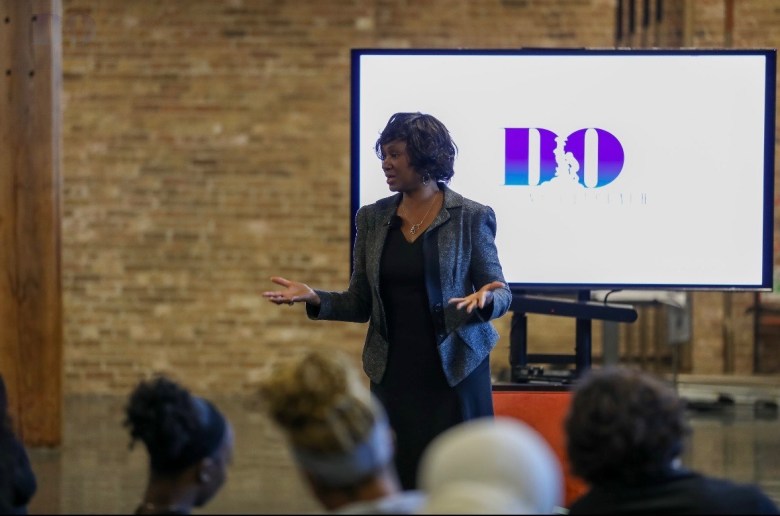 Denita Patterson talks with students participating in the Destiny’s Outreach program | Provided
Patterson later founded Destiny Outreach to help young people develop socially, emotionally and vocationally, offering the Dreams and Destiny curriculum to prepare participants for careers in entertainment, technology and business.
Students in the apprenticeship were able to learn from writer and producer Sylvia Jones for an interactive writers’ room exercise and actor Charles Gardner for an acting workshop to help the students understand the industry at a higher level.
The first cohort graduated 21 apprentices who started on June 3, completing 55 hours of training before being placed in summer jobs for 100 to 200 hours. The second cohort launched on Nov. 4 and now includes 26 apprentices.
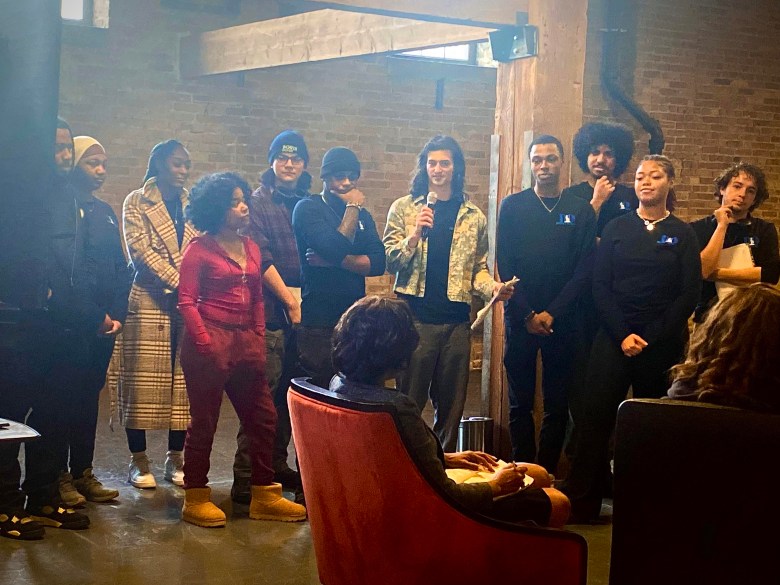 Students spent Saturday morning presenting their film pitches to program leaders before moving into production to shoot their projects later that afternoon, Nov. 22 | Hector Cervantes
Aisha Romer and Nicholas Torres, both from Chicago’s West Side, are participants in the apprenticeship program. Romer, a University of Illinois Chicago graduate, studied theater and is pursuing a career in film, while Torres, a Chicago High School for the Arts alumnus, has a background in arts education and is seeking hands-on industry experience. Both joined the program to gain professional skills and opportunities in entertainment.
“When I saw this program, I was really interested in the apprenticeship opportunity for them placing you in a department, where you can really get those hands-on experiences,” Romer said.
Coming from a background in arts education, Torres graduated from The Chicago High School for the Arts and took some community college courses. After recently completing a play, they sought more industry experience and professional guidance, feeling unprepared in areas like applications and resumes, and found this opportunity invaluable.
Before the program, Torres felt only partially able to access opportunities in entertainment, with some limitations affecting their experience.
“A big thing about the entertainment industry is who you know and the connections you have. Going in with next to nothing, I had my arts education and the people I knew from that, but still it felt like I was going in alone. This program definitely provides support and the connections you need to navigate the industry,” Torres said.
This is Romer’s second workforce training program of the year. Unlike the first program, which lacked an apprenticeship component, this one allows participants to apply what they’ve learned, gain real-world experience and get paid for showcasing their skills.
“I feel like this program demystifies a lot of the industry. It makes it feel much more attainable than before. Even in my previous program, there were still things I was left in the dark about, and it felt like you’d just figure them out once you got on set. This program really prepares you beforehand and explains everything ahead of time,” Romer said.
Patterson launched the Entertainment Industry Apprenticeship Program to give Chicago youth the kind of early exposure and hands-on training she received but knew many others lacked.
“I created this program because I wanted Chicago’s young people to have the same opportunities I had to discover their purpose early on,” Patterson said. “When I left for Los Angeles in my early twenties, I realized how much exposure and mentorship shaped my career. Now I’m bringing that knowledge home so our youth don’t have to leave Chicago to chase their dreams. They can start building them right here,” Patterson said.
Related