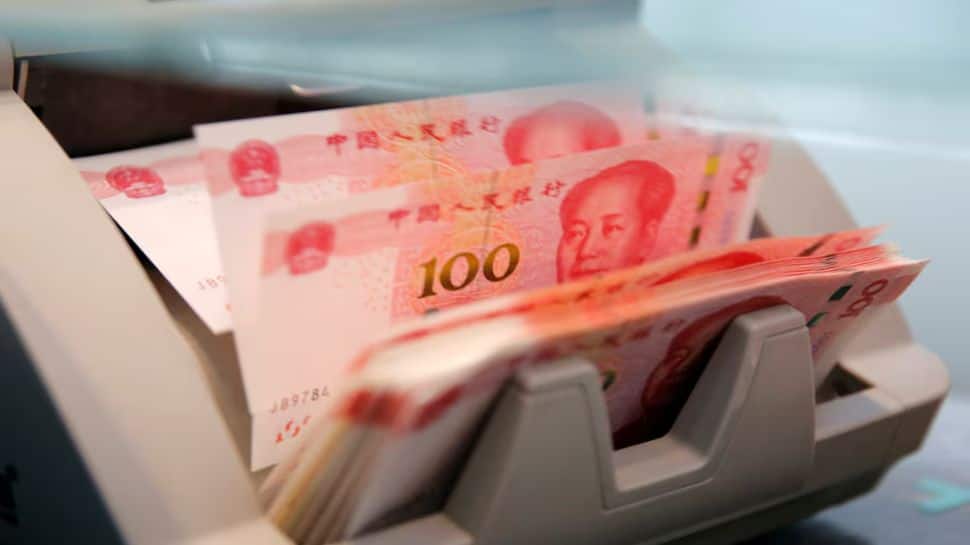
China Global Debt: China is no longer a manufacturing powerhouse or an economic giant. Over the past two decades, it has emerged as the world’s largest official creditor, strategically lending and investing across nearly 200 countries. Its financial influence now stretches from the United States and Russia to Australia, Pakistan and even smaller and economically vulnerable nations. A few corners of the globe remain untouched by Beijing’s money. Surprisingly, its largest debtor is the United States. It highlights China’s extraordinary economic leverage.
Author Dan Wong, in his book Breakneck, emphasises that Beijing’s engineering prowess, rapid construction and urban transformation represent more than only growth stories. They pose a tangible challenge to the United States.
He asks whether China has advanced so far that the United States now fears being left behind. Supporting this, a report from AidData Research Lab reveals that between 2000 and 2023, Beijing disbursed $2.2 trillion globally in loans and grants, benefiting nearly 200 countries and regions either through financial aid or increasing debt burdens.
Add Zee News as a Preferred Source

China’s lending strategy does not target only economically weaker nations. Less than 6 percent of its funds were provided as grants or concessional loans. Around 47 percent went to poorer countries, while a surprising 43 percent was lent to wealthy and developed nations. This indicates that while many developing countries grow dependent on China, so do economically advanced nations.
AidData’s findings establish China as the world’s leading official creditor. Beyond loans, state-owned Chinese enterprises and banks are investing worldwide in infrastructure, mineral resources, airports, pipelines, data centres and high-tech companies. These investments include stakes in over 2,500 international projects, touching major corporations such as Tesla, Amazon, Disney and Boeing.
While the Belt and Road Initiative often captures global attention, it accounts for only about 20 percent of China’s total overseas lending. A substantial portion of Beijing’s financial influence now flows into the technology and semiconductor sectors of wealthy nations, allowing China to expand its strategic control over future technologies, not just roads and bridges.
The shift in lending patterns is noteworthy. In 2000, only 11 percent of China’s loans went to developed countries, but by 2023, this proportion had risen to 75 percent. The top 10 borrowers today highlight this trend, with the United States leading at $202 billion, followed by Russia at $172 billion, Australia at $130 billion and Venezuela at $106 billion. India also features, having received $11.1 billion in loans and grants from Beijing.
These numbers make one point abundantly clear: China’s financial strategies are not merely about fostering development. Through targeted loans and investments, Beijing is building infrastructure, influencing global political equations and securing a decisive role in influencing the future of technology, trade and international relations.
The world’s economic and strategic map is increasingly being redrawn with China at its centre.