The U.S. Environmental Protection Agency has approved another pesticide that contains PFAS, often referred to as “forever chemicals” because they do not break down in the environment.
The decision expands where the product can be used, including on a wide range of food crops. It has intensified concerns among toxicologists and environmental advocates who say federal regulators are overlooking long-term risks.
PFAS exposure has been linked to a variety of health problems, including certain cancers, hormonal disruption, immune effects and developmental delays. Studies have typically focused on contamination from manufacturing, firefighting foams or consumer products. The application of PFAS-containing pesticides to cropland introduces a newer exposure route that researchers say has not been adequately examined.
“My reaction is shock and awe,” said Nathan Donnelly, environmental health science director at the Center for Biological Diversity. “The worry is that this is irreversible. Whatever we put into our environment today will be lurking around forever.”
The EPA had begun a process to limit PFAS discharges under former President Joe Biden, a move that was opposed by business interests including the chemical industry. One of President Donald Trump’s first actions after taking office this year was to undo those proposed changes.
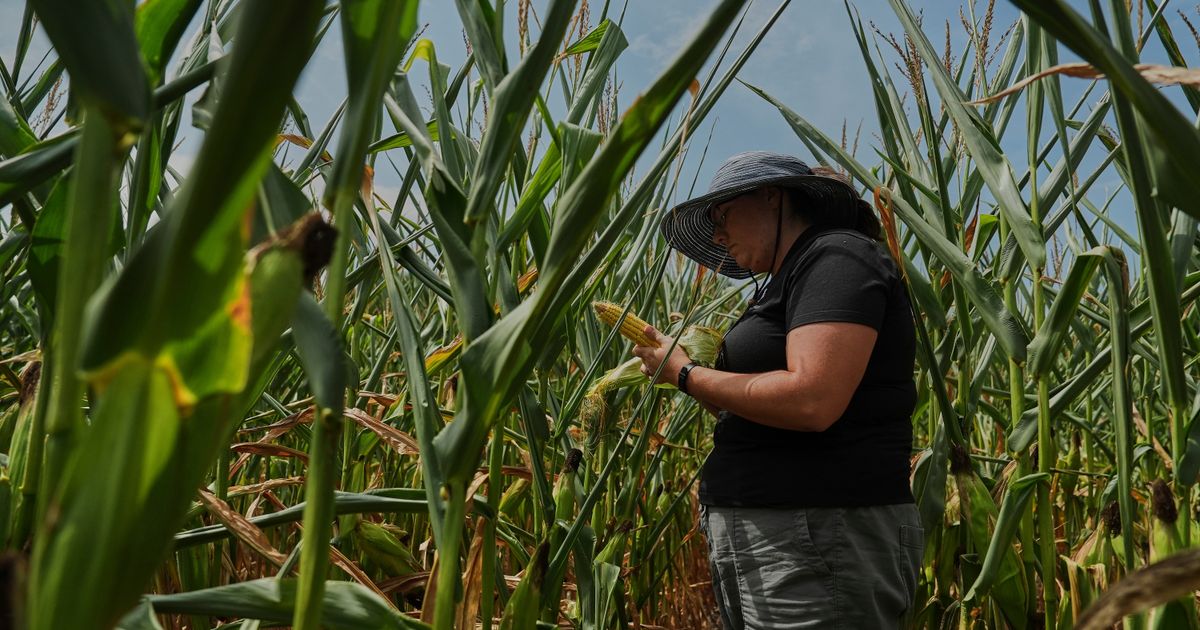
Now, following this new approval from Trump’s EPA, the pesticide can be applied on farms, golf courses and certain commercial properties. Its active ingredient includes a fluorinated compound that scientists say fits the widely accepted definition of a PFAS. These chemicals are persistent and mobile, and they have been detected in drinking water, soil, wildlife and in the blood of most Americans.
The EPA said in its approval documents that it found “no human-health risks of concern when used as directed.” Several experts dispute that conclusion and argue that the agency’s review did not fully account for how PFAS accumulate in soil and water or how they move into food.
“The pesticide approval process is really calibrated on older pesticides that break down within a normal period of time,” Donnelly said. “These new forever pesticides don’t fit that mold. There are risks here that are not accounted for.”
Concerns about the persistence of these chemicals extend beyond human health. Researchers have identified toxicity concerns for pollinators, including bees, which are essential for crops that rely on natural pollination.
“These pesticides are being used under the guise of food security,” Donnelly said. “But these same pesticides are killing pollinators that are responsible for one out of every three bites of food we eat.”
The approval also arrives at a time when the EPA faces legal pressure over PFAS contamination in sewage sludge used as fertilizer. Environmental groups have challenged the agency’s decades-old biosolids regulations, saying they have failed to protect farmland and livestock from PFAS-tainted waste. The lawsuit, now on appeal, argues that the agency has not updated its oversight to reflect modern science.
Donnelly said he sees a broader pattern. “The pesticide office has been broken for quite some time,” he said. “We are approving things that industry wants, that are going to have enormous harms to our society, to our children, to us. These harms are not reversible.”
Consumers can use water filtration systems and purchase organic produce to reduce some PFAS exposure, according to toxicologists.