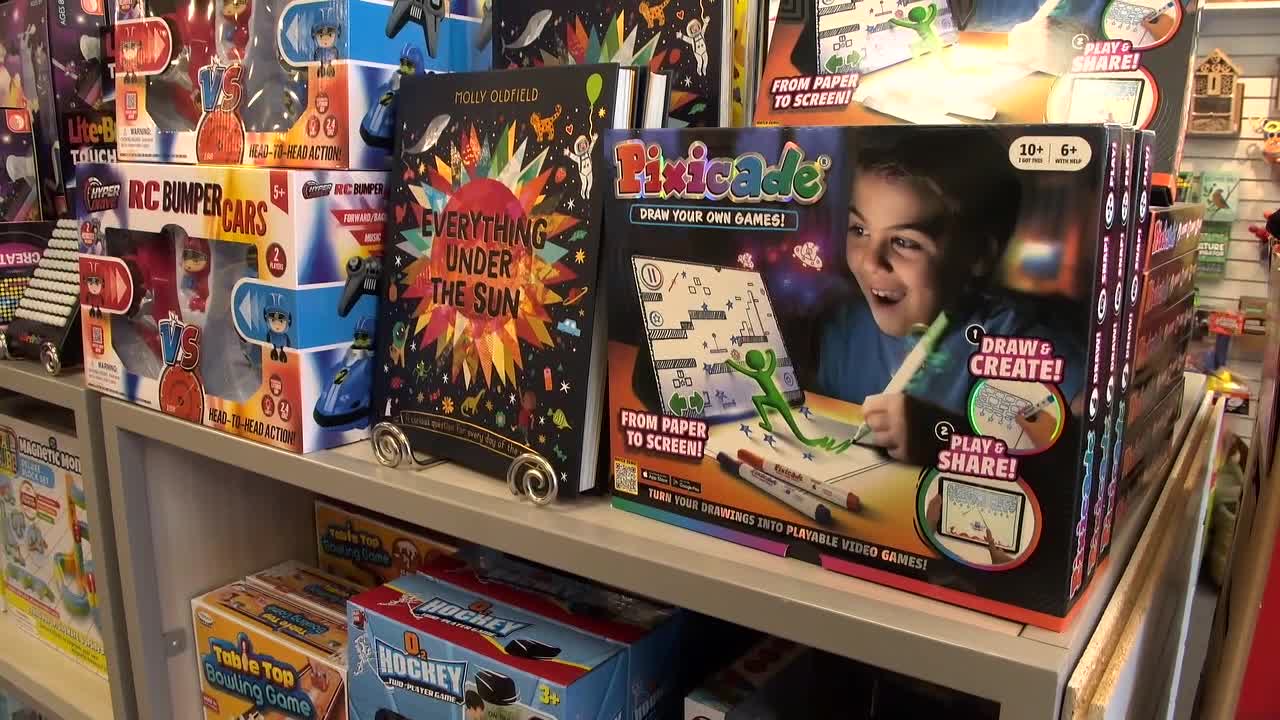
Sarah Anderson was out toy shopping on Black Friday, keeping an eye on the family budget and an uncertain economy.
“For the most part, we’re gifting our kids one or two medium to large-sized gifts,” she says. “We don’t need any more things or stuff in our house, really. Being able to have less stuff and being choosier about the stuff we bring into the house.”
Anderson certainly isn’t the only one hitting the stores while watching their wallets.
The National Retail Federation says nationwide, a record 187 million people are shopping through Cyber Monday.
The group predicts Americans will spend $1 trillion during this holiday season.
Dave Vang, a University of St. Thomas finance professor, says despite those high numbers, consumer confidence is a bit shaky right now.
“A lot of it is consumer sentiment,” he explains. “I mean, we’ve been through some hard times between COVID and the near double-digit inflation we’ve had recently.”
Another problem, Vang says, is tariff uncertainty, an issue Kelsey Cerovac is all too familiar with.
“Some things would go up five dollars wholesale, some things would go up ten dollars to twenty dollars,” she says.
Cerovac is the buyer for GoodThings Kids, a White Bear Lake toy store.
With half her toy inventory coming from China, she says it’s been a roller-coaster year that’s been settling down a bit in the fourth quarter.
But at times, Cerovac says she’s had to nix some orders from wholesalers while trying to avoid passing the cost on to her customers.
“It’s been a continuous cycle of ‘every order you it’s place, you have to look at the numbers,’” she explains. “They’ll come back with what the price increases were, and you have to see if it’s worth it, and think like the consumer, ‘would I spend that much money on an item?’”
But this new normal for brick-and-mortar stores doesn’t stop there.
Adobe Analytics, which tracks e-commerce transactions, says online spending on Thanksgiving Thursday rose 5.3% year-over-year to $6.4 billion.
Vang says that means fewer customers in brick-and-mortar stores.
“The problem for the stores, of course, if you’re a brick-and-mortar place, they’re buying online rather than from you,” he notes. “Black Friday and all these sorts of rituals we sort of had around Christmas, they actually got people into the stores and made them more likely to do impulse buying.”
“I think that’s just a sign of the times,” adds Nancy Olson, visiting White Bear Lake from Duluth. “It’s more convenient, you can shop whenever.”
Vang says for some Minnesotans, there may be another motivation for taking it easy on the spending.
He points to a series of layoffs in the state, including about 1800 job cuts at Target. “If you’re concerned about your job, you’re probably not going to splurge like you normally do if you’re very, very confident about your job,” Vang explains.
Back at GoodThings Kids, Cerovac says the store just might have a secret weapon in this holiday shopping competition.
“The fortunate thing is there will always be babies,” she smiles. “People will always need to buy gifts.”