Several local organizations have started new boots-on-the-ground programs in Colorado Springs to meet mental health demands and fill gaps in addressing clinician shortages, providing LGBTQ+ care for traumatized youth, expanding adult addiction recovery and preventing suicide among all ages.
Safe Passage
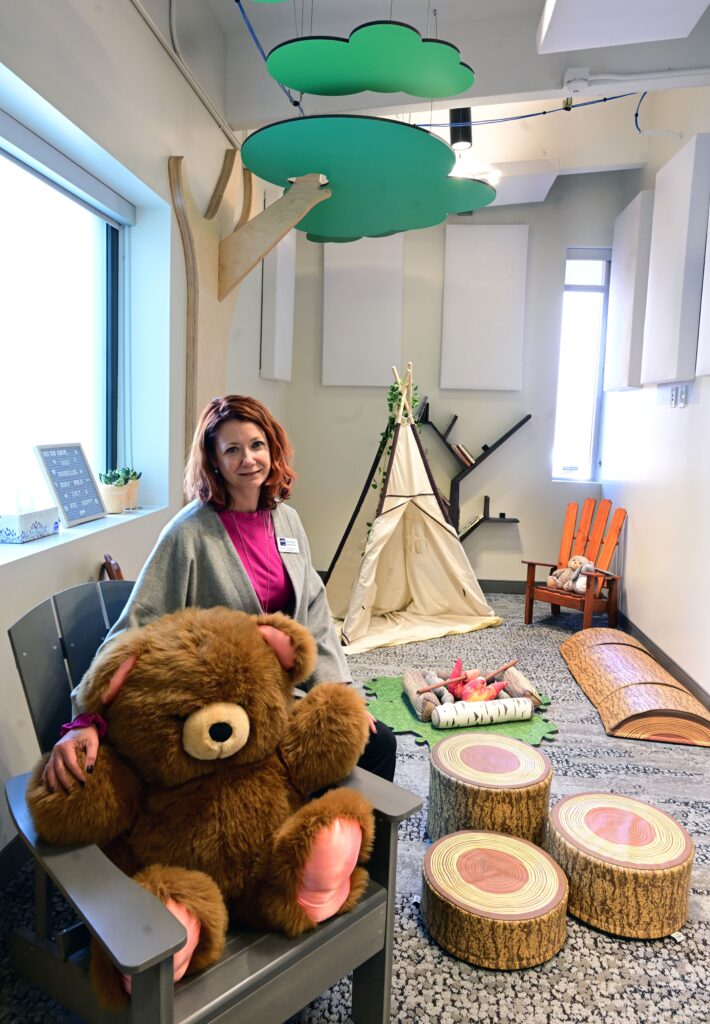
Marking its fourth anniversary of locating multiple independent services in one building that specialize in assisting minor children who have been sexually abused, Safe Passage has brought mental health providers on staff to immediately provide free therapy to clients and their families.
Instead of contracting with The Family Center of Colorado Springs to provide therapeutic services, Safe Passage hired two trauma-focused clinicians earlier this year, with a goal of adding two more, said Maureen “Mo” Basenberg, executive director.
“It had been a goal when we were putting the co-located model together,” she said. “It’s not something we were ready to take on when we opened four years ago; The Family Center helped us get the co-location off the ground.”
Also, as a nationally accredited children’s advocacy center for victims of sexual abuse, Safe Passage is required to work with clinicians who have high levels of training.
“We’re able to ensure the training and that they focus their time fully on the children we serve and our team partners,” Basenberg said.
Employees from numerous law enforcement agencies in El Paso and Teller counties, as well as health care institutions and an empowerment organization, have offices inside Safe Passage’s headquarters at 2335 Robinson St.
“We know when these victims get help, they are set up much better to understand they are not to blame, and as they go forward in life, they are in a healthier position to grow and make relationship and family choices,” Basenberg said. “We feel this is a really meaningful investment for our community.”
As a result, of the 670 children Safe Passage served from January through October, 44 have qualified for the free therapy.
That number represents an exponential increase from the two children who received mental health services on site last year and the six in each 2022 and 2023, Basenberg said.
“We changed the model because we were able to do that,” she said. “We needed a connection immediately.”
Children offered free counseling typically come from low-income families and are underinsured or uninsured. Some insurance plans cover such services.
Safe Passage now also provides a once monthly virtual parent support group for parents who meet and bond through the center.
A grant partially funded the $200,000 add-on to the organization’s $1.6 million annual budget; Safe Passage is working on securing additional money, according to Basenberg.
“I think that it does come to how can we connect and be creative,” she said. “People are facing a lot of challenges. While mental health is so vital, we realize there is so much pressure right now, and people are sometimes trying to just put one foot in front of the other.”
Prism Community Collective
Although three years have passed since a mass shooting at a Colorado Springs gay nightclub took the lives of three patrons and two employees on Nov. 19, 2022, studies show that now is a crucial time in the healing process, according to Rachel Keener, senior director of learning and impact at ChangeLine, formerly Community Health Partnership.
“The federal Office for Victims of Crime research on mass shooting survivors and families of victims found negative mental health effects increase three and five years after a traumatic event,” she said. “So, we know this is a really pivotal time. We’ve had lots of folks reaching out for mental health care or retreating back into isolation and struggling to get care.”
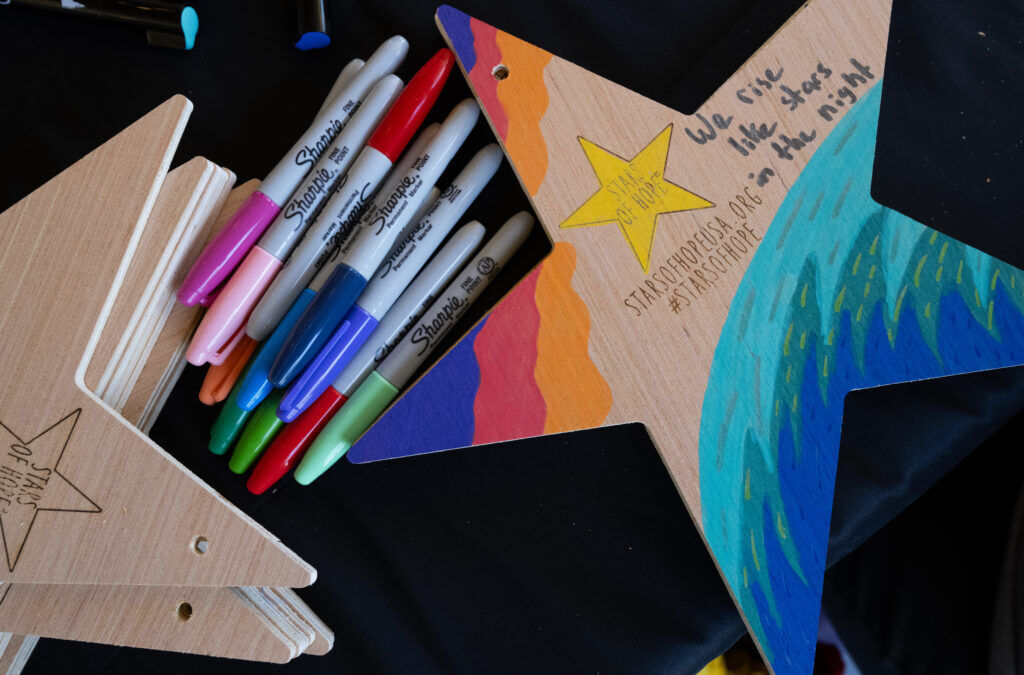 A message of hope is written on a star donated by Stars of HOPE (starsofhopeusa.org) Sunday, Nov. 16, 2025, as family and friends gathered at the Hillside Gardens and Event Center in Colorado Springs to remember the lives of Daniel Davis Aston, Kelly Loving, Ashley Paugh, Derrick Rump and Raymond Green Vance who were killed Nov. 19, 2022, during the shooting at Club Q in Colorado Springs. The event was sponsored by the Prism Community Collective. (Christian Murdock, The Gazette)
As part of its work, Prism Community Collective, which opened June 5, 2024, as a support and services center for LGBTQ+ people and others affected by the Club Q attack, has compiled an online directory of Colorado providers who are familiar with issues pertaining to the physical health and mental well-being of the population.
Listed are 174 mental health professionals, most of whom are in Colorado Springs, but others from around the state that offer telehealth services.
Also included as providing “affirming care” specific to the needs of LGBTQ+ people are 20 medical clinicians and 10 health and wellness practitioners, such as massage therapists and chiropractors.
The directory is available to anyone and has seen a steady increase in usage since debuting earlier this year, Keener said. More than 600 “visits” were recorded in the past month.
“When we did focus groups, one of the biggest issues that folks talked about was not knowing how to find primary care for LGBTQ+ affirming providers,” she said. The Club Q shooting accelerated the need for like-minded therapists, counselors, psychiatrists and psychologists, she added.
Also new is that federal funding from the Anti-Terrorism Emergency Assistance Program for the temporary center, which operates under the auspices of ChangeLine, has been extended.
“We had money left over, and the state is allowing us to take the next two years to spend it,” Keener said. In addition, “to sustain these resources so they don’t drop off after 2027, we are currently planning for sustainability.”
Benefits for directory providers, including continuing education, professional development, consultant groups and insight on best practices are also offered.
“We’re hearing the current political climate and negative sentiment against the community impacts mental health, and when combined with the approaching holidays, folks are really struggling,” Keener said. “It’s Prism’s role to be there.”
Serenity Recovery Connection
It can be harder for residents in rural southern Colorado than for urbanites to seek and receive addiction treatment and recovery services.
The stigma surrounding substance abuse is strong in rural communities, said Frank Montesano, programs manager at Serenity Recovery Connection, the state’s only nationally accredited recovery community organization.
Peer-led recovery services are expanding from Colorado Springs-centric to cover all of El Paso, Fremont, Custer, Chaffee and Park counties, he said. The reach is happening with funding from The Colorado Health Foundation.
The peer recovery model uses people who have been there and done that to walk alongside people new to sobriety as they navigate living with substance use disorder.
“Us peers have that lived experience are likely to break down barriers and help people get the support they need,” Montesano said.
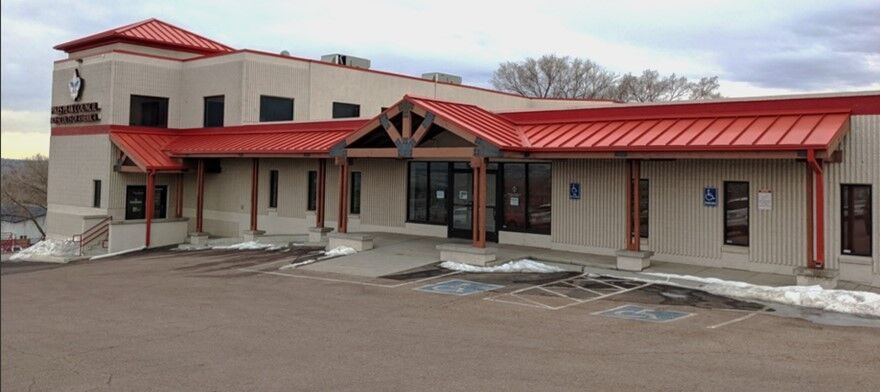 Serenity Recovery Connection is headquartered at 985 W. Fillmore St., in Colorado Springs. The organization is expanding peer coaching to people recovering from alcohol and drug use to all of El Paso, Custer, Chaffee and Park counties. (The Gazette file)
Ten peer recovery coaches offer individual and group sessions in-person and online. Peer recovery coach trainings and youth and family empowerment support groups are also in the works.
“I don’t think people have access or know where to find the resources,” Montesano said. “With peer recovery coaches in these areas, people can get recovery support.”
Virtual appointments reduce transportation issues for clients, he said. Referrals come from word-of-mouth, hospitals and other health care offices, homeless shelters, street outreach teams and clients themselves.
Some treatment centers in southern Colorado accept Medicaid clients, Montesano said.
“Residential treatment is lacking in those rural areas more; even if people have to come to Colorado Springs for treatment, we can arrange rides on the spot,” he said.
Suicide prevention
After studying El Paso County’s high rate of deaths by suicide for five years, aiming to reduce the numbers, a team of nonprofits and other service providers working on prevention is now zeroing in on reaching specific demographics.
Colorado has consistently ranked in the top 10 in the nation for worst suicide rates for more than a decade, with El Paso County leading the state.
Since teen suicides hit a record high of 15 in 2016 and again in 2020, the Pikes Peak Suicide Prevention Collaborative, a group of representatives from many agencies and organizations, has made a concerted effort to educate and train anyone from students to community leaders to the average resident on warning signs someone could be nearing a crisis and what to do.
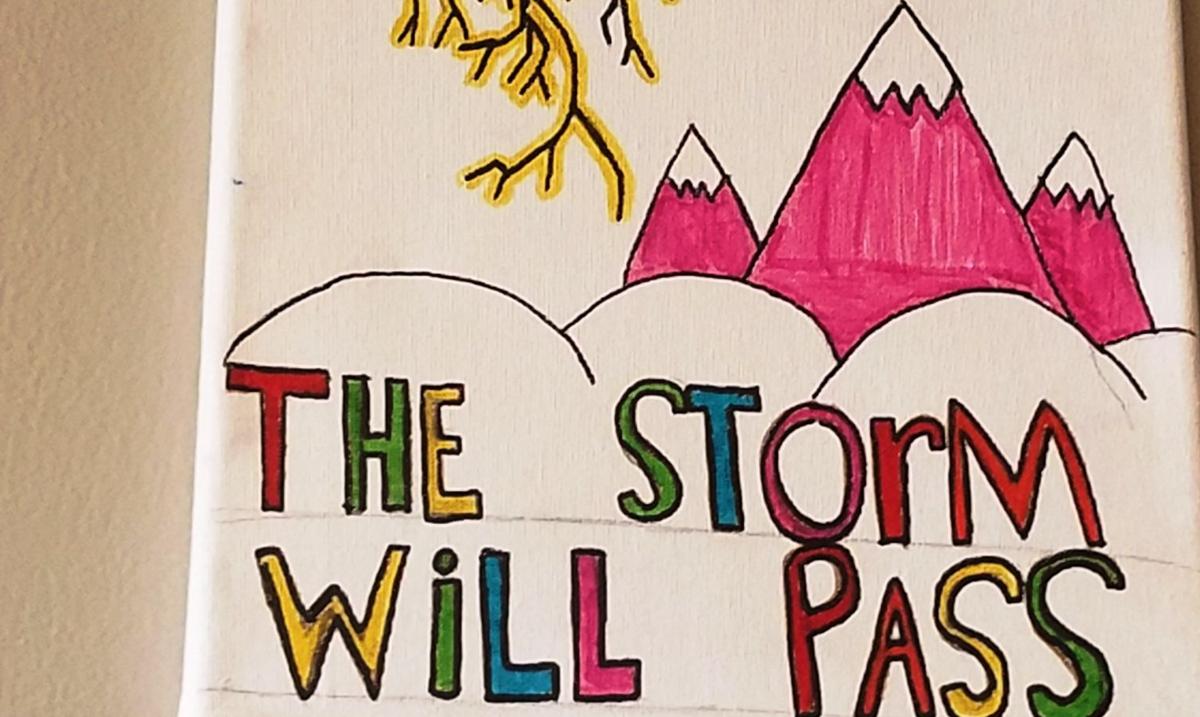 Artwork from a teen is among the pieces that hang in the Colorado Springs office of Pikes Peak Suicide Prevention Collaborative. (The Gazette file)
The work has resulted in an improved outlook.
Countywide, deaths by suicide decreased by about 18% in 2024 over 2023, and suicidal deaths among children ages 17 and younger dropped by 60%, according to the El Paso County Coroner’s annual report.
The county recorded 155 deaths by suicide in 2024. That’s the lowest in the past five years — down from 189 in 2023, 194 in 2022, 176 in 2021 and 178 in 2020.
The number of youth suicides has ranged from four in 2024, 2022 and 2021, to 10 in 2023 and 15 in 2020.
“We have a lot of folks working to reduce deaths by suicide,” said Keener, with ChangeLine.
“But we’re not capturing enough military, Black, Brown and veteran folks.”
Collaborative members have realized that what grabs people’s attention and what they are responsive to isn’t the same across the board, Keener said.
Another community-wide conference will be held in May to “get a wider perspective on what’s driving deaths by suicide and the best way to address it,” she said.
That could include improving access and quality of care for crisis mental health centers, working with gun owners and gun shops on safe storage of firearms, and what’s being dubbed education and awareness 2.0.
Also, ChangeLine offers a Hope Certification program to help businesses and organizations identify when someone is potentially suicidal and what steps to take.
“What we know about suicide risk is you’re not often feeling heavy and immediately going and seeking care,” Keener said. “Most of the time, things are simmering, and you might be talking to a friend, a boss — your barber. This training is about how folks in the everyday community can be a support person and help people get access to care.”
Anyone struggling with emotional, mental health or substance use problems can dial or text 988, the Colorado Mental Health Line, for free, immediate and confidential support that’s available 24/7.