PHOENIX – While long-term drought conditions still persist, a leading Arizona climate expert said Phoenix’s wettest fall on record was a welcome sight.
“We’ve been in a drought since 1994, so there’s a lot to make up there,” Erinanne Saffell, whose titles include Arizona State Climatologist and Arizona State University professor, told KTAR News 92.3 FM’s Arizona’s Morning News on Thursday.
Saffell, who is director of the Arizona State Climate Office, explained that the record wet autumn helped the area catch up after the state’s third driest January-August stretch on record.
“This has been great,” she said. “We’re mitigating some of that short-term drought, and we’re happy to see that.”
How much did it rain in Phoenix in fall 2025?
September-November is what climatologists consider meteorological fall. Phoenix Sky Harbor International Airport, which the National Weather Service uses for the city’s official records, received 6.31 inches of rainfall during that span as several major storm systems hit the area.
Meteorological fall 2025 (Sep, Oct, Nov) is officially the wettest on record for Phoenix Sky Harbor Airport as it registered 6.31″ of rain. In fact, approximately 76% of the total annual rainfall recorded at Sky Harbor Airport so far has occurred since September 1st. #azwx pic.twitter.com/Z5ee49YsKF
— NWS Phoenix (@NWSPhoenix) December 2, 2025
That broke the previous record of 6.18 inches set back in 1939.
The Phoenix rainfall totals don’t always reflect activity in other parts of the Valley, but it was a pretty good indicator of how wet it was across the region this fall, Saffel said.
“Deer Valley was wet. Scottsdale was wet. … We have hundreds of weather stations across the state, but if we look at Maricopa County, that looks like we’re going to have the wettest fall from Maricopa County,” she said.
What does Drought Monitor say after Phoenix’s wettest fall on record?
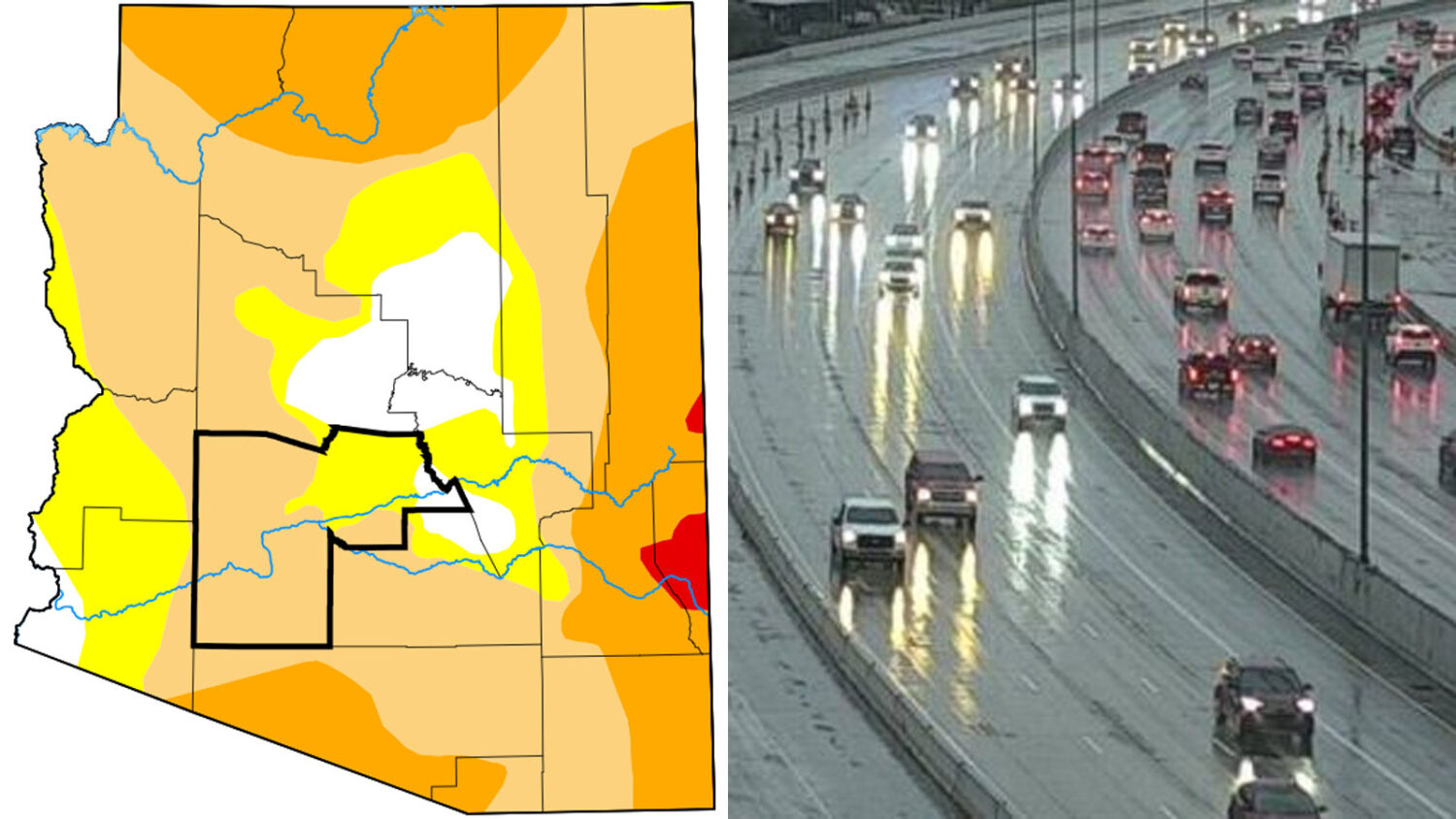
The latest U.S. Drought Monitor map provides additional insight into the impact of Phoenix’s wettest fall.

Three months ago, all of Maricopa County was classified as at least D2 (severe drought) on the map, with about 20% at the D3 level (extreme drought). The Drought Monitor scale goes up to D4, or exceptional drought.
As of Thursday, conditions had improved to the point where no areas were worse than D1 (moderate drought) on the county map and 4% of the region had no drought.
Phoenix’s wettest fall prepares soil for snowfall runoff
Phoenix’s wettest fall will pay off down the road when it comes to the Valley’s water supply, part of which comes from winter snowfall runoff from mountains in northern and eastern Arizona.
“Having that wet fall is really helpful because that fall precipitation is great for our soils. It gets them in shape for our winter snowpack,” Saffel explained. “And so when our winter snowpack melts in spring, having the soil in a good place right now helps that snowpack move into our water supply.”
However, she said La Niña conditions in the Pacific Ocean could indicate a dry winter is coming, although it’s too soon to make firm predictions.
“We are in that La Niña kind of situation, which statistically for our winters in Arizona means we won’t have as much of a storm event, but we certainly can get those storms and we will get some snowpack. And so, we just kind of wait and see and see what happens,” she said.
We want to hear from you.
Have a story idea or tip? Pass it along to the KTAR News team here.
