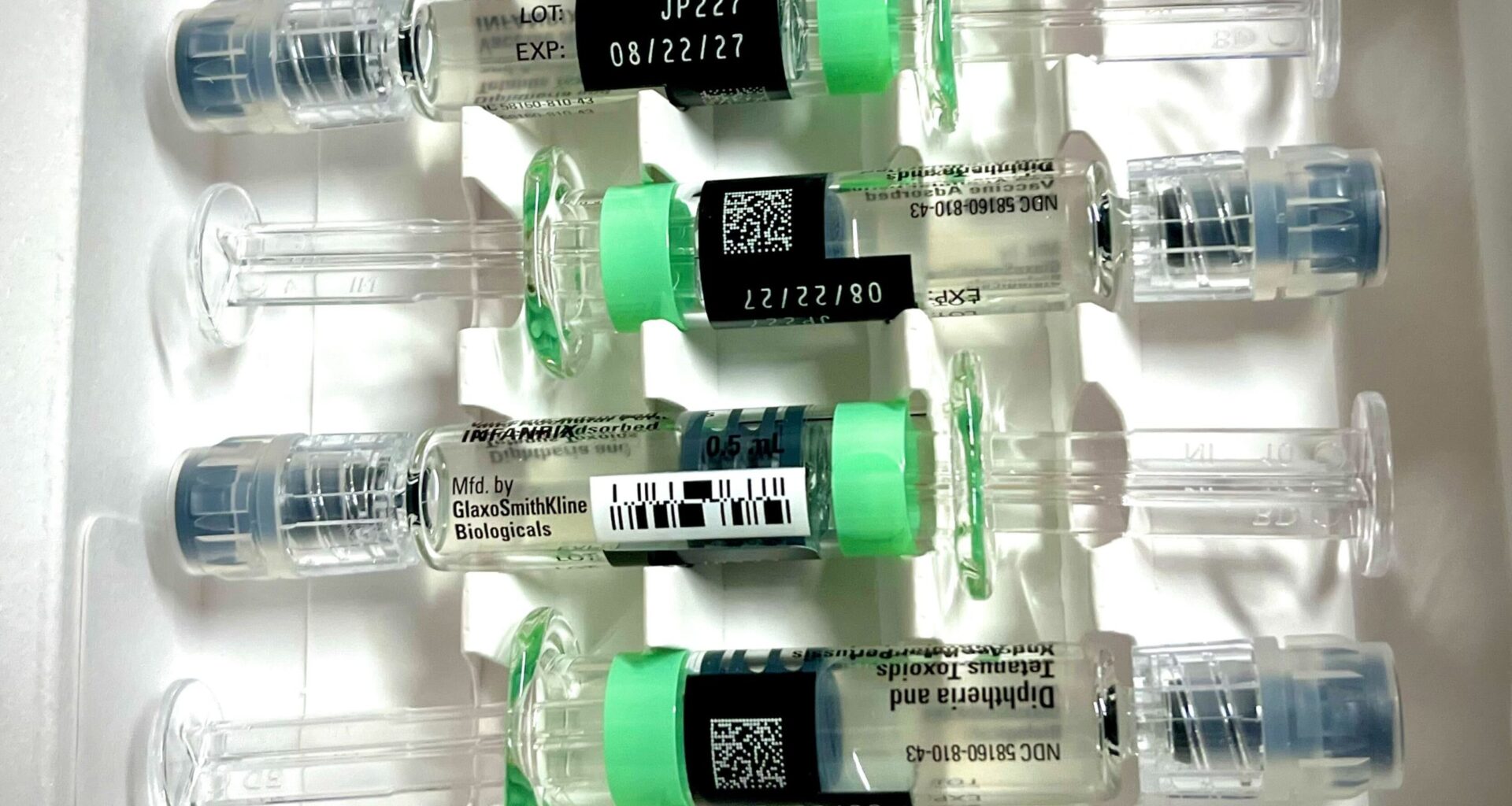
Bexar County is seeing a dramatic rise in cases of whooping cough this year alongside potentially record-breaking increases statewide.
So far in 2025, San Antonio’s Metropolitan Health District has recorded a little over 200 cases of pertussis, more commonly known as whooping cough, a respiratory infection that mostly affects young children.
That’s well above the 72 cases in the county last year, and the pre-pandemic average of 50-70 cases, according to Miguel Cervantes, interim assistant director of communicable diseases at the city health department.
Symptoms of whooping cough are initially mild and similar to the common cold, including sneezing, runny or stuffy nose, watery eyes, fever and cough. It can become more severe though over time, leading to an intense cough and high-pitched “whoop” noise that follows.
Unvaccinated infants are especially at risk from the disease; but fatalities are rare, and none of have been in recorded in Texas this year, according to the Texas Department of State Health Services.
The state health department has recorded 3,762 annual cases of whooping cough in Texas — a significant jump from 1,907 cases last year.
Because December is typically a highly infectious month for pertussis, the department expects that the case count could exceed the state’s previous high of 3,985 in 2013, according to Lara Anton, senior press officer at DSHS.
Like many infectious diseases, whooping cough declined during the pandemic but cases have since rebounded nationwide and locally, prompting the state health department to issue health alerts two years in a row.
Two combination vaccines protect against whooping cough: DTaP for babies and children younger than 7, and Tdap for older children and adults. The vaccines effectiveness wears off over time, so young children and teens generally receive several booster shots.
A rebound in whooping cough cases post-pandemic isn’t unexpected, but lower vaccination rates also play a role in what could end up being a record-breaking year.
“Children during the COVID pandemic did not have as many opportunities to get caught up on vaccines, and we’ve had children that fell behind on on staying up to date with their vaccines,” Cervantes said.
Compared to the 2023–2024 school year, kindergarten students in Texas had lower
coverage rates for all vaccines, including the DTaP vaccine, during the 2024-2025 school year, according to an annual immunization report by DSHS.
The most effective way to prevent the spread of whooping cough is by staying up to date on vaccinations and boosters, health officials said.
Doctors recommend infants receive their first pertussis shot at two months old, according to the U.S. Centers for Disease Control and Prevention. Two more boosters are typically administered to combat the waning effectiveness of the vaccine at ages 4-6 and 11-12.
Contact your primary care doctor or pharmacist to determine if your child is up to date on their pertussis vaccine and boosters.
“It’s definitely concerning, because these conditions can all be very dangerous,” Cervantes said. “The vaccination, even though it may not 100% of the time prevent someone from being infected with pertussis, it can definitely prevent a more severe illness, which is one of the main goals of the vaccination.”