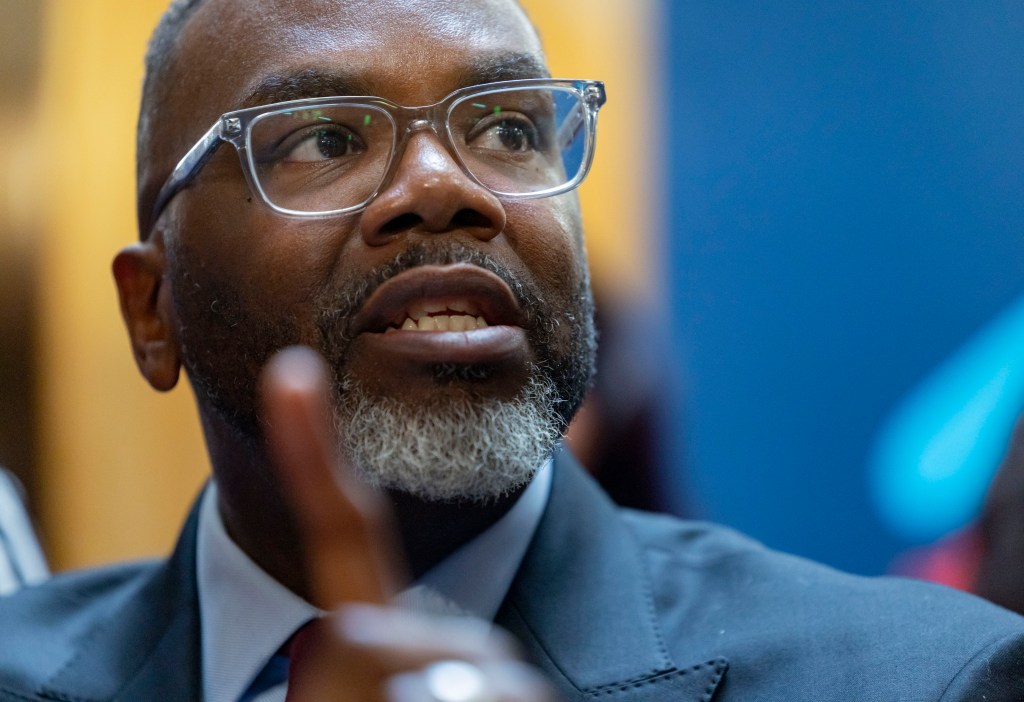
Buckle up, Chicago. Mayor Brandon Johnson is running the Hail Mary play, both for Chicago’s finances and his political future.
The mayor’s lengthy response on Thursday to an alternative budget framework put forth by 26 aldermen last week was an exercise in political irresponsibility. The mayor’s team dismissed virtually all of the suggestions the majority of the council made and came back with almost no alternative proposals of their own. And the mayor’s cheering section, the Chicago Teachers Union, decided, appallingly, to engage in the politics of personal destruction naming “The Alders willing to shutdown our city,” suggesting they will provide backup if Johnson digs in sufficiently for Chicago’s own version of a federal government shutdown. Be very afraid of that.
If nothing else, this budget season has exposed as fiction the mayor’s repeated claim of being more collaborative than his predecessors when it comes to relations with the City Council. In the past, Johnson’s “collaboration,” such as it’s been, has been born of necessity as much as anything else — a consequence of a divisive brand of politics that has sapped aldermanic confidence in his leadership. It’s not surprising that any pretense to give-and-take is on the shelf now that we’re fast approaching election season in Chicago.
But it is dismaying. And, if you care about Chicago’s future, very worrying.
Long after a majority of alders made it clear they wouldn’t support reviving the city’s corporate head tax, Johnson’s insistence on a monthly $21 tax on each worker at businesses employing 100 or more is beginning to put Chicago in truly perilous territory when it comes to its finances.
Team Johnson estimates that tax would generate $100 million; the city’s budget gap is $1.2 billion. A head tax would crush whatever remaining confidence companies and investors have in Chicago as a healthy place to do business. There are clear alternatives to that much-despised levy, but we’re not in the realm of logic and practicality anymore.
Johnson clearly wants desperately to stand for reelection having made the “rich” pay more in taxes to bankroll his agenda. That goal is what has animated his mayoralty from the start, and he’s obviously been frustrated at his inability to convince Springfield lawmakers, the business community and even ordinary Chicago voters to endorse more levies on a business sector that already is heavily taxed.
Now, it’s the City Council’s turn. And they’re not buying what the mayor is selling either.
As a result, the first week of December is nearing its close and Johnson has only brinksmanship on offer. It would be one thing if all that was at stake was his future political standing. But he’s holding Chicago itself hostage over an ideological demand that at the end of the day isn’t critical to balancing the budget.
What do we mean by “holding Chicago hostage”? The agencies that determine the city’s credit rating — Standard & Poor’s, Moody’s and the like — are watching this process just like us journalists and other interested observers. Those agencies, in determining how much of a risk the city’s bonds are for investors, will consider not just the details of the final budget product for 2026 but how the council and mayor arrived at it.
In short, the stability of Chicago’s governance is a factor in these ratings as well. And right now Chicago simply isn’t a good bet on that score if you’re an investor, whether in the city’s bonds, a real estate project or a new restaurant. Chicago’s credit rating currently is a scant (and wobbly) two notches above junk status.
So Johnson at this stage truly is playing with fire. If he continues on this course — threatening budget vetoes, summarily dismissing potentially viable cost-cutting or revenue ideas — soon there will be open discussion of precisely what happens if the budget isn’t passed by the Dec. 31 deadline. That’s never happened in this city’s long history. Never.
Ask President Donald Trump and members of Congress from either party how much they enjoyed the longest federal government shutdown ever. The federal government can issue debt and print money to paper over fiscal woes. But our city’s functionality depends heavily on the confidence of bondholders, many of whom don’t live here. Blowing the deadline would be disastrous.
It’s not too late. The mayor should pivot and begin engaging in good faith with aldermen, including his own Finance Committee chair, Ald. Pat Dowell, 3rd, who was among the 26 to sign last week’s letter outlining budget alternatives to the head tax.
Unions representing the city’s workforce also should understand that even if they end up “winning” in this budget crisis by not agreeing to any money-saving concessions, they will risk losing far more in the future if the city’s access to the debt markets is badly constrained or even shut off. If the mayor isn’t going to provide appropriate leadership, those unions could help fill the breach — and it would be in their self-interest to do so. Now.
Unfortunately, an awful lot of short-term thinking seems still to be at work in the budget showdown.
Shared sacrifice is the only realistic — and fair — way out of this mess.
Submit a letter, of no more than 400 words, to the editor here or email letters@chicagotribune.com.