Hawaii’s economy continues to head toward a mild recession in 2026, driven
primarily by the overall U.S. economy, President Donald Trump’s ongoing tariffs, cuts in federal spending and deportations, according to the fourth quarter economic forecast released today by the University of Hawai‘i Economic Research
Organization.
Combined with Hawaii’s sluggish tourism industry and expected slowdown in job hiring, “all of those come together to produce an overall weak economy,” said Carl Bonham, UHERO’s executive director.
UHERO’s economic expectations mirror its previous forecasts for 2025 even before the record-long, 43-day federal government shutdown began on Oct. 1, disrupting pay for many of Hawaii’s approximately 34,000 federal workers.
The shutdown reduced household spending in Hawaii and “likely weakened visitor demand temporarily, adding short-term drag to the local economy,” UHERO said. “Some, but not all, of the shutdown-related spending hit will be reversed as federal workers receive back pay.”
It also caused panic among Hawaii’s 161,132 SNAP recipients, who represent 81,124 families, and led to long lines at food distribution centers.
But it did not play a major role in UHERO’s last forecast for 2025, Bonham said.
Don’t miss out on what’s happening!
Stay in touch with breaking news, as it happens, conveniently in your email inbox. It’s FREE!
While the shutdown didn’t help Hawaii’s economy, Bonham said it was “just piling on.”
Tourism has been sluggish all year, which will likely continue into 2026.
And the New Year will see Hawaii’s minimum wage jump from $14 an hour to $16, which will likely cause employers to rethink hiring and overall payroll costs, Bonham said.
The higher minimum wage also will affect entry-level employees seeking their first jobs and people trying to rejoin the workforce, Bonham said.
“Because it’s happening when the economy’s going to be weak, it makes it difficult” for both employers and employees, Bonham said.
Overall, according to UHERO, “Hawai‘i’s labor market shows clear signs of slowing. Job postings have fallen, opportunities have narrowed, and federal layoffs will continue into 2026.”
Businesses also will continue to pass the costs of President Donald Trump’s tariff wars onto consumers and inflation in Hawaii should peak at 3.5% by the middle of the year, Bonham said.
This year ends with a few economic bright spots.
Maui’s recovery from the Aug. 8, 2023, deadly wildfires continues to outpace Oahu and Hawaii island.
Room rates and occupancy are still down, but overall visitor spending was up 12% on Maui in
October compared to the year before, Bonham said.
“In some ways, Maui is recovering faster than the Big Island and Oahu,” he said. “… Maui’s not hit quite as hard because there’s this offsetting of people beginning to return.”
And construction remains hot, driven by
ongoing housing and
infrastructure projects.
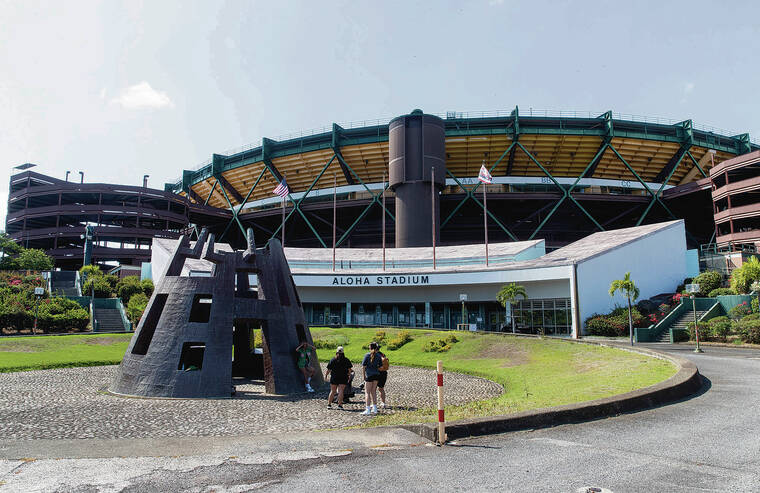
“New federal projects, including an $8 billion Navy contract and progress on Aloha Stadium redevelopment, will keep construction employment near record levels through the decade’s end,” UHERO said. “This will help cushion the downturn but cannot fully offset weakness elsewhere in the economy.”
Overall for Hawaii tourism, UHERO said that,
“International markets remain weak, with Canadian visitors down sharply. There has been a welcome recent uptick in the number of Japanese visitors, which nevertheless remains well below its pre-pandemic level. Visitor arrivals and average daily census are expected to
decline in 2026 before
recovering in 2027-28.”
UHERO’s last economic forecast for 2025 offers no new surprises for the upcoming legislative session, which begins Jan. 21.
Before it begins, legislators will closely watch the Hawaii Council on Revenues’s economic forecast coming out in the first week in January, which legislators rely on to set their budget expectations.
Bonham, who sits on the Council on Revenues, said that legislators will have to grapple with the “recognition that the economy is overall weak and tax collections are weak,” Bonham said. “Any way you cut it, it’s going to be a challenging session.”
By 2027, according to UHERO, “Honolulu consumer prices will be about 1.5% higher than they would have been without recent tariff hikes, raising annual costs for a typical Hawai‘i household by about $1,400.
“Job and income losses will be real but limited in scale, with the greatest burdens falling on lower-income households and sectors tied to tourism and federal spending,” the UHERO forecast said. “Significant uncertainties remain — from trade policy and deportations to the ability of the Federal Reserve to steer the national economy — but prospects look somewhat better than they did earlier this year.”