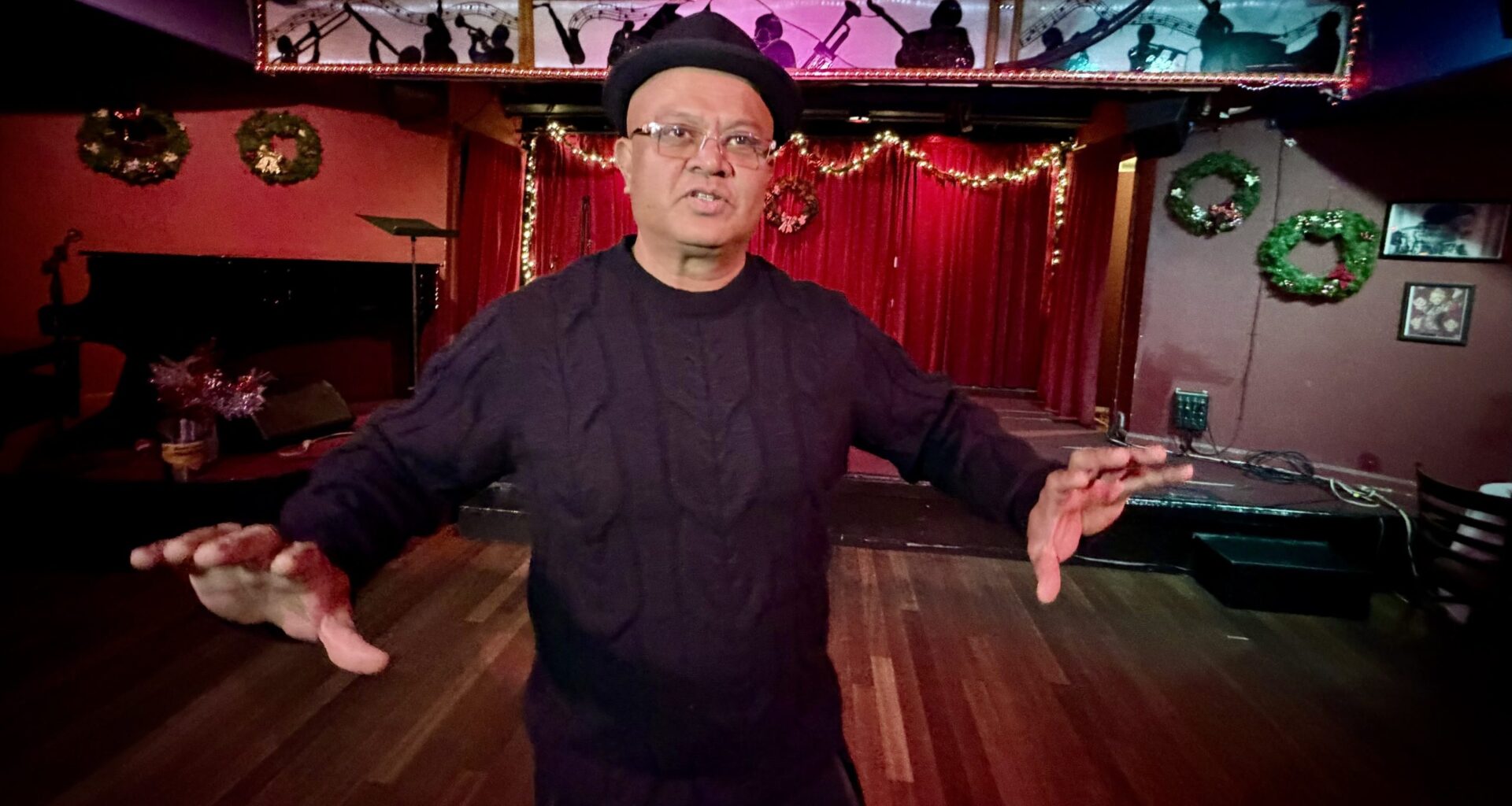
When I walked into Swing 46 on Restaurant Row on Thursday afternoon, John Akhtar was already in motion — hands raised, eyes bright, on his head the distinctive hat that regulars have come to recognize across three decades.
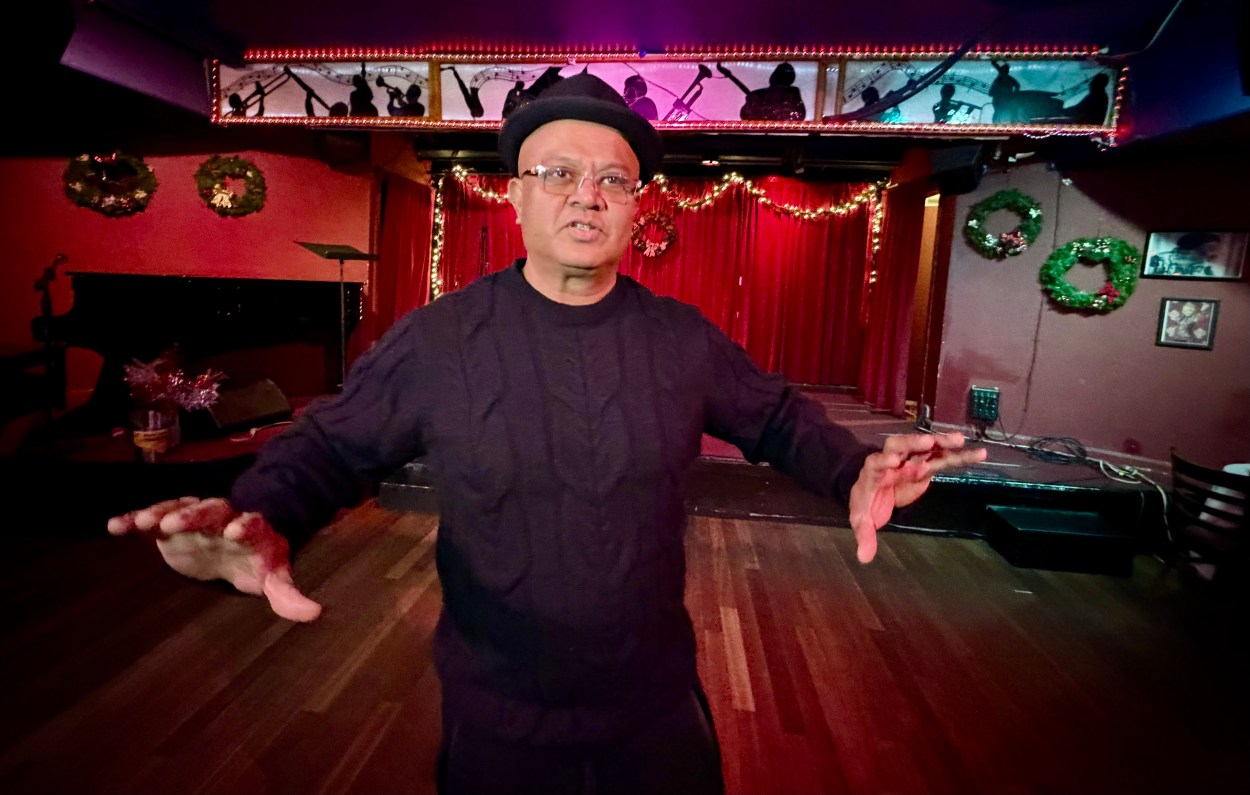 Swing 46 owner John Akhtar is leaving Restaurant Row behind at the end of the year. Photo: Phil O’Brien
Before I even asked a question, he told me exactly how this interview was going to go. “It’s going to be emotional,” he said with a grin. And it was. There was laughter, long breaths, goosebumps that he pointed out that he was feeling — and moments where he paused to hold back tears.
This winter marks the end of an era: Swing 46 will close at the end of 2025, with jazz impresario Spike Wilner (Smalls, Mezzrow) taking the reins and reopening a club in the space in spring 2026. But spending an afternoon with John makes one thing clear — this story isn’t about closure. It’s about legacy, devotion and a man whose love for swing runs deeper than the stage he built for it.
John’s journey to becoming the guardian of swing music in New York and Hell’s Kitchen starts far away. He was born in Bangladesh, spent time in the UK visiting friends, and eventually came to Texas for college. But a summer break changed everything. On his way back to school, he stopped in New York City to see someone — and the city claimed him instantly.
“I came to New York to visit a friend, and I just fell in love with the place,” he said. “I cancelled my return ticket. I knew this was my home.”
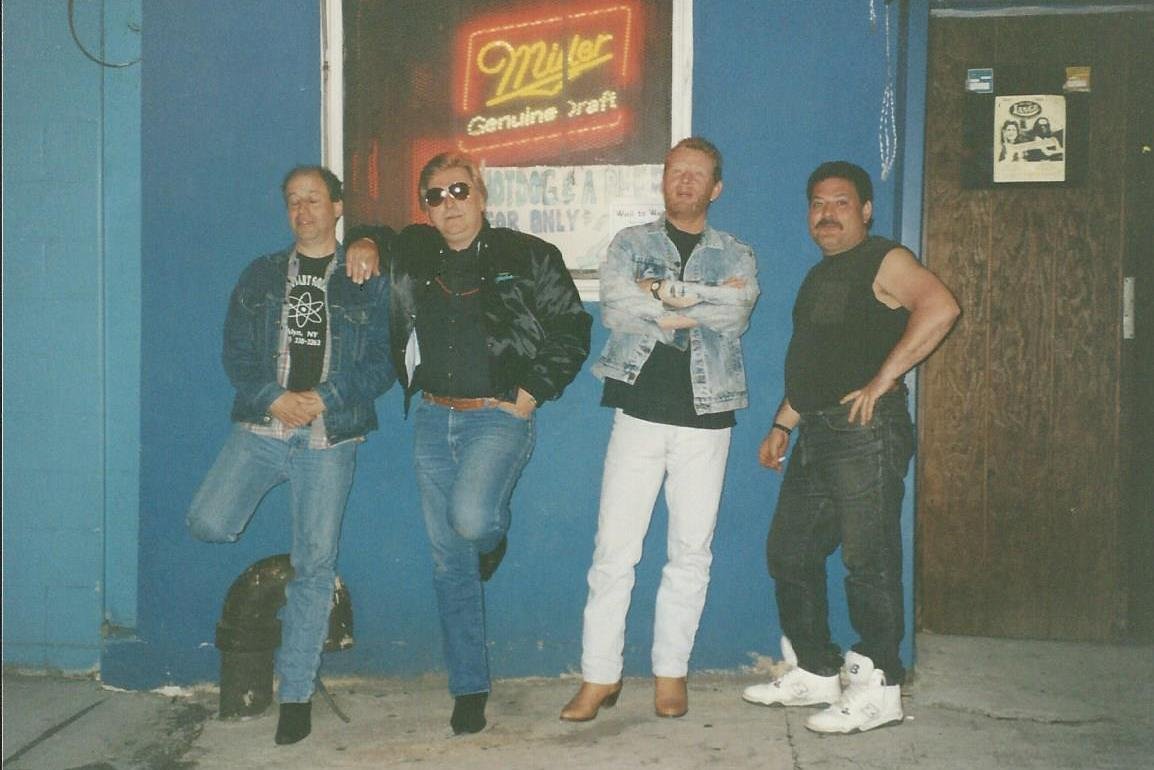 John Akhtar (not pictured) was a manager at Dan Lynch’s West bar at W38th Street and 9th Avenue back in the 1990s. Photo: Rich Johnson/Facebook
From that moment, he immersed himself in New York’s music rooms — Delta blues at Dan Lynch’s, Chicago blues, punk at CBGB, anything with soul, edge, or electricity. He became a bartender at Dan Lynch’s Hell’s Kitchen location on W38th Street and 10th Avenue, then a manager, then the one booking the bands.
He recalls it being a gritty location: “The story was that the Westies came in and they shot the register because somebody pissed them off.” The bullet holes were still there when he managed the place.
It was the swing and rhythm that attracted him, not the grit. “Music grabbed me,” he said, sweeping his hands through the air. “I was mesmerized.”
By the mid-1990s, his girlfriend (soon to become wife) Judith had picked up a Sunday night bartending shift at a supper club on W46th Street — the old Red Blazer Too, owned by Denis Carey. John would sit quietly at the back, waiting for her, nursing a drink and falling deeper into the sound of the big band that played there each week.
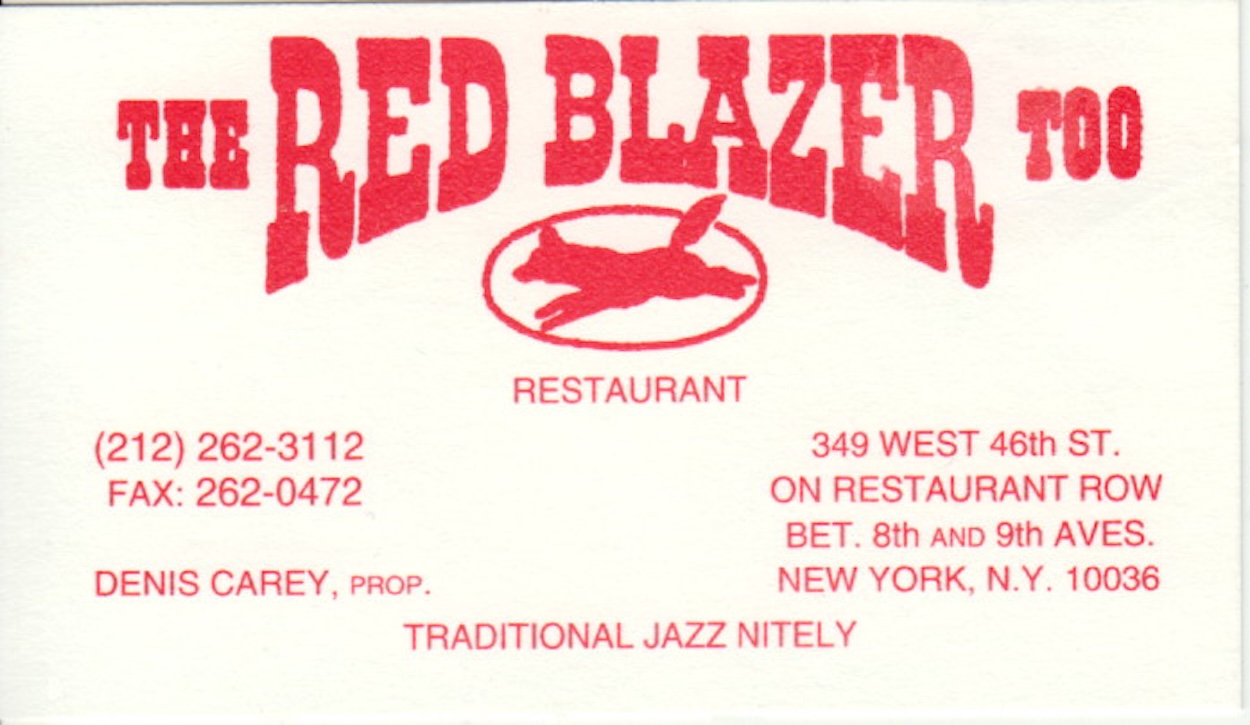
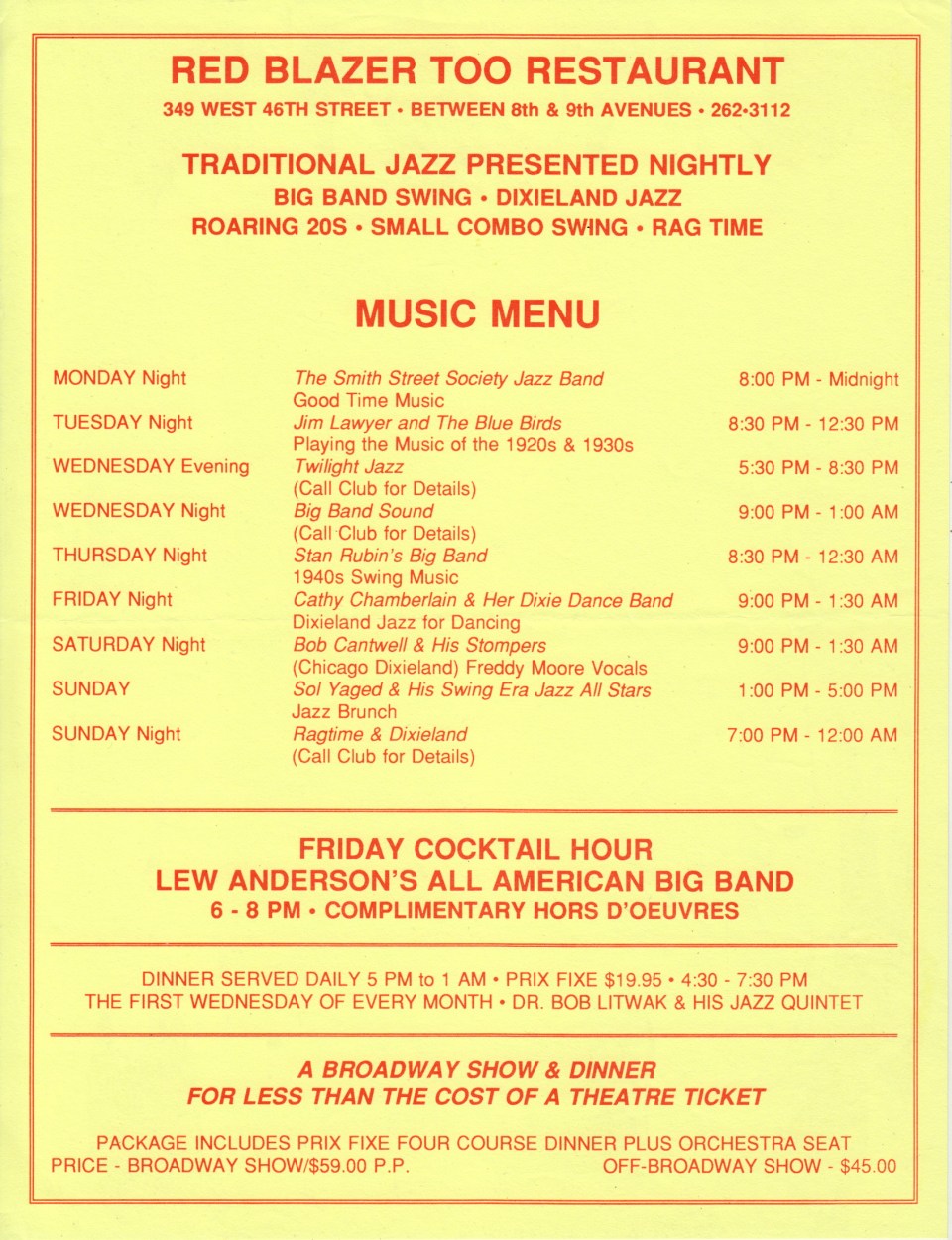
Before it was Swing 46, the venue was The Red Blazer Too, run by Denis Carey. Business Card and Menu Photos: Celia Biscoe
“This was different,” he remembered. “Not punk, not rock — swing. Duke Ellington, Count Basie, Billie Holiday. I wanted to learn everything.”
Then came the turning point. The owner didn’t want to sign a new lease after a steep rent hike. John and Judith didn’t have the capital to buy the place — not even close — but they had absolute belief. They stayed up all night at their kitchen table writing a pitch to the building owner.
“We had nothing,” he said. “But our dream was so vivid. We told him, ‘Give us a chance — you’ll never be sorry.’ And somehow… we closed the deal.” John and Judith are no longer married, but remain friends.
Swing 46 was born, and the name came to him instantly. “I love the word ‘swing.’ And it’s on 46th Street — Swing 46. It came from my heart,” he recalls.
So did the entire build-out. He redesigned the room for live music, elevating the band so audiences could see and feel the energy. He committed to big bands — 17 and 18 musicians — on nights when other clubs wouldn’t dare. And he built something more than a venue: a place where people danced.
“I never wanted anyone stiff,” he said. “I wanted people to smile. To move.”
That commitment nearly cost him the club. Under the old New York City Cabaret Laws, officials tried to shut down Swing 46 in the early 2000s for allowing dancing without the proper license.
“They wanted to fine me $4,000 a day,” he said. “I took it all the way to City Hall. Swing dancing is American heritage. I wasn’t going to stop.”
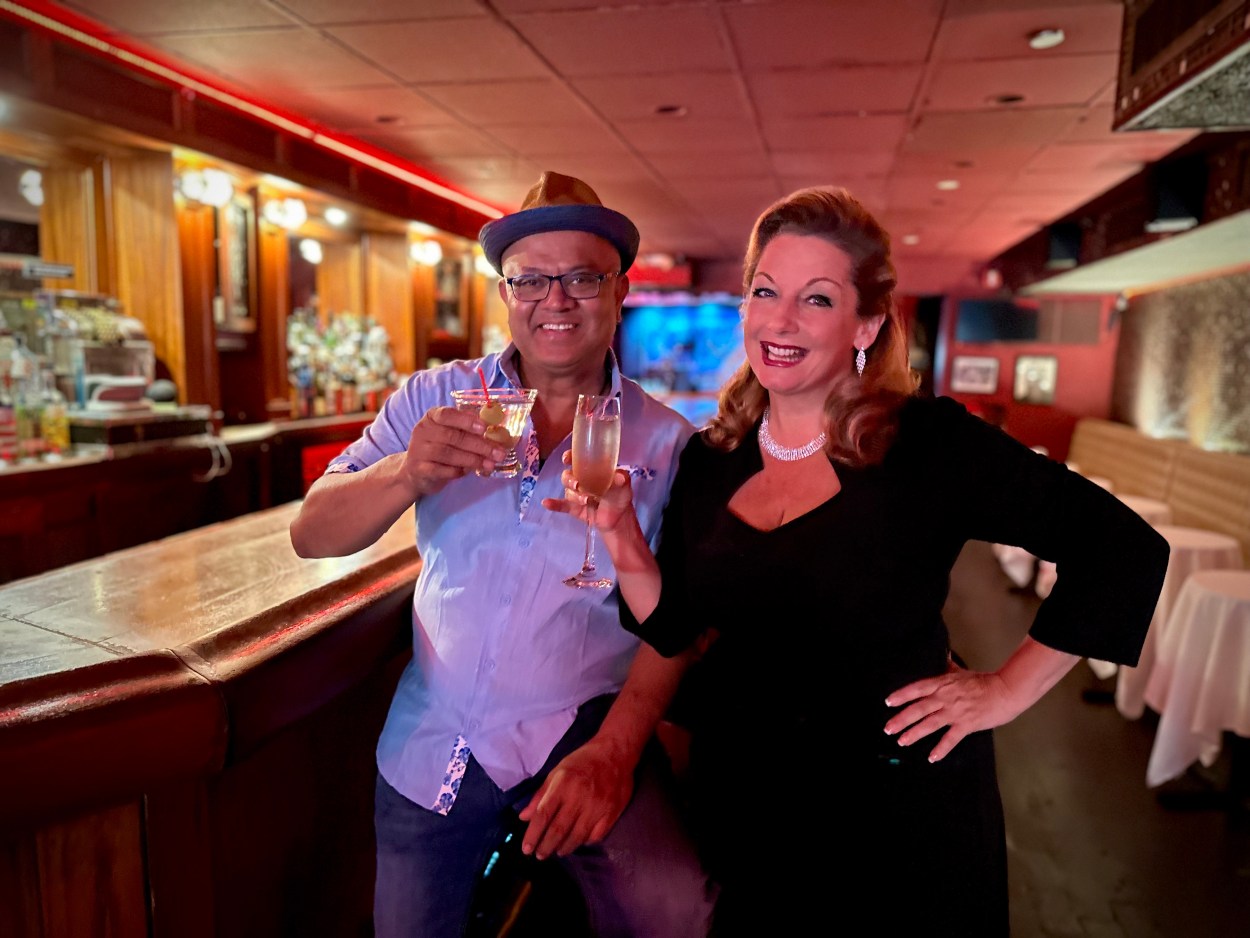 Swing 46 owner John Akhter and manager/performer Sarah Hayes raise a glass to Swing 46. Photo: Phil O’Brien
He won. Dancing stayed.
Night after night, between sets, Swing 46 has been teaching people how to swing dance — complete beginners, tourists, locals, everyone. The club grew into a community: proposals on the dance floor, marriages, couples returning 15 years later with their kids.
Swing 46 wasn’t just a jazz room — it was a living archive of America’s social dance traditions. The club became a home for Lindy Hop, the Harlem-born style co-created by the legendary Frankie Manning. Manning was a regular, and Swing 46 is where he danced for the very last time. As John told us, “Frankie loved it here — this was his favorite place.”
And then there was the tap dancing. For nearly a decade, every Sunday night, Swing 46 hosted New York’s longest-running open tap jam, first led by tap giant Buster Brown and later by Stumpy (Harold J Cromer). The stage became a gathering spot for some of the art form’s greatest names — Savion Glover, Omar Edwards, Samuels Smith, even Gregory Hines. “We’d put down the tap floor and the place would fill with tappers,” John recalled. “Their mothers would come, their friends would come — everybody wanted to see it.”
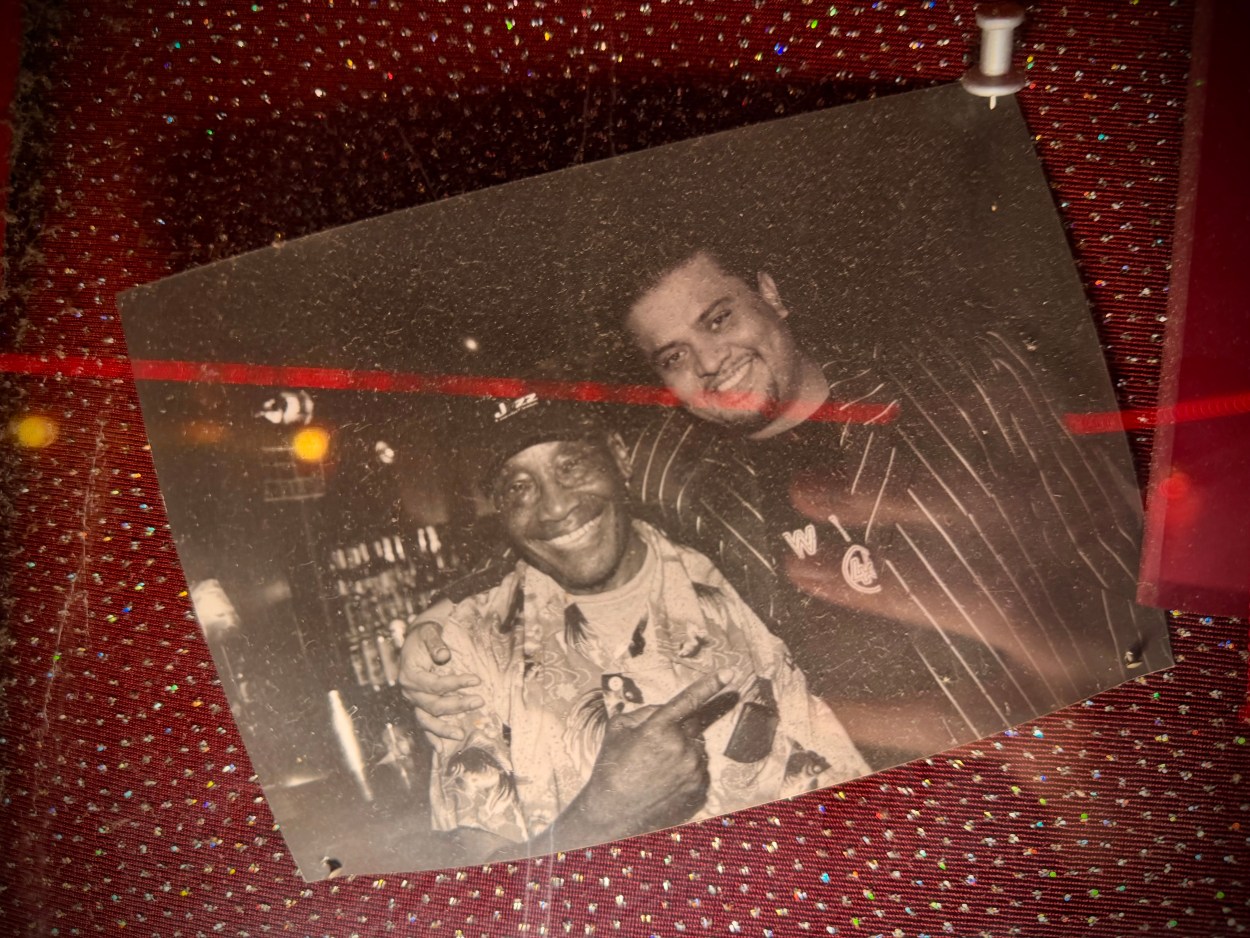 Glass cases display around the room display Swing 46 memorabilia — including this photo of Frankie Manning with a young John Akhtar. Photo: Phil O’Brien
“This place… people got engaged here. Married here. They come back decades later,” he said softly. “I’ve met so many beautiful human beings. I am blessed.”
But behind every joyful night was the burden of a one-man operation. Rent climbed from $15,000 to $36,000 a month. Costs rose. Musicians needed to be paid nightly. Insurance, inflation, Restaurant Row’s struggles — all of it fell on him.
“I’m the sole proprietor. Everything goes through me,” he said. “After 30 years, the pressure became overwhelming.”
Yet the reason he’s stepping away now isn’t financial. “It’s not about the money,” he insisted. “I just need a break.” After three decades of running a club that never truly slept, he’s ready for the things he’s put off: long trips to see his siblings in Australia, Sweden and Canada; unhurried time with family he’s barely been able to visit.
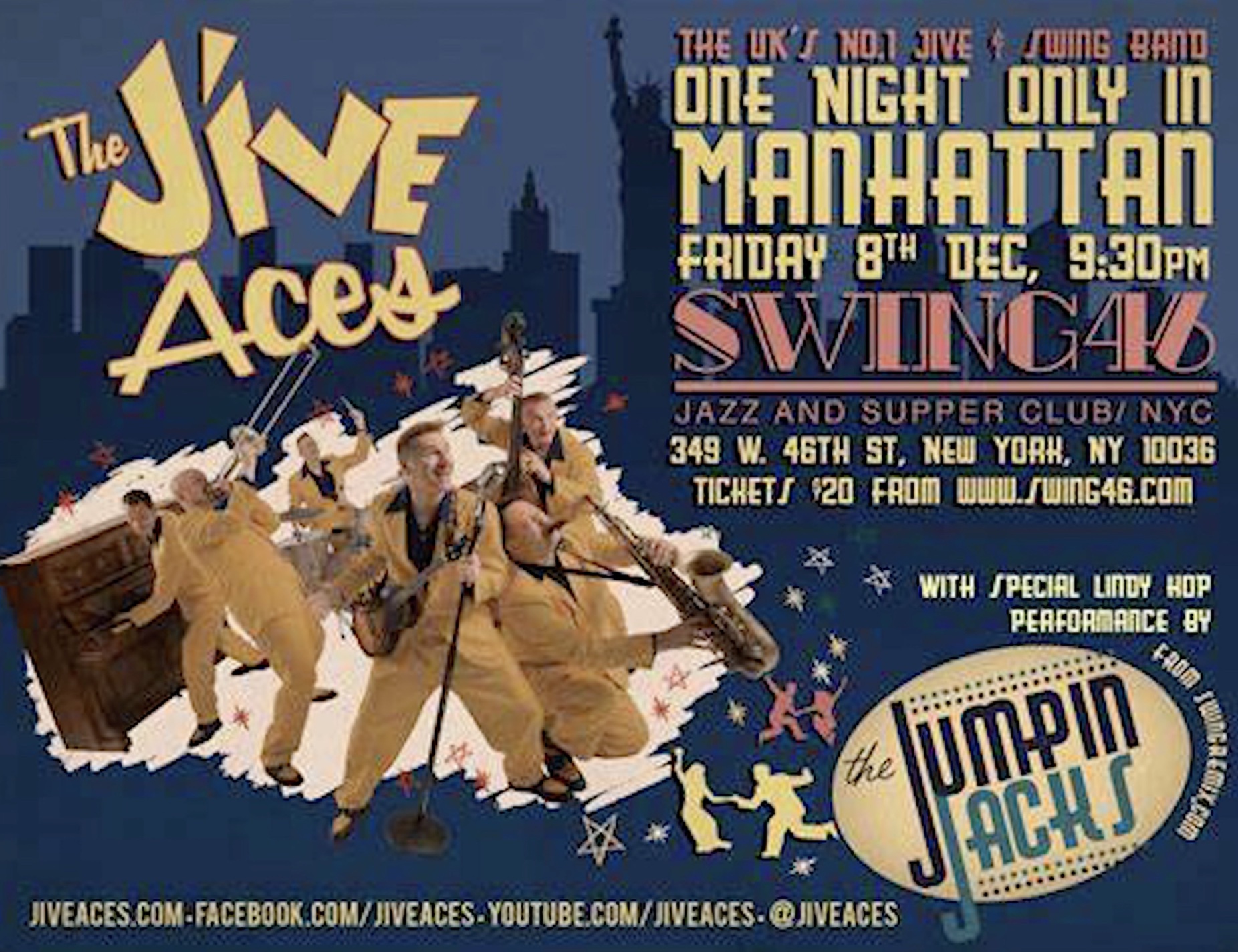
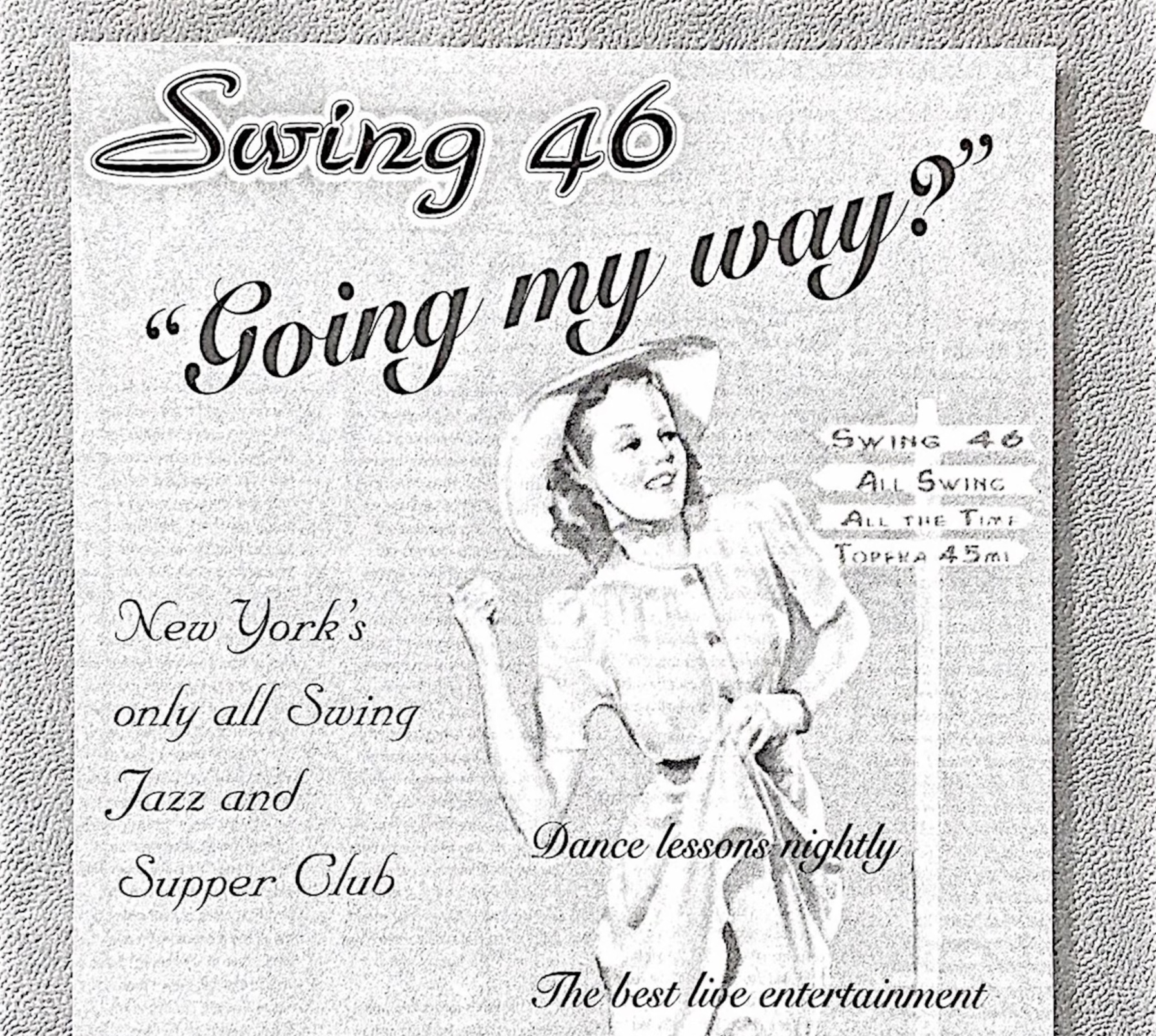
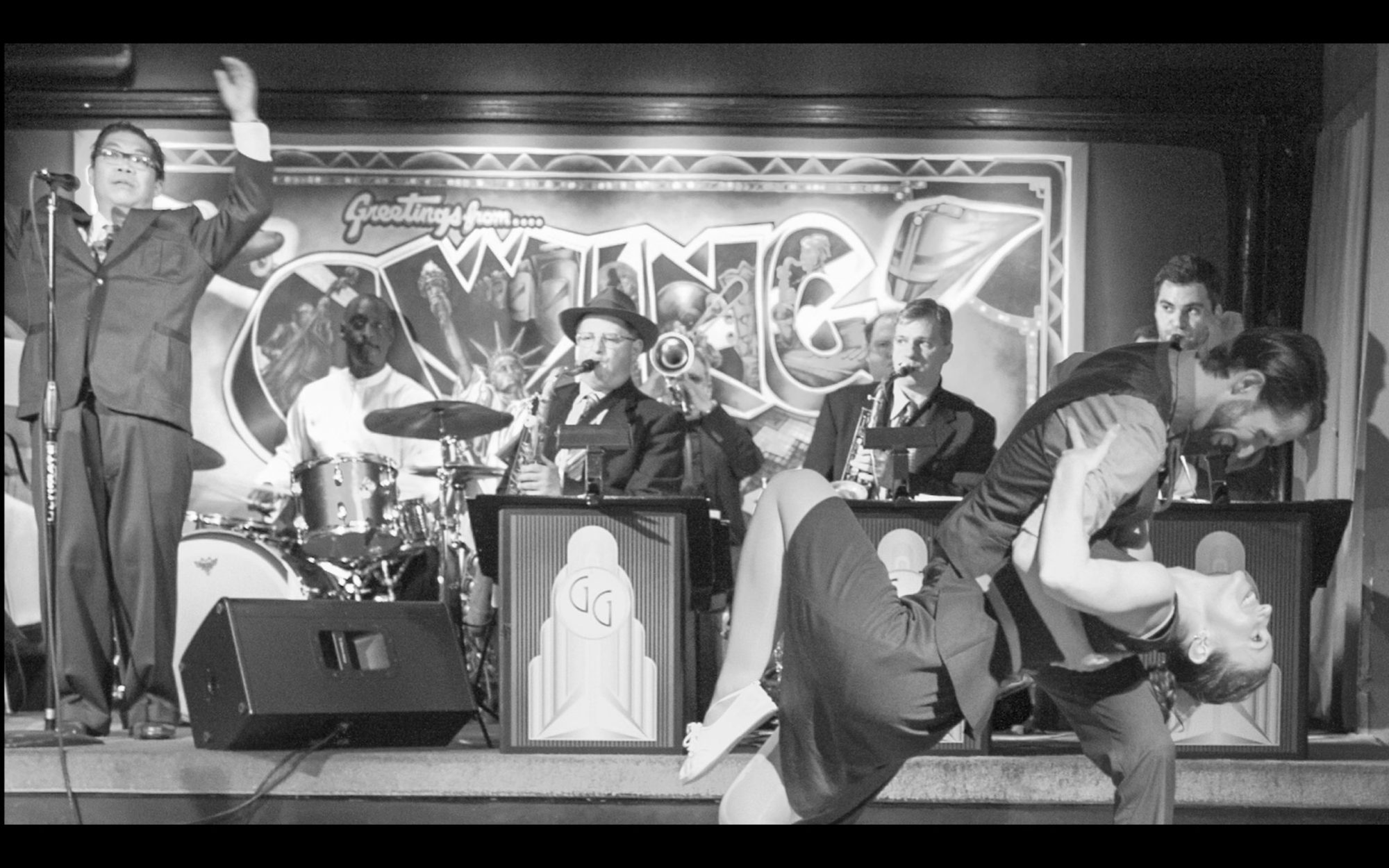
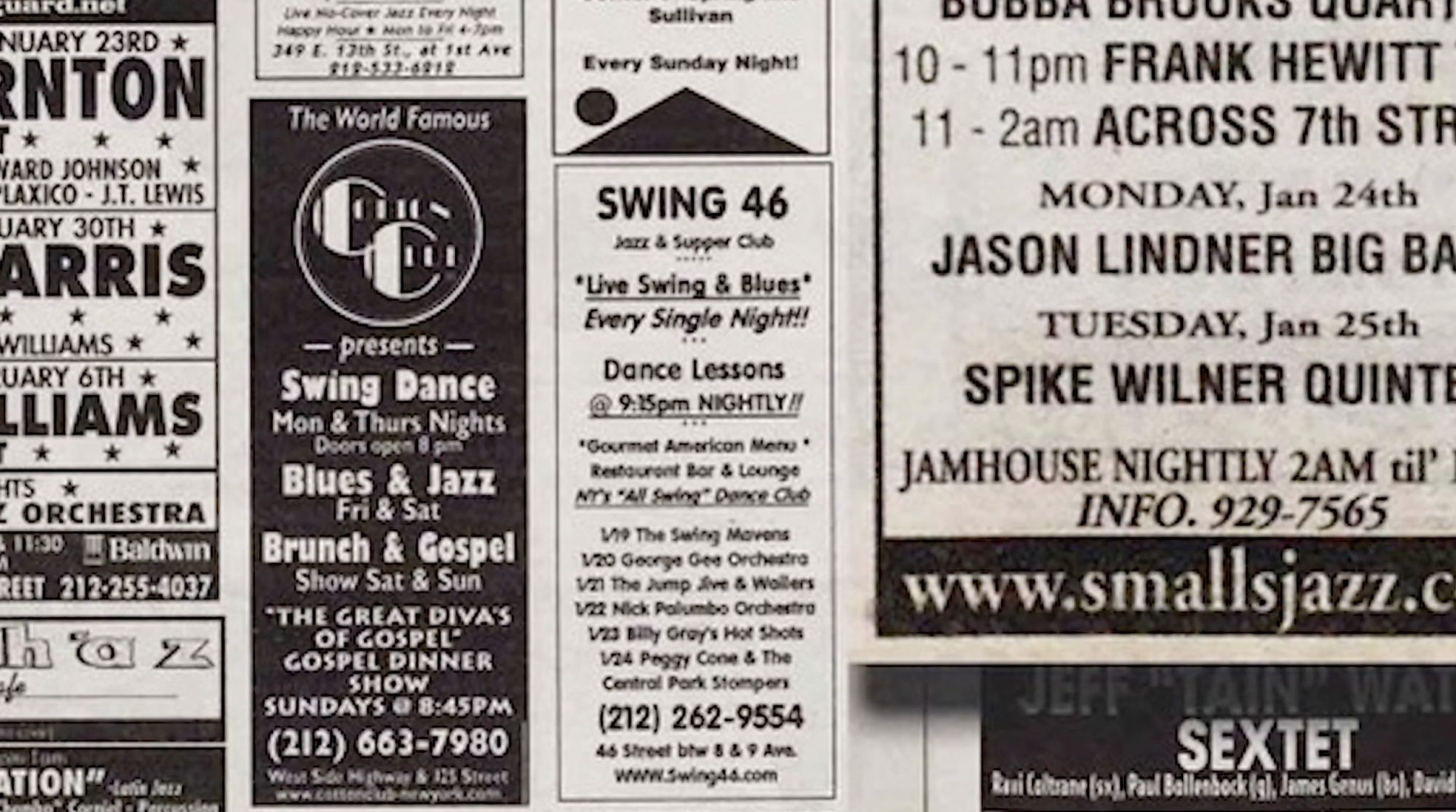
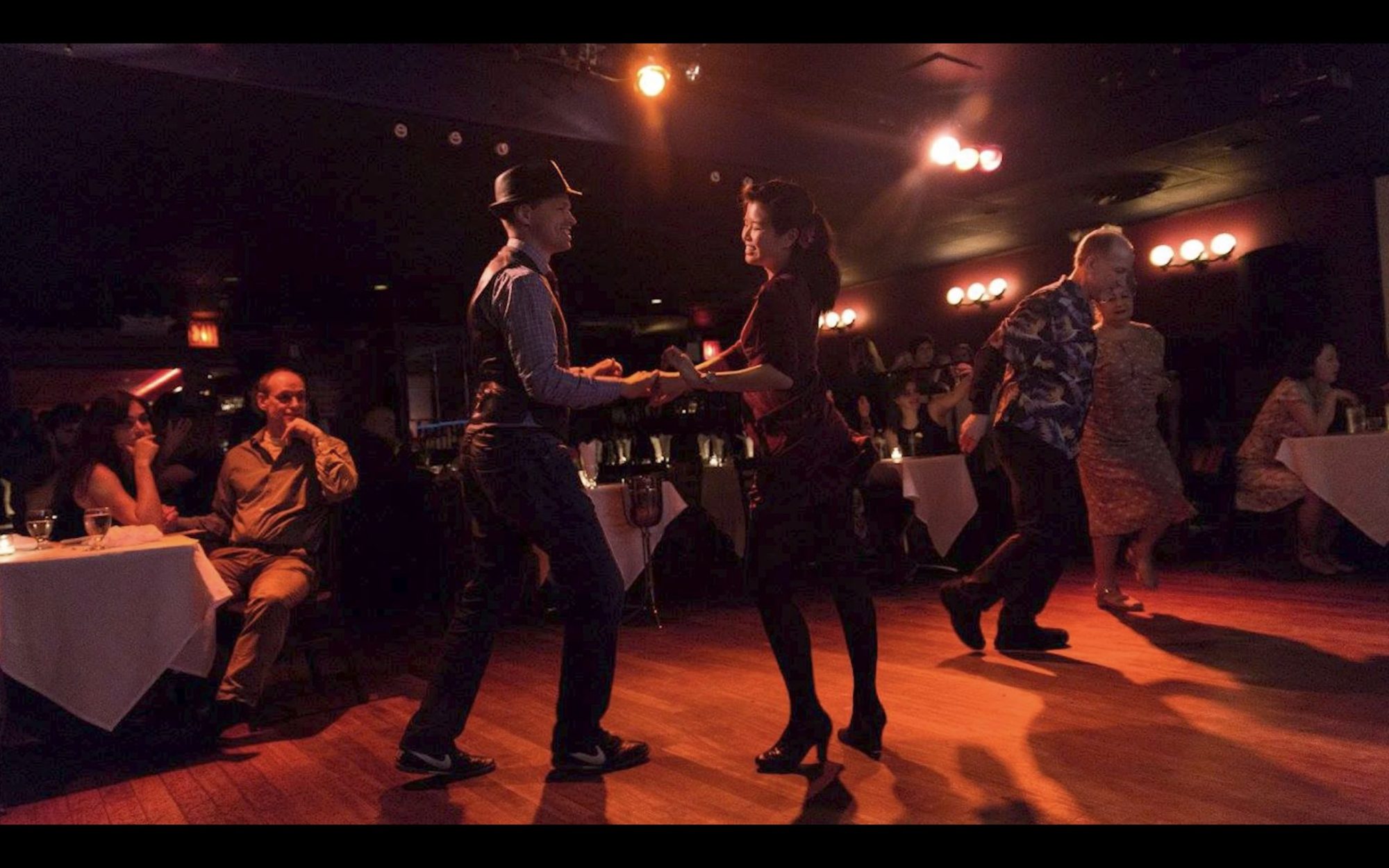
The history of Swing 46 on Restaurant Row. Photos: Swing 46: The Last Swingin Supper Club
Choosing a successor wasn’t easy. He refused to let Swing 46 become anything other than a home for music. “I wasn’t giving it to just anybody,” he said. “If someone wanted to make it a French or Italian restaurant — no. Only the right person.”
That right person was Spike Wilner. “God sent,” John said, smiling. “He will keep the music going.”
Spike will renovate the club in early 2026, reopen in the spring, and carry the torch into its next era. John will stay nearby at first — “I know where all the wires are buried,” he joked.
John’s tenure on Restaurant Row will culminate on New Year’s Eve — the final night Swing 46’s doors will open under John’s watch. It will be less a farewell than a thank-you, a room full of musicians, staff, regulars and longtime friends gathered one last time beneath the lights. “This is the finale,” John said. “Many people will be my guests. I owe them so much” — and then, finally, he will take a well-earned rest.
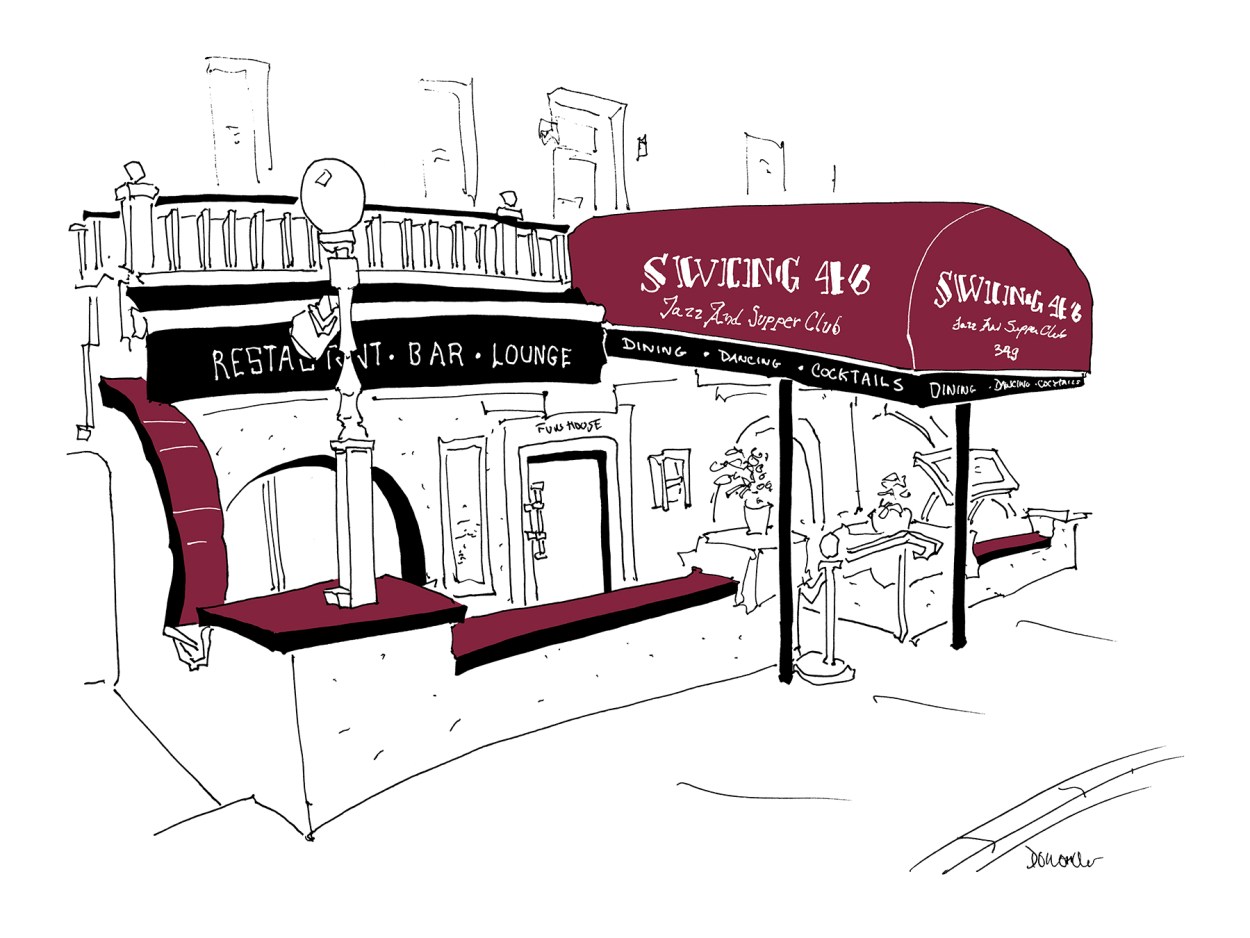 A sketch of Swing 46 on Restaurant Row. Illustration: John Donohue/AllTheRestaurants
But not retire. He’s kept the ownership of Swing 46 itself — the corporation, the name, the history.
“I’m not done yet,” John said. “In two years — at most — you’ll see me again. Bigger space, bigger bands. Seven nights a week.” He’s thinking Harlem or the Upper West Side — but Hell’s Kitchen has a long memory, and it wouldn’t be surprising if its rhythm brings him, and the music, right back here.
Swing 46 remains open through the end of the year. You can still experience live big band jazz, dancing and the club’s final New Year’s Eve under John Akhtar’s watch. For upcoming shows, reservations and ticket information, visit swing46.nyc