“Prime Minister’s Question Time,” also referred to as PMQs, is a weekly staple during House of Commons meetings. To cheers of support from their party mates or exaggerated groans and heckling from opponents, elected officials are invited to question U.K. Prime Minister Keir Starmer.
Can you picture a variation of that here in Scottsdale?
Mayor Lisa Borowsky can.
On Dec. 3, hours after a “bloc” vote that changed some public comment and other Scottsdale City Council procedures, Borowsky sent out an email titled “Bait-and-Switch: How the Scottsdale City Council majority betrayed the public trust.”
She lashed out at the bloc – representatives Adam Kwasman, Barry Graham, Kathy Littlefield and Jan Dubauskas – for eliminating an open public comments section at the beginning of meetings and other moves.
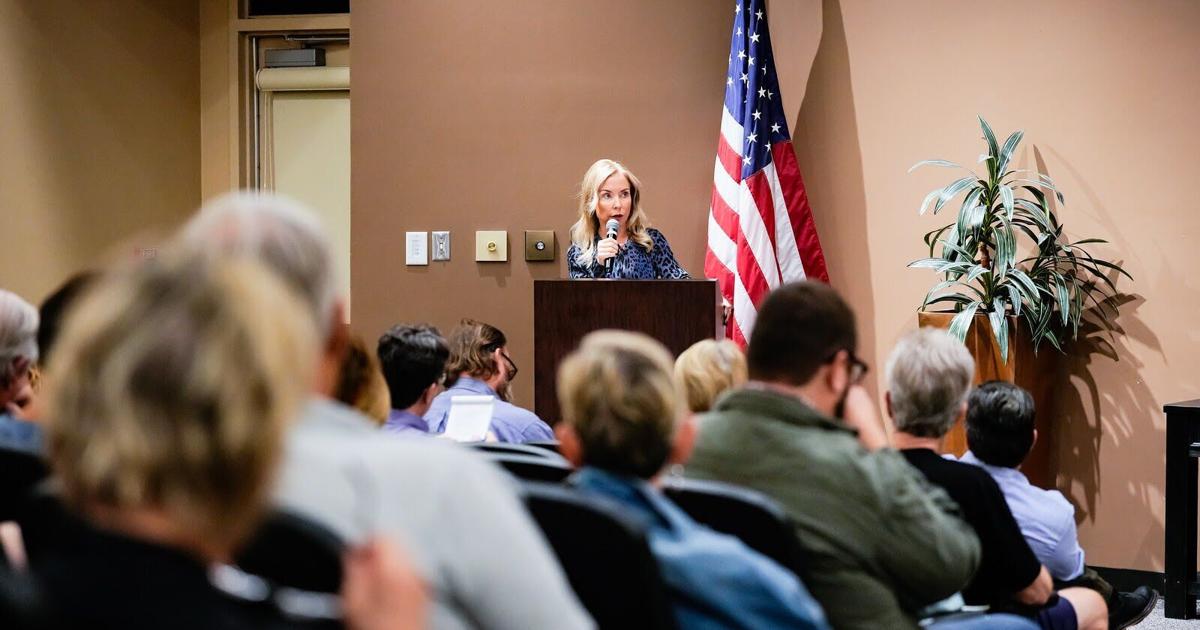
Using herself as an example of free speech promoting, Borowsky pointed out the two town halls she held this year, “to engage with residents and hear what matters to them.”
She then took it a few steps further:
“In 2026, I will be relying on the City Charter authority, vested upon me as Mayor, to hold special council meetings whereby our residents are invited to openly engage with their elected council members, akin to the British House of Commons PM question time.”
Kwasman’s response?
“If the mayor wants to participate in a question-and-answer period akin to the British House of Commons,” he said, “I suggest she move to London.”
Insisting he is focused on issues important to Scottsdale residents, Kwasman added, “I will not be participating in the mayor’s political circus.”
Asked about the mayor’s question-and-answer idea, Graham – specifically accused by Borowsky of “political gamesmanship” in the public comments changes – was more diplomatic.
“We respect the City Charter and her authority as presiding officer,” Graham said. The first-term councilman is running for reelection in 2026.
Mayor v. bloc
Borowsky took particular aim at Graham and company for eliminating a public-comments section that has been a long-standing anchor at the beginning of Scottsdale City Council meetings.
The “open” or “non-agendized items” public comments section at the end of meetings will remain.
Reducing public comment open periods from two to one was part of a staff presentation by Luis Santaella, the interim city attorney, and City Clerk Ben Lane.
They also recommended reducing speaker time from three minutes to two minutes and the allowed number of speakers from 10 to eight – but the Graham-led bloc rejected both of those.
Councilwoman Maryann McAllen received backing from Borowsky and Councilwoman Solange Whitehead on her motion to have a study session on Santaella’s proposals – but the bloc passed on that.
Borowsky was the lone vote against requiring citizen petitions to be submitted two business days in advance.
Borowsky ranged from snappy to sarcastic on another procedural change: a proposal from Santaella that “if the Mayor is going to be absent from the city for more than 72 hours or otherwise unavailable, the mayor shall notify the City Council and charter officers of the mayor’s unavailability and/or absence.”
“I don’t think the mayor should have to inform anyone if she’s out of town for 72 hours,” Borowsky complained.
“Should I get an ankle bracelet next, and, you know, an air tag so that everyone knows my whereabouts?”
Borowsky then snidely suggested the bloc is “very hell bent on showing we’re all equal,” and wondering why she was being singled out.
According to Santaella’s introductions, the updates “are based on feedback from councilmembers and city staff” – he declined to tell Borowsky who brought up the idea of language for the mayor’s absence.
With input from Kwasman, Dubauskas made a motion to amend the changes to “absent from the state” for 48 hours and adding that City Council members should also notify the city clerk “of their unavailability or absence.”
That motion passed by – the usual – a 4-3 vote.