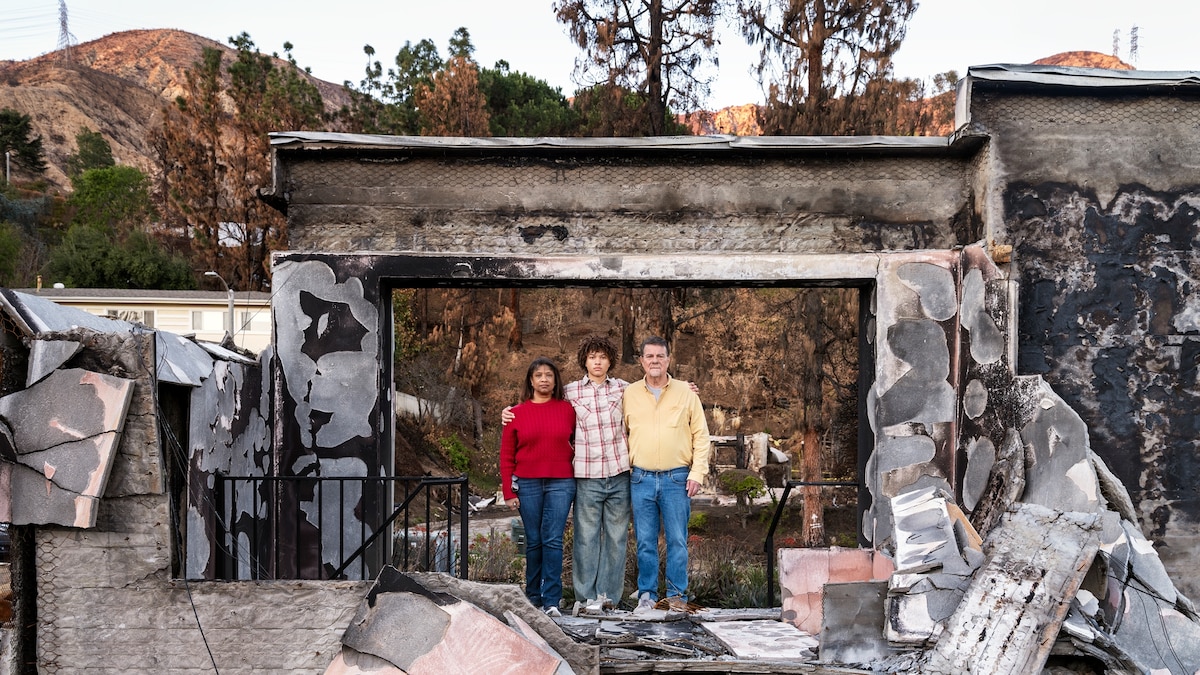
In the era of megadisasters, language fails us. We reach for an adjective—the worst storm, the deadliest flood, the largest wildfire—but even the superlatives come up short. What words, after all, can convey the scale and ferocity of the fires that devastated two very different Los Angeles communities one year ago? The lead-up to Southern California’s winter had been the driest on record. The Santa Ana winds were topping out at nearly 100 miles an hour. On the morning of January 7, those winds began fanning a brush fire on the bluffs above the affluent Pacific Palisades neighborhood, and within an hour, towering flames were consuming homes. That evening, 26 miles away, another wildfire started spreading from Eaton Canyon into the unincorporated community of Altadena, prompting frantic evacuations throughout the night.
Where words feel most inadequate is in articulating the loss—even for those grieving only homes and possessions and not loved ones. “It’s just stuff” buoys us only until we remember that among the ashes were the last existing photos of a parent long passed. “It can all be replaced” ignores the irretrievable sense of continuity that’s gone with the hand-me-down toys or the heirloom necklace. And how to express the loss of community? The Eaton fire alone destroyed more than 6,000 homes in Altadena, causing billions of dollars in damage. But those numbers don’t describe the desolation of a neighborhood, the rupture of bonds forged over decades or generations. (Photos show apocalyptic scenes as wildfires rage across Los Angeles.)