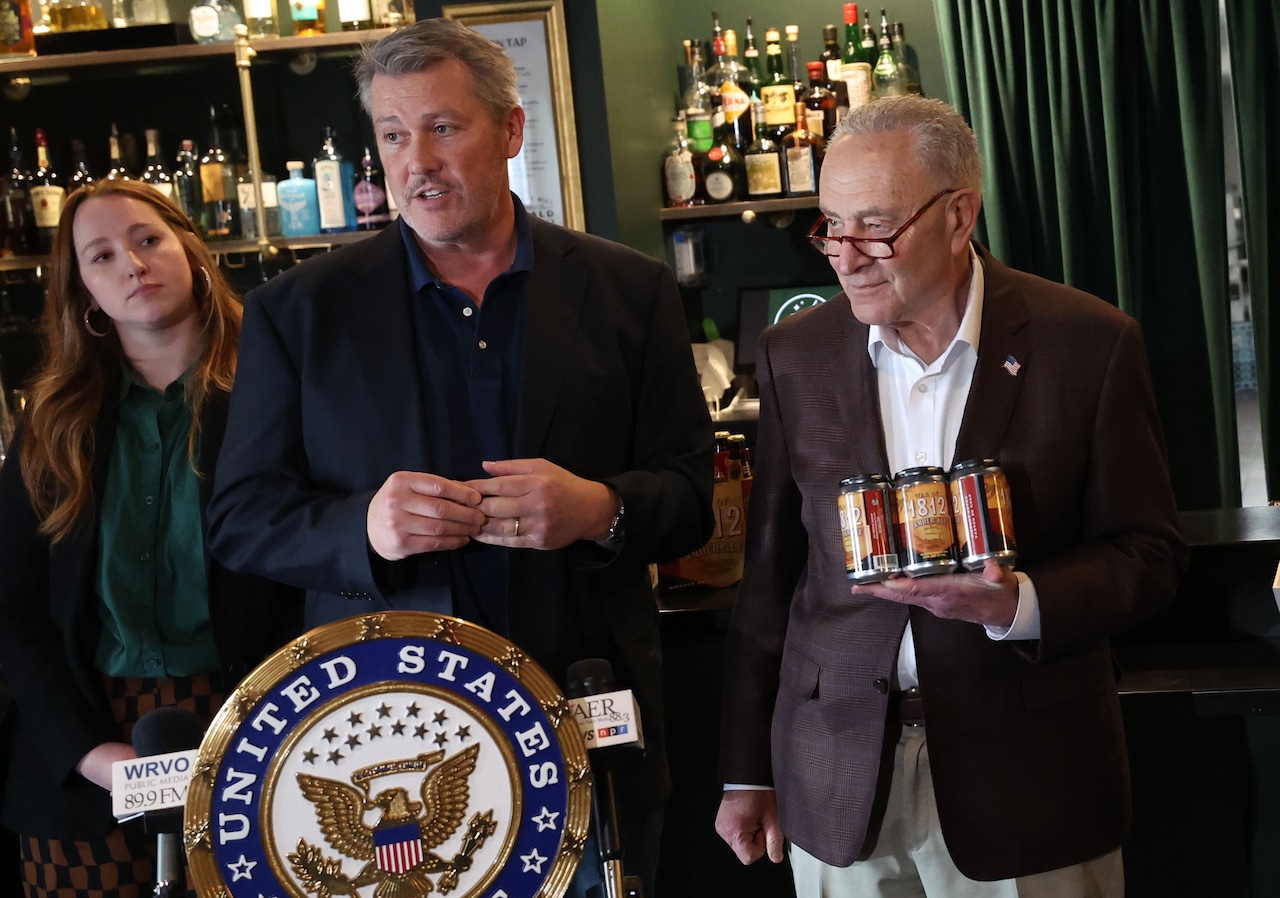
Washington – Each year for 27 years, U.S. Sen. Charles Schumer has heard from New Yorkers about their struggles, fears, hopes and successes as he visited each of the state’s 62 counties.
But after completing his annual statewide tour this week, Schumer said this year stood out for one reason: He found an unprecedented level of anxiety in every corner of the state about rising prices for basics like food, housing, health care and energy.
“This year was different than in the past because the cost of living – the affordability crisis – was just dominant,” Schumer told syracuse.com. “You had people worrying in 2008 during the financial crisis about keeping their jobs. But this was much more about paying the bills.”
Now Schumer plans to take what he learned – especially from dozens of visits to working-class families in Upstate New York – to lay a foundation for a national agenda that he believes will help Democrats win the 2026 midterm elections.
Schumer, the Senate Democratic leader, met with his leadership team Wednesday in Washington to ask them to come up with a series of initiatives to lower costs and counteract the tariffs imposed by President Donald Trump’s administration.
Schumer said his party will unveil details of an affordability agenda in the weeks ahead focused on five key areas – lowering the cost of health care, energy, housing, groceries and Trump’s tariffs.
After listening to hundreds of Upstate New Yorkers, the 75-year-old said he knows how Democrats can chart a new path forward politically.
He especially wants to address the stubbornly high cost of food, which disproportionately hurts working-class households and people dependent on SNAP, the federal food assistance program.
In a May visit to Central New York, Schumer heard warnings that local families struggling with food prices would be hit hard by Trump’s plan to cut nearly $200 billion over 10 years from SNAP, the federal food aid program for low-income Americans. The cuts are due to take effect in March.
Schumer said about 20,000 of the 108,000 people in Central New Yorkers who depend on SNAP could lose their aid. Democrats in Congress introduced a bill just before Thanksgiving that would reverse those cuts.
Schumer’s visit in May marked a rare time when local faith leaders, farmers and food pantry operators spoke out on a political issue.
The event also stood out because it took place in Oswego County, one of the reddest counties in New York where Trump won by wide margins in all three of his presidential elections.
Now Democrats will try to flip some of those Trump voters in House and Senate races across the nation by showing them that their party has a better plan than Republicans to address the cost of living.
Schumer said it’s clear from his travels across New York that people are desperate for some sort of relief.
He said a man he recently met in the Hudson Valley “told me he’s sitting at the table figuring out whether he should pay his mortgage and not get health care, or pay health care and lose his home. These are stories you hear all over the place.”
Democrats have pushed in Congress to extend for three years the Affordable Care Act subsides that expire Dec. 31. Without a renewal, health insurance premiums for millions of Americans are expected to spike in 2026.
Schumer said he also worries that some rural hospitals in Upstate New York could close or lay off employees because of steep Medicaid cuts included in Trump’s “Big Beautiful Bill Act.”
Schumer is pushing to pass the Protecting Health Care And Lowering Costs Act, which would repeal the Medicaid cuts and extend the Affordable Care Act tax credits.
He also wants to restore clean energy tax credits eliminated by Trump and Republicans in Congress. Those cuts included a 30% tax credit that served as an incentive for Central New York homeowners to install residential solar panels, heat pumps or energy storage equipment and lower their energy bills.
Separately, Democrats are pushing back on Trump’s tariffs, which have costs New York consumers an extra $4,200 per household this year, according to a state report that examined the impact of the tariffs.
U.S. Sen. Kirsten Gillibrand, D-N.Y., has introduced a bill with 14 colleagues that would halt the tariffs and provide a tariff refund to small businesses.