Heshmatollah Falahatpisheh said on Tuesday that Iran should urgently clarify the legal status of more than $2 billion in claims against Venezuela, warning that experience from Syria showed how quickly assets could become unrecoverable after a sudden political collapse.
Writing on X, Falahatpisheh said lessons from Syria showed the need to settle Iran’s outstanding claims with President Nicolás Maduro’s government while conditions allow.
His remarks come against a backdrop of sharply rising tensions between Washington and Caracas.
On Tuesday, US President Donald Trump ordered what he called a “total and complete blockade” of sanctioned oil tankers entering or leaving Venezuela.
The move is part of a broader US pressure campaign targeting Maduro’s main source of revenue and follows the seizure of a sanctioned tanker off Venezuela’s coast last week.
While Falahatpisheh’s warning was framed by the experience of Syria – where the scale of Damascus’s debt to Tehran only became public after the fall of Bashar al-Assad, estimated by Syrian officials at around $30 billion – his comments coincided with Trump’s latest order on Venezuelan oil shipments.
 Tehran defends massive spending in Assad’s Syria amid calls for restraint
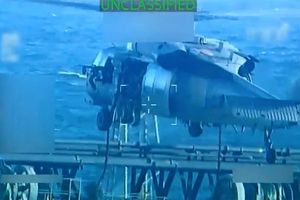 US seizure of tanker off Venezuela may squeeze Iran’s shadow oil trade
Iran and Venezuela, both under heavy international sanctions, have built extensive but opaque economic ties over the past two decades.
Public records do not clearly show how much Iran has invested in Venezuela, the exact size of Caracas’s debt to Tehran, or the value of Iranian assets in the country, according to an article by Iranian outlet Fararu last week.
Iranian lawmakers have previously flagged specific claims. In August, MP Ahmad Bigdeli said Venezuela owed about $1 billion to Iran’s national oil company, urging Iran’s oil minister to explain why the debt had not been recovered. No official update has since been provided.
Iran has launched or participated in a range of projects in Venezuela, many of which have struggled.
A large Iranian-backed supermarket in Caracas, Megasis – opened in 2020 and linked to Iran’s Etka retail chain – has faced logistical problems due to infrequent shipping and supply disruptions, according to Iranian business figures cited by Fararu.
Joint automobile production, launched in 2006 with Iran Khodro and Saipa assembling Samand and Pride models in Venezuela, was halted in 2015 after years of losses and unpaid deliveries, Iranian media have reported. The project was revived in 2023 during a visit by former president Ebrahim Raisi, though analysts again questioned its economic viability.
Iran has also announced agricultural, housing and industrial ventures, including claims in 2021 that Venezuela had allocated up to one million hectares of farmland to Iran for overseas cultivation.
Officials have not clarified whether those plans are active or how much capital was committed.
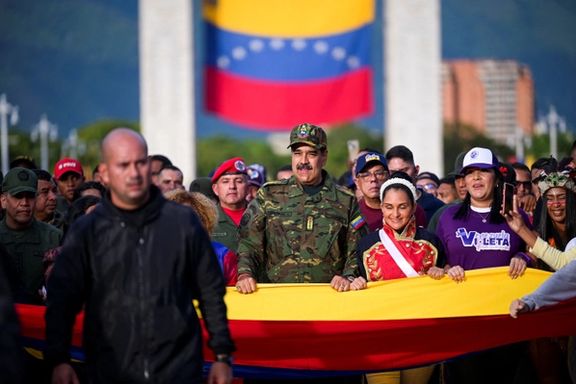 Venezuela’s President Nicolas Maduro marches in a rally against a possible escalation of US actions toward the country, in Caracas, Venezuela, November 25, 2025.
Oil, gold and sanctions pressure
Energy cooperation has been central to the relationship. Iran has supplied fuel, refinery services and technical assistance to Venezuela, while Western media and sanctions authorities have alleged barter arrangements involving oil and gold.
Bloomberg reported in 2020 that Venezuela transferred around nine tons of gold to Iran in exchange for fuel – a claim both governments have framed as legitimate barter.
Since US sanctions were imposed on Venezuela in 2019, much of its oil – including shipments involving Iranian or Russian-linked vessels – has relied on a so-called shadow fleet to evade restrictions.
Trump’s latest order has already pushed oil prices higher on expectations of reduced Venezuelan exports, Reuters said, though enforcement mechanisms remain unclear.
Analysts warned that a prolonged blockade could sharply cut Venezuelan output, with potential spillover effects for Iran, which has used Venezuela as a distant logistical and commercial partner to manage sanctions pressure.
In an analysis for Iran International, Shahram Kholdi wrote earlier this month that Venezuela has functioned as a strategic “distant flank” for Tehran, facilitating oil swaps, financial channels and political support beyond the Middle East.
But expanded US military deployments, legal actions and sanctions enforcement are tightening scrutiny on those networks.
Billions for Iran’s nuclear program
Further allegations have added to the sensitivity. Spain’s ABC newspaper reported this month – citing leaked documents now under US review – that Venezuelan state mechanisms may have funneled billions of dollars toward Iranian entities over nearly two decades, including groups linked to Iran’s nuclear and military programs.
The claims, which Caracas and Tehran have not publicly addressed, remain unproven but are being examined by US authorities, according to the report.
“Projects and funds explicitly linked to Iran total about $4.69 billion, with an additional estimated $3.13 billion allegedly diverted indirectly from a China-Venezuela fund. The combined total about $7.82 billion – represents money that investigators say reached Iran’s state ecosystem directly or indirectly through Venezuela,” read a report by The Latin Times.