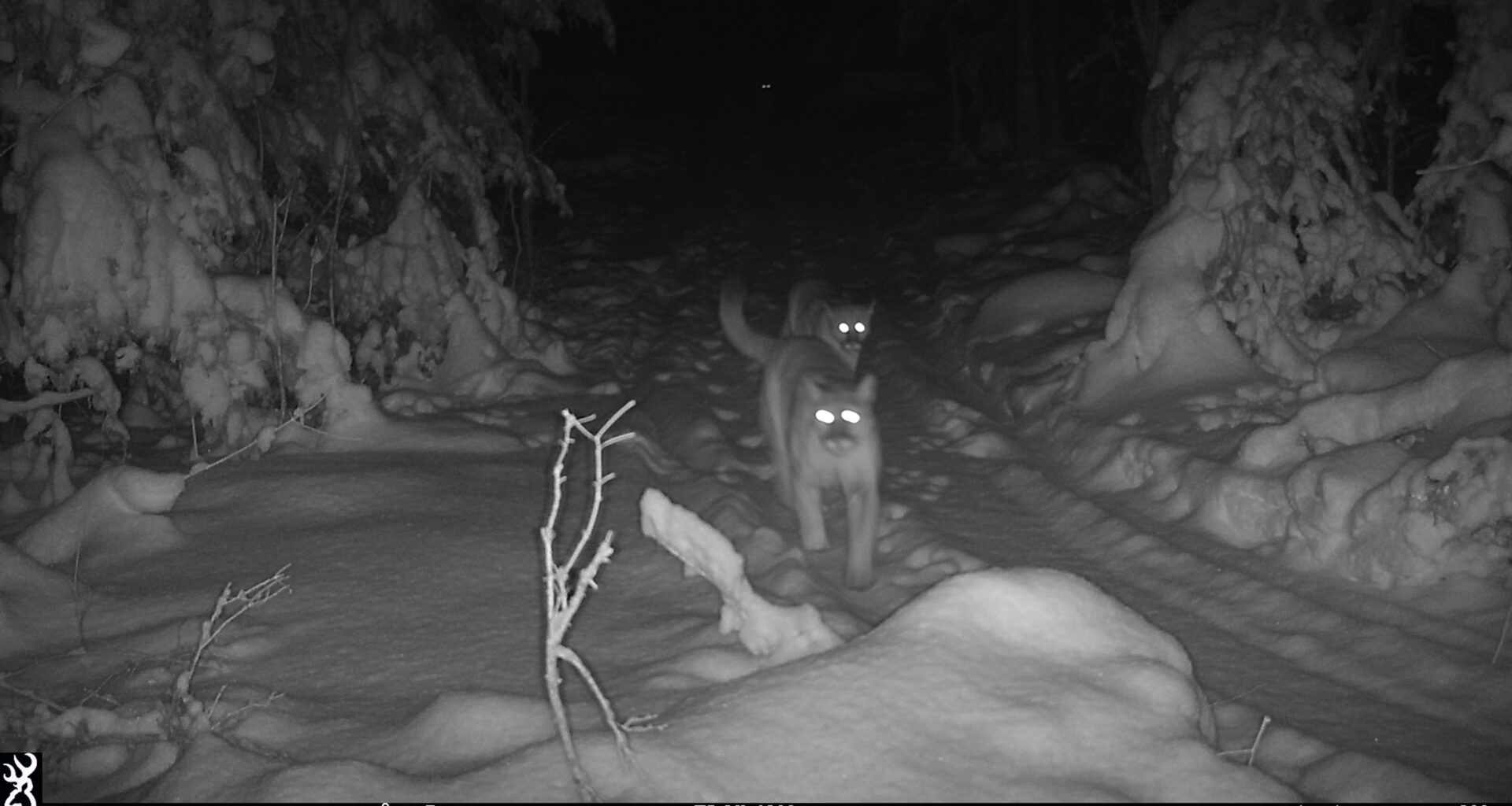
ONTONAGON CONTY — The Michigan Department of Natural Resources confirmed the existence of a female cougar and her two cubs in Ontonagon County on Dec. 6, 2025, through a verified trail camera photo.
The sighting marks the first verified reproduction of cougars east of the Mississippi River in more than 100 years.

The adult cougar and her cubs were last documented in early March when they were just two months old. Concerns regarding the cubs’ survival arose due to their absence from trail cameras during the intervening nine months.
The newly verified photo, received from a private landowner, was enhanced to confirm the adult with two juvenile cougars down a snowy trail.
The sighting represents a significant moment for cougar conservation, said Brian Roell, a biologist with the DNR.
“This is a historic confirmation for Michigan since it is the first time in more than 100 years that verified cougar reproduction has occurred east of the Mississippi River and possibly even east of the Missouri River.”
Cougars were historically native to the state but were largely eliminated by the early 1900s due to extensive hunting. Since 2008, the DNR has recorded approximately 168 cougar sightings, primarily in the Upper Peninsula, although these often involve the same individual animal being reported multiple times.
Roell explained that cougar kittens typically stay with their mother for about two years.
“The kittens’ chances of survival are actually pretty high because just like bears, cougars invest a lot of their energy into their young,” Roell said. “So these kittens will stay with their mom through this winter and possibly even into next winter. They already have a leg up, seeing as how they’ve been with her for a year now.”Despite the recent sighting, Roell expressed curiosity about the cubs’ whereabouts over the prior nine months, stating, “The interesting thing is, where were they for nine months?” This indicates a gap in documentation that DNR hopes to investigate further.
The DNR emphasizes the fragility of cougar populations in Michigan, as they are listed as endangered mammals.
“This isn’t an animal that is ever going to become very numerous,” he said. “They’re going to remain rare on the landscape regardless of whatever happens with them here in Michigan.” He warned that human pressure in the area could lead to negative consequences for the cougars, including abandonment of their young.“
Roell also highlighted the necessity for the public to respect the natural habitat of cougars.
“Too much human pressure can also trigger the female cougar to abandon her cubs. As with all wild animals, we’re asking the public to respect their habitat and allow them to live naturally in their home.”
Ongoing monitoring of the cougar population and its habitat in Michigan will continue, with hopes for further documentation of cougars in the state.
The DNR will maintain its efforts to ensure that the public adheres to conservation regulations to protect these endangered animals.