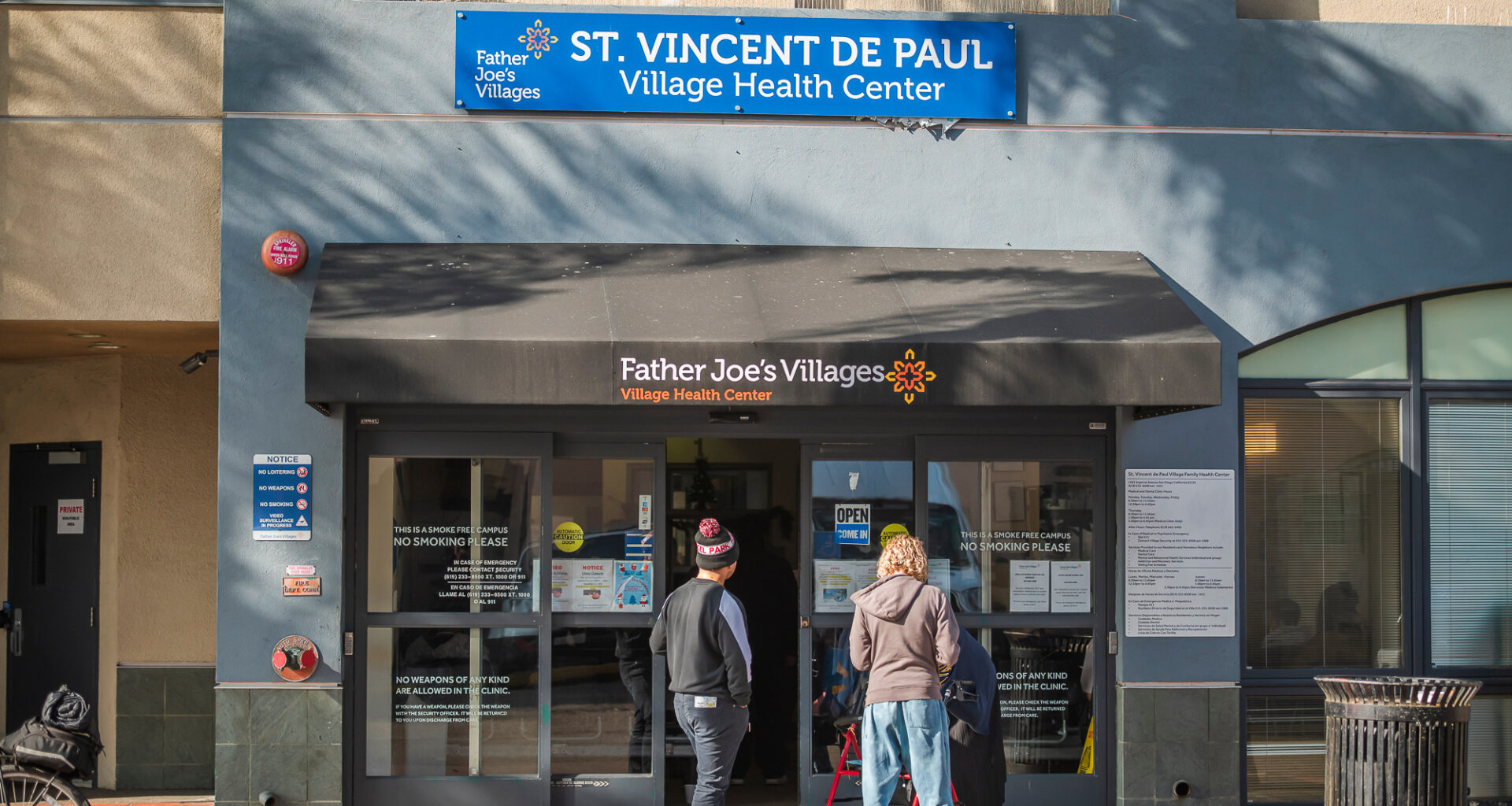
At the height of San Diego’s deadly fentanyl crisis, low-income and homeless San Diegans desperate to stop using the drug had to essentially win the lottery if they wanted to quickly get into detox. Many never made it there.
In early 2023, there were only about 70 county-contracted detox beds for the more than 856,000 San Diegans with Medi-Cal insurance. None were in the city of San Diego. Attempts to add beds were floundering as opioid deaths surged.
By late 2023, leaders at Father Joe’s Villages, a longtime homeless service provider, considered what they could do. They’d seen my Voice of San Diego stories featuring testimonies and numbers that matched their own staff members’ heart-wrenching firsthand experiences. They had a downtown building. They’d need to raise money – and take many leaps of faith – but maybe they could do it.
By early 2024, Father Joe’s Chief Strategy Officer Josh Bohannan said his team was committed: “Nobody’s building it so we’re just gonna do it.”
In September, Father Joe’s opened a 44-bed detox facility at its East Village campus.
This is a story about what it took to make that happen.
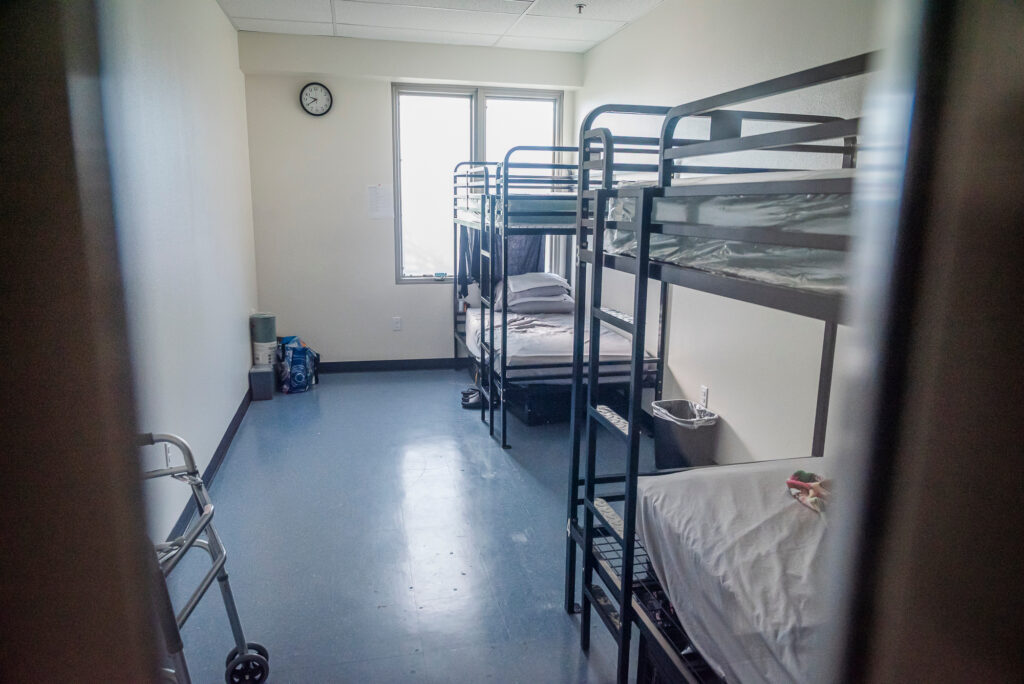 Beds for patients of Father Joe’s Villages Detox Program located in the Paul Mirabile Center building in downtown San Diego, on Tuesday, Dec. 16, 2025. / Vito Di Stefano for Voice of San Diego
In 2022, the county reported nearly 1,200 overdose deaths. As the fentanyl crisis raged on, homeless San Diegans were hit disproportionately hard. Staff at Father Joe’s and other homeless-serving organizations constantly revived people with the drug naloxone.
Yet people who wanted help to start their recovery rarely got a bed.
There weren’t enough. Providers couldn’t deliver openings quickly enough. And people struggling with addiction often felt like they had to keep using drugs while they waited – the physical consequences of abruptly stopping opioid or methamphetamine use can be severe. Excruciating weeks-long waits weren’t unusual for people with Medi-Cal insurance who kept trying to get a bed.
I started documenting San Diego’s detox shortage in early 2023. In late October 2023, I wrote about three providers desperately trying to open more detox beds and facing significant roadblocks.
Exhibit A: McAlister Institute, seemingly buoyed by a $12 million commitment from the city and the county, had decided against 44 locations. They just wouldn’t work.
“People are dying on the streets while we are doing everything we can, and it still doesn’t feel like enough,” McAlister’s leader, Marisa Varond, told me at the time.
Bohannan of Father Joe’s said his team started exploring what it could do. Unlike McAlister, Father Joe’s owned downtown buildings. It had a campus that included a federally qualified health center. Right next to that health center was a city-contracted shelter.
Could Father Joe’s provide detox beds?
“Doing this is a financial jump. It’s a leap of faith,” Bohannan said. “The (Voice) stories helped build conviction in us.”
Bohannan said his team spent about six months internally evaluating the idea while publicly beating the drum on the need for more resources for people struggling with addiction. They knew it would be risky. They’d have to dip into reserves and raise money. They’d have to get a state license, hire staff and get support and approval to serve Medi-Cal patients – and ideally, get city code changes to deliver beds quickly.
Father Joe’s campus couldn’t provide residential treatment with its existing zoning permit, meaning it would need to embark on what could be a years-long process to update it. The team feared it could snarl the mission to quickly open beds.
In late 2023, Father Joe’s CEO Deacon Jim Vargas and lobbyist Ben Haddad met with San Diego City Councilmember Raul Campillo, whose brother Alex died in a 2014 opioid overdose. Could he help? Campillo was in.
Campillo recalled: “They said, ‘What we need your help with is detox beds,’ and when I explained this to all of my constituents through forums and in town halls, the number of people who knew someone in their family who needed a detox bed would really boggle your mind. So what they put in front of me, and what was confirmed by my constituents, just led me and my team to work even harder.”
By 2024, Father Joe’s started taking some financial jumps. They budgeted to hire an architect and investigated whether their Paul Mirabile Center shelter that had for years sheltered up to 350 people a night could become a detox facility. They also started asking Varond and others for guidance.
By mid-year, they decided they could proceed. Father Joe’s could supply up to 45 detox beds on one floor of the Paul Mirabile Center and at least 250 shelter beds in a new sober and recovery shelter for homeless San Diegans on another floor. That decision also meant letting the San Diego Housing Commission know Father Joe’s would need to end its city shelter contract at the end of the year, which also meant shutting off a revenue source.
In early July, the City Council approved crucial city code changes that meant the city could quickly process Father Joe’s permits. The nonprofit wouldn’t have to wait additional months to start the building process.
After the Council vote, Father Joe’s kicked up fundraising.
Bohannan said longtime donors Scott and Carol Manning wrote an initial $75,000 check. Within a few months, Father Joe’s had raised $1.5 million to build the detox facility.
Construction started in late 2024. First, Father Joe’s needed to renovate the third floor of the Paul Mirabile Center to accommodate both men and women at the new sober shelter. Then, in March, homeless women who had been staying on the second floor moved to the third floor, allowing construction to start on the detox facility.
Bohannan said multiple contractors worked at the same time to build 11 rooms, bathrooms and other detox spaces.
After the city fire marshal signed off on the facility in July, Father Joe’s was ready to apply for a state license to open the facility. The nonprofit couldn’t turn in the state application until after the fire marshal’s visit.
While they waited for all of this, Father Joe’s leadership hired a medical director and three staff for the program so they could train and prepare for a hopefully near-term opening. They also wrote up policies and procedures. They’d need those things to get the state license – and to shoulder the costs while they waited.
Once the application was in, Father Joe’s waited for a visit from a state evaluator, who ended up coming in early September.
“(CEO Vargas) had the faith to make this happen and these projects need faith because there are so many moments these things can fall apart from the permitting process to the licensing process to the staffing and the investment of funds you don’t have, that you’re pulling from reserves for,” Bohannan said.
Vargas and his team held on.
Father Joe’s learned in mid-September that the state license was in the mail. The team hustled to hire more staff.
“We very quickly turned around and said to the community, hey, we’re opening in a few days,” Bohannan said.
Father Joe’s detox opened Sept. 23.
From the facility’s opening through November, 88 people entered the program that can last up to 14 days, said Megan Partch, Father Joe’s chief health officer.
Partch said several clients who graduated from Father Joe’s detox program later sent the nonprofit handwritten thank you notes. One client still calls the team weekly to say they remain in recovery. One man returned a month after he graduated to share that he’d reach 30 days of sobriety and teared up when staff handed him a certificate to celebrate.
“There’s been a lot of happy tears through this process,” Partch said. “These people who have gone without for so long finally have something and they have hope and the future looks different than it would have.”
Amber Lucky, a case manager at homeless-serving nonprofit PATH, has helped a few clients get into the program since it opened.
Two successfully completed detox and have since proudly moved onto outpatient treatment programs.
On Tuesday, Lucky joined a homeless senior, who had a beloved cat but also a longtime methamphetamine addiction, for her Father Joe’s detox intake appointment. Lucky shared details on the program after the woman opened up about her addiction. Lucky swiftly got the woman and her cat into Father Joe’s detox.
“For me, it’s a godsend,” Lucky said. “When our clients are ready for that, just to have that resource in our toolbox is invaluable.”
But for now, Father Joe’s can’t fill all its 44 beds – and it’s not because there isn’t demand.
Bohannan and Partch said the program can’t hire the people needed to provide needed support for all its beds until it hits a couple more hoped-for milestones.
Father Joe’s is waiting for state certification to bill patients’ Medi-Cal insurance, meaning donors are now footing the bill for detox services.
The nonprofit also hopes to soon clinch a county contract that would allow it to hire more staff and fill all its beds.
If the county proceeds, that contract for 44 beds could potentially leave the region with double the number of detox beds for people with Medi-Cal insurance than it had just a couple years ago.
That will also be thanks in part to 21 additional beds at Escondido-based Interfaith Community Services, one of the three providers that was desperately trying to add beds in 2023.
In 2025, Interfaith and Father Joe’s delivered.
“San Diego came together to make this happen,” Bohannan said. “That’s how I feel about detox.”