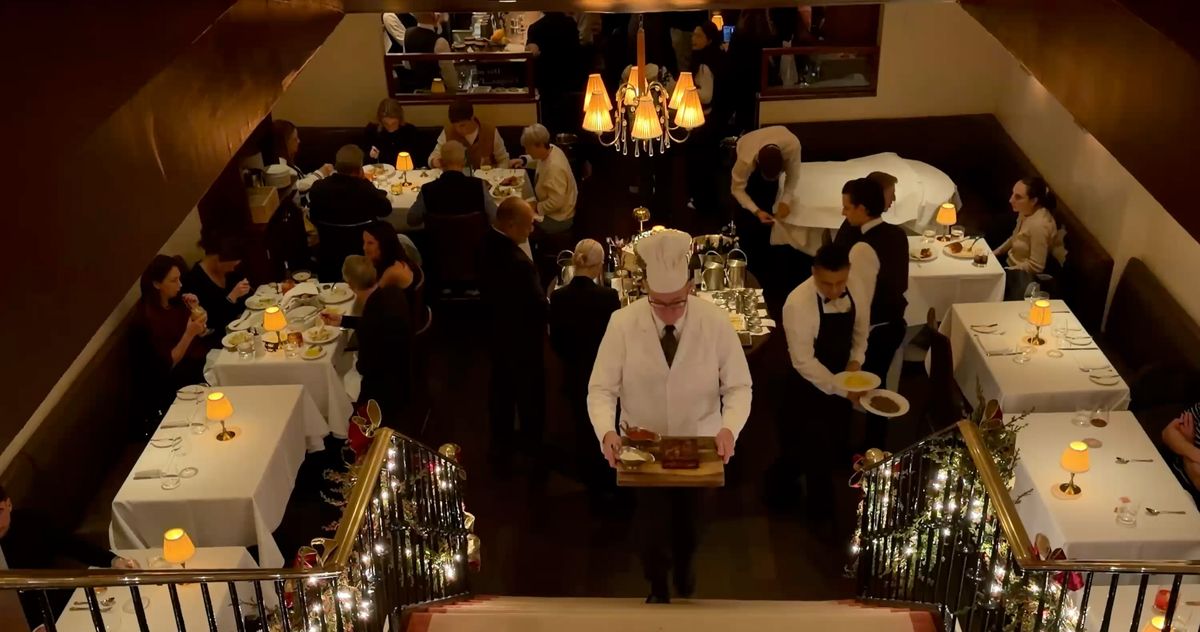
The Zeppelin is blasting once more at Babbo. Though the restaurant closed for renovations only in early 2025, it feels as if it’s been gone for years. Babbo — Italian for “Daddy” — had been, from its opening in 1998 right up until co-founder Mario Batali’s downfall in 2017, a city-defining (and Batali-defining) icon. Then it wasn’t. But Stephen Starr, the megarestaurateur who has been offering distressed establishments a spiffed-up second life (see also Pastis), judged it worthy and salvageable. The doors opened in November. The Prodigal Father has returned.
Encore performances are tough. Babbo is inevitably saddled with the baggage of Batali, even though he no longer owns it or cooks here. The restaurant was made in his image. “Mario’s vocal horniness had set a tone for everyone who worked at Babbo,” Laurie Woolever, who spent three years working as Batali’s assistant, wrote in her recent memoir. “Daddy” was intended sweetly in this case: At the time of opening, both Batali and co-founder Joe Bastianich were new parents, but it carries the unfortunate suggestion of “come to Daddy” now.
If there’s a reason to salvage it — and I leave it to the ethicists to debate whether it’s advisable, or even possible, to separate the pasta from the pastaiolo — it’s that Batali’s wanton indulgences could be as fascinating in food as much as they were execrable in his behavior. He was a giant of Rabelaisian appetites, “known to share an entire case of wine during dinner” (this per Bill Buford, whose time apprenticing under him became Heat), and everything served at Babbo seemed selected for the most cranked-up deliciousness possible. The place was an ode to the pleasures of flesh. Then-unusual ingredients and combinations — calves’ brains and head cheese, lambs’ tongues and lardo — converted skeptics to omnivores. Even the temerity to throw the food pyramid out the window and offer an all-pasta tasting menu was gutsy stuff. I had it at the old Babbo once, many years ago, thrilled to get away with chasing pasta after pasta.
Starr and his partners — Bastianich remains involved behind the scenes — know they’ve got to rehabilitate the restaurant’s image. This Babbo is not that Babbo, but it’s not not, either. The restaurant has been renovated, but it still looks much as it did with grand marble-topped tables in the center of both the upstairs and downstairs dining rooms, not to seat guests but to set the scene, heavy with bowls of walnuts and bottles of wine as in a Baroque still life. Mark Ladner, a Batali protégé, runs the kitchen, and so many old recipes are on the menu that royalties may be in order. The famous “mint love letters” (little envelopes of pasta filled with ricotta and mint) have cycled off, but the old “Sicilian lifeguard style” calamari calamarata (squid and squid-shaped pasta in a kind of alt-puttanesca) remains, as does the beef-cheek ravioli with chicken liver and truffle. Even dishes initially left in the archives have been revived: A shrimp-and-squid-ink spaghetti, slicked with Calabrian sausage, was added to the menu after Babbo old-timers demanded it.
Those old-timers seem to be returning in force, judging from two recent visits. The crowd was grayer and better seasoned than is usual for a noisy new restaurant. We watched a clutch of necktied white guys descend the stairs. “This is like The Devil’s Advocate,” a guest of mine whispered. Ladner has taken on the seigneurial role, spending less time in the kitchen and more on the floor, greeting guests, crushing pesto in a marble mortar (“Carrara marble, from Carrara,” he said), and presenting his “Detroit-style” lasagna for four like a catch of the day before it is quartered and served.
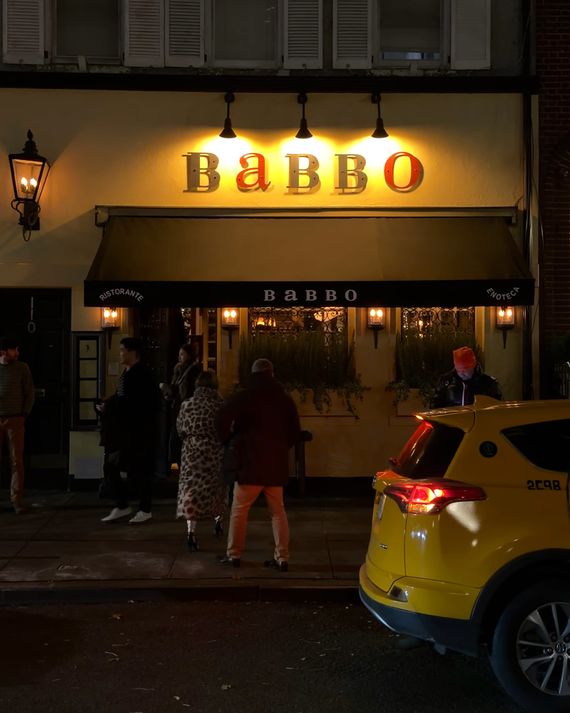
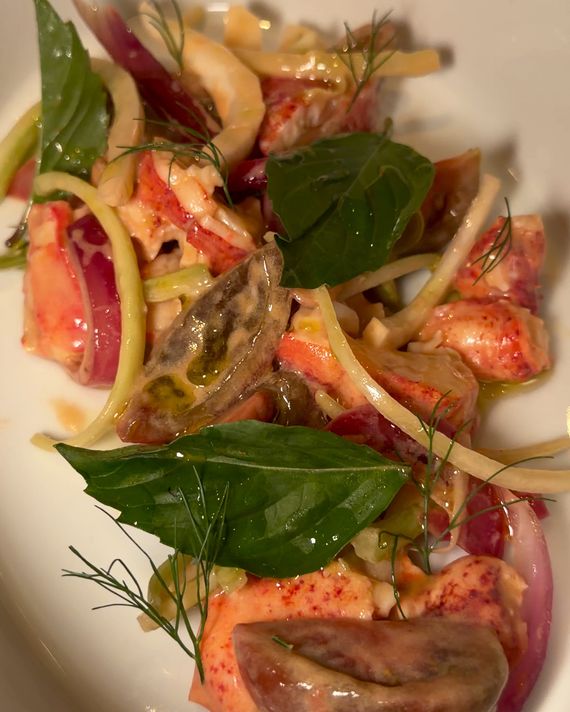
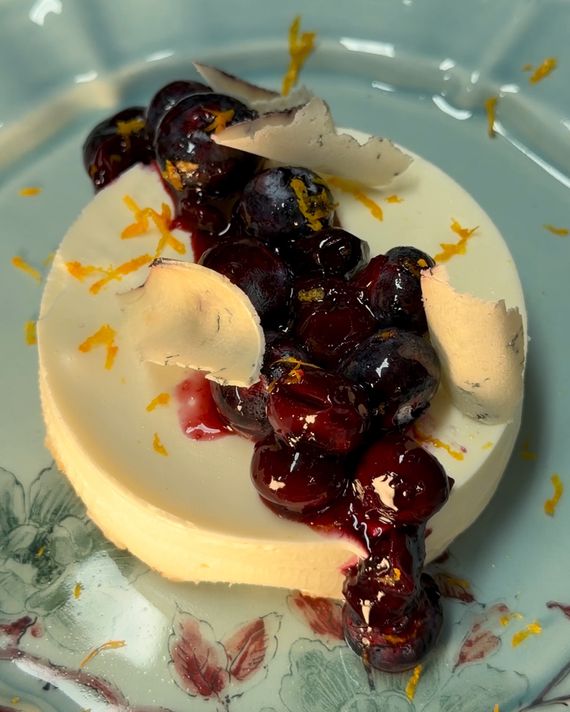
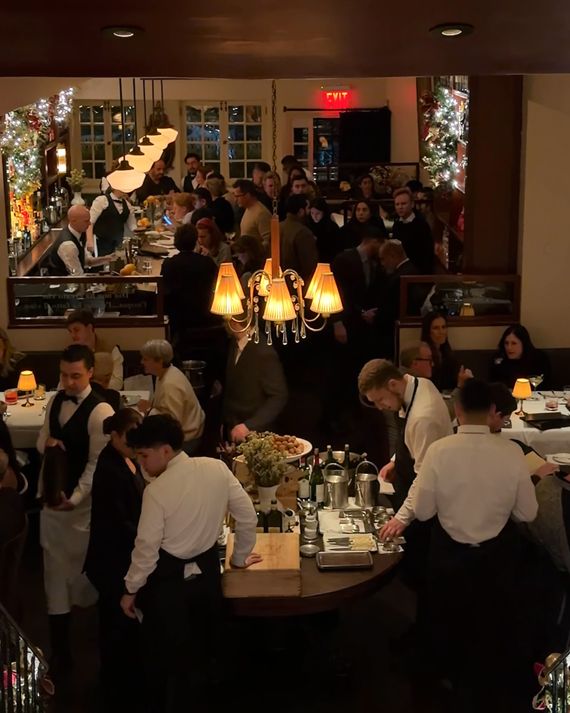
Clockwise from top left: Outside, lobster busiate, the refreshed dining room, blueberry and blue-cheese budino. Hugo Yu.
Clockwise from top left: Outside, lobster busiate, the refreshed dining room, blueberry and blue-cheese budino. Hugo Yu.
I wanted to like Babbo. The space is the space, and it is lovely, a relic of Henry James’s Washington Square. (“Carpeted!” another guest of mine cooed.) Pasta is an easy sell, and Babbo once made some of the best. So why did this revival thud so dully for me? It’s not that I wish for a permanent purgatory for the restaurant or even the recipes. Classics in New York live many lives, and there are plenty of landmarks (B&H Dairy to Le Veau d’Or) thriving in revival mode. But the intensity of this Babbo lacks the vibrancy and surprise that made the original great.
The voluptuous combinations that were eye-opening in 2000 are heavy, and heavy-handed, in 2025. Dishes suffer from an odd, imbalance, the star relegated to the sidelines. The beef in the beef-cheek ravioli was wan and dry but barely needed to be there at all, so aggressive were the crushed liver and black truffle vying for dominance. That lifeguard’s pasta had a nice olive-and-pepper piquancy, salty-hot, but the calamari was irrelevant. Same for the shrimp in what is nominally a black spaghetti with shrimp: Between the saltiness of the squid-ink pasta and the greasiness of noodle-coating salami, the shrimp came to feel like exiles from an offstage pupu platter.
Were these dishes better the first time around, or is that a trick of memory? A peril of being influential is that everyone else eventually catches up. I wish Babbo could ascend from flesh to spirit. The idea of being playful, heretical, esoteric with Italian food: That’s an excellent ethos and guiding principle. Read Babbo as a creed, not a cookbook. That’s what other chefs who are clearly working in a Babbo mold are doing. Carlo Mirarchi was serving veal-innard tortellini in Amaretto at Foul Witch until it closed in November, and nothing I ate at the new Babbo gave me the confused thrill a dish like that did.
Instead, there’s a “puntarelle style” celery Caesar whose “Babbo breadsticks” were actually toasted crusts that looked sheared off a sandwich, giving the whole thing the taste and vibe of a garlicky compost bin. Ladner’s lasagna seems intended to prick at the prissiness of fine-dining norms, but its “Detroit”-ness is a charred crust so chewy that all four people at my table (myself included) left half of it on our plates. To give credit where it is due, I enjoyed “49-day minestrone” (made “solera style,” like sherry, with batches layered onto one another for richness), which is imbued with as much earthy flavor into a vegan soup as I think is possible to achieve. Among the pastas, rabbit-cacciatore cavatelli was my favorite, sweet and mild.
It’s absolutely possible to have a good meal at Babbo, but at prices like these — $45 for lobster busiate or beef-cheek ravioli, $82 for lamb chops, $100 for the lasagna — the chances of that happening should not come down to luck. There are too many traps and hazards, too many opportunities to go off course. Beef rib cap is gilded with umami-rich espresso-porcini butter, but serving it in long, thin strips gives the luxurious, $84 meat an air of brisket. Skip the swordfish Milanese, fish-stick couture.
I didn’t much care for the food at Babbo, but I did love the ambience, the long slow unfurling of a meal in regal rooms of yore, the silver nutcracker placed on the table at the night’s end with a handful of unshelled walnuts to crack and mine and nibble alongside an espresso, some sorbetto, the gelato. The scene is much as it was, though the upstairs dining room has been repainted in a dark oxblood red and the windows covered up. Here, sealed off from the outside world, time seems to stand still. “We call it the casino,” a manager confirmed. That’s seductive. It’s dangerous, too.
Scratchpad
Babbo
The Wine’s Good
The bottle list, thanks to the long-running cellar, is Italo-comprehensive, and there are bargains to be had among the older offerings.
Where to Sit?
Upstairs or down? I’d go up, both for the cozier quiet and the opportunity to descend the staircase at the end, lord of all you survey.
Dessert Isn’t a Must
Try as I might, I never found a composed dessert that delighted me. I did prefer a chocolate olive-oil cake to a blueberry blue-cheese budino with a salty crust.
Thank you for subscribing and supporting our journalism.
If you prefer to read in print, you can also find this article in the December 29, 2025, issue of
New York Magazine.
Want more stories like this one? Subscribe now
to support our journalism and get unlimited access to our coverage.
If you prefer to read in print, you can also find this article in the December 29, 2025, issue of
New York Magazine.
Sign up for The Critics
A weekly dispatch on the cultural discourse, for subscribers only.
Vox Media, LLC Terms and Privacy Notice