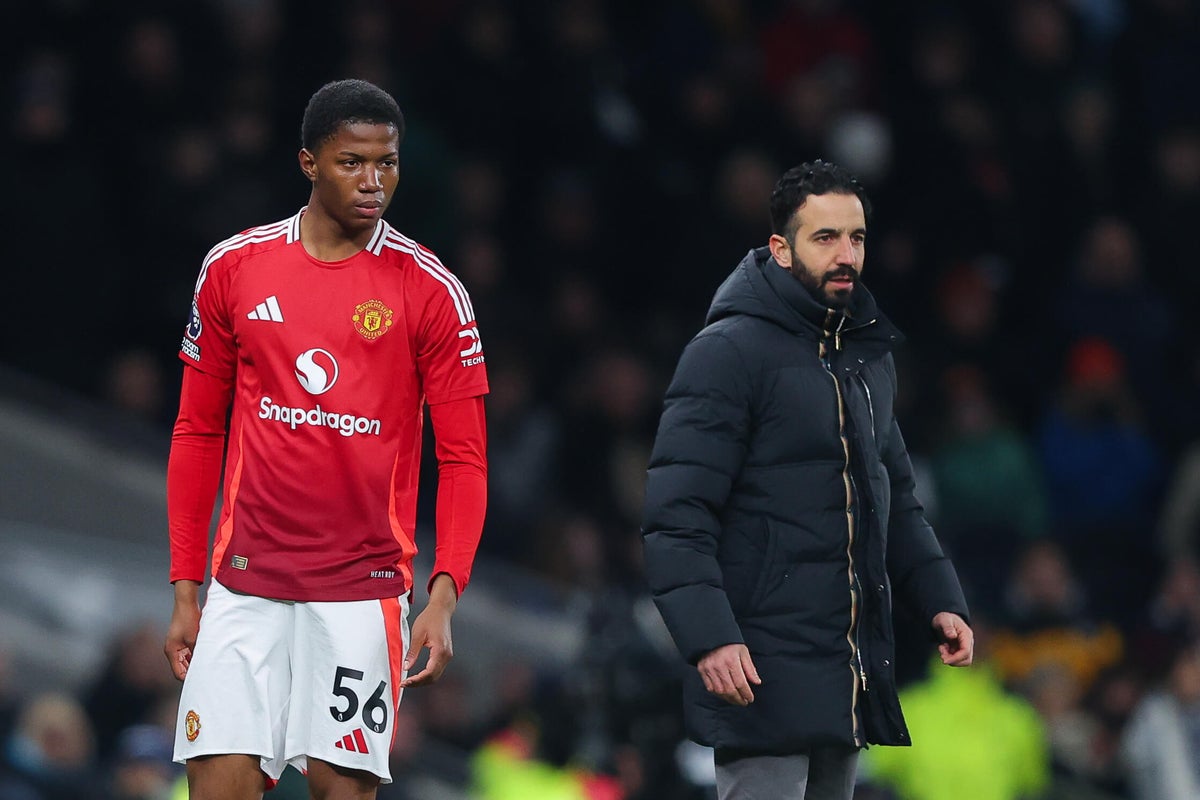
Ruben Amorim is honest to a fault. It’s a reason many fans warm to him: his brutal musings are him telling it like he sees it.
Ralf Rangnick found advocates in United’s fanbase for similar reasons. It’s certainly more interesting than a coach who speaks in cliches or who doesn’t say anything, but that unvarnished truth can be unedifying to consume.
The latest example came yesterday, when Amorim was asked for his view on youngsters Harry Amass and Chido Obi. He had criticised both last week while responding to questions on youngsters not receiving much game time at United and concerns — probably overplayed — that he is threatening the club’s proud record of having an academy player in every first team squad for 88 years, a run that now stretches to over 4,300 games.
Amorim had said Amass “is now struggling in the Championship (with bottom-placed Sheffield Wednesday)” while “Chido is not always a starter in the under-21s (at United).” He also observed that Toby Collyer was not playing much on loan at West Bromwich Albion.
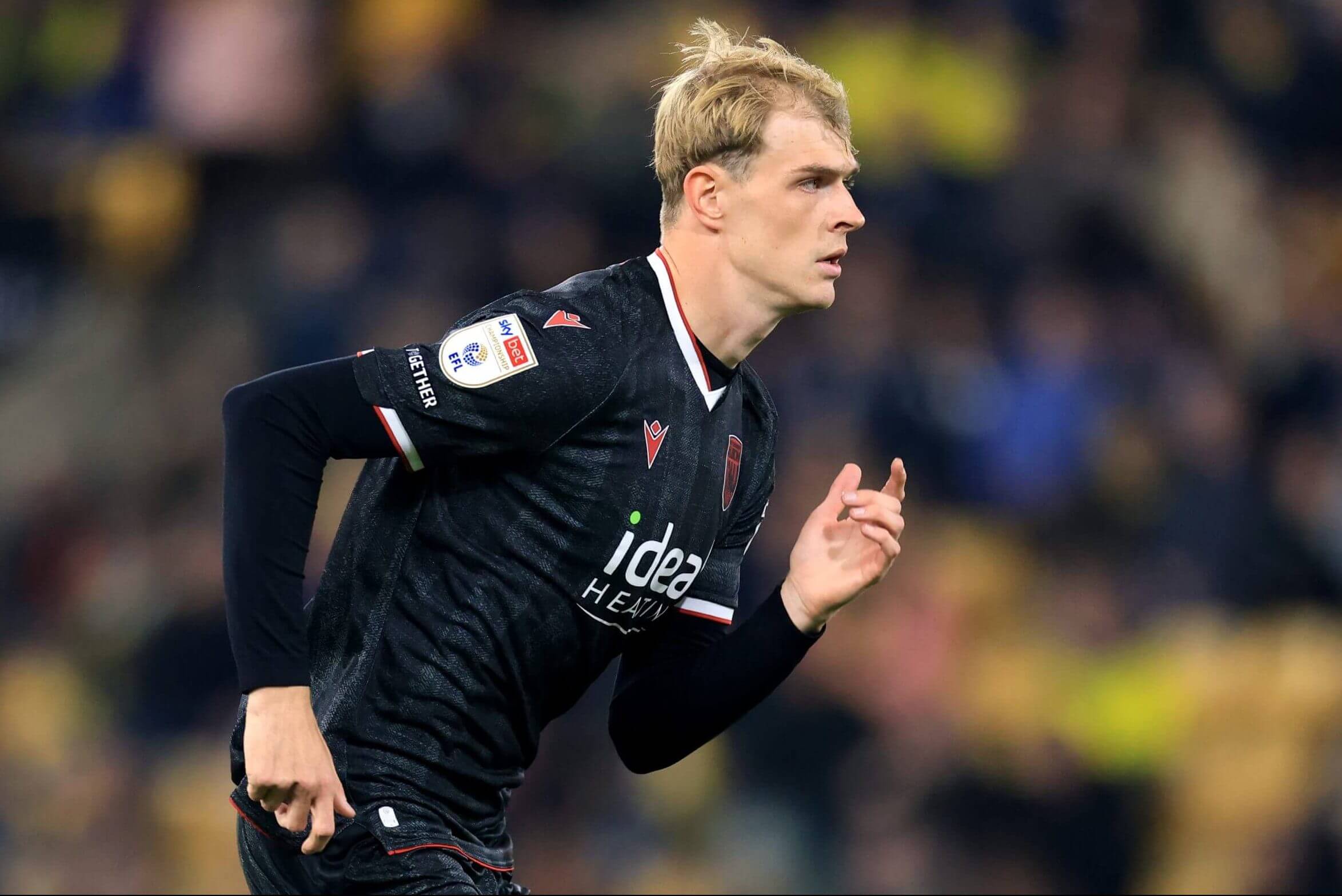
Toby Collyer has not been starting regularly for West Brom (Stephen Pond/Getty Images)
Amass and Chido offered pointed responses to Amorim in messages on their social media feeds in the days that followed, and while they subsequently deleted them, it wasn’t enough to stop the Portuguese taking aim again yesterday.
“They feel entitlement and then they have legends of the club saying, ‘If you don’t play, then leave’ — no, let’s stay and fight and overcome,” he told a press conference. “We have to fight against this feeling.”
All this comes against the backdrop of the debate over Amorim’s sidelining of Kobbie Mainoo. Last week, sensitive to constant Mainoo questions, Amorim tried to emphasise that he wasn’t scared of fielding young players, but his answer came across more as criticism.
“In the end, it’s going to be the training, the games,” he replied, explaining his decision to largely overlook Mainoo this season. “Of course, he’s not playing so many games, but Kobbie has had opportunities, especially last year. Everyone has.”
There are several points here. On one level, Amorim is right. He’s speaking from a point of view at the club where the decision-makers think there’s significant room for improvement with how Manchester United’s academy is run.
There’s a strong counterview, usually coming from departed staff who consider that United’s academy has been a success and point to the trophies won by the youth teams, the players who have come through it and the amount they have been sold for.
But if the new regime thinks it should be better, then bring it on. Such an attitude should only lead to better players coming through and United fans won’t complain if things improve.
Similarly, if Amorim believes what he says, he’s entitled to that view, however unpalatable it may sound to some. He’s the one who makes the tough decisions, the calls on who and who not to play. There may be times when a first team can ‘carry’ an emerging talent, but that time is not now and the situation is further complicated by the lack of European and League Cup games to blood younger talents.
It’s also true that some fans clamour for youth and for them to be thrown in, especially when form is poor. The frustrated thinking goes that they can’t be any worse than the players out there. The reality is they can be a lot worse.
There’s an overexcitement with any emerging talent, even if the unsavoury probability is that they’re unlikely to ever establish themselves as a first-team regular. Amorim did give chances to Chido Obi last season, but maybe the young striker was overpromoted and should instead focus on establishing himself in the club’s under-21s.
We can study the semantics. Amass is doing well in a team at the bottom of the Championship. He’s playing every week and he’ll never forget his time at a club that has been in crisis, with one league win in 20.
Similarly, while Collyer has hardly impressed at West Brom (he didn’t start in any of the first seven league games, before being picked for a game against Millwall that was duly lost 3-0), even ‘bad’ loans can be valuable learning experiences, a dose of reality away from the gilded United bubble.
Still, it’s hard to see what good can come from Amorim being so honest and none of the young lads he’s been critical of are the source of any of United’s problems.
The Athletic spoke to one long-standing figure in academy football who observed that the pressures of representing a club as famous as Manchester United were onerous enough for young players without the head coach criticising them in public, and wondered whether such comments could make it harder to recruit talented youth prospects in future.
If Amorim has made a mistake, then he’s allowed one. Given a choice, United’s coach would likely prefer to do no interviews, but he’s contractually obliged to do so. He usually handles press conferences well enough and can cut a charismatic figure, but he’s still speaking in a second language and there may be slips from time to time.
His job for now is winning matches and building a solid foundation, not one built on sand, from which United can prosper. He needs wins, he needs European football next season and he’s going to choose the players he thinks can deliver it. Promoting youngsters is simply not going to be his priority, as it wasn’t for any of the managers post Sir Alex Ferguson.
Louis van Gaal only paid attention to the academy when serious injuries meant he had to dip into it and use Marcus Rashford. Jose Mourinho was seen as a coach who might pay little attention to United’s record of homegrown youngsters, but he always spoke strongly about Rashford being the head of the youth talent at the club. Erik ten Hag was so preoccupied with the first team that he rarely crossed the car park to see what was happening in the academy, leaving one of his assistants to do that job.
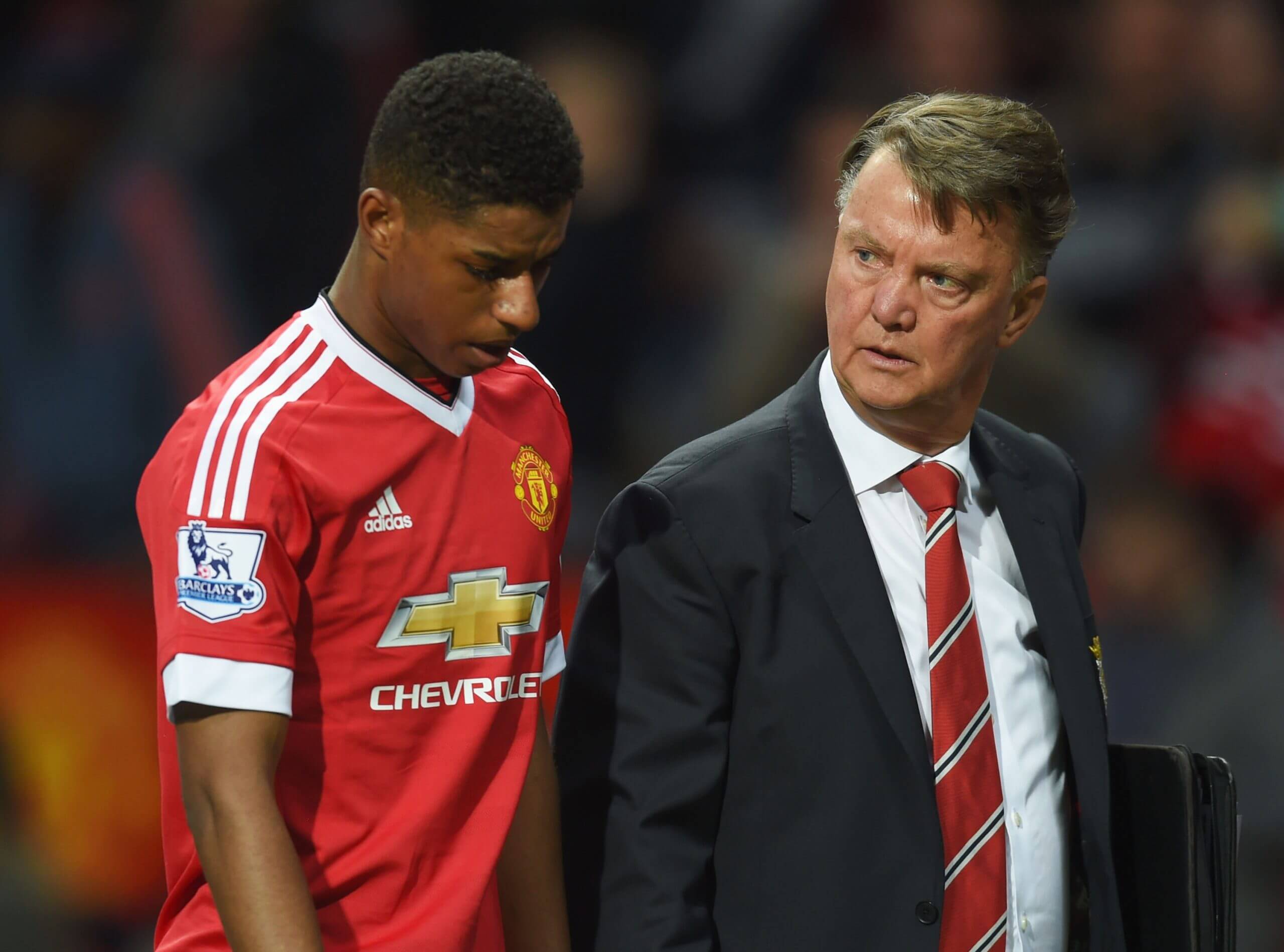
Louis van Gaal promoted Marcus Rashford from the academy (Michael Regan/Getty Images)
When United aren’t winning enough games, people will always search for reasons why. And that’s exactly what is happening with the noise around Mainoo, since fans have seen how good he can be and hope he can be a star for the team. Amorim clearly has a different view — and it’s his view that matters most here.
Mainoo wants to go on loan in January, but he’s under contract on a relatively low wage. Little good can come from his half-brother wearing a ‘Free Kobbie’ shirt as he did at Old Trafford on Monday — a stunt Amorim tried to dismiss yesterday — but then the same could be said of his head coach talking down some of United’s younger talents.