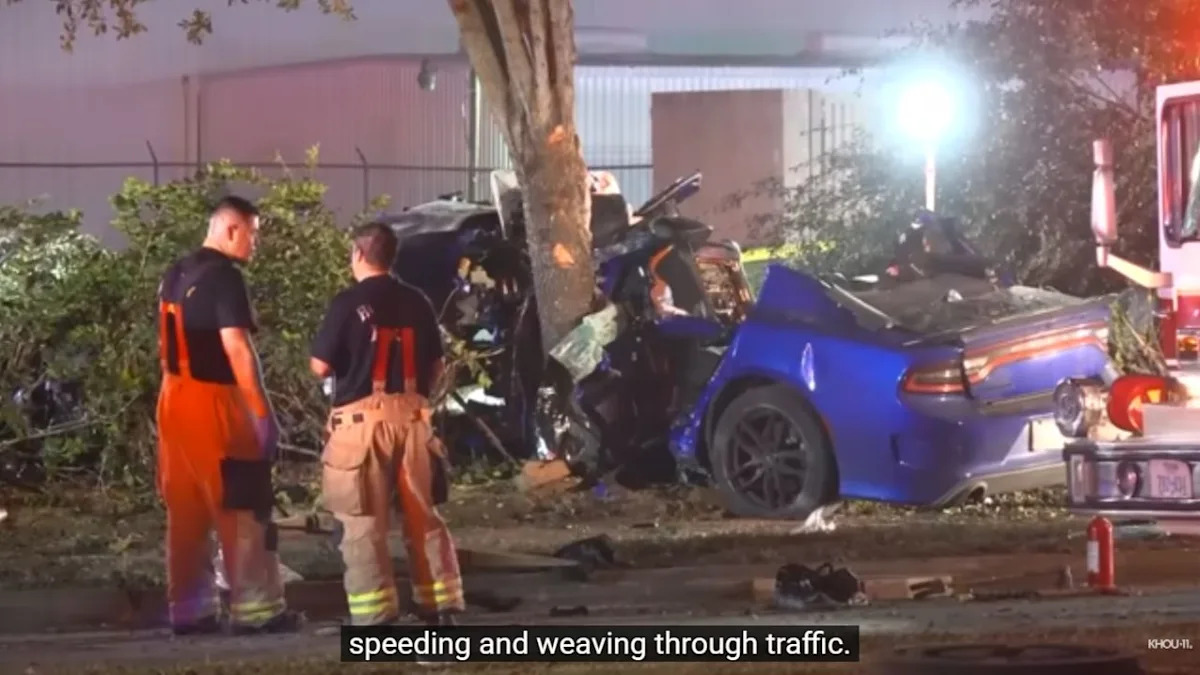
In the early hours of a cold December morning in southeast Houston, a routine traffic stop escalated into a catastrophe that could have been prevented. Around 5 a.m. on December 13, deputies from Harris County Precinct 2 spotted a blue Dodge Charger driving recklessly on the Gulf Freeway, weaving between cars, speeding and ignoring officers’ commands to pull over.
What should have ended with a simple stop instead morphed into a fatal high-speed chase that ended with the vehicle going airborne, slamming into a tree, and splitting apart. The crash killed an 18-year-old passenger, Perry Briscoe, and left questions swirling about whether such violence on Houston streets is truly necessary.
The driver, identified in court records as 17-year-old Ruben X. Mendoza, survived and was hospitalized. Authorities say he faces a felony murder charge for the death of his passenger. Yet outside court filings, this tragedy feeds into a larger national narrative: police chase too often end in death, and many of those deaths may be avoidable if departments adopt stricter pursuit policies focused on public safety.
The Hidden Toll of Police Pursuits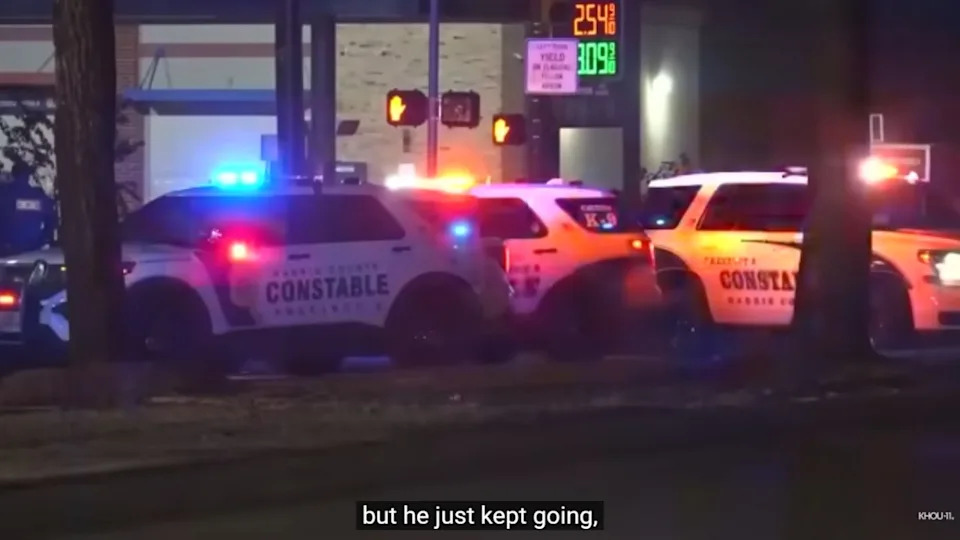
Image Credit: KHOU 11/YouTube.
Across the United States, police vehicle pursuits have evolved from occasional high-octane news clips into a major road safety issue. According to federal and investigative data, high-speed chases remain among the most dangerous routine police activities. National Highway Traffic Safety Administration (NHTSA) figures show that in 2022 alone, there were 577 deaths nationwide tied to police pursuits, the highest on record in recent years.
A broader San Francisco Chronicle investigation found at least 3,336 people were killed in police car pursuits from 2017 through 2022. Those fatalities include suspects, passengers, and bystanders, with innocent people often paying the price.
Importantly, many of these chases begin over relatively minor infractions. Research indicates that a large share of pursuits leading to death start with non-violent offenses like traffic violations or equipment issues, not violent crime.
Houston’s own experience mirrors that troubling pattern. A 2023 Houston Chronicle investigation found the city’s police department engaged in more high-speed chases than other large U.S. departments combined, and that these pursuits often occur in heavily trafficked residential areas, increasing risk to people not involved in law enforcement or criminal activity.
That investigation also showed that many of the people injured or killed in Houston pursuits were not in the fleeing vehicle. It’s a sobering reminder that the public often bears the consequences of decisions made in split seconds by officers and fleeing drivers.
Could It Have Been Avoided?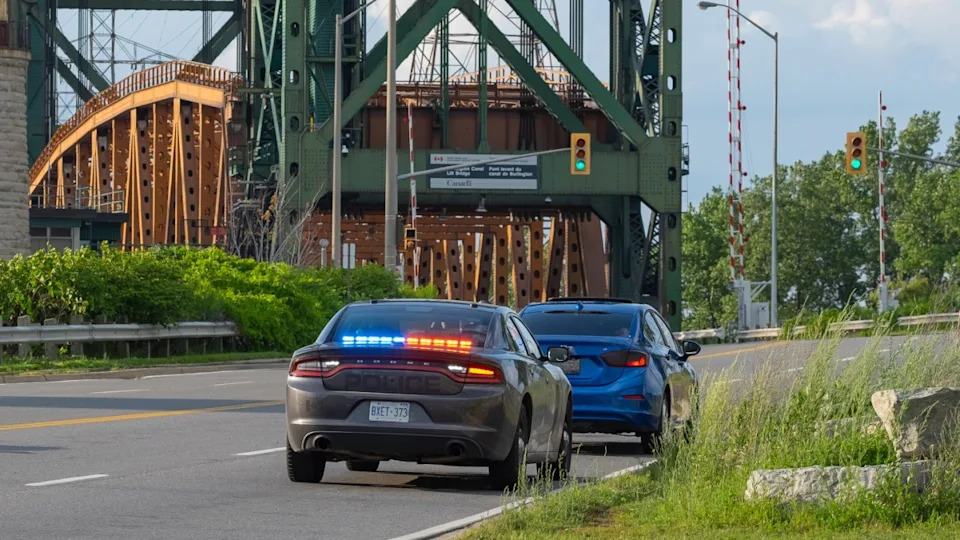
Not actual event / Image Credit: Elena Berd/Shutterstock.com.
In the southeast Houston crash, deputies chased a driver who was going well over safe limits, ignoring red lights and road signs. The vehicle eventually hit a dip in the road, which caused it to go airborne before striking a tree with immense force. Crash reconstruction experts would point out that at high speed, even slight irregularities in road surfaces can turn a vehicle into a lethal projectile. But in cases like this, officials must ask: did the danger to the public outweigh the value of immediate apprehension?
In many cases, it did not. A 2023 national survey recommending pursuit reforms urged law enforcement to limit chases to situations where there is an imminent threat of violence, citing the disproportionate risk to bystanders and the public.
National data reinforce this: some studies estimate that one American die almost every day in a police pursuit — a statistic that includes drivers, passengers, and unrelated third parties — and that a significant fraction of those deaths could be prevented with more conservative pursuit policies.
A Tragedy and a Turning Point
For Perry Briscoe’s family, the loss comes just weeks before Christmas. It’s an emotional, heartbreaking moment compounded by questions about whether this tragedy was necessary. While legal processes may play out in court, this crash, reported by the KHOU11, is yet another case where the risks of a high-speed chase may have outweighed the benefit of immediate capture.
As cities nationwide grapple with rising police chase fatalities, Houston’s deadly morning crash underscores the larger truth that the path to safer streets may require rethinking when and how police pursue fleeing vehicles — not just how fast they go.