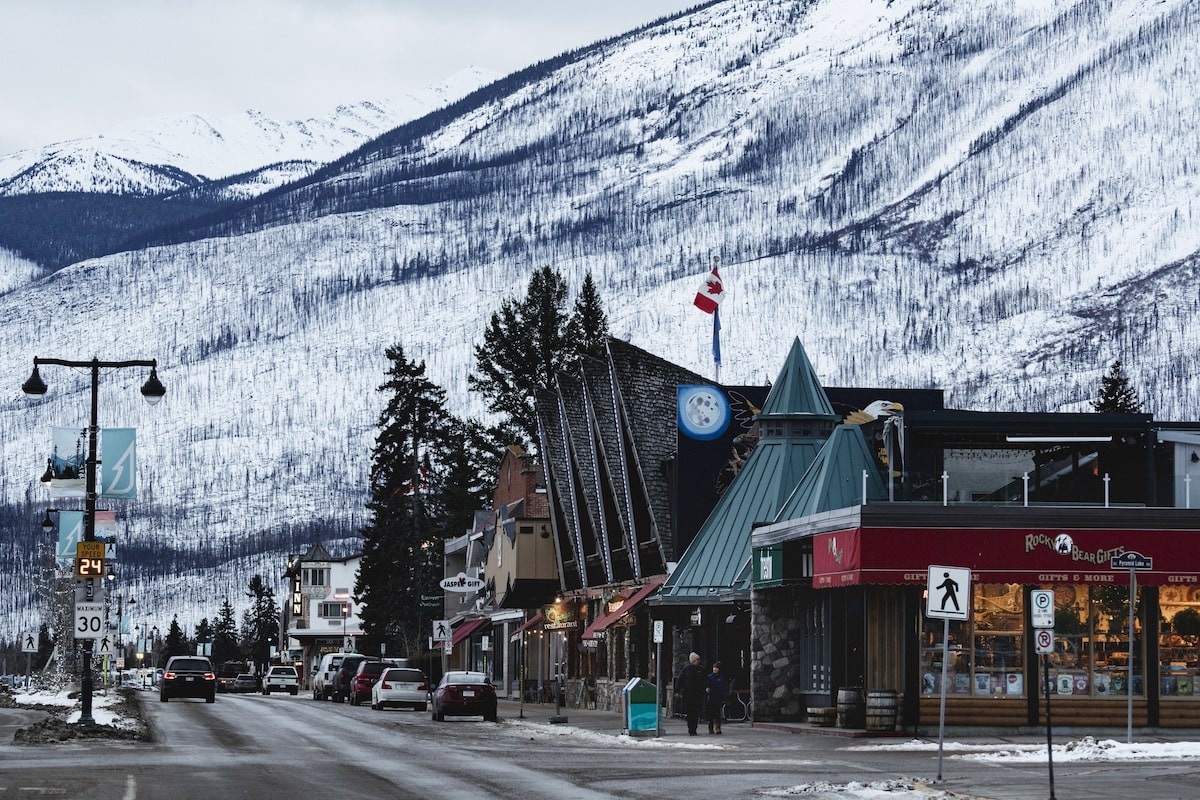
Jasper, Alta., on Jan. 15.Todd Korol/The Globe and Mail
Icefields Parkway has been closed for so long that the residents of Jasper, Alta., have started placing bets on when it will reopen.
It’s been nine days and counting since the rugged, scenic 232-kilometre highway connecting Banff and Jasper was closed after being walloped by a winter storm that buried it in snow and swelled the avalanche risk along the route.
As one of three roads out of Jasper, many are beginning to believe it’ll take a miracle for the parkway to reopen by Christmas Day as some residents reorganize their holiday travel plans around the province.
“I’ve lived here over 40 years,” Joe Polisuk, a construction consultant in Jasper said, adding he’s seen closures of up to five days, but nothing extending into two weeks.
Mr. Polisuk skipped a holiday party in Calgary last Friday because of the road closure and he plans to meet friends in the city on Boxing Day. But he’s unsure if he’ll go if the road is still closed by then; the long way around takes about eight hours – more time than there is daylight.
Alberta towns scarred by fires look to change the way they build
Residents on either end of Highway 93 North, better known as Icefields Parkway, have been locked out of the road since Dec. 14 when moisture from the atmospheric river that hit British Columbia this month crossed over the Rockies.
The powerful winter storm known to meteorologists as an Alberta Clipper covered Western Canada last week, said Terri Lang, meteorologist with Environment and Climate Change Canada.
Since Dec. 14, nearly 1.5 metres of snow have accumulated at one of Avalanche Canada’s weather stations along the highway. A spokesperson for Parks Canada said they would be providing an update on the road conditions Tuesday as the agency works to figure out how to clear the roads and mitigate avalanche risks.
Photos from Parks Canada last week show boulders of snow twice the size of front-end loaders and helicopters buried in waist-deep snow.
Closures are a regular feature of winters on the parkway.
Wildfire ash is accelerating glacier melt in the Canadian Rockies
Rupert Wedgewood, who used to operate Parks Canada helicopters filled with explosives used to detonate unstable snowpack sloped toward the highway, said he hasn’t seen the highway closed this long since a storm in 1997 buried a kilometre of highway for several days.
Mr. Wedgewood said storms like last week’s prevent helicopters from bombing mountains, which can frequently lead to avalanches that leave three to four metres of heavy-packed snow littered with timber sitting on the highway.
In the early 1990s, camps along Icefields holding crews that would plow and maintain the highway were cut from Parks Canada’s budget, Mr. Wedgewood said.
That’s made it harder to maintain the road, he said.
The road closure is a challenge for Paul Hardy, owner of SunDog Transportation, which runs a daily shuttle between Jasper and Calgary. That route has been temporarily altered to skirt the Rockies through the Prairies.
Jasper is welcoming visitors again by embracing its fire-scarred landscape
“As much as Drayton Valley, Caroline, Cremona are beautiful communities, it’s not quite the same as driving the Icefields Parkway,” said Mr. Hardy. The out-and-back round trip has gone from 11 hours long to about 26 hours, he said.
In Jasper, the deluge has been a delight for the winter community that relishes the outdoors, said Steve Pavlov, a retired RCMP officer who used to patrol the highway.
Mr. Pavlov and his neighbours in Jasper are no stranger to Mother Nature’s extremes. Eighteen months ago, the town was rocked by a runaway wildfire that destroyed a third of its structures and displaced much of its tight-knit community.
Mr. Pavlov said the snow has blanketed parts of town and several-hundred square kilometres of forest devastated by the wildfire, including the road to Marmot Basin ski resort.
“It’s still a tough drive, that first little part up the hill to Marmot,” said Mr. Pavlov. “But once you get more snow on it, you see the vistas, and you don’t see the charring.”