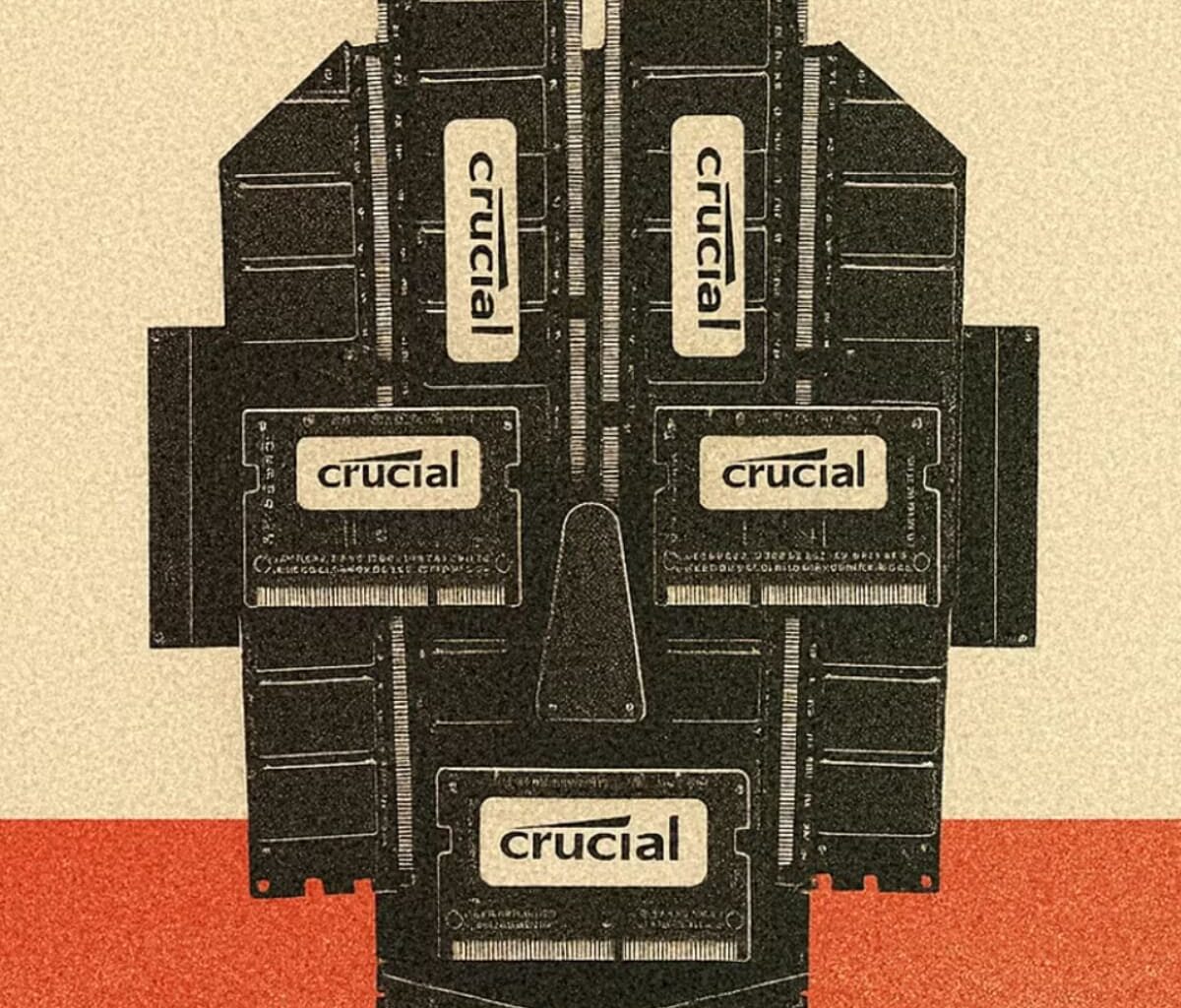
Crucial, the iconic brand known for its memory and SSD components, is pulling out of the consumer market. Its parent company, Micron, says the move is a response to skyrocketing demand for memory in artificial intelligence — a strategic shift that could send consumer electronics prices soaring.
It’s a bombshell in the world of PC components. After nearly three decades, Crucial is shutting down its consumer division, a casualty of the AI boom. Micron announced the decision on Wednesday, December 3, emphasizing that it’s not a bankruptcy but a deliberate — and deeply consequential — strategy change.
Crucial has long been a go-to brand for gamers and tech enthusiasts who build their own rigs, trusted for high-performance RAM and storage. Its disappearance could worsen the current hardware shortage and push prices to new highs.
Artificial intelligence takes center stage
The announcement comes amid a record-breaking surge in memory prices. In just a few months, some products have tripled in cost — and the trend is accelerating. With the explosion of data centers powering artificial intelligence, key components like RAM are becoming harder to find.
Servers rely on a different, more profitable type of memory called high-bandwidth memory (HBM). Many manufacturers have cut back on consumer production to focus on this booming market.
That’s precisely the reason Micron cites for sunsetting Crucial. “The growth of data centers driven by artificial intelligence has led to a sharp increase in demand for memory and storage,” said Sumit Sadana, Micron’s Executive Vice President. “Micron has made the difficult decision to withdraw from the Crucial consumer market to better serve larger strategic clients in faster-growing segments.”
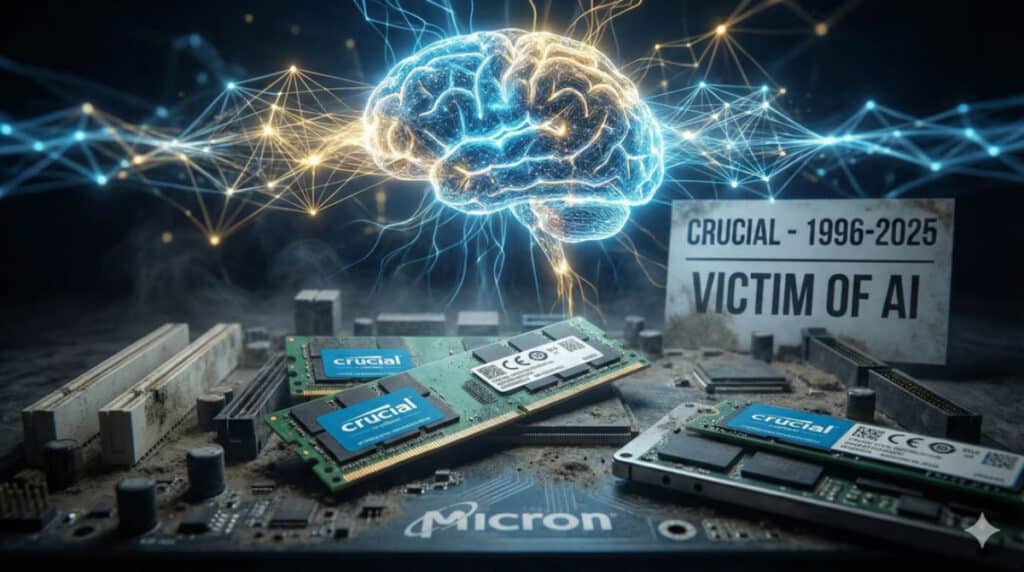
Micron will no longer produce consumer RAM. © Image generated with Gemini
A rising cost for consumers
For gamers, who’ve supported Crucial for nearly 30 years, the news hits hard. Consumer memory prices are already sky-high, forcing many to think twice before upgrading. Now, prices are expected to climb even faster.
And that’s not all — the ripple effects could spread across the tech industry. After RAM and SSDs, expect graphics cards, gaming consoles, prebuilt PCs, and even smartphones to follow. Xiaomi has already raised prices on its latest models, warning that this is just the beginning.
The fallout could also have serious consequences for cybersecurity. Dell estimates that one billion computers worldwide still run Windows 10, which is nearing its end of support. About half of those machines could upgrade to Windows 11, but roughly 500 million are too old to make the jump. While users in Europe will get extended updates for free, the rest of the world won’t — and by October 13, 2026, Windows 10 will stop receiving any security patches. Many users may not be able to afford a new PC. Some will turn to Linux instead, though that option requires a fair amount of technical know-how.
A crisis with no clear end
Experts once predicted that the shortage would ease within a year or two. But now, major memory producers like Samsung and SK Hynix — with Micron in third place — say they’re unwilling to risk overproduction. They’re investing cautiously, which means supply could remain tight well beyond 2028.
The result? A long, uncertain road ahead for consumers and the tech industry alike — all because the world’s growing appetite for artificial intelligence is consuming every bit of memory it can find.

Edward Back
Journalist
My passion for programming began with my very first computer, an Amstrad CPC 6128. I started coding in Basic, then moved on to Turbo Pascal on a 286, eventually exploring more modern languages including web development. I’m also deeply interested in science, which led me to attend a math-focused preparatory program. Later, I studied psychology with a focus on the cognitive aspects of artificial intelligence.