 Donald H. Harrison
By Donald H. Harrison in San Diego
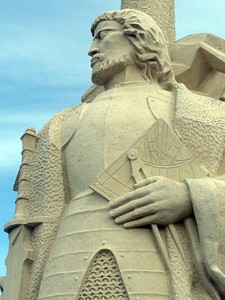 Cabrillo Statue by Alvaro de Bree
U.S. Sen. Alex Padilla (D-California) and four other Western States senators are calling on Interior Secretary Doug Burgum to delay the scheduled Jan. 1 imposition of new fees for non-U.S. residents to visit national parks and monuments, including the Cabrillo National Monument in San Diego.
The other Democratic senators who signed a written request to the Interior Secretary are Adam Schiff of California, Ron Wyden of Oregon, Catherine Cortez Masto of Nevada, and Mazie Hirono of Hawaii.
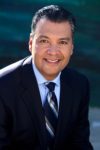 Alex Padilla
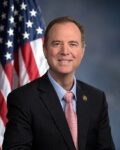 Adam Schiff (Photo: Wikipedia)
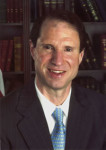 Ron Wyden (Photo: Wikipedia)
Although the new fee of $250 for a non-resident “America the Beautiful Non-Resident Annual Pass” (compared to $80 for residents) applies to visits to all federally owned tourist attraction throughout the nation, Cabrillo National Monument at the southern tip of Point Loma Peninsula is in a unique situation. It is clearly in view of northwestern Mexico, looking out on the Baja California coastline and Mexico’s mostly barren Islas Coronados.
Cabrillo National Monument was named for the Spanish explorer Juan Rodriguez Cabrillo who dropped anchor in what is now known as San Diego Bay on September 28. 1542 – the first European explorer to visit this area. He named the bay and environs as San Miguel, a name that explorer Sebastián Vizcaino 60 years later changed to San Diego.
Eighty percent of the fees collected at Cabrillo National Monument will stay in the park to “preserve natural and cultural resources, improve visitor facilities, and provide educational and recreational opportunities.” According to a Cabrillo National Monument spokesperson, specific projects include “the development of a curriculum-based education program for the San Salvador Ship in partnership with the Maritime Museum of San Diego; construction of restroom facilities at the intertidal area; and construction of the Whale and Kelp Forest Overlook. Projects planned for the future include installation of 38 new wayside exhibits, repair of the damaged Bayside Trail; production of a new signature film for Cabrillo; improved accessibility to park structures and resources; and an upgrade of informational displays for the WWI and WWII bunkers.”
Non-U.S. residents also will be required next year to pay an additional $100 to visit any of the following heavily-trafficked 11 National Parks: Acadia, Bryce Canyon, Everglades, Glacier, Grand Canyon, Grand Teton, Rocky Mountain, Sequoia & Kings Canyon, Yellowstone, Yosemite, and Zion.
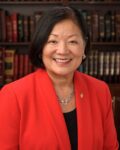 Mazie Hirono (Photo: Wikipedia)
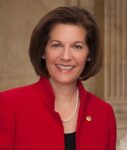 Catherine Cortez Masto (Photo: Wikipedia)
The senators wrote to Burgum, “We strongly believe these fees are being implemented too quickly, without public input, and will be a barrier for both residents and non-residents alike. … The law states the ‘Secretary shall provide the public with opportunities to participate in the development of or charging of a recreation fee.”
Their letter added: “We are also concerned about the impact this plan would have on the already understaffed NPS workforce. The NPS permanent workforce has been reduced by 24% since January, with lost positions that would be important in helping implement these new fees, including fee collectors and IT specialists. Further, the additional requirements to check each visitors’ residency will very likely slow entry into the parks, particularly the highly visited parks identified to charge $100 per person in addition to regular entry fees.”
There was no immediate response from the Interior Department to the senators’ letter. On November 25, 2025, the Department announced “a new resident-focused fee structure that puts American families first.” That press release quoted Burgum as saying “These policies ensure that U.S. taxpayers, who already support the National Park System, continue to enjoy affordable access, while international visitors contribute their fair share to maintaining and improving our parks for future generations.”
*
Donald H. Harrison is publisher and editor of San Diego Jewish World