The animals at the Dallas and Fort Worth zoos are more than cute — they’re built for survival in surprising ways.
From penguins crying salt to kangaroos pausing pregnancy, these and other biological superpowers are on display across nearly a thousand species at the two zoos.
Related
 Mama extraordinaires
Breaking News
Female kangaroos can manage up to three babies at once. After a monthlong pregnancy, a jelly bean-size baby kangaroo (or joey) is born and climbs into its mother’s pouch, where it stays for the next eight months, said Jessi Gorman, an outreach specialist at the Fort Worth Zoo.
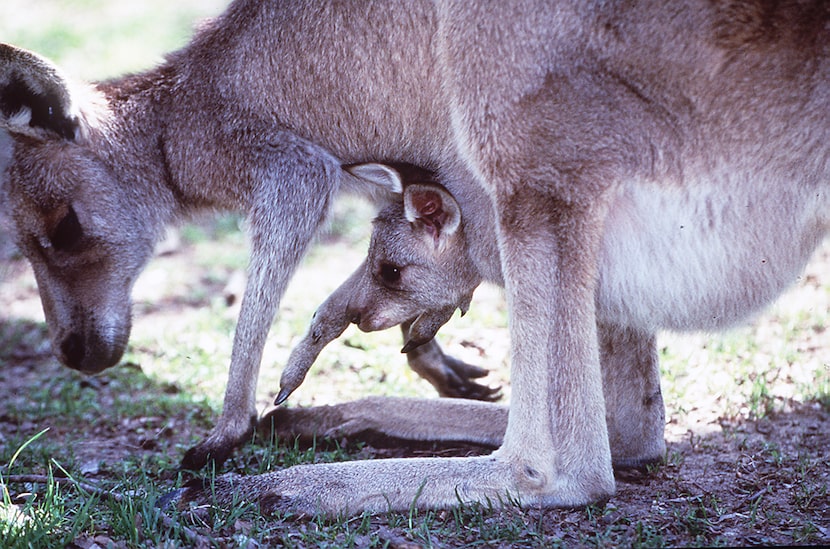
An undated photo shows a red kangaroo carrying an infant in her pouch at the Fort Worth Zoo.
Fort Worth Zoo / Fort Worth Zoo
During those months, the mother will mate again. If the circumstances aren’t right — too little food, cold weather or increased predator presence — Gorman said its body can instinctively pause the embryo’s development. This phenomenon is known as embryonic diapause and is shared among more than 130 mammal species.
Once the first joey starts coming in and out of the pouch, Gorman said, the mother gives birth to the second joey, which crawls up into the pouch to join its sibling. She can mate again soon after, adding a third joey to the mix.
Kangaroos are at the Fort Worth zoo.
Flamingos aren’t always pink
Flamingos are among nature’s most flamboyant birds, with their long legs and pink feathers. But demands of parenthood can leach their fantastic color away.
“When flamingos are producing and laying their eggs, they actually turn white,” Gorman said. “They put so much of their nutrients into the egg production process that it drains their feathers of their color.”
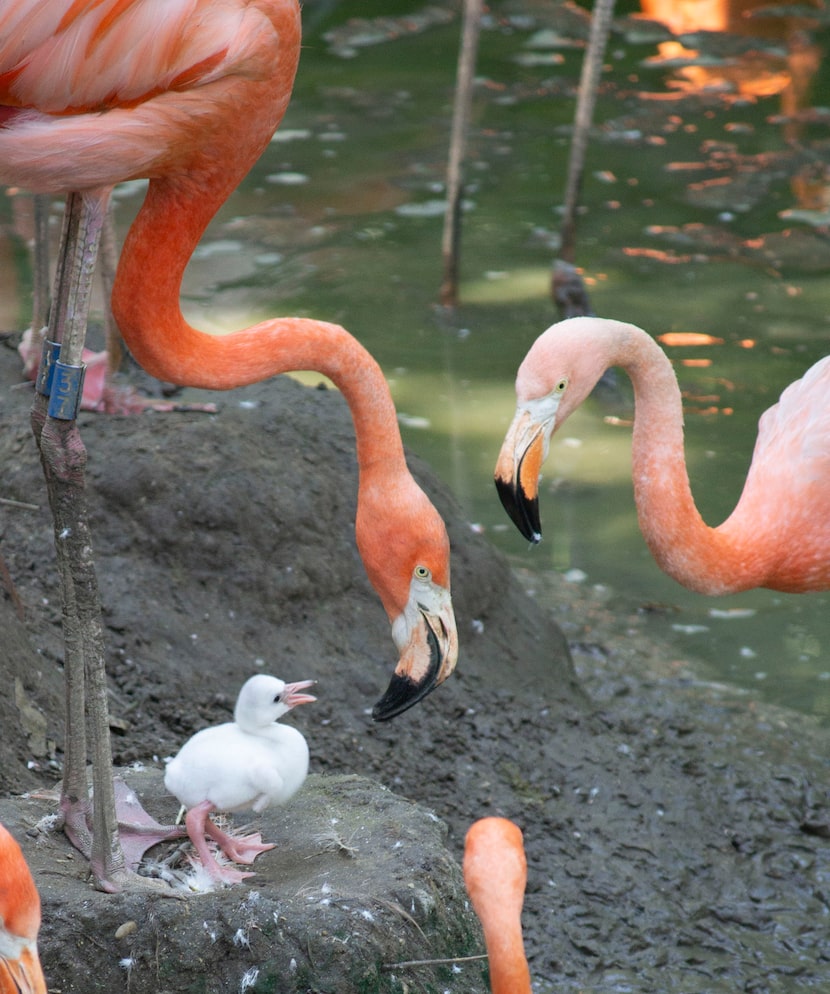
Caribbean flamingos with a chick at the Dallas Zoo.
Dallas Zoo
Pink doesn’t come naturally to flamingos. They get their coloring from the red, yellow or orange pigments — collectively called carotenoids — in their food. Their diets include plants and brine shrimp, which eat microscopic algae that contain carotenoids. Metabolized in the body, the pigments turn a flamingo’s feathers pink.
Flamingos are at the Dallas and Fort Worth zoos.
A long-legged thermostat
Flamingos have a built-in heating and cooling system in their legs. Known as a counter-current heat exchange system, it’s made up of closely paired blood vessels — some carrying warm blood, others cooler blood — said Stephanie Allard, chief mission officer of the Dallas Zoo.
“Flamingos spend a lot of time in bodies of water and, depending on the temperature of both the air and the water itself, they either have to keep warm or cool,” Allard said. By exchanging heat between blood vessels, Allard continued, flamingos can maintain an appropriate temperature in their legs.
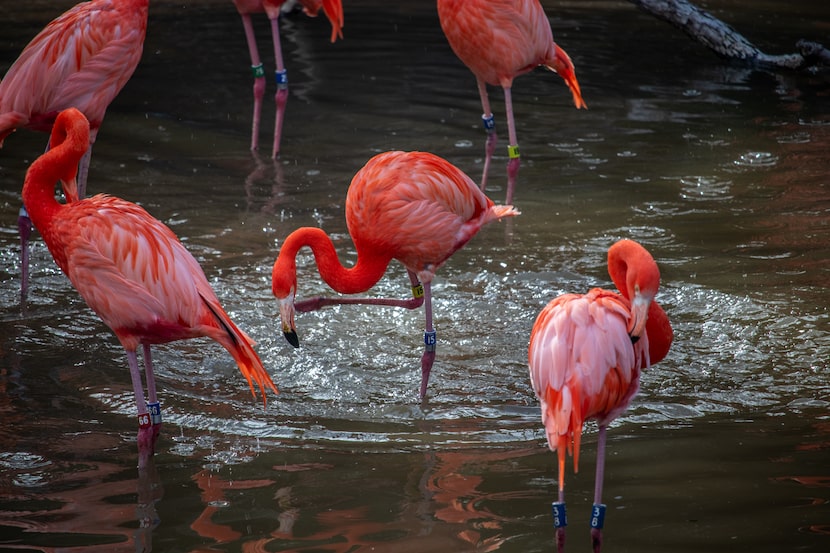
Flamingos at the Dallas Zoo.
Dallas Zoo
Lay off the salt
Eating too much salt is hard on the body, whether you’re a human or an African penguin.
Humans excrete salt through sweat and other bodily fluids. African penguins, on the other hand, remove salt through their tears. They do so using a specialized gland above their eyes.
“African penguins live and forage in the ocean and so they drink salt water,” Allard said. They also eat salty prey, so the gland “helps them not get dehydrated.”
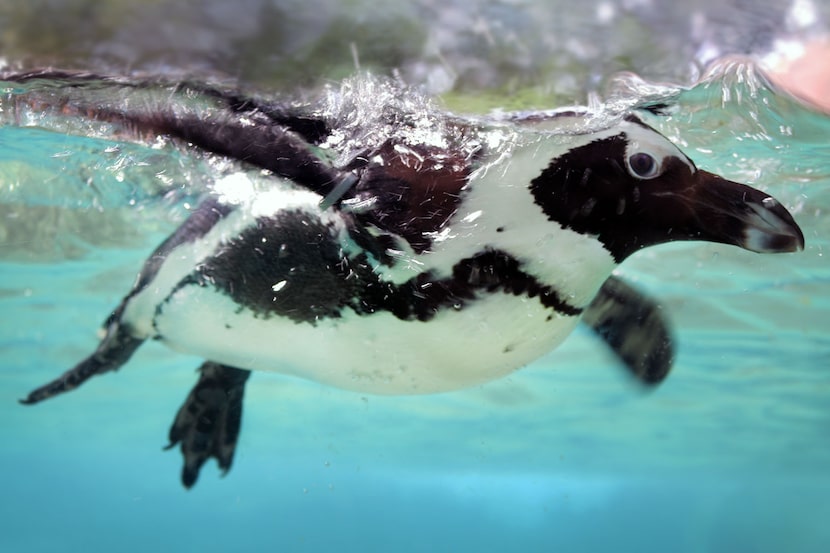
An African penguin swimming in its habitat at the Dallas Zoo.
Dallas Zoo
Called a supraorbital salt gland, this organ has been identified in at least 40 bird families and is especially common among marine birds such as gulls and albatrosses. The gland is also found in some desert-dwelling birds, including ostriches, and carnivores with high-protein diets, such as tawny eagles.
You can find African penguins at the Dallas Zoo and rockhopper penguins at the Fort Worth Zoo.
Iron chompers
Rodents — like squirrels, beavers and porcupines — gnaw constantly. Gorman explained their front incisors never stop growing, so gnawing helps them file them down to a manageable size.
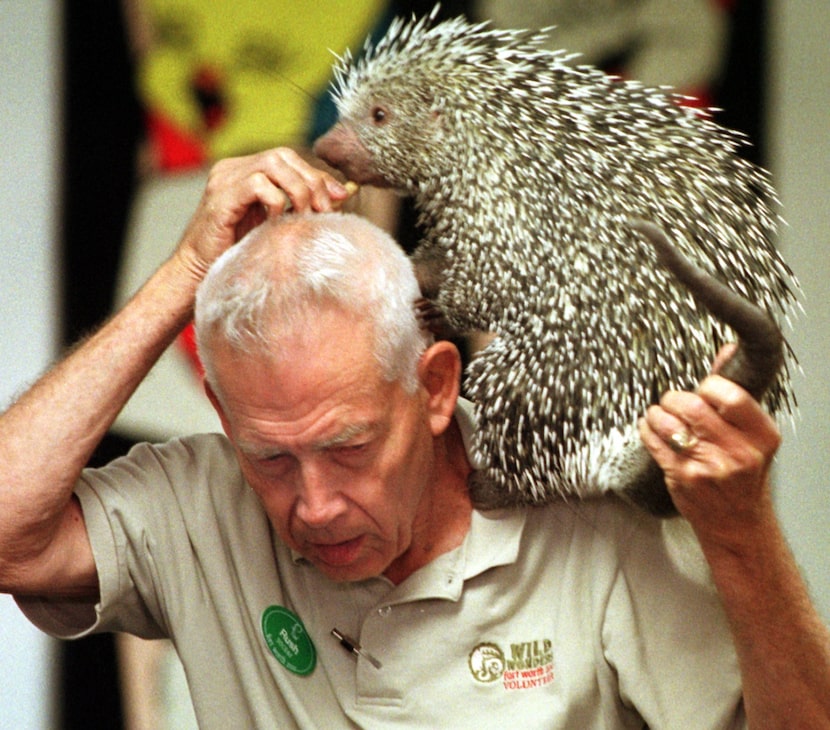
In an undated photo, a Fort Worth Zoo staff member tries to feed Felix the porcupine while showing him to a group of elementary school students.
LOPER, Brad / 142152
Within rodents’ enamel — a tooth’s outermost layer — lies a secret ingredient: iron.
“It’s what strengthens their teeth enough to allow them to chew through harder materials,” Gorman said.
Scientists once thought the orange and sometimes brown color of a rodent’s teeth came from iron. A 2024 study found instead the coloring comes from a thin surface layer of amino acids — the chemical building blocks of proteins — along with minerals.
Rodents such as porcupines and kangaroo rats can be found at the Fort Worth Zoo, though the porcupines are part of the zoo’s outreach program and are not normally visible to the public. Porcupines are also at the Dallas Zoo, along with naked mole-rats, red-rumped agoutis and capybaras.
Fix a broken heart? No problem
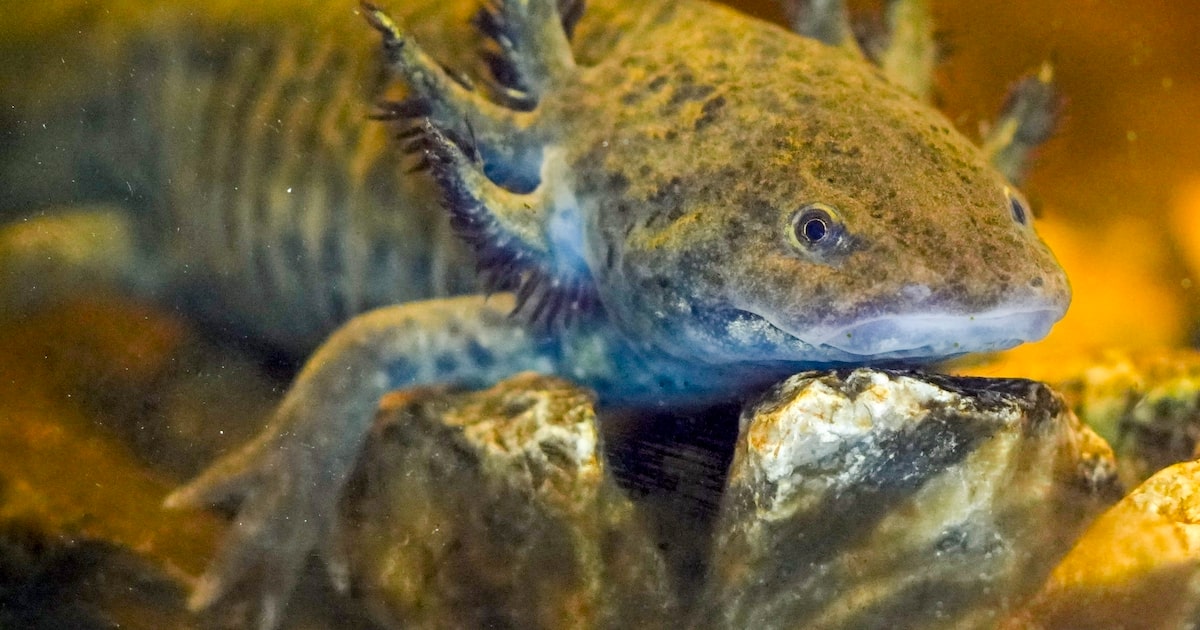
With frilly gills and a perpetually surprised face, axolotls stand out among salamanders. In the wild, axolotls are found only in Mexico’s Lake Xochimilco. Unlike other amphibians that start as tadpoles and grow into adults, these aquatic creatures remain in juvenile form for life.
That enduring youth pairs with another signature trait: regeneration. “They can grow back external limbs and even regenerate organs,” Allard said. “They can’t lose their whole heart and be like, ‘I’m just going to grow that back.’ But they can grow enough of it to be able to continue to function.”
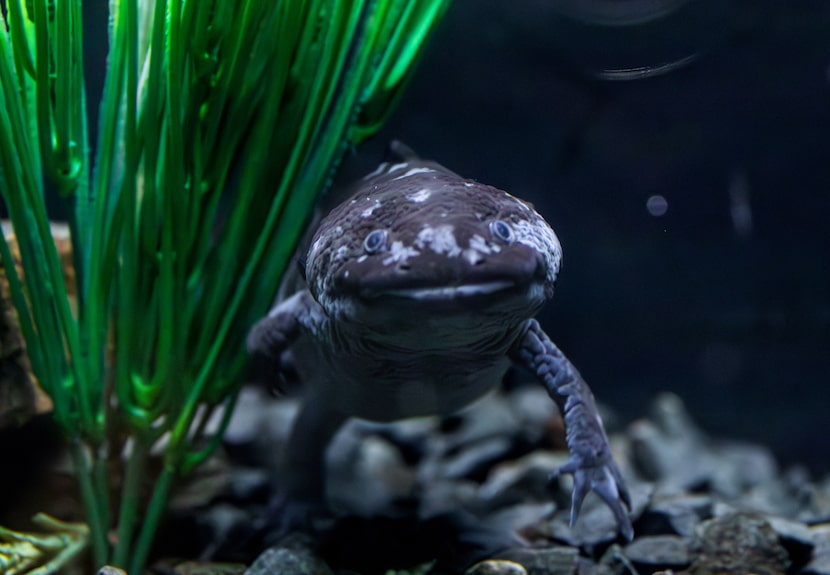
An axolotl at the Dallas Zoo.
Dallas Zoo
Studies dating back to the 1960s found axolotls can regrow parts of their brains, even after substantial tissue was removed. Scientists are exploring whether the axolotl’s superpower could inform limb regeneration in humans, especially because we share genes involved in tissue regrowth.
You can find axolotls at the Dallas and Fort Worth zoos.
Sole survivors with a third eye
At up to 3 feet long and with a crest of spiky scales, tuataras belong to a reptile order called Sphenodontia. The group thrived during the age of the dinosaurs, but it later went extinct — except for the tuatara, the only living survivor. Even more intriguing, these lizardlike reptiles have a third eye, also known as a parietal eye.
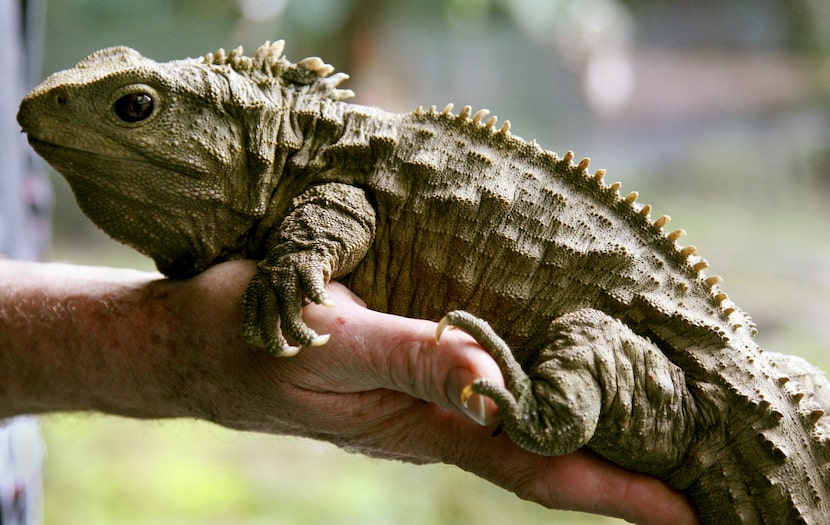
Henry, a tuatara, rests on the arm of his handler at the Southland Museum at Invercargill, New Zealand, on Aug. 6, 2008.
Dianne Manson / ASSOCIATED PRESS
This eye is visible on a newborn tuatara’s forehead and contains many of the same parts as a true eye but doesn’t aid with sight. Instead, it likely helps tuataras sense sunlight and, in turn, regulates physiological processes such as circadian rhythms and body temperature. As these reptiles mature, the eye becomes covered by scales and stops working.
Tuataras are found only in New Zealand in the wild and are considered an at-risk species by the country’s Department of Conservation. You can see two at the Dallas Zoo.
Miriam Fauzia is a science reporting fellow at The Dallas Morning News. Her fellowship is supported by the University of Texas at Dallas. The News makes all editorial decisions.
 Letters to the Editor — Texas Senate race, RFK Jr., ugly American, Dallas Mavericks
Readers wish more moderate candidates would run; criticize the dismissal of science in health decisions; claim the label ‘ugly American’ is making a comeback; and ask why more wasn’t spent to save Luka.
 Trump, nine pharmaceutical companies strike deal to cut drug prices
U.S. patients currently pay by far the most for prescription medicines, often nearly three times more than in other developed nations.
 We’re answering your vaccine questions. Ask us here
Send in your questions about vaccine safety, accessibility, history and more. We’ll track down the answers.
 What’s the scientific difference between snow and other types of winter precipitation?
A lot depends on the changing air temperature from the clouds to the ground.