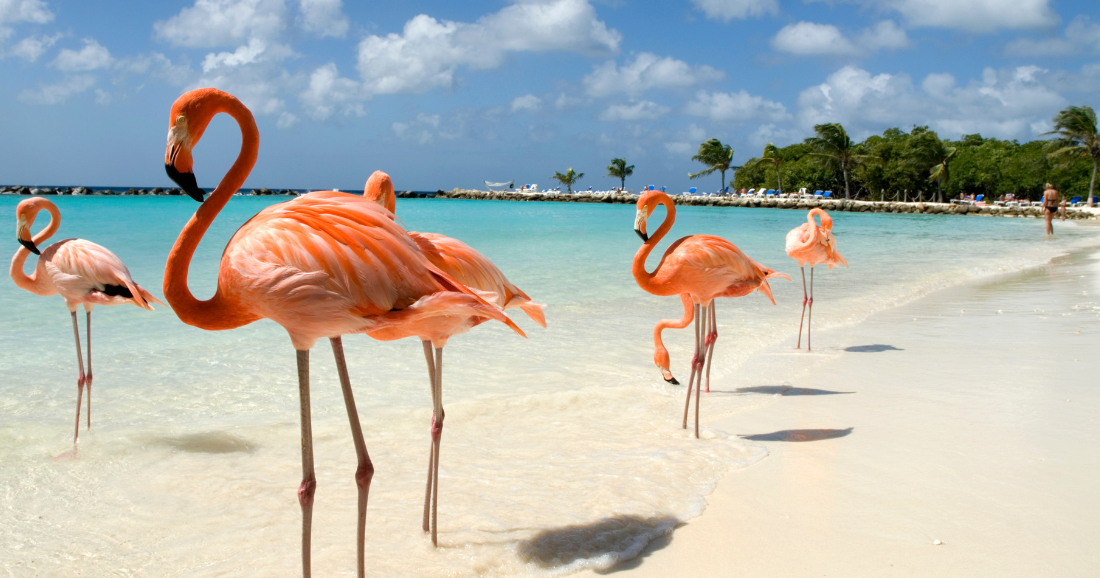
A new scientific study from the University of Central Florida confirms what Floridians have long imagined: the American flamingo belong in Florida and might one day return in greater numbers.
Researchers analyzing the birds’ genetic makeup found that flamingos associated with Florida are genetically similar to populations in the Caribbean and those held in zoos, offering hope for future restoration efforts.
For decades, wild flamingos were widely believed to be escapees from captive flocks or occasional visitors blown in by storms. But the new research shows no significant genetic loss or inbreeding among Florida birds and their Caribbean relatives, a key indicator that these birds really are part of Florida’s natural heritage.
“Before this project, I wasn’t aware of the historical distribution or how common these birds were in Florida 100 to 150 years ago,” said Eric Hoffman, professor and chair of UCF’s Department of Biology, and a co-author of the study, highlighting how little was known about the species after it was nearly wiped out in the early 1900s due to hunting and habitat loss.
Why genetics matter
The study, published in Ornithological Applications, analyzed tissue samples from flamingos in Florida, the Caribbean, and zoo-managed populations. Across more than two million gene markers, scientists found strong genetic variability, meaning the birds can maintain healthy populations, a key element for restoration.
This genetic compatibility could one day pave the way for managed reintroduction programs, possibly including birds from captive flocks, without large risks of genetic mismatch. But experts warn that genetics alone won’t be enough; habitat protection and policy support are also key.
Conservation and the state bird debate

A flock of American flamingos flies over salt marshes. While parts of their habitat are protected in Florida, researchers say additional conservation measures and legislation are needed to ensure the species’ long-term recovery.
Photo courtesy of Mark Cook / UCF
The study arrives amid renewed interest in Florida lawmakers over the idea of naming the flamingo the official state bird. Bills under consideration in Tallahassee aim to replace the mockingbird with the flamingo, citing the bird’s iconic status and growing scientific support for its native roots.
Ahead of the upcoming 2026 legislative session in Tallahassee, Sen. Gayle Harrell from Stuart, has introduced SB 150 – Designation of the State Birds; Designating the American flamingo as the official state bird and the Florida scrub-jay as the official state songbird. The bill unanimously passed the Environment and Natural Resources committee last month.
South Florida House of Representatives Chip LeMarca from Lighthouse Point and Jim Mooney from Islamorada have also introduce a sister-bill – HB-11, which would also make the flamingo as the official state bird.
Researchers say that confirmation of the species’ native status could help build momentum for broader conservation efforts across Florida’s wetlands, including the Everglades and Florida Bay.
A comeback story still in progress
Although the outlook is promising, scientists emphasize that today’s flamingo numbers in Florida are far too low to sustain a self-renewing wild population without active measures. Threats such as habitat loss, pollution and climate change still pose significant hurdles.
But for residents and bird watchers across South Florida, the possibility of seeing flamingos thriving in their historic range, not just on postcards or lawn ornaments, is an exciting modern science development.