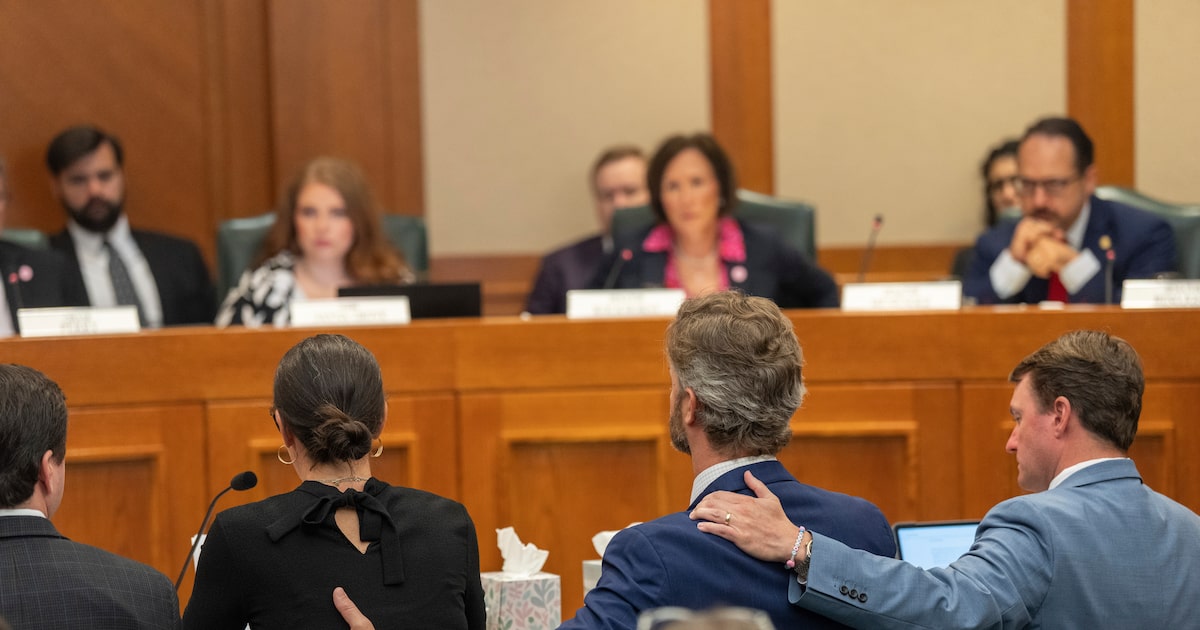
From headline-makers to quiet fixes, state and local centers of power made defining choices on politics, priorities and people in 2025. Here’s what stood out:
TEXAS LEGISLATUREHomestead relief
Action: Lawmakers put property tax cuts and higher homestead exemptions on the ballot last month, and voters overwhelmingly approved the changes. That includes increasing the homestead exemption for all homeowners to $140,000 from $100,000, and giving seniors 65 and older an additional $60,000 on top of the maximum homestead exemption.
Outcome: School property tax bills are lower for homeowners, with limited relief for some businesses, and the provisions are now embedded in the Texas Constitution. But rising appraisals across much of the state have blunted the savings for many households, offsetting part of the benefit from the larger exemption.
Public school funding
Breaking News
Action: Legislators passed and Gov. Greg Abbott signed an $8.5 billion school funding plan for teacher and support staff pay raises, operations, special ed and more.
Outcome: Public school districts get new dollars to stabilize budgets and staff classrooms. Much of the money is tied to targeted allotments, not flexible formula funding, leaving concerns that rising costs still outpace per-student dollars.
Private school vouchers
Action: Lawmakers authorized a statewide education savings account program with up to $1 billion in initial funding and a potential multiyear expansion.
Outcome: The program marks one of the largest school-choice expansions in the U.S. Eligible families can use public funds for private tuition or alternative schooling. Critics warn the program could siphon students and dollars from public schools, particularly in rural areas where private options are limited.
State lottery overhaul
Action: The Legislature passed a measure abolishing the Texas Lottery Commission and transferring lottery oversight to the Department of Licensing and Regulation, while banning online ticket sales and courier services.
Outcome: The lottery’s governance model shifts dramatically, tightening controls and signaling the state’s intent to curb abuses — with ripple effects for revenue, school funding and how Texans buy tickets.
Flood preparedness
Action: After the Camp Mystic floods along the Guadalupe River, lawmakers approved additional funding and directives to strengthen flood warning systems, expand river and rainfall gauges and accelerate updates to flood-risk mapping in high-hazard corridors such as the Hill Country.
Outcome: The response improves alerts and mapping, though officials involved in flood preparedness say key questions remain about land-use rules, camp safety and how prevention efforts will be funded.
What’s ahead in 2026
A high-stakes election year looms, with all 181 legislative seats on the ballot and control of key committees at stake. Voters will also choose new statewide leaders, including a U.S. Senate race that’s drawing national attention. Meanwhile, the fight over Texas’ redrawn congressional maps alter state politics for the rest of the decade.
-Aarón Torres
DALLAS CITY HALLConsolidating elections
- Action: The City Council unanimously decided to move municipal elections to November from May in odd-numbered years, starting in 2027, linking city races to larger, higher-turnout election dates.
- Outcome: Typically, fewer than 1 in 10 Dallas voters elect the mayor and City Council. Consolidating elections is designed to lower costs, ease voter fatigue and increase turnout.
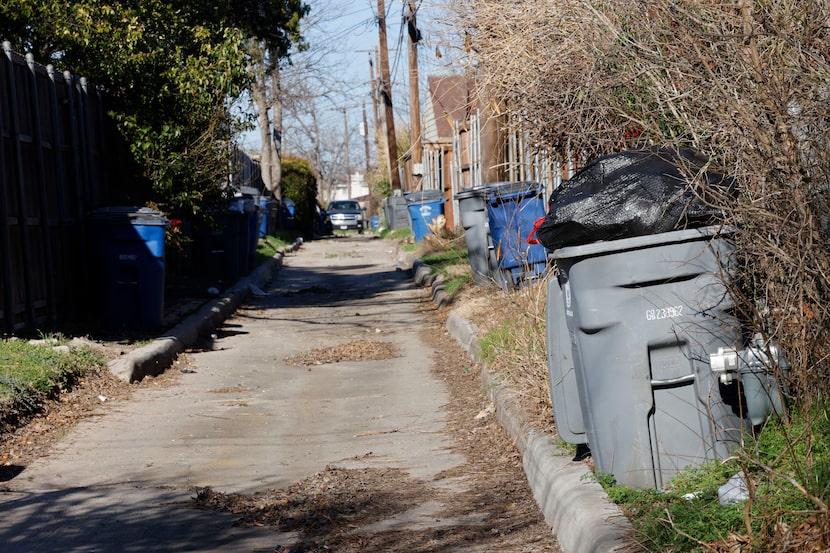
Trash cans are seen on the alley between Bowman Boulevard and Chireno Street, Thursday, Feb. 22, 2024, in Dallas.
Chitose Suzuki / Staff Photographer
Trash pickup
- Action: City officials had proposed phasing out alley trash pickup for homes with narrow, dead-end or unpaved alleys, citing cost and safety concerns. The latest plan would have affected about 26,000 households, but was paused after resident opposition.
- Outcome: The city now is surveying residents for their preferences. Homes with alley pickup make up more than a third of the city’s customers. Higher collection costs could translate into higher fees if the service continues.
More for street repair
- Action: Dallas officials said they’re focusing on street repairs in the latest budget. They allocated about $162 million for street improvements and maintenance, covering 750 lane miles, up from about $125 million for 710 lane miles last year.
- Outcome: Increased investments will help the city improve traffic flow and fix festering potholes that damage cars.
Short-term rental clash
- Action: The city is pressing its bid to enforce limits on short-term rentals, such as Airbnb and Vrbo, in single-family neighborhoods. The dispute is now before the Texas Supreme Court after lower courts blocked enforcement.
- Outcome: Neighbors and officials want tighter oversight, citing noise and housing-supply concerns. Hosts and the tourism industry face uncertainty as the legal fight drags on, even as Dallas prepares for the 2026 FIFA World Cup.
Modernizing parking rules
- Action: The City Council updated off-street parking and loading rules citywide, replacing zoning language dating to the 1960s.
- Outcome: Fewer mandatory parking spaces could lower development costs and allow denser housing, reshaping neighborhoods and downtown growth.
What’s ahead in 2026
The debate over City Hall’s future will intensify as council members consider relocating government operations to a commercial space downtown or repairing the I.M. Pei’s landmark building.
Expect fights over cost, symbolism and preservation on whether the move represents progress or abandonment. The final stay-or-go decision will reverberate across the southern half of downtown.
-Devyani Chhetri
DALLAS COUNTYChild care
Action: The Dallas County Commissioners Court allocated $1 million to help offset child care costs for working families.
Outcome: Employers who provide up to $1,500 per employee can receive a dollar-for-dollar county match, creating as much as $3,000 per worker to cover a portion of day care costs.
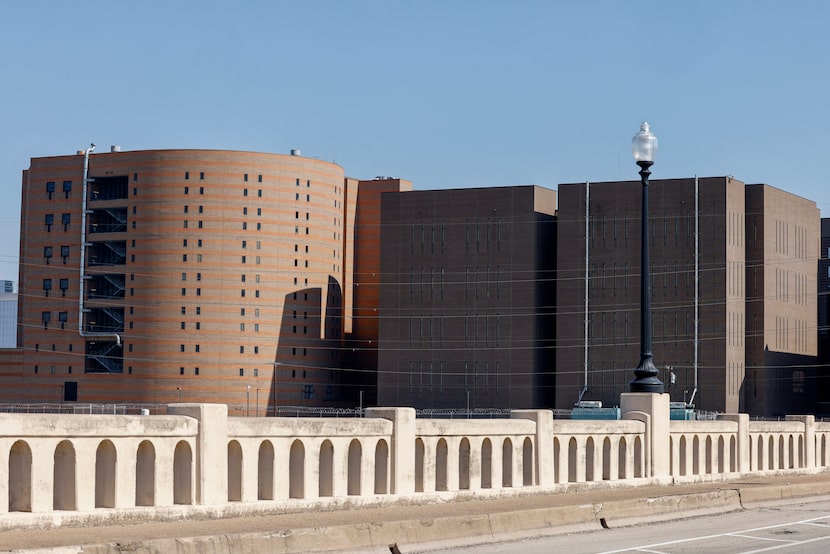
The Lew Sterrett Justice Center pictured, Friday, Oct. 17, 2025, in Dallas.
Elías Valverde II / Staff Photographer
Treatment over jail
Action: To reduce the jail population, Dallas County Administrator Darryl Martin convened a task force to study a Miami-Dade County model that diverts people with serious mental illness into treatment instead of jail.
Outcome: While still in the planning phase, officials are considering four deflection centers where law enforcement could take people accused of low-level offenses for stabilization. A pilot program launched in October at the Austin Street Center shelter with backing from the district attorney’s office.
Emergency food aid
Action: After the federal government shutdown disrupted the food-benefits program for low-income families, the Commissioners Court allocated $1 million to help fill the gap.
Outcome: About 416,000 Dallas County residents rely on the federal Supplemental Nutrition Assistance Program. The county funds supported the North Texas Food Bank’s distribution of produce and pantry staples for households affected by the payment cuts and delays.
Fire marshal rebrand
Action: After the Texas Legislature clarified that fire marshals’ roles are limited to fire and building inspections and barred counties from creating non-statutory law enforcement agencies, Dallas County reassessed its county marshal service.
Outcome: The county stopped calling these employees “county marshals” but didn’t change the way the agency operates. These employees are still used for building security because the new law doesn’t explicitly prohibit it, county officials said.
Steady rate, rising bills
Action: The $828 million budget for fiscal year 2026 kept the county tax rate flat.
Outcome: Even without a rate increase, higher property assessments mean many residents will pay more. The steady rate also allowed the county to absorb the end of pandemic-era relief funds while continuing programs, such as $2 million for homeless services.
What’s ahead in 2026
Countywide politics and elections move to the forefront. The March primary will include county races and more scrutiny of election administration after the Dallas County Republican Party voted to hand-count ballots cast on Election Day, but not during early voting.
DALLAS POLICERecruiting push
Action: Voter-approved charter amendments require the department to reach 4,000 officers, sharpening the department’s focus on recruiting and training. As of November, the force remained more than 600 officers short of that target, according to department records reviewed by The Dallas Morning News.
Outcome: Recent academy classes have been larger than in recent years, and the department hit the City Council’s goal of hiring more than 300 recruits last fiscal year.
Bet on technology
Action: Police already use a growing suite of technology, from facial recognition to a citywide network of license plate-reading cameras. How the department uses the tools has drawn questions from the Community Police Oversight Board and residents.
Outcome: The department has signaled an interest in expanding its use of technology, seeking a free pilot for gunshot-detection technology that has so far underperformed and exploring a drone program that could send aircraft to some calls ahead of officers. It’s touted as a way to help shorten 911 response times.
Domestic violence
Action: Police launched “Operation Safe Families” inn October, aiming to arrest people wanted on outstanding domestic violence warrants or those accused of actively committing domestic violence offenses. The department planned to keep the focus year-round.
Outcome: Police reported 539 arrests during the month but withheld case details to protect victims’ privacy. It also cited partnerships with Genesis Women’s Shelter and The Family Place to connect victims with services and support.

Dallas police Chief Daniel Comeaux speaks during a news conference on Nov. 4, 2025, at the Jack Evans Police Headquarters in Dallas, to share the results of Operation Safe Families. Dallas police Lt. Ashley Lee, from left, Jan Langbein, CEO at Genesis Women’s Shelter and Support, and Tiffany Tate, CEO at The Family Place, listen.
Chitose Suzuki / Staff Photographer
Immigration debate
Action: Dallas drew national attention after Chief Daniel Comeaux said he had declined a $25 million offer tied to a Department of Homeland Security program that would have authorized officers to carry out limited immigration enforcement.
Outcome: Mayor Eric Johnson soon convened a joint meeting of City Council committees. The proposal was roundly rejected at that meeting, drawing praise from some council members and immigrant advocates.
Eyes on downtown
Action: The department increased its downtown police presence and is planning a new downtown substation as part of a public-safety initiative led by Downtown Dallas Inc., the nonprofit pushing quality-of-life efforts in the area.
Outcome: As of November, the central business district had 130 assigned officers, up from about 90 at the start of the year, according to department records reviewed by The News. The substation site has not yet been announced.
What’s ahead in 2026
Police are stepping up recruiting, technology and response-time efforts, and focusing on security in advance of World Cup games that will bring large crowds to the region.
-Chase Rogers