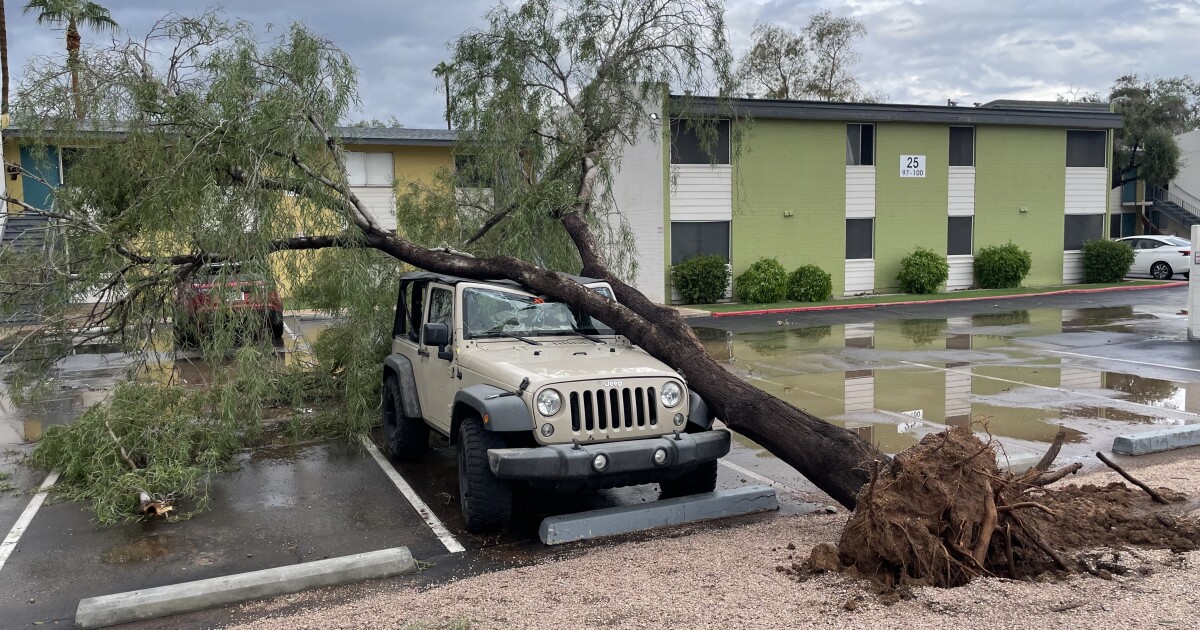
The city of Tempe has been working with churches and other community groups to establish Resilience Hubs that are prepared to help during disasters. Officials say these neighborhood sites were critical during a microburst that hit the city this fall, and now they plan to grow the program.
With wind speeds up to 70 mph, the Oct. 13 microburst damaged more than 1,000 structures, knocked out power for thousands of homes, and displaced more than 130 people.
Three Tempe churches participating in the city’s Resilience Hub program were ready to help. The Community Christian Church served as a disaster assistance center, where 125 families were able to connect with resources from the Red Cross and other organizations.
The Dayspring United Methodist Church acted as a host site for the organization Team Rubicon, which assisted with debris cleanup. And the Desert Palm United Church of Christ was available as a backup shelter.
It was the first time Tempe put its Resilience Hub program to the test during a disaster since the concept was first outlined in the city’s 2022 climate plan.
“I call it the silver lining of the microburst — the thing that we’ve been preparing for for two years and building that trust, it was actually able to be activated,” said Tempe’s heat mitigation and resilience coordinator, Carissa Fowler.
Fowler said the idea behind the Resilience Hubs is “neighbors helping neighbors.” In coming months, she said the city will conduct door-to-door canvassing to get more residents involved in the community disaster preparedness program.
“[Tempe residents] have assets — things that already exist in their community, such as skills, physical assets like chainsaws, their professions are even assets, the networks and connections they have,” Fowler said.
Fowler’s office plans to use information from canvassing to develop community asset maps that can improve how Tempe responds when disruptions occur.
The city is also assessing the possibility of bringing off-grid backup power to some of the community sites.