🔮 New year, old issues
As another year winds down, forecasts for what comes next are everywhere.
But for the economy, 2026 is shaping up less as a fresh start than as a sequel. The big storylines from 2025 — about jobs, artificial intelligence, and tariffs — have yet to be resolved. Mounting frustration with the high cost of living is poised to be a pivotal issue in November’s midterm elections.
When the ball drops in Times Square on Wednesday night, the TV chyron should read “To be continued.”
Where things stand: Government data released this month after shutdown-related delays offer a snapshot of an economy that looks strong on the surface but fragile underneath.
Gross domestic product expanded at a 4.3 percent annual rate in the third quarter, the fastest pace in two years. Solid gains in consumer spending and exports offset a decline in residential and business investment.
But the top-line numbers mask signs of cooling.
Unemployment is rising and inflation remains elevated. Wage growth is easing and households are saving less than they did earlier in the year, suggesting that incomes aren’t keeping pace with rising costs.
“While top level growth of 4.3 percent looks good prima facie, there are some troubling signs when you pop open the hood,” Boston College economist Brian Bethune said in a note.
Still, the probability of recession remains low — 30 percent, according to economists tracked by Bloomberg, down from 40 percent after President Trump rolled out his “Liberation Day” tariffs in April.
Jobs: The labor market has been sluggish and is expected to remain so next year.
Employers added more than a million fewer jobs in the first 11 months of the year than they did last year. That’s despite GDP growth running near its top sustainable pace.
While layoffs have remained relatively tame, an influx of job seekers nudged US unemployment up to 4.6 percent in November, the highest since 2021.
Federal Reserve chair Jerome Powell doesn’t see the jobless rate climbing much further, an assessment shared by most private forecasters.
“We won’t see any kind of a sharper downturn” in employment, he told reporters earlier this month.
The Fed’s optimism stems from its belief that interest rates are now low enough to steady the labor market. (Policymakers have cut their benchmark lending rate by 1.75 percentage points to a range of 3.5–3.75 percent since September 2024.)
 Dario Amodei, chief executive and cofounder of AI-maker Anthropic. KARSTEN MORAN/NYT
AI: Artificial intelligence promises to reshape the economy, but its impact on workers remains a big unknown.
Products such as ChatGPT and Google Gemini improved dramatically, speeding adoption by businesses and consumers. Spending on AI hardware, software, and data centers accelerated economic growth. And AI exuberance spilled into the stock market, raising concerns that a bubble is about to burst.
More importantly, AI poses the threat of massive job losses. Many firms have already curtailed hiring as they assess how they will deploy the technology. Some have laid off workers in anticipation of more widespread AI use.
“Despite concerns about widespread job losses, AI adoption is expected to have only a modest and relatively temporary impact on employment levels,” Goldman Sachs researchers wrote in an August report.
At the other extreme, Dario Amodei, chief executive of AI-maker Anthropic, has said AI could eliminate half of all entry-level white-collar jobs and push unemployment to 10–20 percent within five years.
“Without intervention, it’s hard to imagine that there won’t be some significant job impact there. And my worry is that it will be broad, and it will be faster than what we’ve seen with previous technology,” Amodei said in an interview that CBS News’ “60 Minutes” aired in November.
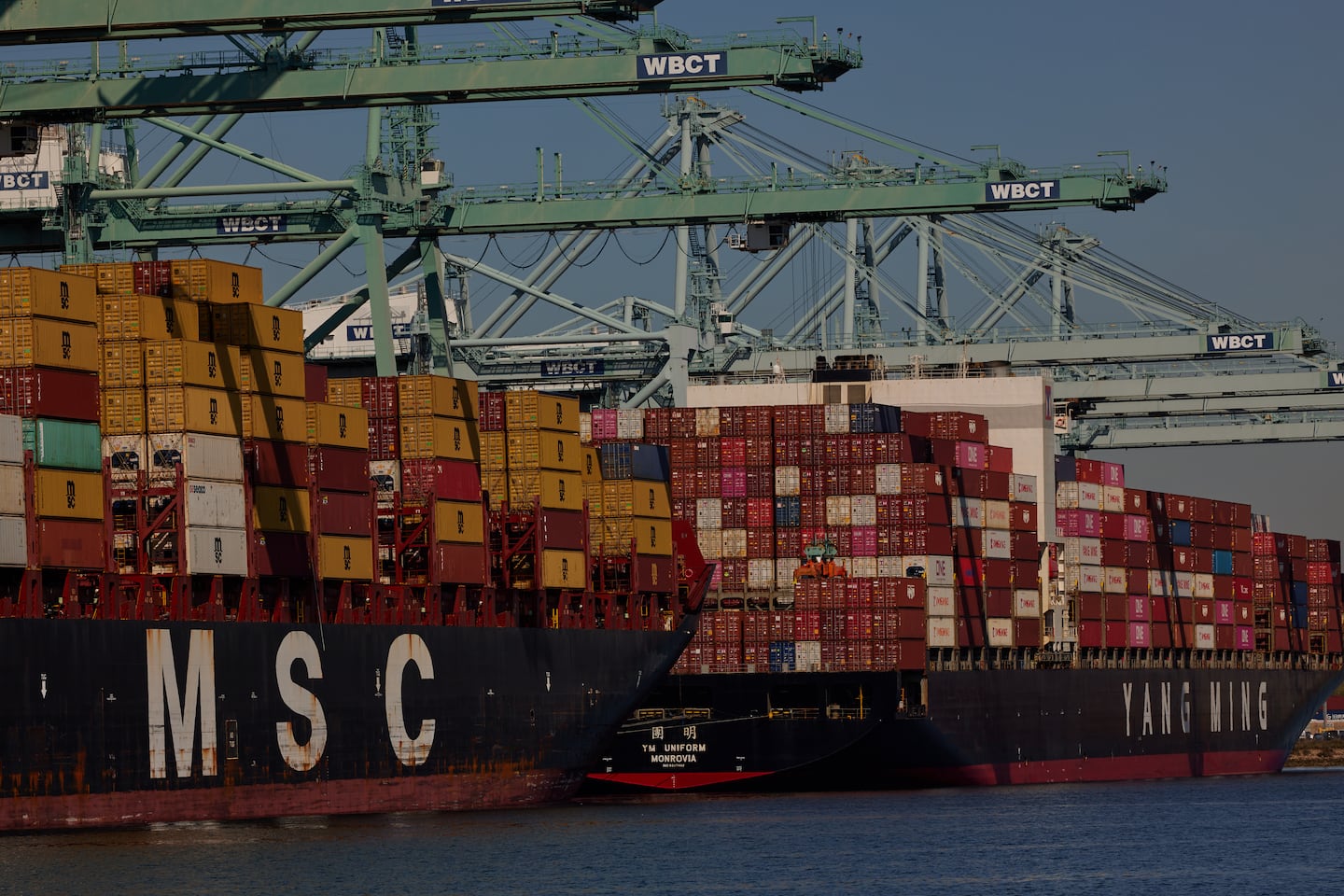 US companies are expected to pass along more of the costs of tariffs to their customers in 2026.MAGGIE SHANNON/NYT
Tariffs: All of this — a cooling labor market and a fast-moving AI transition — is unfolding against the backdrop of disruptive trade policy.
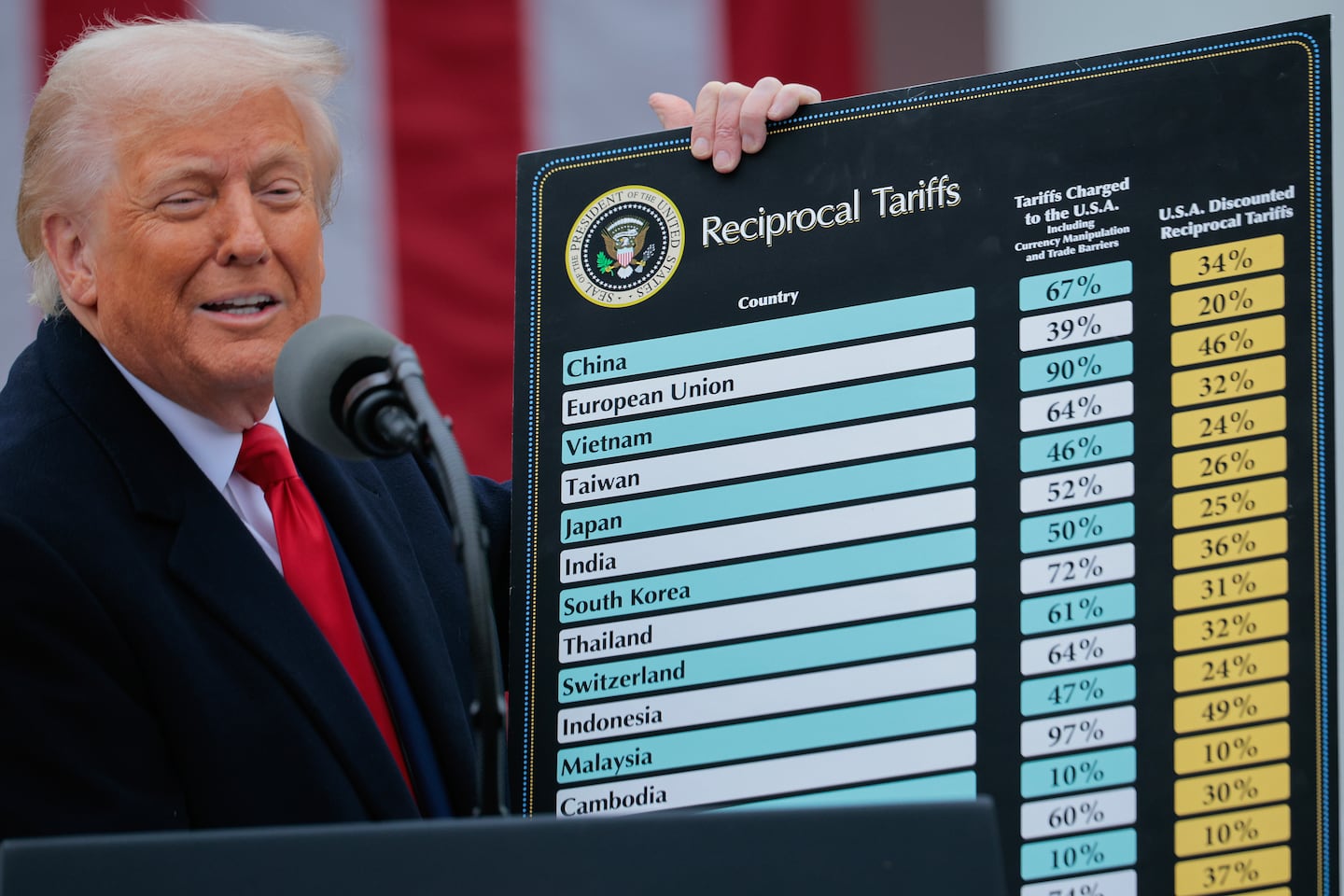
Economists initially warned that Trump’s tariffs — a 10 percent baseline import tax plus rates of up to 40 percent on nearly all US trading partners — would light a fire under inflation or cause a recession. It didn’t happen. The president backed off some tariffs and postponed others, and companies rushed to build up inventories while absorbing some or all of their increased costs.
In 2026, tariffs are expected to be a modest drag on GDP. The Conference Board forecasts that year-over-year growth will slow to 1.3 percent in the fourth quarter of next year, down from 1.7 percent this year.
Tariffs will also keep inflation higher than it would otherwise be as US firms pass on more of their increased costs to customers. In September, the Fed projected that its preferred inflation gauge — which excludes often volatile food and energy costs — would rise 2.6 percent next year, up from a June estimate of 2.4 percent. The central bank’s target is 2 percent.
Final thought: A weak labor market, AI disruption, and tariff headwinds are a recipe for uncertainty but not an imminent recession.
But they may well leave Americans frustrated with a slow-moving economy and high prices, especially if tariffs don’t yield the gains in US jobs that Trump promised. If so, the midterm elections could deliver a harsher-than-usual rebuke to Republicans as the party in power.
Welcome to 2026. Don’t be surprised if it feels a lot like 2025.
“The pessimists have just been wrong for so long that people are kind of tired of that schtick.”
— Stock market strategist Ed Yardeni. None of the 21 Wall Street prognosticators surveyed by Bloomberg News is predicting a market decline in 2026.
Crying foul: How a developer’s lawsuit against Cambridge aims to topple affordable housing rules across Massachusetts.
Secret to success: Warren Buffett’s greatest asset is his character, writes biographer Roger Lowenstein.
Dreambuilder: The family foundation of Bob Marr, the construction firm owner who died in 2022, has pledged $6.5 million to help make the Fieldhouse+ project in Dorchester a reality.
Legal twist: The Trump administration has launched investigations into the use of diversity initiatives in hiring and promotion at major US companies, built on the novel use of a federal law meant to punish businesses that cheat the government.
Slamming the door: What America might look like with zero immigration.
Change of address: Google is rolling out a new feature that allows users to change their @gmail.com addresses without losing their data.
$400,000
— The value of lobster meat that vanished en route from a warehouse in Taunton to Costco locations in the Midwest.
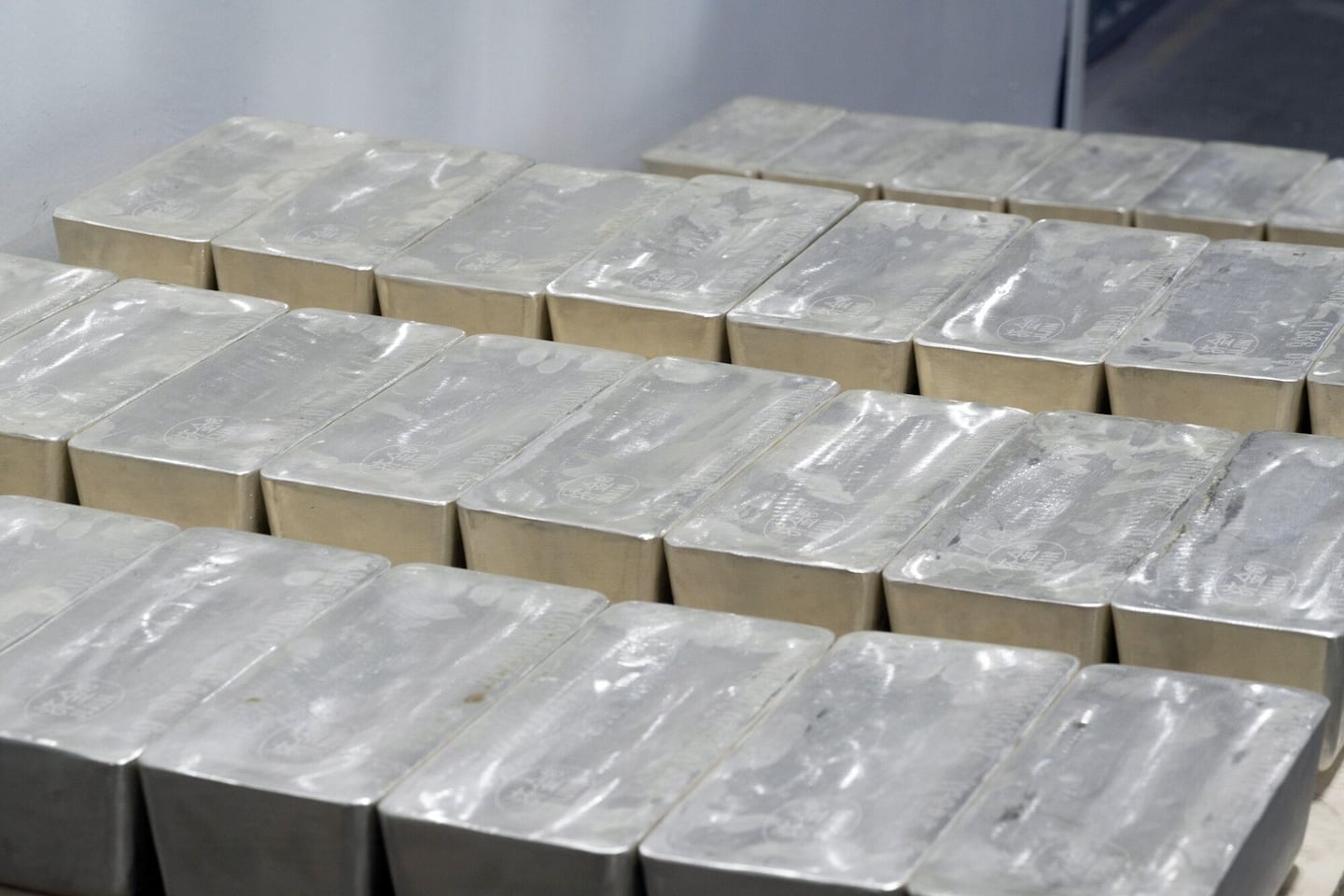 The price of silver has more than doubled this year.Wei Leng Tay/Bloomberg
It’s been a good year for stocks, though not quite as good as 2023 or 2024.
Going into the final three trading days of 2025, the Standard & Poor’s 500 index had returned 19 percent including dividends. The tech-heavy Nasdaq’s return was 23 percent. For all of last year, the indexes returned 25 percent and 30 percent, respectively.
But even with all the focus on the AI-fueled stock rally, the big gains were found elsewhere this year.
Silver soared 174 percent through Friday, outshining gold, which gained 73. Investors have plowed into both metals as a hedge against political uncertainty and inflation. Silver’s surge also reflects demand from industrial users.
On the downside, the spot price of crude oil at the Cushing, Okla., hub dropped 18 percent. Supply has been steadier than forecast and demand has been weaker than hoped.
After setting a record in October, the bitcoin rally — sparked in part by demand from new exchange traded funds — has faltered. The cryptocurrency was off 6.3 percent for the year as of Friday as investors moved their money to gold, silver, and other better-performing assets.
As always, please remember that past performance is not indicative of future results.
📆 On this date in 1891, Thomas Edison patented a wireless telegraphy system — based on electromagnetic induction and conduction — that anticipated some practical uses of cable-free communication, but it was distinct from the radio technologies developed a decade later.
👋 Thanks for reading. Trendlines will be back next Monday. Have a safe and happy New Year!
✍🏼 If someone sent you this newsletter, you can sign up for your own copy.
Larry Edelman can be reached at larry.edelman@globe.com.