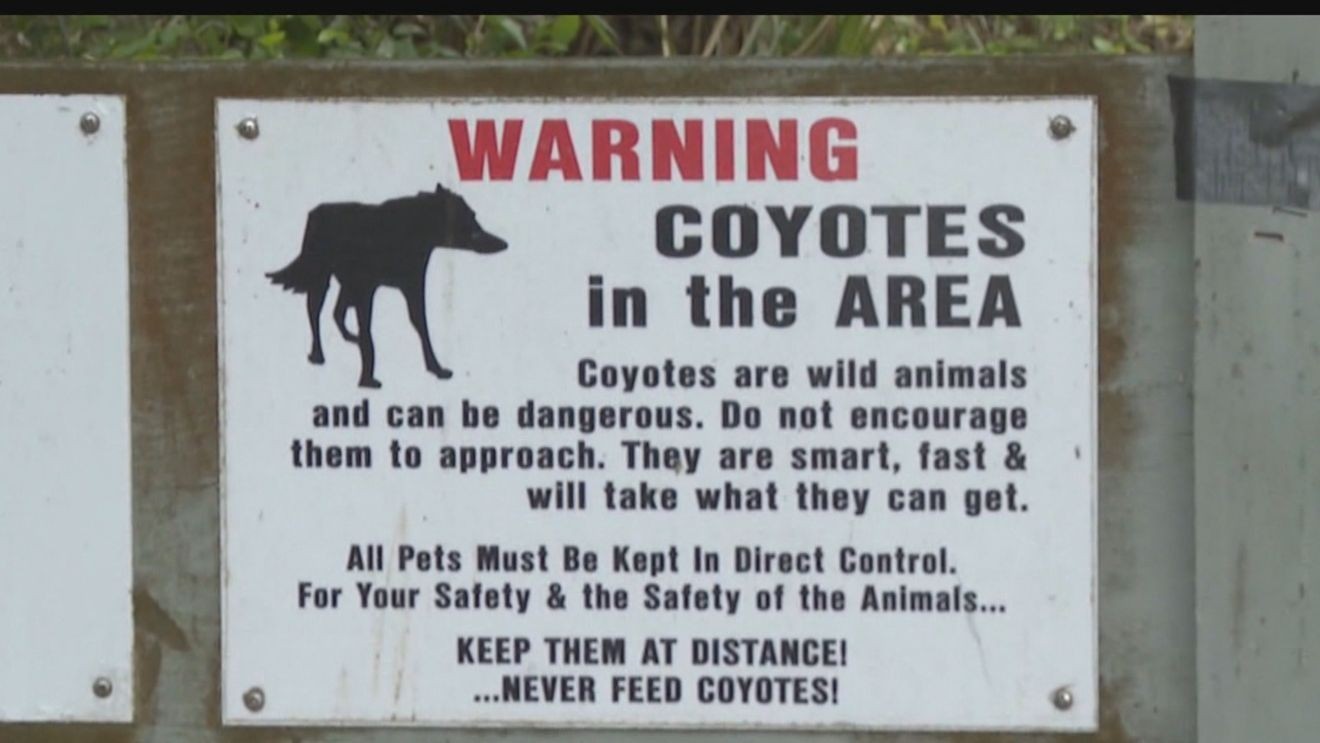
NARRAGANSETT, R.I. (WJAR) — The Narragansett Bay Coyote Study has been working to find a solution to the growing coyote population in Rhode Island since 2004.
After 18 years of field studies, they’re putting final touches on their findings, and revealing it to NBC 10 News.
It comes after authorities warned residents in Wrentham about two dogs killed by coyotes, and another dog in Narragansett was snatched by a coyote while walking with its owner.
“We’re moving forward to be the first state in the nation that successfully manages coyotes,” said Dr. Numi Mitchell, a field scientist for the Narragansett Bay Coyote Study.
She said for 18 years, scientists put GPS collars on the coyotes in the Ocean State, followed them around, and found out what they were eating.
After 18 years of field studies, the Narragansett Bay Coyote Study is putting final touches on their findings, and revealing it to NBC 10 News. (WJAR)
“We found in our study that we could reduce the population of coyotes by 40% if we moved the big food subsidies that they were getting, roadkill deer and farm livestock,” explained Dr. Mitchell.
NBC 10’s Molly Levine asked where the livestock and roadkill remains would go.
“There’s no place you can drop them off where it won’t have an impact,” said Dr. Mitchell.
“We did do a preliminary study on using alkaline hydrolysis digesters, and they’re just composting vessels,” said Dr. Mitchell. “In 18 hours it cooks down to sort of a soup, and we called it ‘safe cycle’, and we hope to have ‘safe cycle’ depots maybe in four places around the state of Rhode Island.”
This would make it convenient for Rhode Island Department of Environmental Management, Rhode Island Department of Transportation, or farmers to dispose of remains, which could then be used as fertilizer.
“What we want to do is remove those 90 tons, is what it amounts to, of deer from the system and probably, not such a large amount, but a significant amount, of farm waste as well, certainly 25 to 50 tons I would think,” she said. “Once we get rid of that, I think we’ll be in really good shape and we’ll have many fewer animals to deal with.”
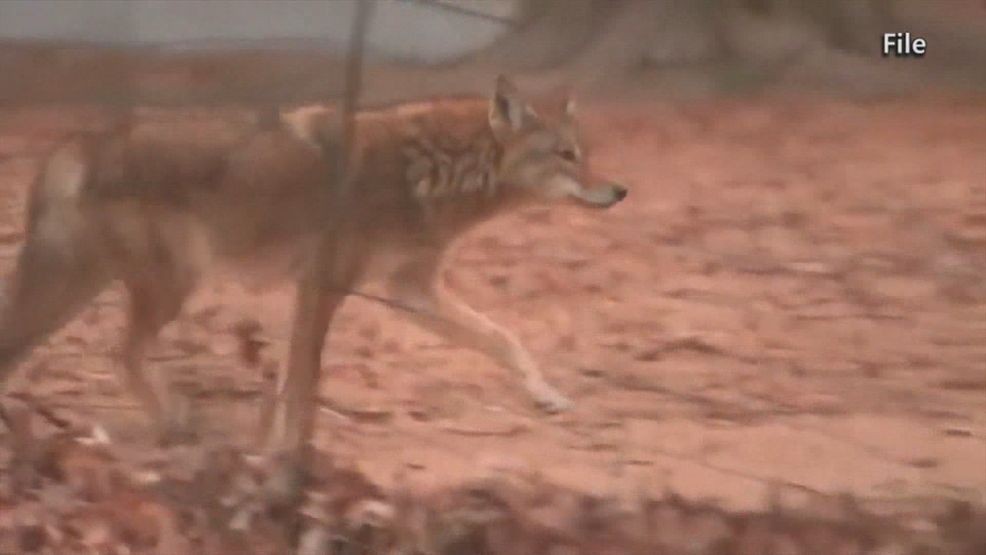
File photo of a coyote.{ }
Dr. Mitchell said hunting coyotes is legal, and a useful tactic to scare the animals, but not a solution to controlling the population.
“There’s decades of data that show if you hunt coyotes the population size just gets larger,” said Dr. Mitchell. “The ones that tend to be more visible are the alpha coyotes, the heads of the family groups that patrol the territory the most,” she explained.
“If that happens, the territory boundaries collapse and coyotes tend to flow into areas and so it actually makes the situation worse,” Dr. Mitchell said.
She said she is still in favor of hunting, and continued pressure on the population, to keep coyotes skittish and afraid of people, but that it shouldn’t be confused with management.
“We attacked this problem in 2004 and have been working hard, suspecting and then finally proving, that we could do it, so I really hope that Rhode Islanders work together to fix the problem which we have the ability to do,” Mitchell said.
The Narragansett Bay Coyote Study hopes to introduce their findings and legislation in the new year.