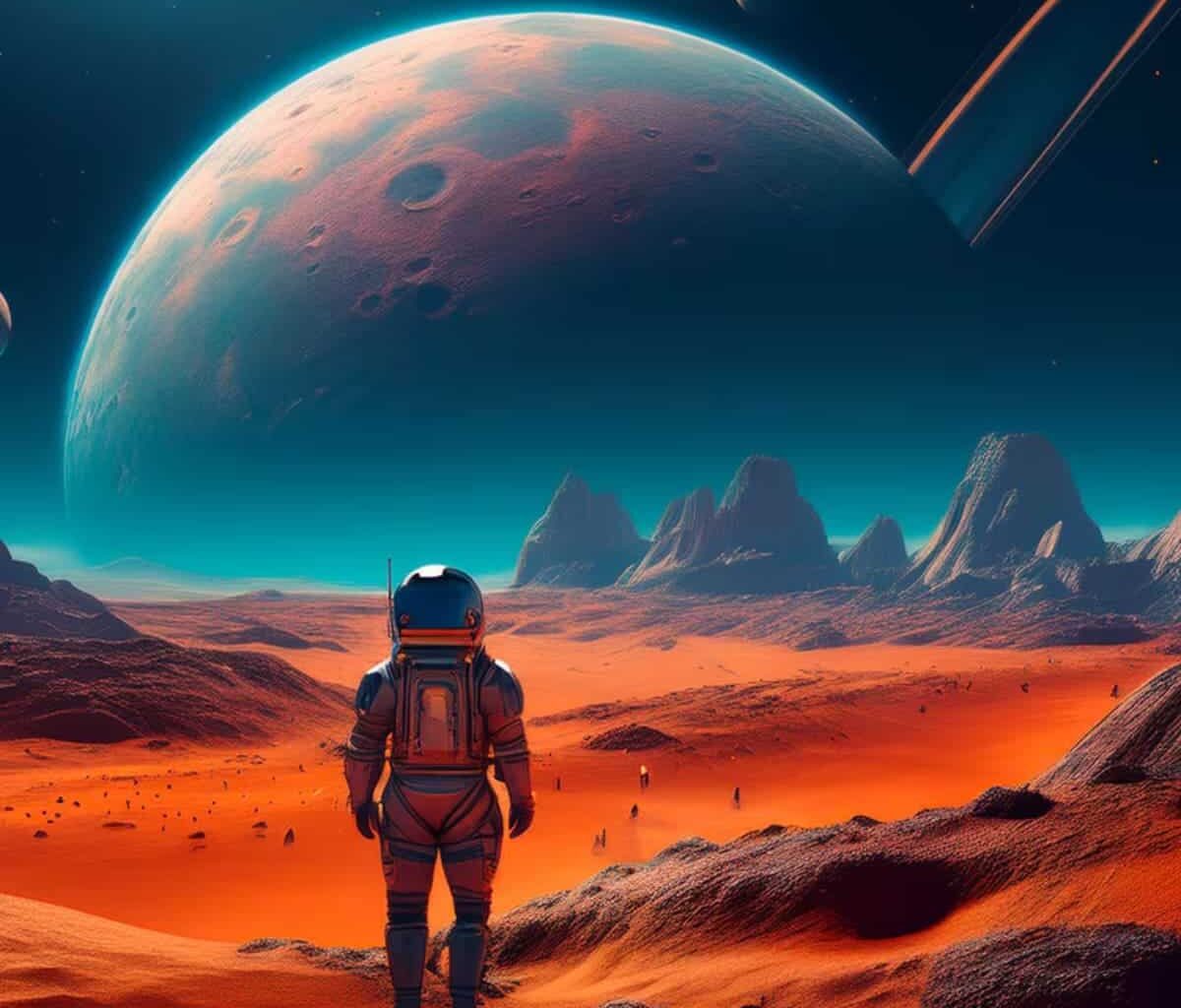
As humanity sets its sights on becoming an interplanetary species, the dream of living beyond Earth is coming closer to reality. Space agencies are planning lunar bases, followed by missions to Mars and nearby asteroids, while Elon Musk envisions a colony on the Red Planet. But a recent study warns that long-term space missions could carry far greater health risks than previously believed.
With new manned missions being prepared for the Moon — meant as stepping stones toward Mars, Phobos, and beyond — researchers are examining how spaceflight might affect the human body. Leaving Earth doesn’t just mean venturing away from home; it means losing the planet’s protective shield — its atmosphere and the Van Allen radiation belts — that guard us from dangerous cosmic radiation.
A recent study by the Guy Foundation, an independent research group advancing quantum biology, has drawn attention to the potential biological toll of long-term space travel. Its findings suggest accelerated aging, insulin resistance, and reproductive problems — all of which could worsen over time in deep space. While these results don’t shock scientists, they do challenge the public’s assumption that humans can easily adapt to space environments.
The role of microgravity and radiation in cellular decline
The study found that microgravity and weightlessness disrupt mitochondria, the cell’s energy producers, undermining metabolism and heightening oxidative stress. Increased exposure to cosmic radiation adds another layer of risk, damaging DNA and further intensifying that stress. Without Earth’s magnetic field, the body’s internal balance — its cellular homeostasis — could also falter.
Researchers also identified quantum-level disruptions affecting metabolism, linking microgravity, radiation, and weakened cellular function as interconnected threats.

The health of astronauts working on Mars will be exposed to greater risks than those aboard space stations orbiting Earth. © NASA, Johnson Space Center
The limits of human adaptation
Astronauts returning from the International Space Station can typically recover after weeks or months, but for missions farther from Earth — and lasting far longer — the damage may be harder to reverse.
A key takeaway from the study is that spaceflight seems to accelerate aging. Complex organisms like humans simply don’t adapt to the harsh, unnatural conditions of space the way short-lived microbes do. That raises serious questions about how space travel might affect the human microbiome — the intricate ecosystem of bacteria vital to our health.
So far, research on space habitation has focused more on survival than on well-being. Surviving isn’t the same as thriving. Most astronauts are young and fit, but what about those who aren’t? The long-term effects on older or less healthy individuals remain largely unknown, especially for missions beyond low Earth orbit.
Recreating Earth wherever humans go
Short of genetic engineering — which opens a Pandora’s box of ethical and legal dilemmas — the best hope for protecting astronaut health may be to recreate aspects of Earth’s environment wherever humans travel. More realistically, scientists must pinpoint the environmental factors that cause disease and find ways to reduce their impact — or accept that some limits of human biology simply can’t be overcome.
Conclusions for human health
The findings from this study underscore an urgent need to better understand the health consequences of space travel. As we push toward life on other worlds, this knowledge will be vital — not just for astronauts’ survival, but for their ability to live and thrive far from Earth.
Such research isn’t only about safety; it’s about shaping the future of deep-space exploration itself. In the vast, radiation-filled void between planets, health risks will multiply. If we’re to build an interplanetary civilization, science must first learn how to keep the human body — and mind — alive and well beyond the cradle of Earth.

Rémy Decourt
Journalist
Born shortly after Neil Armstrong’s first steps on the Moon in 1969, my journey into space exploration has been entirely self-taught. A military stay in Mururoa sparked my formal education in space sciences, and early sky-watching experiences in an astronomy club ignited my passion. I founded flashespace.com, transitioning from sky observation to a deep interest in space missions, satellites, and human and robotic exploration. Since 2010, I’ve been part of Futura’s editorial team, covering space news and working as a freelance writer with extensive international field experience in space-related sites.