We’ll provide some targets who will likely improve their value by next offseason, plus some sleepers you should take a shot on before the rest of your league catches up. Then we’ll round out the group with two fades who might be at the peak of their value right now.
Targets
Freddy Peralta, SP, Brewers
Peralta has been one of the more underrated starters in fantasy over the last few seasons. In 2025, he was the sixth-best starter in fantasy, as he took a big step forward in his win total while his ERA finally matched his underlying skills. An undersized righthander, Peralta has shown durability over the last three years, making 30 or more starts in each season since 2023. Peralta boasts two pitches that grade as plus-plus in his fastball and changeup, as well as a pair of breaking ball shapes that grade as average. It’s a good pitch mix with command and the ability to miss bats. Peralta could potentially be traded this offseason and will enter free agency after 2026. At 30 years old, he still has a three-year window of peak seasons remaining. [Geoff]
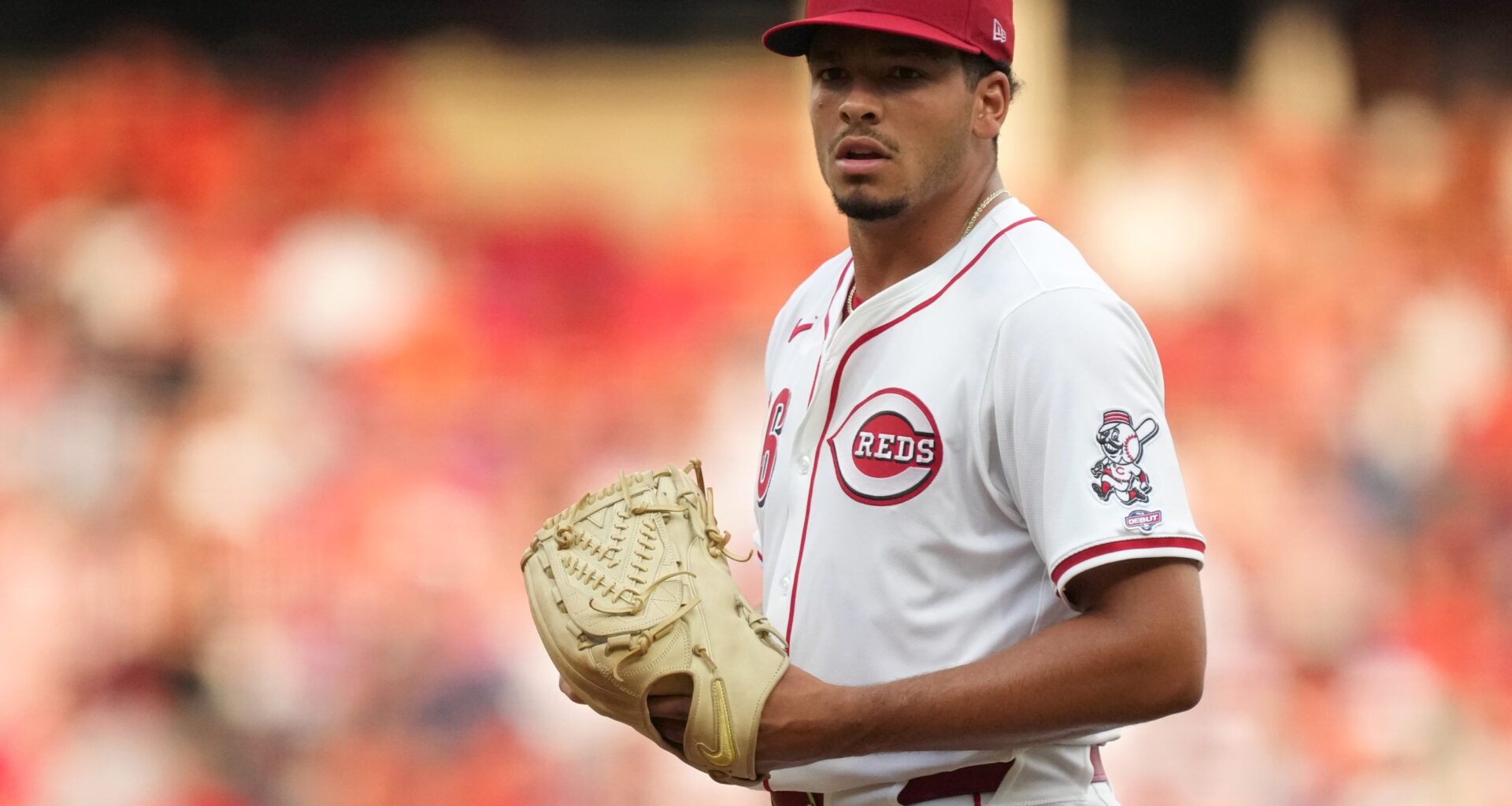
Chase Burns, SP, Reds
Over the final few months of the season, I debated with which young pitcher I prefered: Chase Burns, Jacob Misiorowski or Nolan McLean. This was before the outstanding postseason performances of Trey Yesavage, Cam Schlittler and Connelly Early added even more names to the list of young horses. Even so, my consistent answer was Burns. RoboScout loved what the Reds righthander did in the upper minors, projecting his major league equivalency to be a 1.13 WHIP and 3.52 ERA with a 26% strikeout rate and 6% walk rate. In his debut, he had a 1.32 WHIP and 3.44 xERA with a 36% strikeout rate and 8% walk rate. In other words, RoboScout thinks Burns is better than what he showed. It might be low-hanging fruit to compare Burns to another fastball/slider fireballer on the Reds in Hunter Greene, but I think it’s instructive to use him as an example about how having two primary pitches of that caliber can lead to success while also potentially resulting in a career speckled with arm injuries. Being three years younger than Greene, Burns presents more of a runway for being able to weather any potential injury hiccups in his productive fantasy period. [Dylan]
Sleepers
Jonah Tong, SP, Mets
With an unsightly 7.71 ERA and a 1.77 WHIP across his five starts in his major league debut, I think there is an opportunity to take advantage of what might be the nadir of Tong’s value. With the same 64-degree arm angle that Blue Jays pitcher Trey Yesavage possesses, Tong too provides a semi-unique look that ate up upper-level minor league hitters to the tune of a 40.5% strikeout rate across 113.2 innings in Double-A and Triple-A. Per RoboScout, despite the reasonably lofty 10.6% walk rate, that corresponds to an expected WHIP and ERA of 1.16 and 3.35, respectively. That projection is better than Chase Burns’ 2025 minor league performance and Yesavage’s when translated to the major league environment. Of course, it is possible that Tong’s stuff is not as electric as Burns’ or not as deceptive as Yesavage’s but note that FanGraphs’ PitchingBot has Tong’s stuff rating at 62, which is better than Yesavage’s 55. Yesavage also had a 10.5% walk rate in the minors in 2025—nearly identical to Tong’s. Still, trying to weight recent MLB performance for a player with less than the 113 innings in the upper minors can be tricky. There is a chance Tong is not in the Mets’ rotation for more than 100 innings in 2026, but in terms of long-term value, he should be a mid-3s ERA pitcher with more than a strikeout an inning for the next 5-7 years. [Dylan]
Tatsuya Imai, SP, Free Agent
Imai’s posting window is coming to a close, but we still don’t yet know where he will sign. What we do know is that Imai has had success in NPB and brings a pitch mix that should translate well to MLB. Imai has a flatter four-seam fastball similar to the Dodgers’ Emmet Sheehan or the Brewers’ Freddy Peralta. His slider is his best pitch and is a better version of Trey Yesavage’s cut slider. Like most Japanese pitchers, Imai also has a very good splitter. It’s a three-pitch mix of above-average-or-better options with average control projection. Imai has taken big strides over the past few seasons and looks poised for a potential top 30 pitching season in 2026. [Geoff]
Fades
Tyler Glasnow, SP, Dodgers
Glasnow is entering his 11th MLB season, and at this point, it’s clear he’s not capable of staying healthy over a full season. Things started to slip for Glasnow in 2025, as his strikeouts dropped and walks rose. He saw a drop in fastball velocity and hitters chased less, swung less and made more contact against him. At 32 years old, it looks like the beginning of the end for Glasnow as a potential top 20 starter in fantasy. That’s if he ever truly was one. [Geoff]
Spencer Strider, SP, Braves
After two strong seasons in 2022 and 2023—the latter of which resulted in 20 wins with a ridiculous 37% strikeout rate—Strider was a popular first-overall pick in 2024 redraft leagues. Unfortunately, he was then befallen by a right elbow injury. Having internal brace surgery rather than the full-blown Tommy John, Strider has not yet shown glimpses of his previous self, with his fastball no longer being the dominant offering it once was. Not only has it lost 2 mph since 2023, it’s also lost two inches of IVB and ride. The error bars are wide here, with the optimist viewing 2025 as Strider trying to regain his sea legs. Unfortunately, the pessimist’s take that Strider may never reach his previous heights is probably more correct than the one. Currently, his price is reflecting the potential for him to once again be the top pitcher in baseball, and I think the risk is too high to hope that’s the case. [Dylan]