Remember the climate crisis? The relentless, escalating threat to human health and safety that was once the main driver of clean energy policy?
You’d be forgiven if it’s all a bit hazy, given how swiftly the term was dropped from the energy-transition lexicon this year.
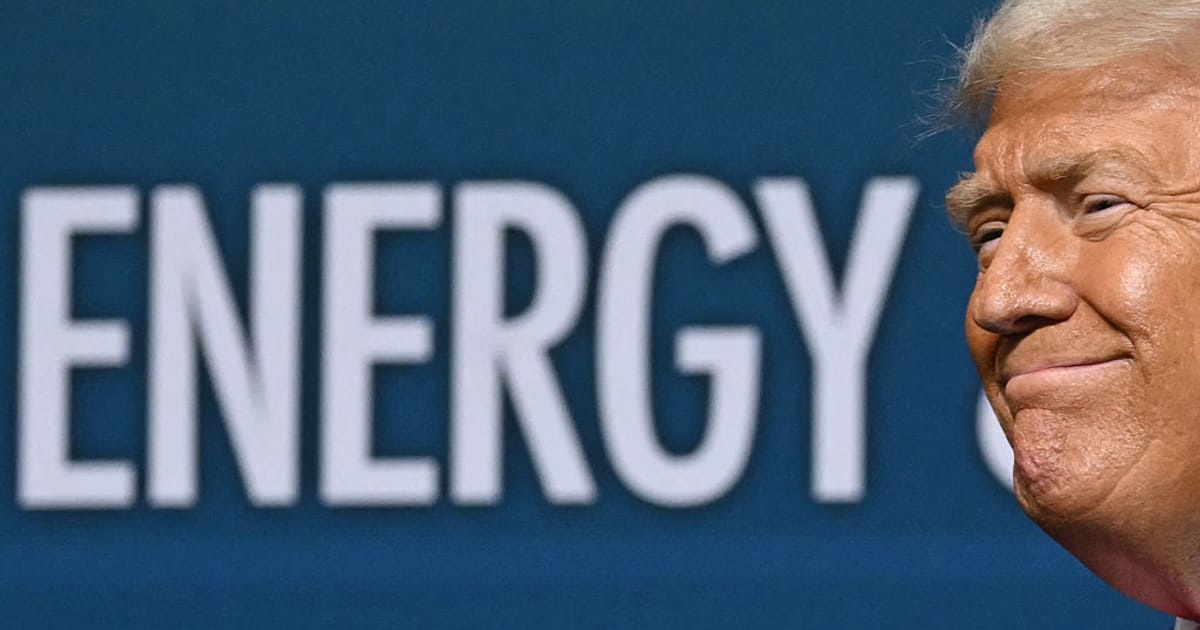
Starting on Inauguration Day, President Donald Trump not only eviscerated climate policy but completely upended the way Americans talk about energy. Though Trump seemed more concerned with taking down ideological rivals than helping constituents’ bottom lines, his new lexicon got a boost from consumer concerns about soaring energy prices that had people casting around for quick fixes. Climate change was out. Talk of “energy dominance,” “energy abundance,” and “unleashing American energy” rushed in. The shift was like “6-7” taking over a fourth-grade classroom: inexorable and irresistible.
The new terminology made the scene on Trump’s first day back in the White House, when he signed an executive order with a grab bag of fossil-fuel giveaways under the title “Unleashing American Energy.” A few weeks later, he used another executive order to create the National Energy Dominance Council. Both orders touted the country’s “abundant” resources.
Clean energy advocates quickly began invoking similar terminology in an attempt to shoehorn solar power into the new narrative. The Solar Energy Industries Association even passed out stickers with the phrase “energy dominance” on Capitol Hill as part of its lobbying efforts.
Some media outlets followed suit in deemphasizing climate. In November 2024, five major U.S. newspapers published a total of 524 stories about climate change; in the same month this year, those papers ran just 362 climate change articles, according to researchers at the University of Colorado Boulder — a drop of almost a third. (Both numbers are way down from the October 2021 peak of 1,049 climate articles.)
A number of Democratic politicians embraced the vibe shift in their own ways. “All of the above” crept in among leaders — notably New York Gov. Kathy Hochul and Massachusetts Gov. Maura Healey — who wanted to signal they are open to the changing conversation, but not ready to give up on renewables entirely. In New Jersey and Virginia, Democrats Mikie Sherrill and Abigail Spanberger ran successful gubernatorial campaigns with hardly any mention of climate change; likewise, New York City mayor-elect Zohran Mamdani spent little time on the topic.