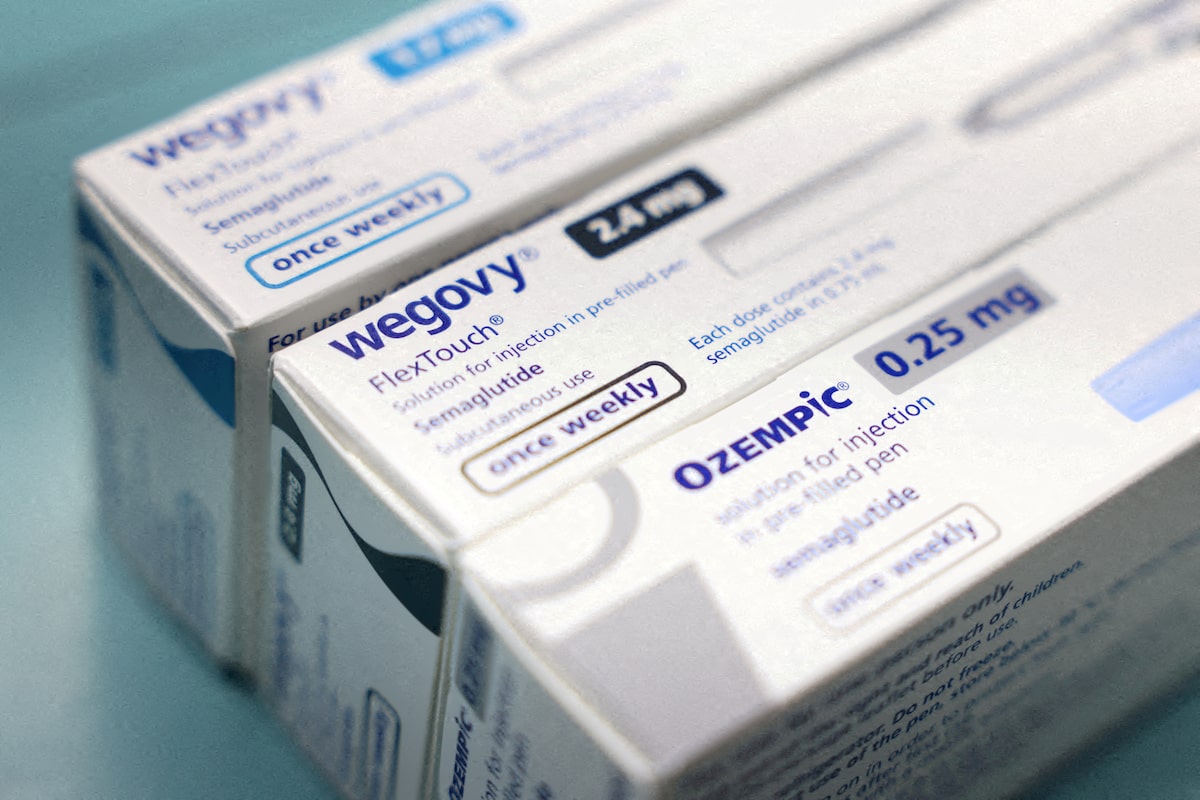
Ozempic and Wegovy will lose market exclusivity in Canada in January, paving the way for cheaper generics to enter the market.Hollie Adams/Reuters
Canadian employers and their employees can expect to see drug plan savings as generic versions of diabetes and obesity medications are introduced, cutting insurance costs.
Ozempic and Wegovy – two brand-name semaglutide drugs prescribed for diabetes and weight loss – will lose market exclusivity in Canada in January. That means generic pharmaceutical companies can launch versions of semaglutide, which could lead to prices falling by 65 per cent.
The industry expects at least one generic semaglutide product to become available in Canada by the summer, with multiple versions out by the end of 2026.
Insurers are already preparing their clients, known as plan sponsors, for changes to expect in their group benefit plans.
Hims & Hers acquires Livewell in Canada in anticipation of generic Ozempic
Frédéric Leblanc, a pharmacist at insurer iA Financial, works in drug management strategies for group insurance clients and expects the introduction of generics to “significantly impact” their plans. He has been meeting regularly, in some cases monthly, with plan sponsors to discuss the potential cost savings for generic GLP-1 drugs.
“Every time a generic comes to market – and this is a big one coming – there is a break on expenses for a few years,” Mr. Leblanc said. “But new medications are always coming, so it’s a cycle and we have to realize that we are always funding more medications.”
Generic drug prices are set out in a formula agreed to by manufacturers and public-health plans. For semaglutide, it is expected to reach 35 per cent of the Ozempic brand price once at least three generic options are on the market, presenting “substantial savings for both plan sponsors and members alike,” Mr. Leblanc said.
In recent years, weight-loss drugs have soared in popularity, with total claims paid out by Canadian insurers spiking to $77-million in 2024 from nearly $38-million a year prior. The current list price of Ozempic, which is prescribed for diabetes, is about $2,899 a year before pharmacy and distributor markups. Wegovy, with a higher dose of semaglutide, costs about $5,066 a year and is prescribed for weight loss.
The introduction of generics next year is a double-edged sword for the industry – as costs per claim decrease, the number of claims will jump significantly, said Colin Ferguson, a senior benefits consultant with Quinn Advisory, a firm that advises companies on how to set up and renew group benefit plans for employees.
Health Canada approval backlog expected to push back arrival of generic Ozempic
Even if it results in a higher number of claims, plan sponsors are anxious to see generics come to market, he said, as nearly every company has seen semaglutide claims driving up the cost of their employee group benefits.
The growing demand poses a problem for private benefit plans, which are funded by employers and have a direct impact on their bottom lines.
Only about 30 per cent of plan members insured through iA have coverage for obesity and weight management – which includes Wegovy. That compares to Ozempic, which is widely covered by most employers, Mr. Leblanc said.
However, if generic pricing makes coverage more affordable for employers, there could be an increase in the number of plans that will cover obesity medication.
“We are preparing for everything we need to do so that everybody benefits from a lower price, both in diabetes and eventually in weight management,” Mr. Leblanc said.
Quebec-based Beneva Inc. is also keeping an eye on the number of plan sponsors who may redesign their plans to include weight management drugs.
“These are not a standard inclusion, like Type 2 diabetes drugs, but the conversations that have started to come up is, ‘Why aren’t we acknowledging as an industry that obesity is a chronic condition,’” said Sunil Hirjee, vice-president of sales at Beneva Inc.
Most group benefit plans do not reimburse up to 100 per cent of a drug’s cost, leaving employees to pay a certain percentage out of pocket. With more expensive drugs, even having a co-pay of 10 or 20 per cent can make paying out of pocket unaffordable.
People don’t always take their prescribed medications “as socioeconomic factors can come into play,” Mr. Hirjee said. But generics, with their lower prices, could change that. “If messaged properly, you get a really big adoption rate.”
Canada’s public health plans end talks with Novo Nordisk to cover weight-loss drug Wegovy
Typically, when a generic drug comes to market, group benefit plans automatically reimburse the drug at the new lower price. There’s likely still a co-pay but it will be lower.
If a patient decides they want to continue to use brand-name medication, most insurers will require them to pay out of pocket for the remaining balance. In certain cases, usually for medical reasons such as an allergy, an insurer will make an exception to reimburse the full price of a brand-name drug.
Major insurers Manulife Financial Corp., Sun Life Financial Inc. and Canada Life told The Globe they are all monitoring the GLP-1 landscape ahead of the patent’s expiry.
“These are high-demand therapies, and affordability remains a priority,” Manulife spokesperson Fiona McLean said in an e-mail.
Sun Life spokesperson Jolene Sonshine said that, generally, when plan sponsors have a drug already listed, such as Ozempic or Wegovy, listings of the generic product will occur right away. Patients can still choose to get the branded product if they wish – they have to pay the difference as the plan will only cover the lower-cost alternative.
“This helps balance both patient choice and plan sustainability to maintain robust employer coverage,” Ms. Sonshine said.
Prior authorization from doctors will still be required for any generic equivalents of Ozempic, Amélie Gagnon from Desjardins Insurance said.
“If a plan member has already been approved for reimbursement of Ozempic, they will be able to switch to a generic without needing to submit an additional request,” she said.
Mr. Leblanc said the reason for prior authorization, even at the lower price, is because GLP-1 drugs will continue to be in the top 10 expenses for most insurers.
Group benefit providers Green Shield Canada and Empire Life Insurance both declined to comment on GLP-1 generics.