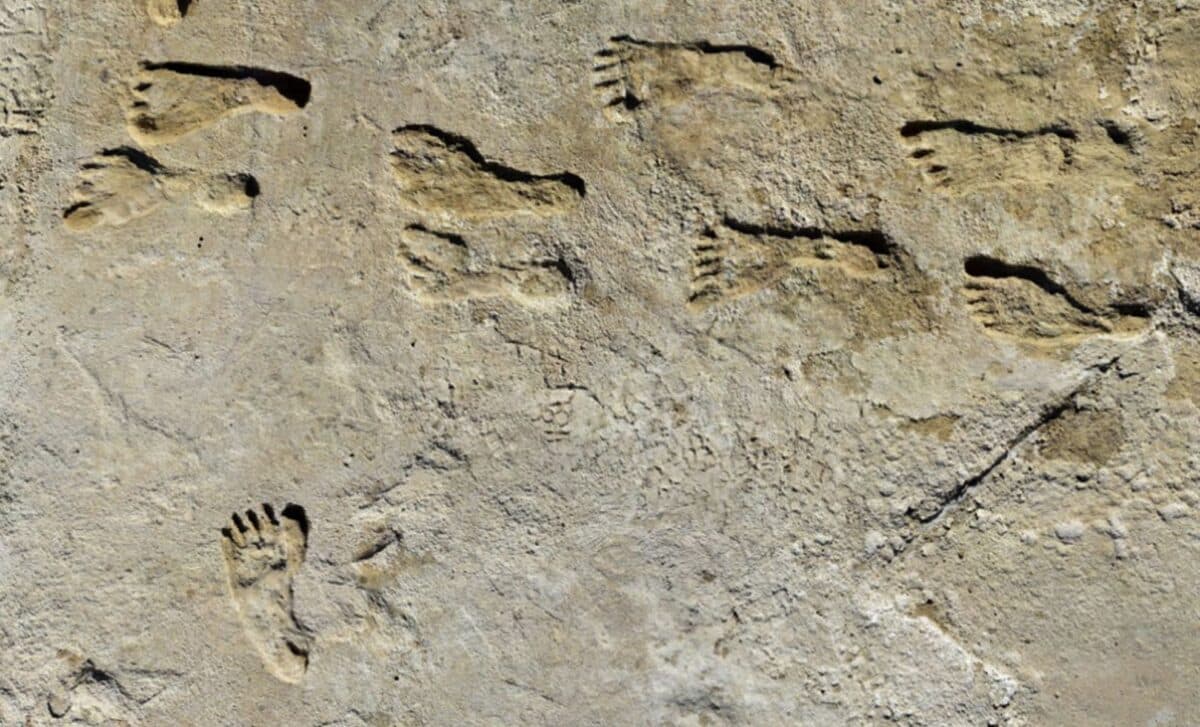
The discovery was made in White Sands National Park, where researchers studying the dry bed of the prehistoric Lake Otero identified dozens of ancient footprints embedded in layers of sediment. Radiocarbon dating of seeds found above and below the footprints confirmed their age, placing them at the height of the Last Glacial Maximum, a period lasting from about 26,500 to 19,000 years ago, when the continent was long thought to be uninhabitable.
According to a paper published in the journal Science, the find challenges long-held timelines that placed human arrival in North America no earlier than 16,000 years ago. The study, led by Professor Matthew Bennett of Bournemouth University, suggests that humans were living in this region of New Mexico at least 7,000 years earlier than previously confirmed by other archaeological evidence.
Before the Ice Melted, Humans Were There
Researchers used radiocarbon dating of Ruppia cirrhosa seeds, aquatic plants found above and below the footprint layers, to determine the age of the tracks. The dates were consistent and well-ordered, pointing to human activity between 23,000 and 21,000 years ago.
“This corresponds to the height of the last glacial cycle, during something known as the Last Glacial Maximum, and makes them the oldest known human footprints in the Americas.” said Dr. Kathleen Springer of the U.S. Geological Survey, who took part in the research.
According to Professor Vance Holliday from the University of Arizona, very few archaeologists have accepted dates earlier than 16,000 years due to the lack of reliable evidence.
“The White Sands tracks provide a much earlier date,” he said, positioning the find as a turning point in understanding early human migration across the continent.
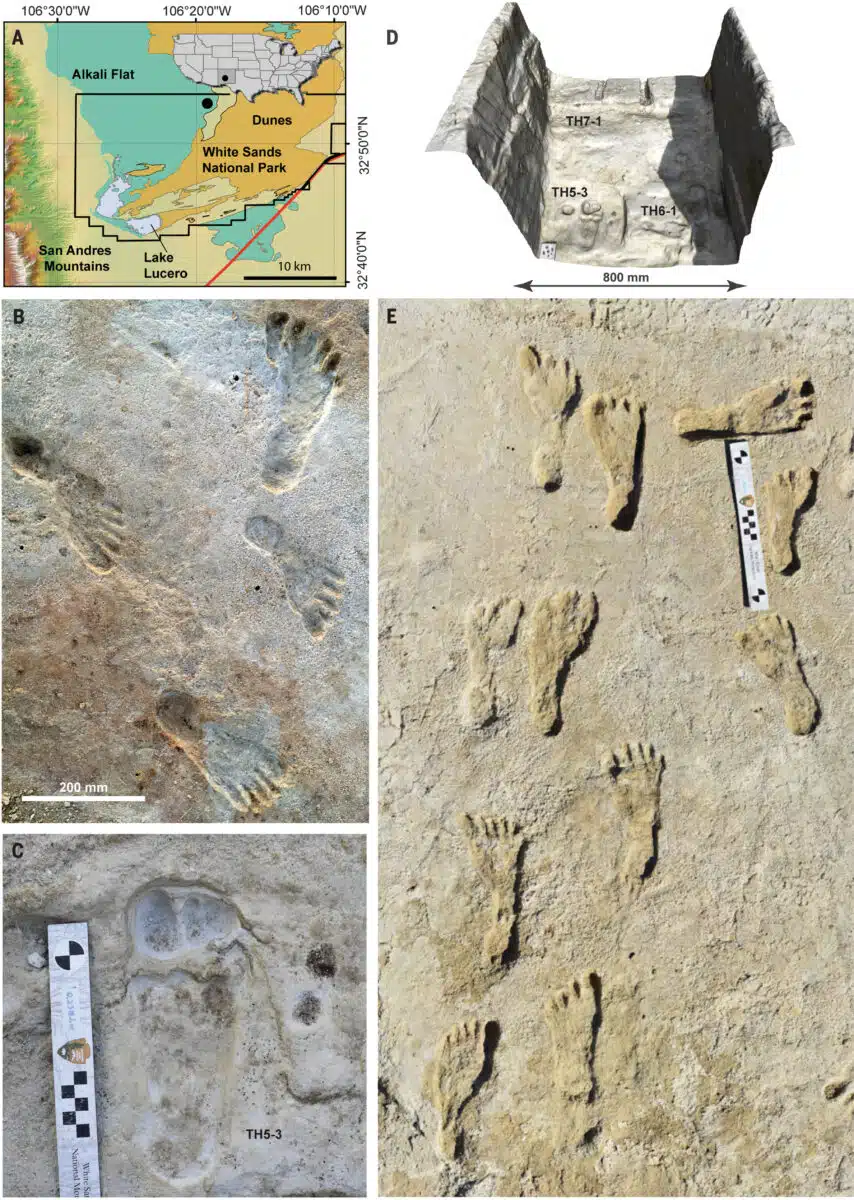 Map of the Study Area Showing Ancient Footprints at White Sands National Park. Credit: Science
Footprints Tell a Story of Daily Life
As mentioned in the research, the majority were made by teenagers and children, suggesting that the area was not just a transit point but a lived-in environment.
“Teenagers interacting with younger children and adults,” said Professor Matthew Bennett of Bournemouth University, describing what the track patterns reveal. “We can think of our ancestors as quite functional, hunting and surviving, but what we see here is also activity of play, and of different ages coming together.”
Footprints of extinct animals, like mammoths, giant ground sloths, and dire wolves, were also identified in the same area, adding context to the ecosystem these early people inhabited.
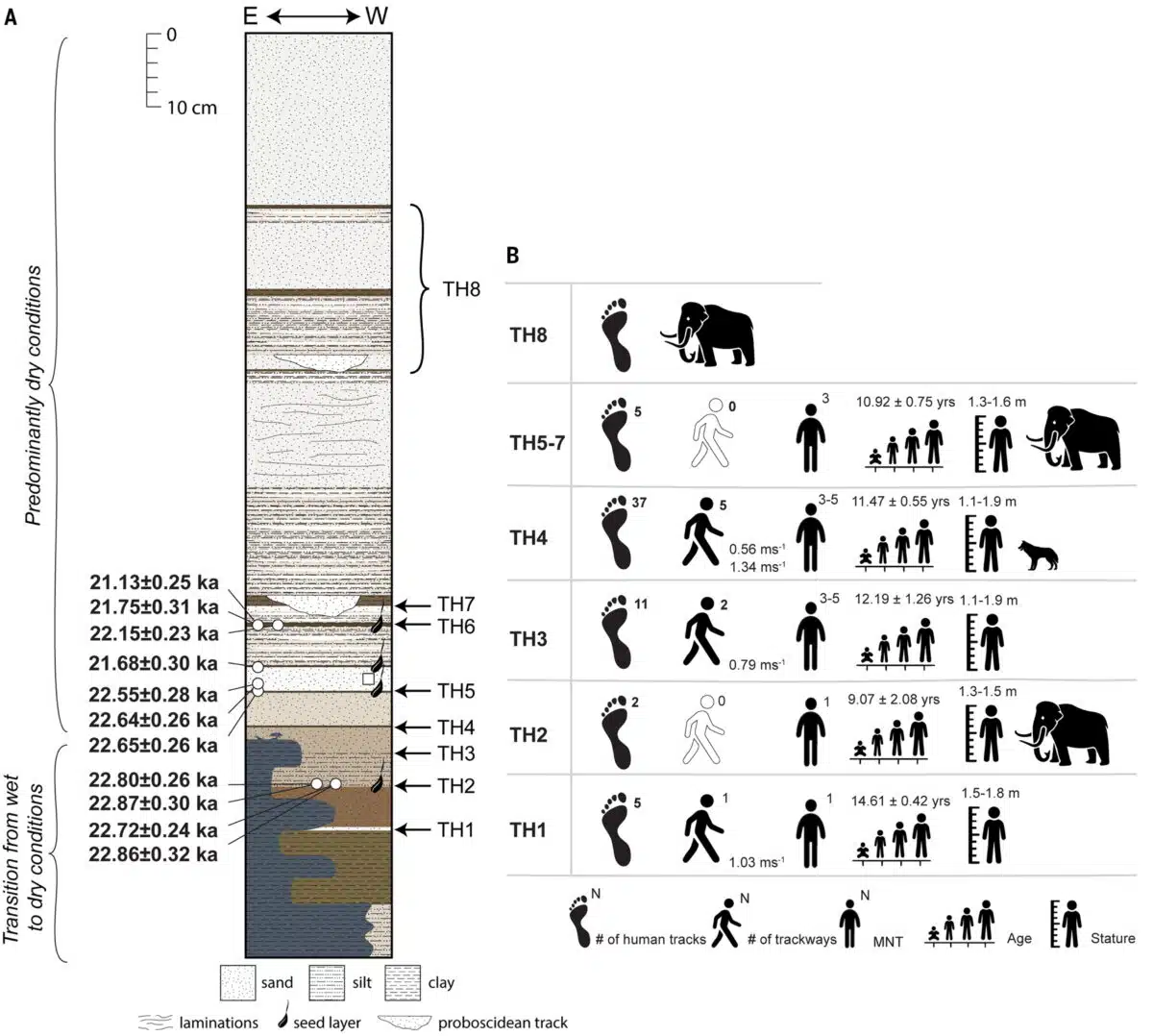 Geologic context and track-maker demographics at the White Sands National Park locality. Credit: Science
Ancient Traces Under Threat from Erosion
Although the footprints offer an extraordinary window into the distant past, their preservation is under immediate threat. The surface of White Sands National Park, particularly in the area known as Alkali Flat, is highly vulnerable to erosion, which is steadily destroying the exposed trackways.
“It is incredible to have the confirmation on the age of the human prints,” said David Bustos, the park’s resource manager, who first discovered the tracks. “Exciting but also sad to know that this is only a small portion of the 80,000 acres where the prints have been revealed bare and are also being rapidly lost.”