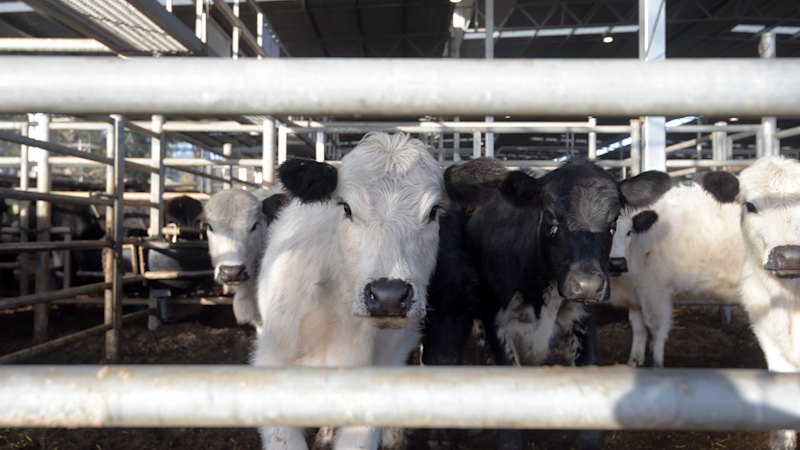
“This decision will have a severe impact on trade flows to China over the duration of the measures’ enforcement,” said chief executive officer Tim Ryan. “Imports of Australian beef are not a cause of damage to the domestic beef industry in China.”
Loading
Australia shipped 266,000 tonnes of beef to the Chinese market in the 12 months to the end of November, according to the industry council’s figures, which comprises roughly eight per cent of China’s beef imports.
The new quota was introduced after a 12-month investigation by China, which found that rising imports had undermined local producers. This means the action is permitted under World Trade Organisation rules, which sanction so-called safeguard measures to protect domestic industries.
Prime Minister Anthony Albanese on Thursday was more circumspect than his ministers, saying Australia had not been singled out by China, and added he was optimistic about the beef industry’s prospects in new markets.
“This is an announcement that is across the board,” Albanese said.
“Australian beef is in my view, proudly as the prime minister, the best in the world. Our products are in great demand right around the world, and we expect to continue.”
Opposition Leader Sussan Ley said China’s trade restrictions were a test of the Albanese government’s diplomacy.
“What the prime minister needs to do is leverage the very good relationship that he tells us he has with President Xi, and make sure he makes contact, and makes it very clear that Australia should not be included in any of these arrangements,” Ley said.
Victorian Farmers Federation president Brett Hosking said Australian exporters would have to seek new markets for beef when China’s tariffs kick in. This would squeeze profit margins, he said, but deliver good news for Australian shoppers.
“For the average Australian, when they walk into the supermarket, they may get to enjoy some of that premium beef that would have once gone to China,” he said.
Loading
“That could be seen as a good thing, but we want farmers to be rewarded for what they produce too.”
Robert Mackenzie, a beef producer that runs Macka’s Pastoral north of Newcastle, said the quota announcement was “devastating” for his business, which counts Chinese buyers among his top customers.
“This has hit us like a tonne of bricks,” Mackenzie said. “I can understand why the Chinese government might want to make their local beef more accessible for local consumers, but I’m not sure this is the right way to go about it.”
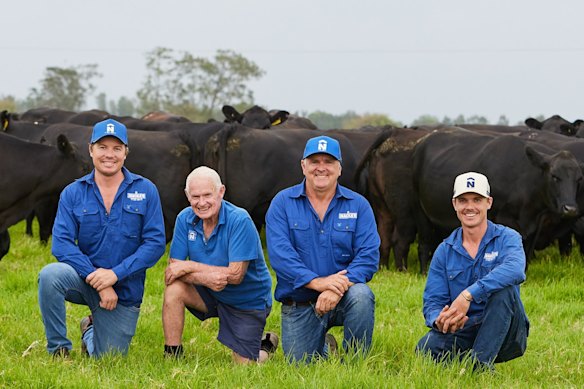
Robert Mackenzie, centre-right, with father Bruce and sons James (left) and Jack (right), at Macka’s Pastoral
Cattle Australia, the peak body for graziers, agreed with the forecasted $1 billion loss of exports to China and said the quota system would restrict access to reliable meat products.
Loading
Chairman Garry Edwards said China’s restrictions breached the spirit of the free trade deal with Australia, and demanded an explanation for the decision.
“We are deeply disappointed by this decision – a decision we believe to be entirely unwarranted and at odds with the sentiment of the free trade agreement we share,” said Edwards.
In 2020, China imposed $20 billion of trade sanctions as an act of political retribution against the Morrison government with bans on barley, wine, lobster, timber, major beef exporters, timber and cotton.
It cited labelling and health certificate requirements as reasons for the beef bans, and claimed biosecurity issues were the reason for the lobster, cotton, barley and timber restrictions.
The restrictions came in response to then-prime minister Scott Morrison’s push for an independent coronavirus inquiry.
Cut through the noise of federal politics with news, views and expert analysis. Subscribers can sign up to our weekly Inside Politics newsletter.