At a lightly attended special meeting convened just a week before Christmas, Bethel officials approved a downsized version of the controversial Vessel Technologies affordable housing complex proposed along Nashville Road.
The negotiated deal means Bethel, a wealthy Fairfield County suburb east of Danbury, can avoid trial in the lawsuit that Vessel had filed just a month ago.
Vessel went to court after municipal planners rejected its proposal to build a five-story, 75-unit apartment complex. The compromise version will be four stories with 72 units.
Residents balked at Vessel’s plan since it was put forward in May and some have formed on online petition drive against several multi-story apartment proposals they they call “the effort to turn Bethel into an urban wasteland.”
After the Dec. 17 decision, dozens reacted on Facebook with messages bemoaning what they expect to be high-density, offensively large mid-rise towers in a suburb known for tree-lined streets, a picturesque historic district and traditional one-family homes.
But because Bethel has relatively little affordable housing, it is vulnerable to housing projects proposed under Connecticut’s 8-30g law — such as Vessel’s. Bethel has under 6% of its housing priced affordably, well below the state’s target of 10%.
The New York-based Vessel is pledging to lease 30% of its apartments at state-designated affordable rates for at least 40 years. That’s the minimum to invoke the 8-30g law.
Under 8-30g, towns with inadequate affordable housing can refuse such proposals only if planners demonstrate significant public health and safety concerns. They also have to prove those concerns can’t be reasonably addressed, and that they outweigh the community’s need for affordable housing. By comparison, a standard application can be rejected on a wide range of grounds, and the burden of proof falls on the developer.
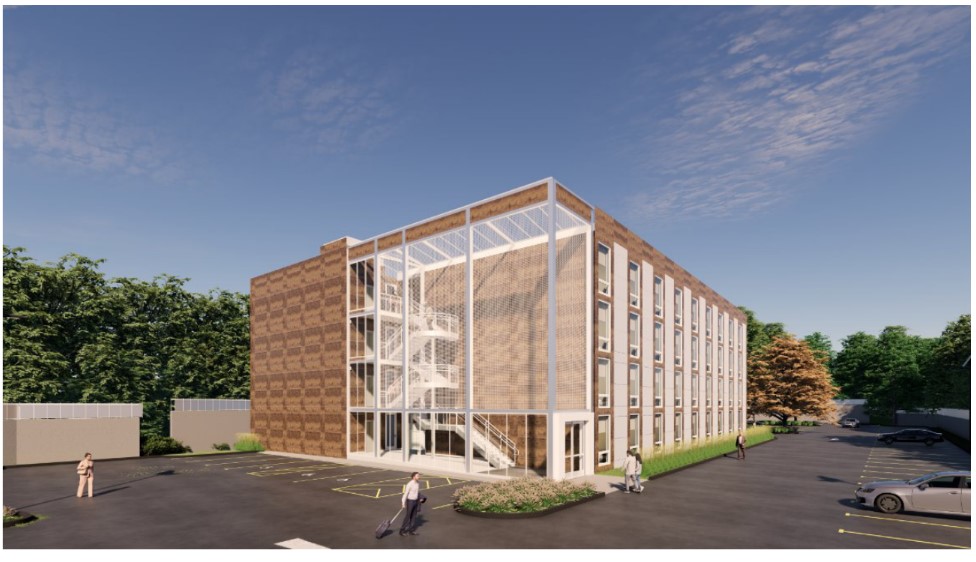
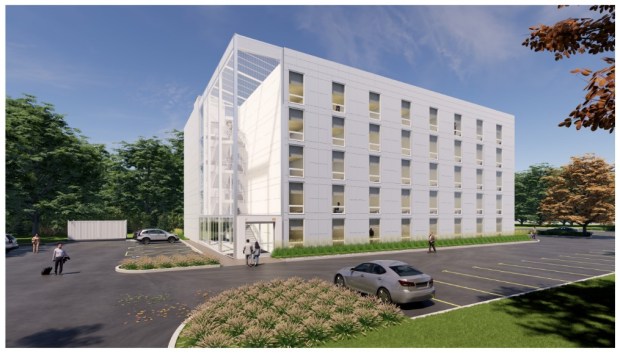
After intense public pushback this summer, Vessel offered to modify its original proposal for an all-white five-story building with 75 apartments. It offered to cut the height to four stories, reduce the apartment count to 72, and add a brown-tan color to the exterior.
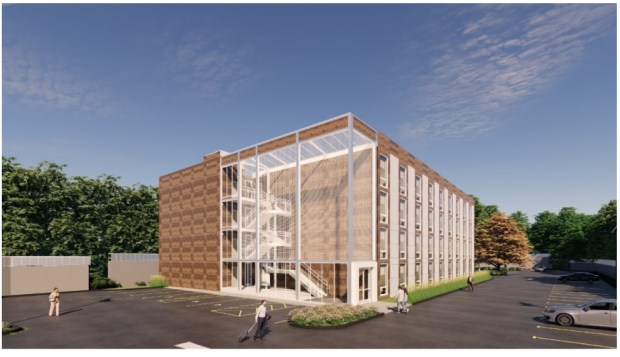 Vessel Technologies’ rendering of the four-story, 72-unit apartment building it will construct in Bethel. (Courtesy of Town of Bethel)
Neighbors still complained to planners there wouldn’t be enough parking, traffic would worsen and nearby streams could be polluted. The Planning and Zoning Commission in November never voted on the compromise version, but instead rejected the original one.
Vessel had warned that if it sued and won, it would automatically be allowed to build the larger version. The company sued, noting that neither the police department, fire department nor public health director had raised any objections, but told the judge that during one meeting “several members of the public made comments indicating opposition to affordable housing and multifamily development.”
Vessel’s suit also alleged that commissioners offered only vague, irrelevant or baseless objections to the plan, and entirely failed to meet the 8-30g standard of providing a serious public health or safety risk.
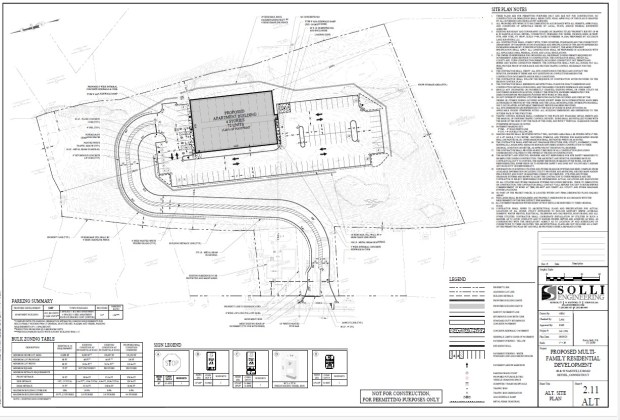 The layout of the Vessel Technologies apartment building in Bethel. (Courtesy of Vessel Technologies)
With a hearing scheduled for early January, the commission convened the Dec. 17 meeting and conferred in executive session for about an hour. It went back into public session to approve the negotiated settlement. Official minutes state only that Chairman Michael Kozlowski “opened the floor to discussion by the commission. Discussion ensued,” and then notes that the settlement passed unanimously.
Posts on Bethel-centered Facebook pages lambasted the town for agreeing to the deal.
“Shame on you P & Z! This town is losing its charm, and now Nashville road will have more traffic,” one woman wrote.
But others said the compromise made sense if the town knew Vessel would win in court.
“If the commission was convinced they would lose on appeal, why would you want to spend the additional money and end up in the same position, or worse, in a year?,” a resident asked.
Vessel is currently suing Newtown and Glastonbury to overturn rejections there. It reached an out-of-court settlement with Rocky Hill that allowed it to build a bigger project than proposed but at a less high-profile site. The company also sued Simsbury and won a decision that allows a smaller-than-proposed building on the site it originally wanted.
Cheshire, New London and Avon all approved Vessel projects without court action.
The company contends it can produce affordable housing quickly and efficiently with modular construction using what it describes as non-combustible, recyclable panels rather than wood or other traditional building materials. It offers essentially identical architecture everywhere; community opposition often focuses on its ultra-modernistic but minimalist style.