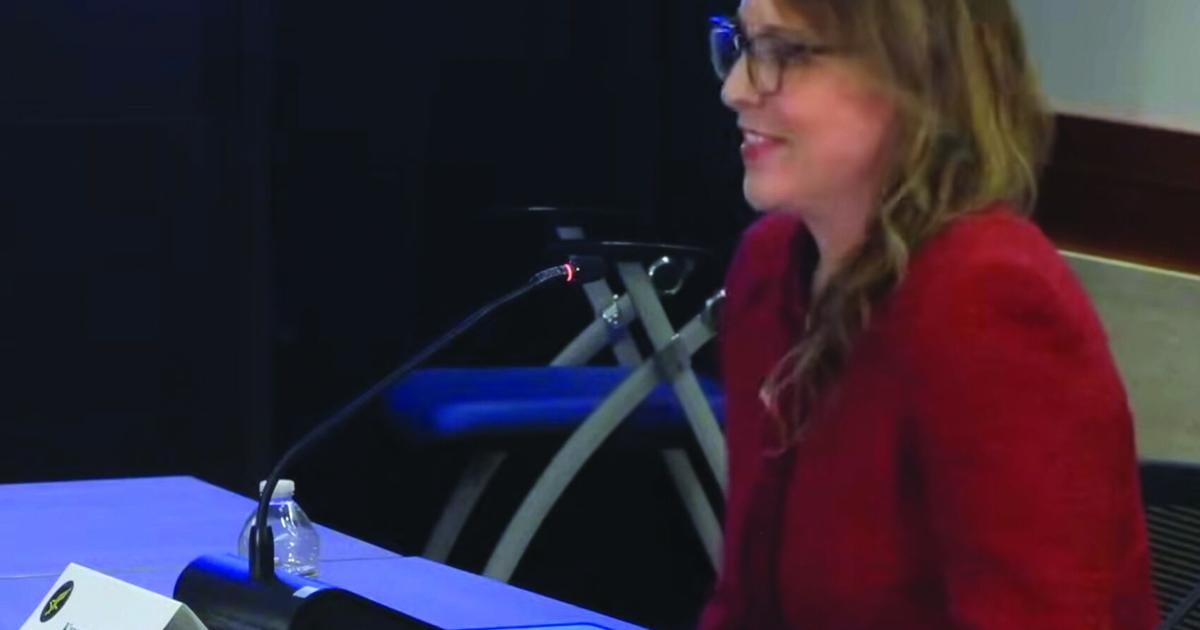
While most Ahwatukee residents this month were making final preparations for celebrating the holidays, Kendra Riley was in Washington, D.C., celebrating a major victory that could save thousands of children’s lives.
Joining other parents, members of Congress and U.S. Health and Human Services (HHS) officials on Dec. 16, Riley was on hand to watch HHS Secretary Robert F. Kennedy Jr. formally add two medical conditions to the Recommended Uniform Screen Panel for newborns.
Early detection of the two conditions – Duchenne Muscular Dystrophy (DMD) and Metachromatic Leukodystrophy (MLD) – can mean the difference between a child’s life cut short in agony and hope that federally approved therapies will preserve their quality of life by slowing the genetic disorders’ progression.
Kennedy’s signing ceremony marked a turning point for families who have long fought for earlier diagnoses of conditions that are often fatal or permanently disabling by the time they are discovered.
It expands the list of rare diseases that states are encouraged to screen for at birth with a mere pinprick to a newborn’s foot.
That screening panel has existed for roughly 60 years and currently includes about 60 conditions, though adding new conditions involves a lengthy process.
Most children with DMD or MLD are diagnosed at 4 or 5 years old, often after their frustrated parents have visited specialist after specialist to find out what’s wrong.
By then, muscle and other functions have significantly declined.
Not only will adding these conditions to the screening panel help children retain some of those abilities for a longer period – it also gives families a better chance to avoid the long delays, repeated specialist visits, and the financial and emotional strain that define years-long searches for a correct diagnosis.
Kendra and Dave Riley know all about that agonizingly frustrating search: Two of their three daughters have MLD.

Health and Human Services Secretary Robert F. Kennedy Jr. gave challenge coins to Kendra Riley’s daughters Eva and Keira following the Dec. 16 ceremony.
(Facebook)
Heartbreaking journey
The Rileys’ ordeal began over five years ago when their daughters, then-5-month-old Keira and 1-year-old Olivia, or Livvy, were diagnosed with MLD.
MLD is described as an “extremely rare and fatal brain disease” that destroys the protective fatty layer surrounding the nerves in the central nervous system, “aggressively taking away motor function and other abilities.”
Their eldest daughter, Eva, was diagnosed as a carrier of the genetic disease and hence is unaffected – as are her parents.
Even though Kendra nor David had gone through DNA testing to minimize the risk of inherited disease, they had only been tested for the five most prevalent gene mutations that lead to MLD rather than the many more that exist.
The Rileys had to spend five months in Italy so Keira could get the gene therapy that was not available in the U.S.
They face a staggering cost of $500,000 to make that happen.
Because Keira’s MLD was caught in infancy, she was able to get the gene therapy treatment – thanks to the generosity of the people who responded to the Rileys’ GoFundMe plea, the Armer Foundation for Kids and the Desert Financial Credit Union Foundation.
Keira became only the 32nd child in the world to get that life-saving treatment.
Livvy’s outcome was tragically different because her diagnosis came too late and her condition had aggressively advanced.
“When symptoms show early in life, such as in Olivia’s case, most children aren’t expected to live past 4-6 years old,” said Kendra in an AFN interview in 2021.
She said Livvy had lost her vocabulary, couldn’t pronounce most words, had difficulty walking and experienced “moderate to severe” pain every day.
“While we know our time with Livvy is limited,” Kendra said in the same interview, “we have so much hope for Keira because of this treatment and want to do everything we can to give Eva, and ourselves, as many happy memories as we can with her sisters.”
Kendra updated Livvy’s status for Kennedy and the others who had gathered for his signing ceremony that added MLD to the Recommended Uniform Screen Panel.
“I cannot tell you how grateful we are,” she began. “It’s a very bittersweet day for our family.”
She described the cruel contrast between what early detection can mean and what happens without it.
“Our daughter Livvy is 7 years old and in hospice,” Riley said. “She couldn’t get the same treatment that our youngest daughter Keira got. So we’ve had to watch her worsen day by day while we’re watching Keira thrive.
“And it’s because of these gene therapies that exist – and because of the many of you in this room, and probably many of you not in this room – that we’re going to be able to prevent families like ours from losing one child in order to save another.”
Kendra and David Riley and two of their three daughters, Eva (foreground) and Keira, posed with Health and Human Services Secretary Robert F. Kennedy Jr. after his signing ceremony that added a deadly genetic disorder to the recommended screening panel for newborns. Keira was diagnosed with the disorder early enough for her to receive treatment that preserved her quality of life.
(Courtesy of Kendra Riley)
Long time coming
Kendra’s campaign has been a bipartisan one.
Although only Republican senators spoke Dec. 16, she made sure at the gathering to publicly acknowledge Democratic U.S. Rep. Greg Stanton and his Republican counterpart, Rep. David Schweikert, for their support.
The two Arizona congressmen had recognized, like the senators who spoke Dec. 16, that expanding the recommended list of newborn screenings can produce transformational results for families.
“Early data changes the entire trajectory for affected children and their families,” said HRSA Administrator Tom Engels on Dec. 16. “A confirmed result in infancy replaces years of guesswork and helps families make informed decisions about treatment and support.”
As Kennedy added, “The stakes could not be higher.”
Noting that the FDA in April 2024 finally approved a gene therapy that can slow or even stop MLD’s effects, Kennedy also emphasized the economic implications.
On a policy level, Kennedy said, early treatment could lead to “enormous savings” for private insurers by preventing years of intensive care, misdiagnosis and disability.
“These so-called rare diseases are not actually that rare,” he added, noting that Duchenne has a particularly high incidence in the Navajo Nation, where the rate is closer to one in 2,500 births.
He said he had discussed the issue repeatedly with Navajo Nation President Buu Nygren and pledged to ensure that early diagnostics reach tribal communities.
“Newborn screening isn’t just a medical advancement, but a moral imperative,” Kennedy declared.
He later gave a challenge coin to Eva and Keira, who, with their father, accompanied Kendra.
“There’s been so many people along our journey that have helped us get to this point, and I’ve had tears pretty much all day,” Kendra told Kennedy and the other officials in the room. “So thank you so much for making them happy tears.”
As she spoke during a congressional briefing Dec. 8, Kendra Riley watched as her eldest daughter Eva played with her youngest child Keira.
(Courtesy of Kendra Riley)
The fight goes on
While the federal government sets screening recommendations, each state must formally adopt them into its own newborn screening program.
Kennedy urged states to act quickly, citing data showing that nearly 30% of children with rare diseases die before the age of 5.
States choose whether to adopt each screening, making – or not making – decisions that can reshape health outcomes for thousands of families.
Kennedy praised the 14 states that will have to add MLD and DMD to the recommended screening panel because they’re signed on to accept it. However, Kendra added that could take as long as two years to occur, so she will press both federal and Arizona officials for a way to speed up their addition to the list.
In some ways, the Dec. 16 ceremony was a miracle that Kendra only seven months earlier feared she would never see.
She had blogged in May about her fears that funding cuts and the termination of the Advisory Committee on Heritable Disorders in Newborns and Children – which normally decides which diseases go on the Recommended Uniform Screening Panel – meant her campaign to add MLD to that list had been set back to square one.
On her blog, reillysroad.com, she had urged supporters at that time to contact their legislators to save the committee.
Her December miracle started Dec. 8, when Kendra was in D.C. to speak during a congressional briefing about the importance of adding MLD to the screening panel.
The same day, she also met with White House staff to share her family’s story.
Two days later, she was invited back to D.C. on Dec. 16 for what she had thought would be more briefings.
Instead, when she got there, she learned she was invited to Kennedy’s signing ceremony that would make her long-sought wish partly come true.
“I am still in shock that this happened so quickly and we are beyond grateful that now other families won’t have to endure what we have,” she said after returning from Washington.
The founder of Dawning Public Relations, Kendra stressed her campaign isn’t over.
“I will say, while this is a major step forward, our work isn’t done,” she said. “Now each state needs to implement adding the blood test to their state labs so that babies can get properly diagnosed in time to receive the gene therapy. Stats show that at least one baby per week is born with MLD in the U.S. so the sooner this is done the sooner we can start saving lives.”
She said she also learned that an MLD newborn screening costs $5 to $8 – a pittance, she said “compared to the millions in healthcare, Medicaid and insurance costs for a single symptomatic child, like our daughter Livvy, who will need a variety of special needs equipment, 10+ medications/day, and numerous hospital and ER visits – to name a few things – before passing away at an average age of 6.”