A near-100-year-old debate between the theoretical physicists Albert Einstein and Niels Bohr has finally been settled—and not in the former’s favor.
A team of physicists in China have realized a modern take on a thought experiment proposed by Einstein to dispute the ‘principle of complementarity,’ which Bohr argued was an essential feature of quantum mechanics.
According to Bohr’s principle, there are paired properties of particles that cannot simultaneously be measured—for example, in this case, the position and momentum of a particle.
Sadly for Einstein, the outcome of his experiment has supported Bohr and complementarity, with the potential to help shine light on other questions in quantum mechanics.
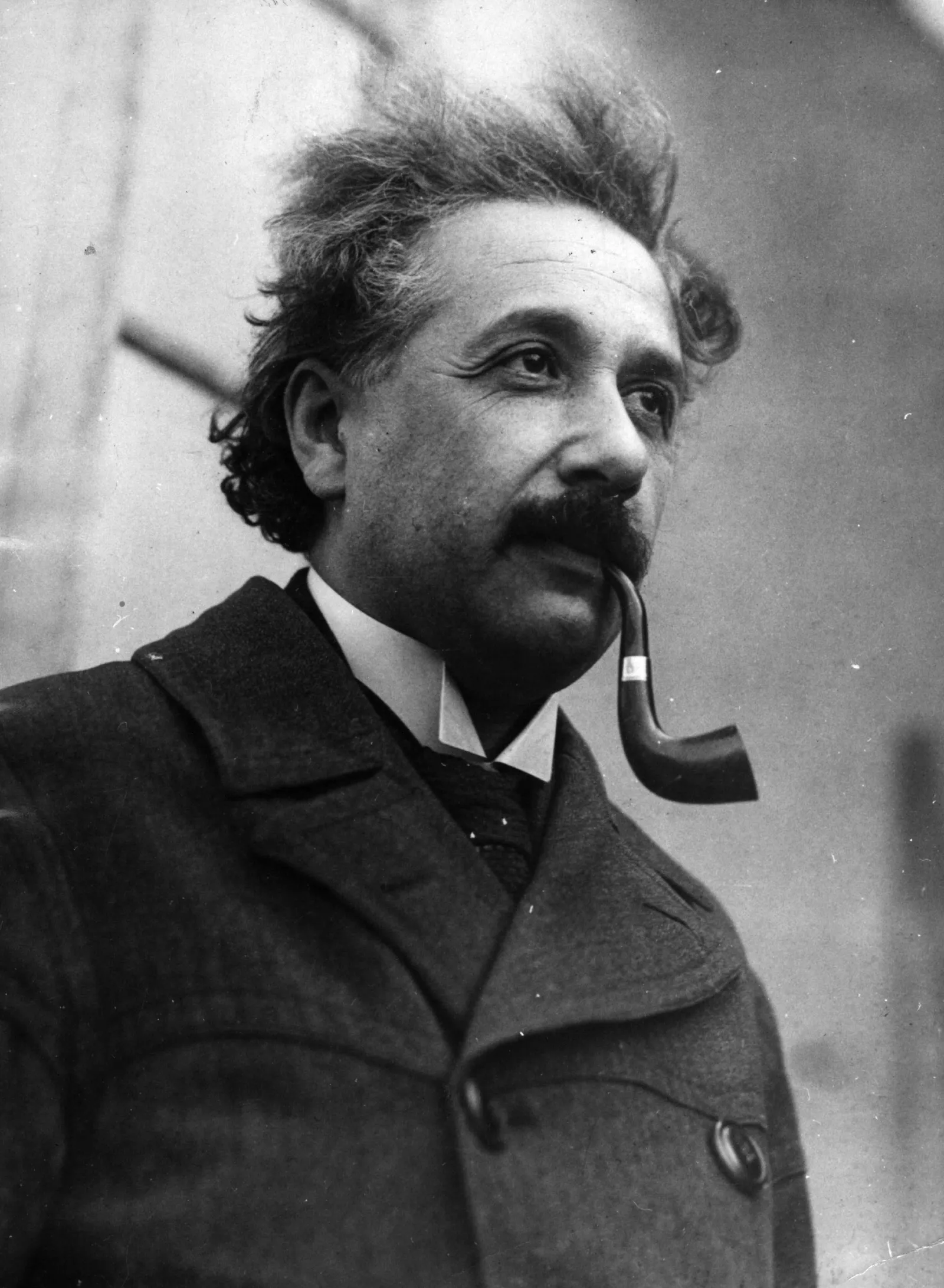
While Einstein was one of the fathers of quantum mechanics—particularly for the role he played in establishing the particulate nature of light in 1905—he would go on to be troubled by its deterministic interpretations, preferring the idea of a reality that could be completely described by physical laws, rather than having some inherent randomness.
The German-born physicist was particularly fond of asserting that “God does not play dice with the universe”—an assertion that he often debated with his friend Bohr.
At the 1927 Solvay Conference in Brussels, Einstein cooked up the beginnings of a thought experiment to disprove Bohr’s principle of complementarity.
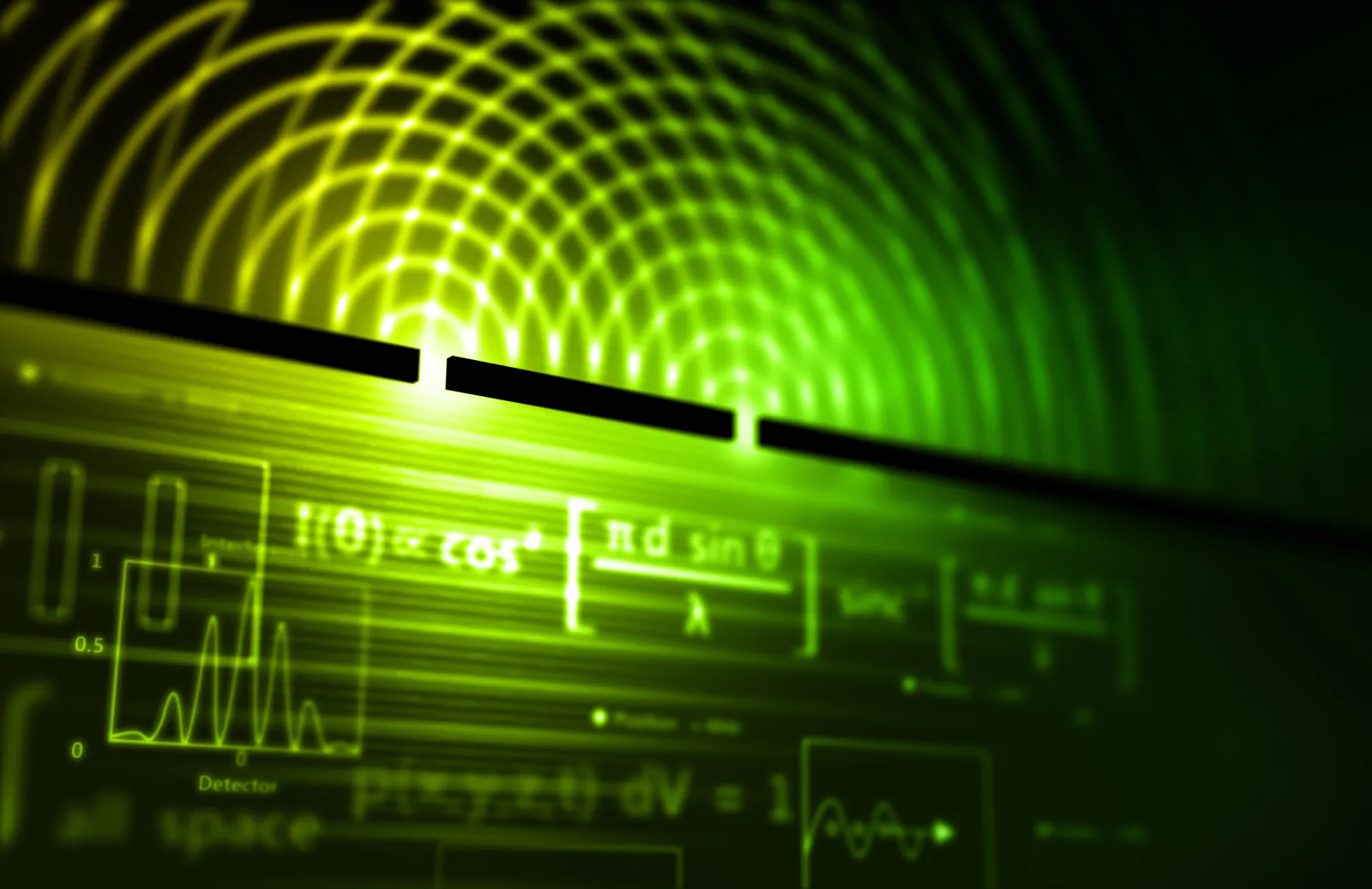
Einstein’s idea was based on the real-life ‘double-slit experiment’ of British polymath Thomas Young, which demonstrated how light has so-called wave-particle duality—that is, it acts both like a wave but also like a particle.
In Young’s experiment, a coherent light source like a laser beam is fired at a plate sporting two horizontal slits, behind which lies a screen.
Passing through the slits not only causes the light to generate an interference pattern based on its wavelike properties, but also to hit the screen only at discrete points, in a particlelike fashion.
Young used this experiment to show the duality of light in 1801; researchers at Bell Labs in New York and Cambridge University, England, would later prove the wavelike nature of electrons in 1927.
In Einstein’s revised concept, the particles would first pass through a single horizontal slit—held top and bottom by momentum-sensitive springs—before encountering the double-slit.
His idea was that particles headed, say, for the upper or the paired slits would impart a small amount of downward momentum of the single slit as it recoiled, showing the particlelike nature of the light—but then go on to reveal their wavelike nature after passing through the double-slits and forming an interference pattern.
In this way, Einstein hoped to contradict Bohr’s complementarity principle. The latter disagreed—arguing instead that precisely measuring a particle’s momentum with the single slit would leave a large uncertainty in the particle’s position (as per Heisenberg’s Uncertainty Principle) and result in a corresponding blurring of the fringes on the interference pattern.
In their new study, quantum physicist Jian-Wei Pan of the University of Science and Technology of China and his colleagues conducted an updated version of Einstein’s experiment—proving Bohr’s hypothesis correct and Einstein wrong.
In the team’s experiment, the single slit was replaced by a cooled atom of rubidium, trapped in place by an optical tweezer. This allowed the rubidium atom to serve as an ultralight beam splitter whose momentum is entangled with that of the incoming photon of light.
Adjusting the depth of the optical tweezer altered the intrinsic momentum uncertainty of the rubidium atom—this, in turn, made the fringes on the interference pattern more or less blurry, as predicted by Bohr and the complementarity principle.
The researchers concluded: “Using modern language, the Einstein-Bohr interference visibility is determined by the degree of quantum entanglement in the momentum degree of freedom between the photon and the slit.”
Do you have a tip on a science story that Newsweek should be covering? Do you have a question about quantum mechanics? Let us know via science@newsweek.com.
Reference
Zhang, Y.-C., Cheng, H.-W., Zengxu, Z.-Q., Wu, Z., Lin, R., Duan, Y.-C., Rui, J., Chen, M.-C., Lu, C.-Y., & Pan, J.-W. (2025). Tunable Einstein-Bohr Recoiling-Slit Gedankenexperiment at the Quantum Limit. Physical Review Letters, 135 (23). https://doi.org/10.1103/93zb-lws3