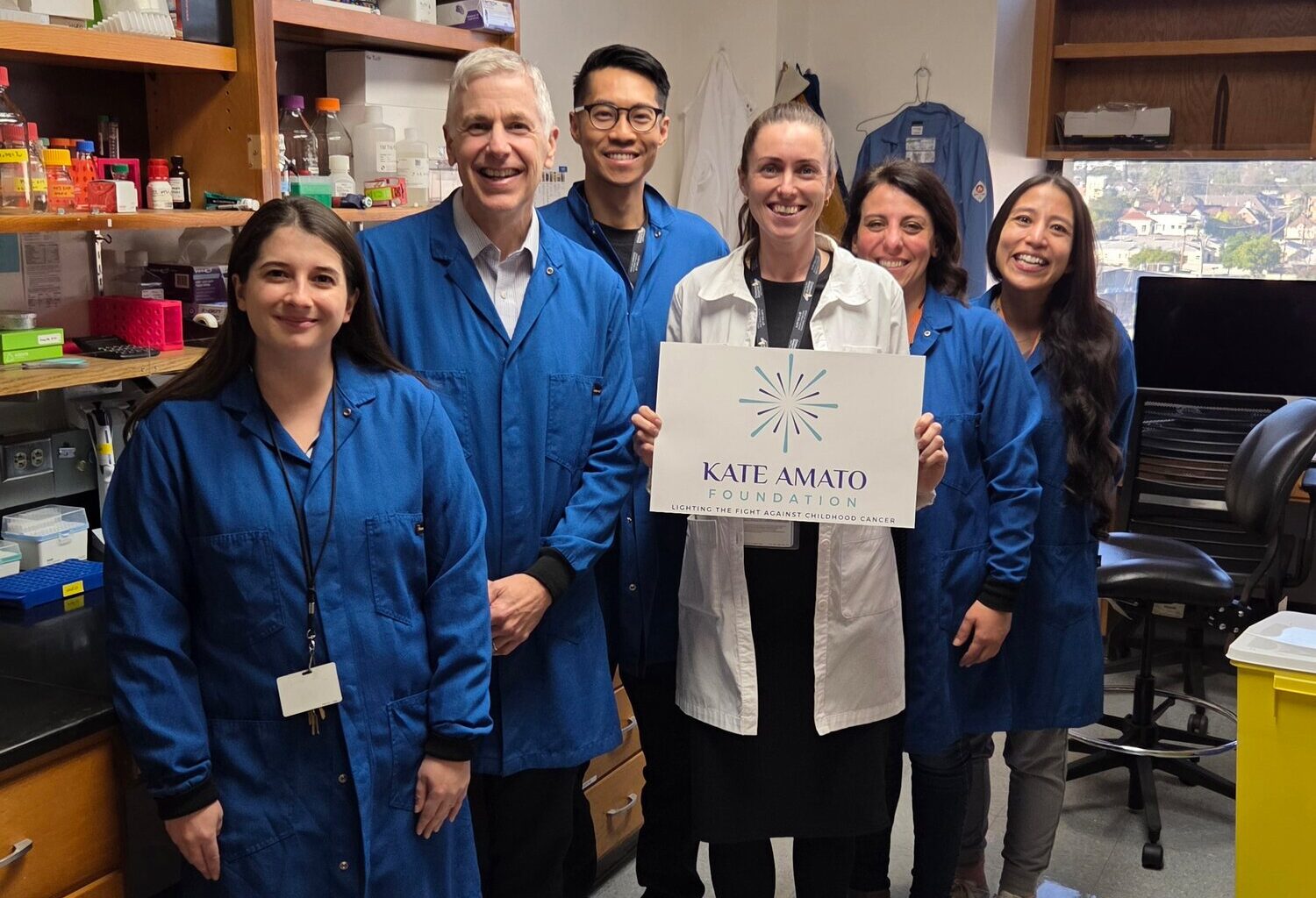
Kate Amato Foundation has hit a monumental milestone: $1 million in total funding for pediatric cancer research since the organization’s founding. The official announcement was made on Dec. 10, a deeply meaningful date that marks what would have been Kate Amato’s 21st birthday.
In conjunction with this milestone, the foundation also announced the five recipients of its 2025 research grant awards, continuing its commitment to advancing safer, smarter and more effective treatments for children with cancer.
“We are profoundly grateful to the donors, partners and supporters who believe in our mission to accelerate progress in pediatric cancer research,“ said Lisa and Jeff Amato, founders of Kate Amato Foundation and Kate’s parents. “Through funding innovative science, our foundation is helping to drive breakthroughs that save lives and bring hope to children and families facing their most difficult battle.”
The foundation set out to meet the million-dollar mark in cumulative grant funding early in the year. By the end of September, as Pediatric Cancer Awareness Month concluded, the foundation launched the One Million, One Mission Campaign with $75,000 left to raise before the annual grants were awarded.
Each year the foundation announces its grant recipients in December and its One Million, One Mission Campaign proved successful due in large part to its strong community support and corporate partners, Trailer Bridge, Northwestern Mutual and ARCO Design/Build.
“This milestone represents more than a number — it represents hope,” said Lisa Amato. “Because of Kate, and the incredible support from our community, researchers are one step closer to changing outcomes for all children facing cancer.”
On Dec. 10, the foundation celebrated Kate’s 21st Heavenly Birthday by announcing a record breaking five grant awards and reaching $1 million in total funding for pediatric cancer research. A remarkable achievement for a foundation with a paid staff of none, but a heart of gold.
Here are the 2025 Kate Amato Foundation grant recipients:
- Debananda Pati, Ph.D. at Baylor College of Medicine and Texas Children’s Hospital, whose project is titled “Advancing P27600: A Novel Plant-Derived Compound for Treating Ewing Sarcoma” and will focus on synthesizing P27600 in the laboratory, evaluating its safety and testing its ability to stop tumor growth in animal models of ewing sarcoma. The long-term goal is to create a safe and effective new drug that will offer hope to children battling resistant ewing sarcoma.
- Ingrid Lekk, Ph.D. at Children’s Hospital Los Angeles whose project titled “Elucidating the Role of Extracellular Vesicles in Ewing Sarcoma Metastasis” will study why some cancer cells leave the tumor and survive in new locations by imaging cancer vesicles in living fish to determine what signals the tumor is sending to the surrounding tissues. The future goal of this project is to develop treatments that prevent and cure the spread of ewing sarcoma to other parts of the body.
- Che-Hsing Li, Ph.D. at Seattle Children’s Research Institute, whose project is titled “Protein-Free Drug Inducible Transgene Expression Platform in CAR T Cells.” This research team has developed a new type of targeted, chimeric antigen receptor (CAR) T-cell therapy to fight multiple tough pediatric solid cancers including liver cancer, Wilms tumors, and a type of muscle cancer. The new system is called PAR (Polyadenylation Regulator) which is a precise dimmer switch that allows scientists to control the activity of CAR T cells using a common, readily available medicine called tetracycline. The goal is to combine this smart “dimmer switch” with powerful CAR T cells to create a safer, more effective treatment for children fighting cancer.
- Rosa Vincent, Ph.D. at Baylor College of Medicine, whose project is titled, “Harnessing Therapeutic Probiotics to Enhance CAR-T Cell Activity in Pediatric Solid Tumors.” This project is developing a new kind of cell therapy that brings together two unlikely partners: CAR-T cells and probiotics that can selectively grow in solid tumors. CAR-T cells have cured children with certain blood cancers, but they’ve struggled to work in solid tumors like neuroblastoma and osteosarcoma where the hostile tumor environment often shuts them down before they have a chance to work. Remarkably, the same harsh environment that weakens T cells can fuel the growth of probiotic bacteria. This project will explore how bacteria, CAR-T cells, and the immune system interact inside tumors, laying the groundwork for a smarter, more cooperative therapy that could one day offer new hope to children with difficult-to-target cancers.
- Katelynn Wilton, M.D., Ph.D. at Boston Children’s Hospital and Harvard Medical School, whose project is titled, “Stepwise Development of Acute Myeloid Leukemia in Germline GATA2 Deficiency Syndrome” and will study the genetic changes that lead to blood cancers to uncover benchmarks that identify when and how cancer develops, which could then provide health care teams with the ability to identify when a patient may develop blood cancer and intervene to provide early intervention.
KATE KUP Triples Tennis Tournament — Saturday, March 28, 2026
The foundation’s next major fundraising effort will be the 7th Annual KATE KUP Triples Tennis Tournament held at The Yards in Sawgrass. Registration will open Friday, Jan. 16, at noon and sponsorships are available now. Those wishing to participate are strongly encouraged to register promptly, as this event sells out quickly each year. Registration for tennis triples teams is $825 and includes team play, gift bags, lunch and awards after-party. All levels of play are welcome, and proceeds go directly to support life-saving pediatric cancer research. All details can be found on the website: KateAmatoFoundation.org.