We step into the new year with Human Trafficking Awareness Month to inform and educate the community on the realities of this pervasive threat that exists in communities throughout the state, the country and the world.
An annual report published in June 2025 by The University of South Florida’s Trafficking in Persons (TIP) Risk to Resilience Lab reported that there were an estimated 200,000 victims of sex trafficking in Florida in 2024 and an estimated 540,000 victims of labor trafficking and/or labor exploitation during that same year.
Human trafficking is a very real threat to our communities. Still, in this month’s “Charity Chat,” we choose to lift up the survivors, championing their strength and courage, and the organizations that walk beside them as they rebuild their lives, find their voices and step back into their power and agency.

Delores Barr Weaver Policy Center
With a focus on advocacy, the Delores Barr Weaver Policy Center, commonly known as See the Girl, promotes systemic change, addressing the policies and societal structures that leave young women vulnerable to exploitation. Through public education, policy advocacy, and survivor-centered initiatives, the Center works to prevent trafficking by reforming systems that often perpetuate further harm by criminalizing girls who are unfairly trapped.
The See the Girl: Open Doors program supports survivors of commercial sexual exploitation ages 10 to 24 through a survivor-informed, trauma-centered approach. The program offers comprehensive services including mental health counseling, emotional support, justice system assistance and resources for education, employment, and housing.
Zala, a survivor, was set to be released from juvenile detention, but had nowhere to go, if it weren’t for See the Girl.
“I only had one Croc, a pair of joggers and a shirt, and was facing the idea of being homeless,” she said. “I met Brandy with See the Girl, and instead, she gave me the ideas of somewhere to sleep, something for my stomach, and something on my back.”
A collaborative team of clinicians, survivor advocates, and regional advocates guides survivors, helping them navigate challenges with people they can trust, who share lived experiences and connect them with community resources to achieve their goals. By tailoring support to each girl, Open Doors empowers survivors on their journey toward healing and long-term independence.
“Brandy has been a great help over the past three years and has progressed with me,” said Zala. “It has been a long journey, but we have done so much in our time together. Every month, I am completing a goal I set for myself, so I come up with another goal. She holds me accountable, but she also takes care of me and loves me, like a mother. My biological mother barely did that for me. All the people at See the Girl are great people with great hearts.”
Anyone can make a referral to the Delores Barr Weaver Policy Center through its website at www.seethegirl.org/referral/. All services are provided at no charge.
“Victims are getting even younger, crime is ever evolving, and needs are growing,” said Vice President of Development and Communications Stacy Ellison. “Financial support is the best way the community can help and gives us flexibility to meet needs as they arise.”
Her Song
Her Song begins its work by building trusting relationships with young women in jails and prisons, ensuring that, upon release, they have a safe and supportive place to start rebuilding their lives.
Founded in 2013, Her Song opened its first safe house in 2017 and merged with the Tim Tebow Foundation in 2020. Today, the organization operates three safe houses in Jacksonville, with a fourth set to open early this year, expanding its reach to help even more survivors.
“The common thread between survivors of human trafficking is trauma,” said Community Engagement Coordinator Mindy Cederquist. “It may start in childhood or adolescence, trauma endured and not dealt with, a young woman is vulnerable, and the situation can snowball. She’s in survival mode – it’s the only thing presented to her, and she gets trapped.”
Her Song’s housing program is designed in three phases, each tailored to meet survivors where they are in their healing journey. Phase one, lasting six to nine months, focuses on intensive therapy, case management and providing a stable, nurturing environment where young women can begin to experience a sense of normalcy and security. In phase two, residents are empowered to prepare for the future – taking classes, applying for jobs and gaining the tools and confidence needed for self-sufficiency. Finally, phase three offers transitional housing as an optional safety net, allowing graduates to step fully into independence while knowing support remains available if needed.
Through this structured, compassionate approach, Her Song not only provides safety but also fosters long-term healing, resilience and hope, helping survivors reclaim control over their lives and look toward a brighter future.
To make a financial donation or purchase items from their wish list, visit www.hersong.org/getinvolved.
Her Song will be hosting an informational session at the Church of Eleven22 Baymeadows Campus on Jan. 21 from 10:00 – 11:30 a.m. Contact Mindy at [email protected] or 904-574-7403 for details.
Rethreaded
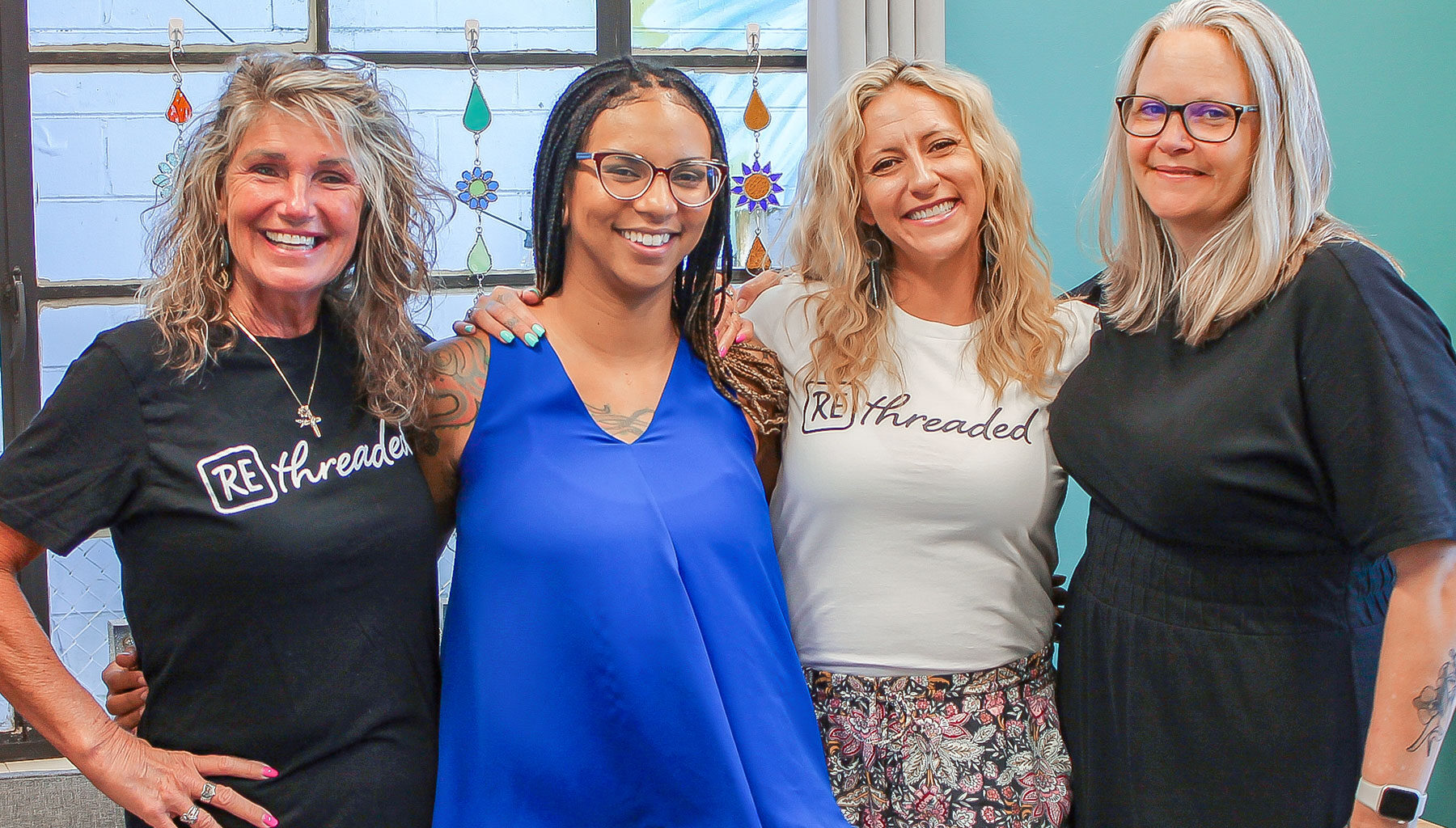
Rethreaded is a nonprofit dedicated to helping survivors of human trafficking achieve economic independence. Through skill-based employment programs, survivors are trained in production, inventory, sales, marketing and finance, transforming trauma into craftsmanship and financial stability.
“If you give women access to a new community and economic empowerment, they will reclaim their lives,” said Founder and CEO Kristin Keen.
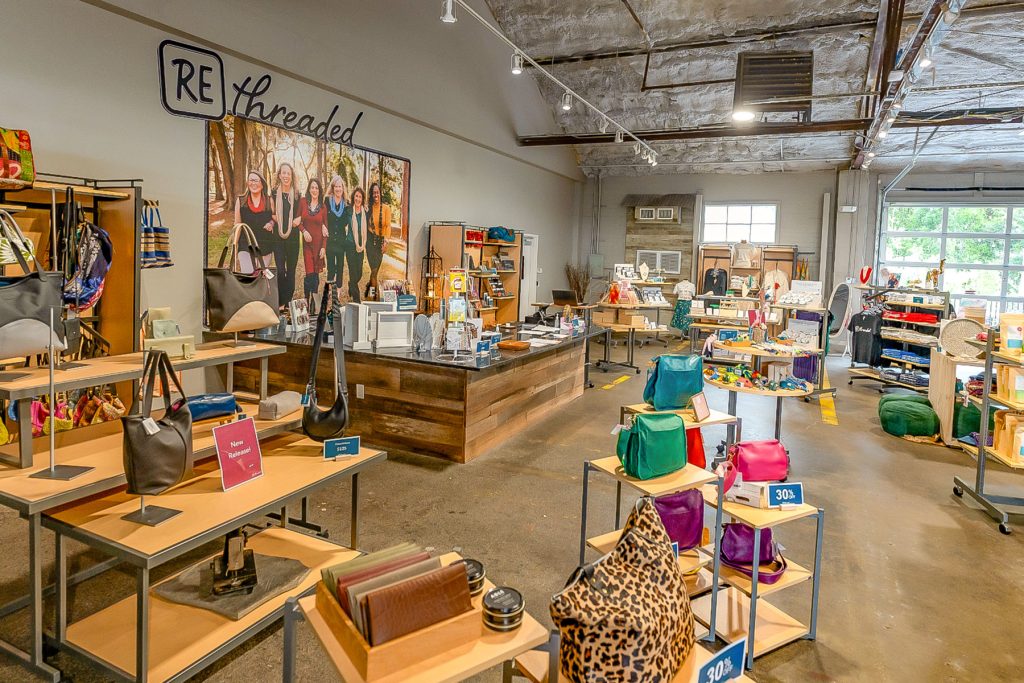 The Rethreaded shop features items made by survivors.
Rethreaded provides a safe space for survivors to learn, grow, and work while staying focused on their healing process, with plenty of compassionate support.
Their boutique line of survivor-made products offers the community a tangible way to support these life-changing programs. For example, the Rethreaded Grace Scarf represents the promise of a new beginning. It’s the very first product a survivor learns to create when she starts at Rethreaded, marking the start of her journey toward healing and rebuilding her life.
Shop Rethreaded’s online store at shop.rethreaded.com or visit its brick-and-mortar store at 515 E. 9th Street in Springfield, also known as its Campus of Hope.
Rethreaded offers a hands-on volunteer opportunity every Thursday, from 1:30 to 4:30 p.m. at this campus, where volunteers help prepare upcycled materials for use in their manufacturing program. Visit rethreaded.com/volunteer to learn more.
Visit the Resident News website to view a list of organizations working to prevent human trafficking and support survivors in Northeast Florida. “Now I know, this situation doesn’t last forever,” said Zala. “Anything people can give, whether it’s to donate clothes, hygiene items, or school supplies, it is so helpful.” January is National Human Trafficking Prevention Month, and residents are encouraged to show solidarity by wearing blue on Jan. 11 for National Human Trafficking Awareness Day.