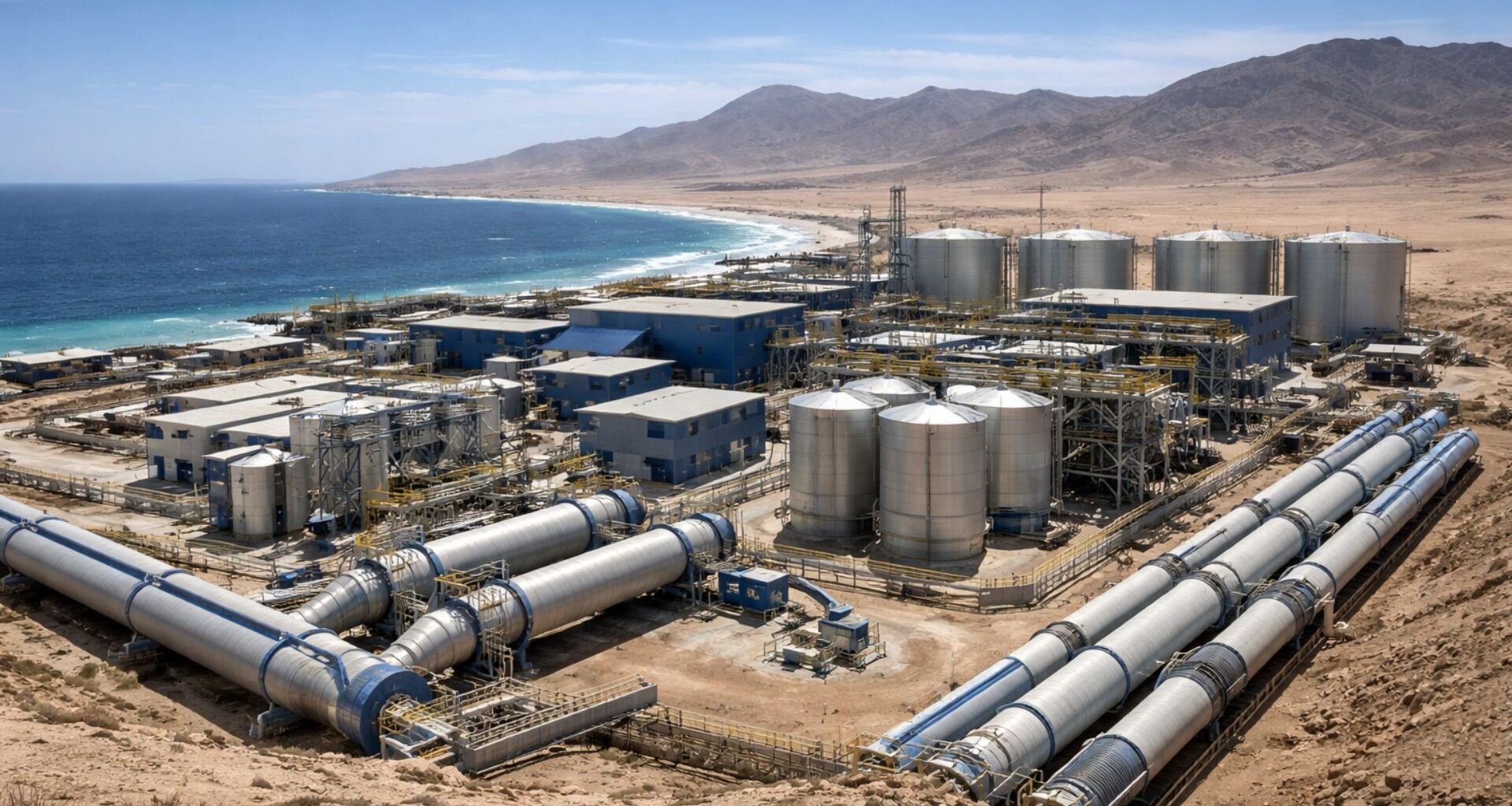
Located in Caldera, in the heart of the Atacama Desert, a large Chilean desalination plant uses reverse osmosis and renewable energy to transform seawater into a strategic source of urban and agricultural supply.
In the region considered one of the driest on the planetAs a result, Chile has become dependent on a large desalination plant to guarantee a daily supply of drinking water for its population.
Located in the municipality of Caldera, in the Atacama region, the plant is capable of transforming approximately 1,6 million liters of seawater per hour into fresh water., becoming a central part of the country’s strategy to address water scarcity in an area without sufficient natural aquifers for self-sufficiency.
Capacity of the Atacama Desalting Plant
The facility, known as Atacama Desalination Plant ou Atacama Desalting Plant, it was designed with an initial capacity of 38.880 cubic meters per day, equivalent to approximately 38,9 million liters per day, and designed to operate in modules until it reaches a maximum flow rate of 1.200 liters per second of potable water.
— ARTICLE CONTINUES BELOW —
This final capacity corresponds to approximately 103.600 cubic meters per day.
According to the company responsible for the project and official documents, the plant was designed to guarantee the supply of quality water for more than 210 thousand inhabitants in four municipalities: Copiapó, Caldera, Chañaral and Tierra Amarilla, serving approximately 70% of the population of the Atacama region.
Public project and international participation
The project is being conducted by the state-owned company. Econssa Chile SA, responsible for sanitation services in various regions of the country, and was financed with public funds, being presented as the first large-scale desalination plant aimed at human consumption, fully funded by the State..
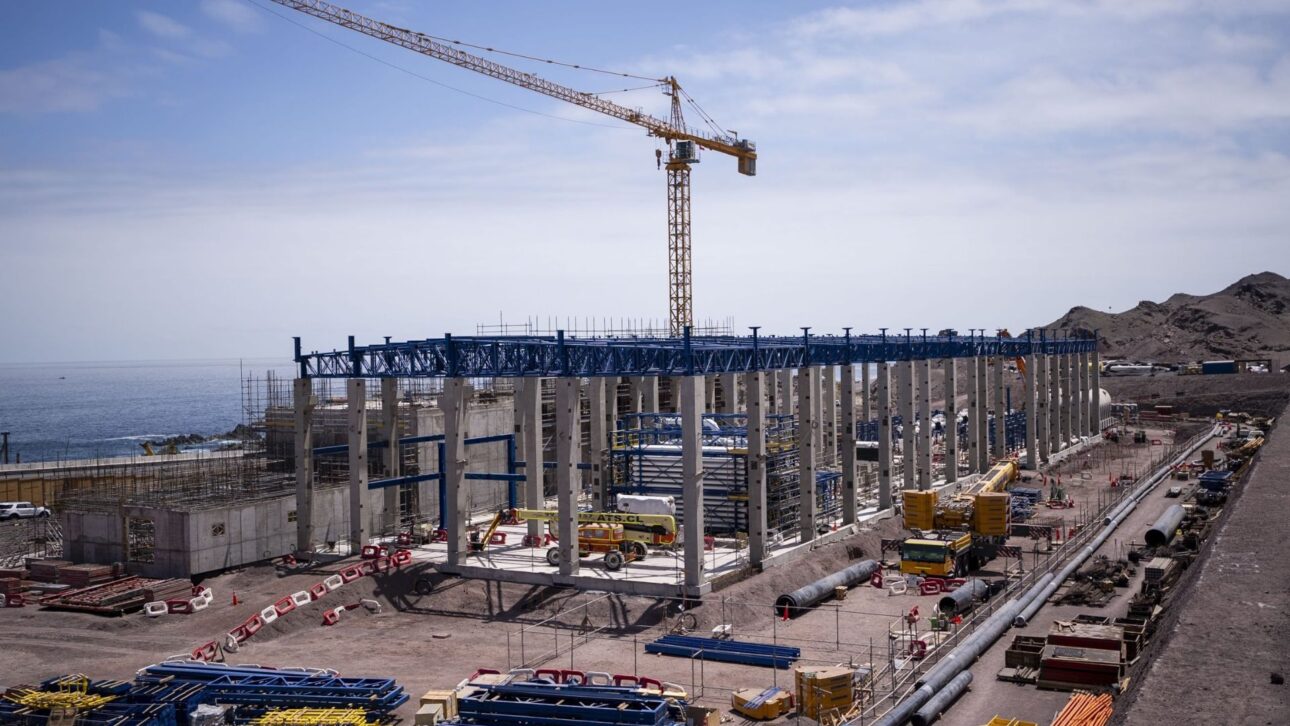 A power plant in the Atacama Desert transforms seawater into potable water per hour, guaranteeing a supply to Chilean cities in a region of extreme scarcity.
The project was awarded in 2017 to a consortium formed by the Spanish company. GS Inima and by the Chilean construction company Claro Vicuña Valenzuela, which took on the engineering, equipment supply, construction, and the first years of operation and maintenance.
Extreme water stress in northern Chile
The choice of a large-scale power plant was directly linked to the situation of Chronic water stress in northern Chile.
The Atacama Desert is classified by climate studies as the driest non-polar desert in the world, with average annual rainfall of just a few millimeters and records of areas that go years without any measurable precipitation.
In parts of the region, the average rainfall is less than 2 millimeters per year, which makes relying on surface reservoirs unfeasible.
The situation is aggravated by the fact that the country appears in international surveys among the nations with increased pressure on water resources, due to a combination of increasing demand and limited supply.
Before the power plant became operational, the Atacama region depended mainly on Copiapó River aquifer, which suffered a sharp decline after decades of exploitation for human consumption, agriculture and mining.
Chilean authorities began describing the area as permanently threatened by the risk of running out of water in case of extreme weather events.
With the plant’s completion, the government itself began to treat the project as a… “state project”, a priority in public policy for water security in the north of the country.
Reverse osmosis technology in the Atacama Desert
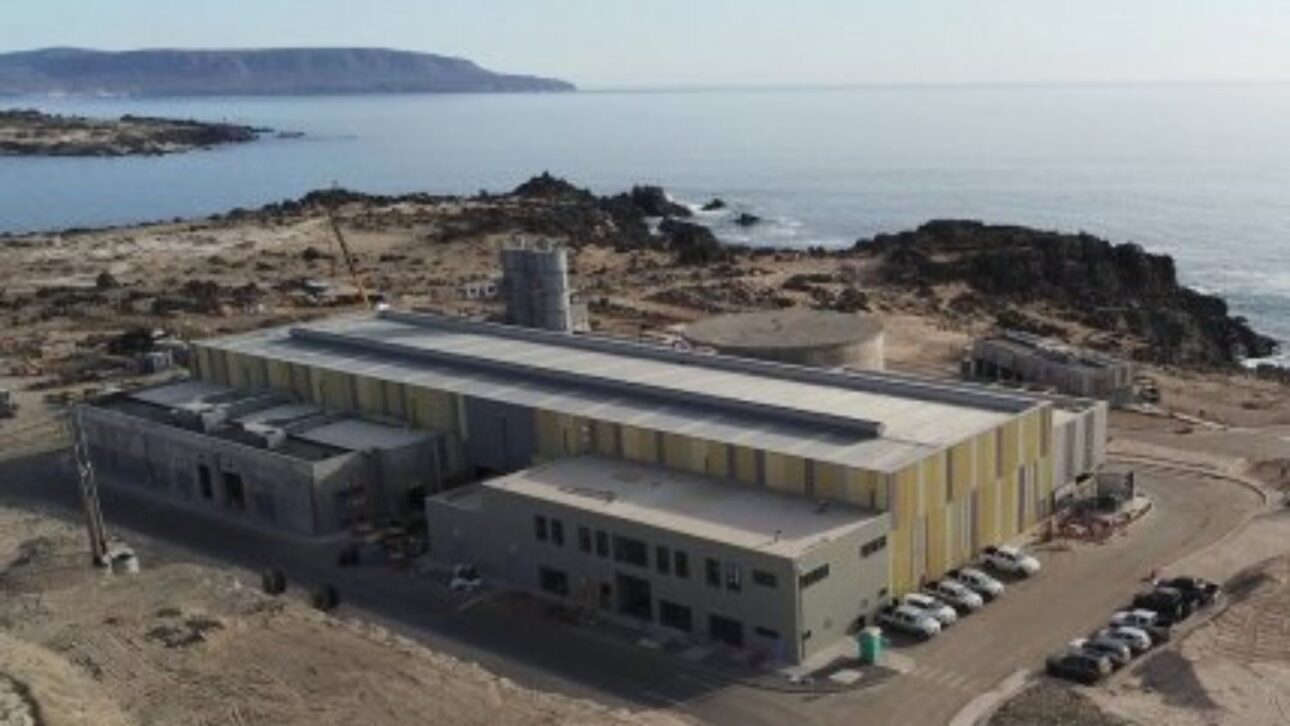 A power plant in the Atacama Desert transforms seawater into potable water per hour, guaranteeing a supply to Chilean cities in a region of extreme scarcity.
From a technical point of view, the plant uses seawater reverse osmosis technology.
The process begins at the intake point, with underwater structures and pipelines that carry raw water from the ocean to land-based facilities.
Next, the liquid goes through stages of physical and chemical pretreatment to remove suspended solids, sand, organic matter, and marine organisms that could damage the membranes.
Only then is the water pressurized by high-powered pumps and sent to reverse osmosis modules, where it undergoes a process. semi-permeable membranes that retain salts and most contaminants, separating the flow into desalinated water and concentrated brine.
The drinking water produced is subjected to final pH adjustments, remineralization and disinfection, before being pumped through dozens of kilometers of pipelines to the region’s urban centers.
The network associated with the power plant includes pumping stations and intermediate reservoirs which allow overcoming altitude differences and ensuring adequate pressure in the supply to the cities served.
The brine is then returned to the sea by means of Submarine outfalls designed to dilute the saline concentrate. and minimize local salinity changes.
Energy efficiency and the use of renewable energy.
One of the points highlighted by companies and entities in the sector is… energy efficiency of the Atacama Desalting Plant.
Technical information released by GS Inima and partners indicates that the plant operates with Guaranteed electricity consumption of less than 2,8 kWh per cubic meter of water produced., a level considered among the lowest in the world for facilities of this size.
During performance tests, even lower average values were recorded, close to 2,6 kWh per cubic meter, result associated with the use of energy recovery equipment in high-pressure tailings and to the optimized design of the process.
Another difference is the integration with renewable energy sources.
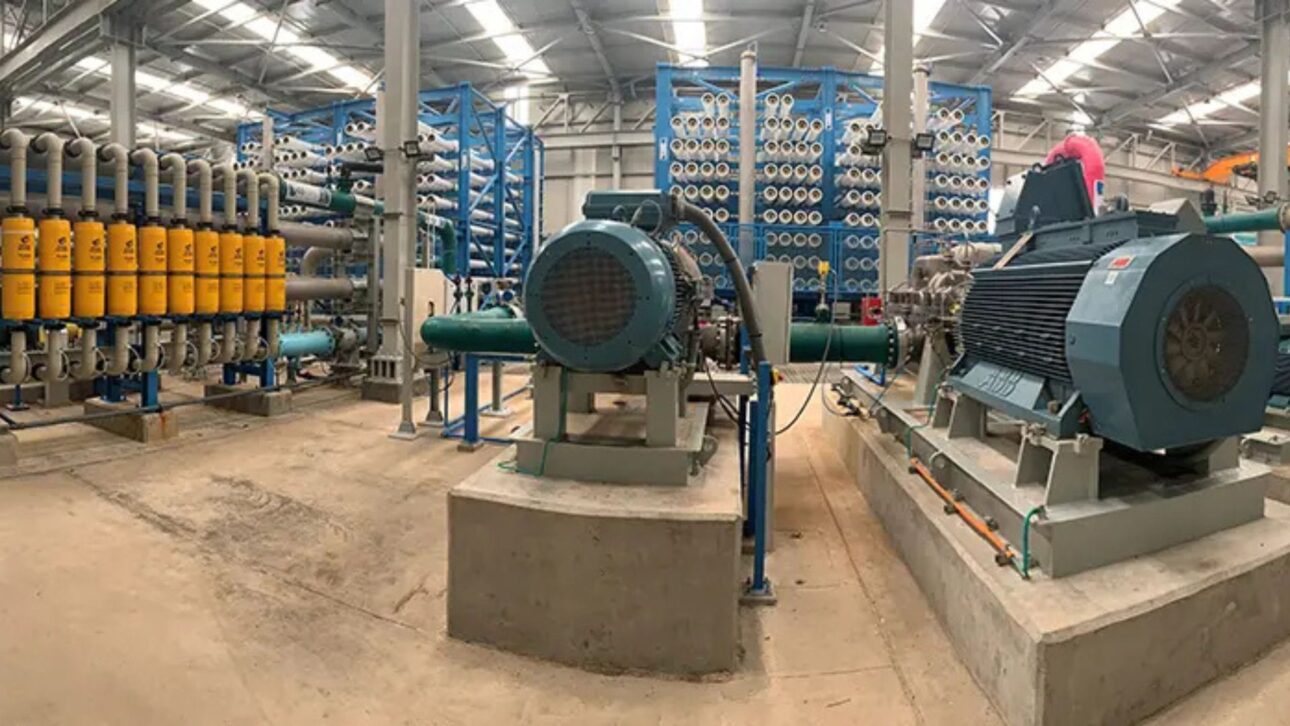 A power plant in the Atacama Desert transforms seawater into potable water per hour, guaranteeing a supply to Chilean cities in a region of extreme scarcity.
Public documents related to the project indicate that the power plant’s electricity supply is guaranteed by an arrangement of Wind and solar power generation, officially characterized as 100% renewable..
This configuration reduces the carbon footprint associated with desalination.This is a frequent criticism of similar projects in other parts of the world, where the energy for high-pressure pumps usually comes primarily from fossil fuel-fired power plants.
International recognition and regional impact
The combination of technological solutions and the direct impact on the region’s supply yielded… international recognition for the project.
In 2022, the Atacama desalination plant was announced as the winner of the award. “Desalination Plant of the Year” at the Global Water Awards, an award organized by entities linked to the water and sanitation sector.
The plant had also previously been identified as one of most relevant engineering projects in the country by Chilean technical associations, based on the volume of investment, the social role, and the solutions adopted to reduce environmental impacts in the coastal zone.
Domestically, the Chilean government emphasizes the effect of the power plant on… local water security.
During the official inauguration, authorities highlighted that the region, previously under constant risk of water shortages, now has a guaranteed supply of drinking water for decades, based on the contracted capacity and the modular design that allows for future expansions.
Institutional reports also mention the generating more than 500 direct jobs during the construction phase and the volume of resources invested, around 100 million dollars, as significant factors in the regional economy.