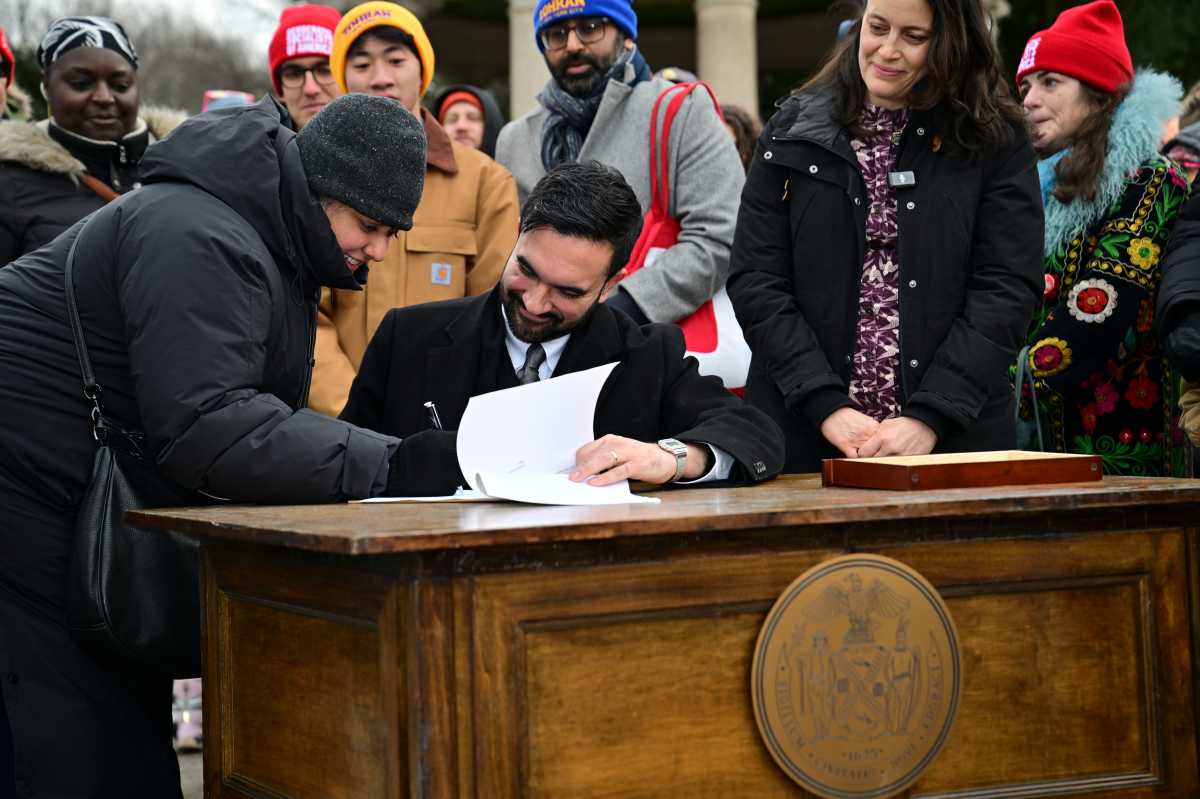
Just hours after an inauguration where he called for unity among New Yorkers, Mayor Zohran Mamdani took executive action by repealing orders that former Mayor Eric Adams signed related to Israel and antisemitism.
That only rekindled anxiety and mistrust among many Jewish New Yorkers already concerned that the new mayor, whose support of pro-Palestinian causes and previous refusal to recognize Israel as a Jewish state, would protect them in a time of heightened antisemitism across the city and world.
Mamdani signed an executive order on Jan. 1 that repealed every executive order former Mayor Adams signed between Sept. 26, 2024 — the date Adams was indicted on federal campaign fraud charges that were later dropped — and Dec. 31, 2025. Among those revoked orders were a ban on city officials boycotting, divesting or sanctioning Israel (something which Mamdani had previously supported), directions for the NYPD to examine ways to keep protesters away from houses of worship (issued weeks after an Upper East Side synagogue demonstration), and the city’s adoption of the International Holocaust Remembrance Alliance (IHRA) definition of antisemitism, which some have said can treat criticism of the Israeli government’s actions as antisemitic.
At the same time, Mamdani indicated he protected other orders that former Mayor Adams had signed prior to Sept. 26, 2024 — including one that continues the Mayor’s Office to Combat Antisemitism.
Mamdani has said he would have zero tolerance for antisemitism and would work to protect all New Yorkers — a promise he repeated when pressed at a Brooklyn press conference Friday about the repeal of the other Adams’ orders.
The new mayor said the executive order was intended to give his administration a “clean slate” while reaffirming a commitment to combat hate, including antisemitism, through funding hate crime prevention, community engagement and what he described as a “politics of universality.”
But that didn’t quell the new round of concern among Jewish community leaders and advocates already skeptical of Mamdani’s promise to protect Jewish New Yorkers in a city that has experienced a troubling spike in antisemitism since Hamas’ Oct. 7, 2023, terrorist attacks on Israel.
Is Mamdani ‘singling out Israel’?
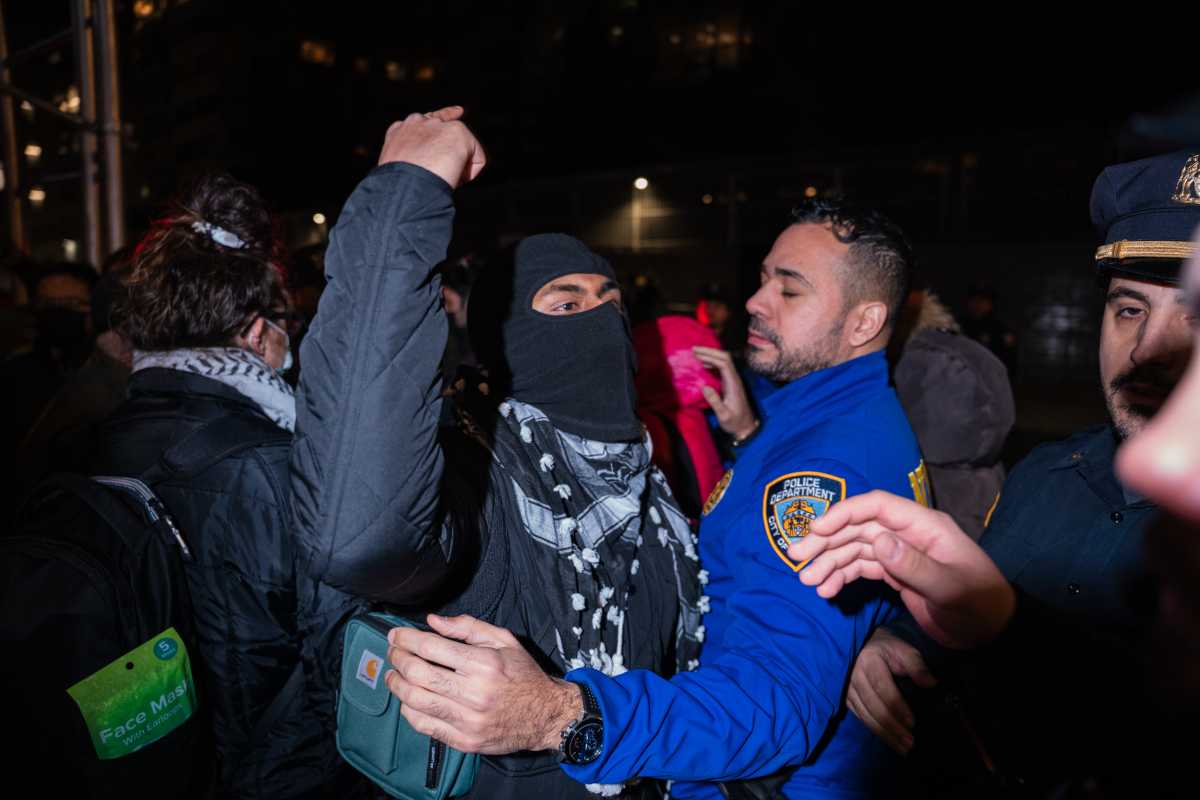 Pro Palestinian protesters rally outside of a synagogue, to protest an organization that promotes Aliyah to Israel, as counter protesters gather in opposition.Photo by Yoav Ginsburg/ZUMA Press Wire
A joint statement by the UJA-Federation, JCRC-NY, AJC New York, ADL New York/New Jersey, Agudath Israel of America, the New York Board of Rabbis and the Orthodox Union criticized Mayor Mamdani, while praising some actions.
“Our community will be looking for clear and sustained leadership that demonstrates a serious commitment to confronting antisemitism,” they said. “And ensures that the powers of the mayor’s office are used to promote safety and unity, not to advance divisive efforts such as BDS.”
They supported his “seeking to better protect houses of worship” and continuing the Mayor’s Office of Combatting Antisemitism, created by then Mayor Eric Adams.
They also said Mayor Mamdani “reversed two significant protections against antisemitism,” the city’s adoption of the IHRA definition of terrorism and protections against city government boycotts of Israel.
“Singling out Israel for sanctions is not the way to make Jewish New Yorkers feel included and safe,” they said. “And will undermine any words to that effect.”
Ravi Avi Weiss, founding rabbi of the Hebrew Institute of Riverdale, and founder of the Yeshivat Chovevei Torah and Yeshivat Maharat Rabbinical Schools, and a contingent protested near the inauguration.
“At the very moment Mayor Mamdani was publicly inaugurated, our message was unmistakably clear,” Ravi Avi Weiss said on X. “As you seek to undermine Israel as a Jewish state, our voices of moral conscience, of Jewish conscience, will continue to be peacefully raised wherever you go.”
William Daroff, CEO of the Conference of Presidents of Major Jewish Organizations, who opposed Mamdani in the election, cited “a troubling indicator of the direction in which he is leading the city, just one day at the helm.”
And Councilwoman Inna Vernikov (48th District -R) in Brooklyn said of protecting houses of worship from protests that “We need to enforce federal law that’s already in place, because the pro-Hamas antisemites emboldened by @NYCMayor are coming!”
Israeli representatives said Mayor Mamdani had taken divisive steps on international issues that could lead to more problems in the city.
Ambassador Ofir Akunis, Consul General of Israel in New York, said, “The Mayor of New York said he would be a mayor for everyone, yet he is taking dangerous steps in the exact opposite direction.”
Akunis added to “allow for boycotts against Israel” could prompt antisemitism in New York City as well as “pose an immediate threat to the safety of Jewish communities in New York City and could lead to an increase in violent antisemitic attacks throughout the city.”
Mamdani acknowledges the skepticism
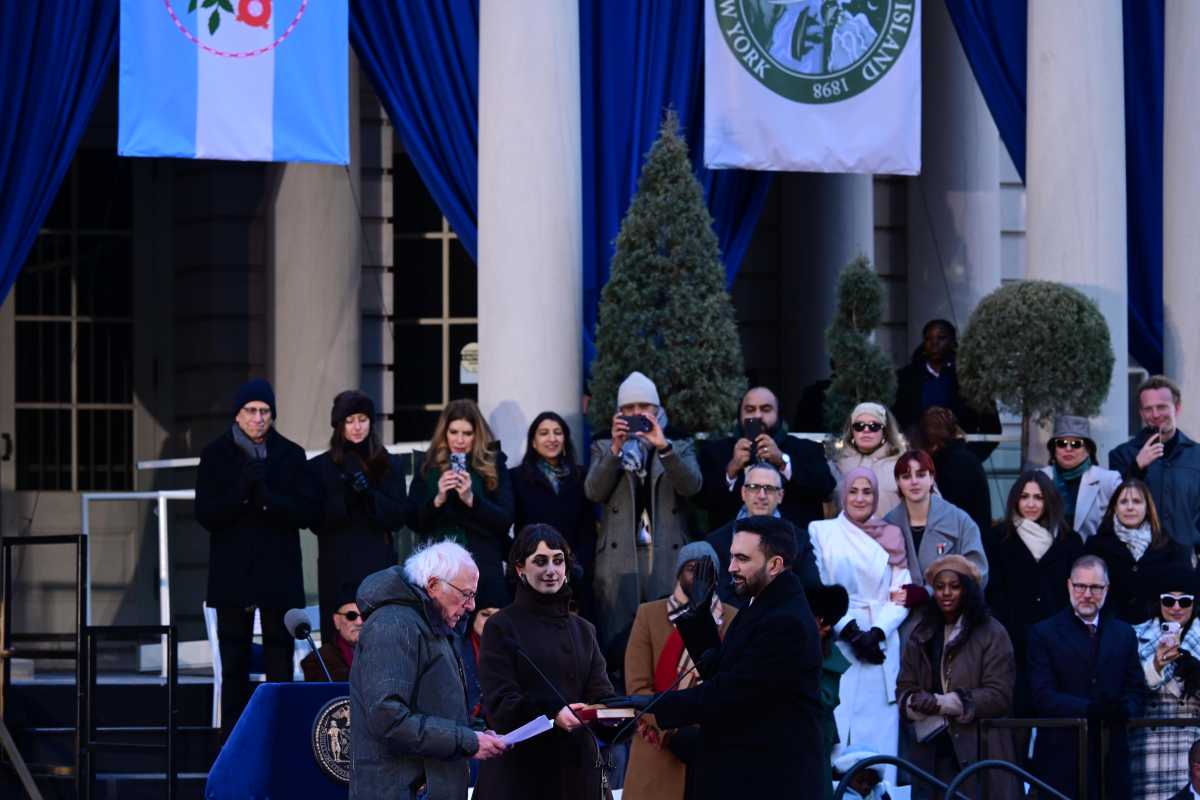 Vermont Senator Bernie Sanders swears in Mayor Zohran Mamdani.Photo by Lloyd Mitchell
Despite the criticism, Mamdani’s inauguration ceremony on New Year’s Day was attended by many Jewish supporters who contributed to the festivities.
Some other Jewish leaders stood with and by Mamdani, including Rabbi Ellen Lippmann, founder of the Kolot Chayeinu, on stage during the inauguration.
The new mayor stood with leading Jewish legislators at the inauguration, including Vermont Sen. Bernie Sanders, the democratic socialist who administered the oath of office to Mamdani; Rep. Jerold Nadler (who endorsed him); and Sen. Chuck Schumer (who did not) on the dais.
And renowned actor Mandy Patinkin was part of the ceremony along with a school choir that sang “Over the Rainbow,” with music by Harold Arlen (whose father was a cantor) and lyrics by Yip Harburg, who were both Jewish.
The new mayor also sought to celebrate the Jewish community in his address, remarking at one point, “Where else could a Muslim kid like me grow up eating bagels and lox every Sunday?”
But he also sought to acknowledge the skepticism and avowed that he will protect all New Yorkers regardless of whether they agree.
“I know there are some who view this administration with distrust or disdain, or who see politics as permanently broken,” Mamdani said in his address. “And while only action can change minds, I promise you this: if you are a New Yorker, I am your mayor. Regardless of whether we agree, I will protect you, celebrate with you, mourn alongside you, and never, not for a second, hide from you.”
Rabbi Jill Jacobs, CEO of T’ruah who attended the inauguration, struck a hopeful note, calling for support of the mayor along with vigilance.
“There’s a lot we don’t know about how this mayoral term will play out, but the theme of the day from Mamdani and every other speaker was that this administration is committed to making New York work for all New Yorkers, including those who too often get left behind or ignored,” she said on Instagram.
Rabbi Jacobs added “those who care about this city need to work with the mayor and comptroller and public advocate and City Council to build the city we want,” adding we also need “to push and protest when necessary, and to hold them all accountable to making this city safe and affordable for everyone.”
Mamdani has said he’s aware of concerns among some Jewish groups and residents, saying he plans to take action against hate crimes, including those related to antisemitism.
“My administration will also be marked by a city government that will be relentless in its efforts to combat hate and division, and we will showcase that by fighting hate across the city,” he said after the inauguration at a Brooklyn event. “That includes fighting the scourge of antisemitism by actually funding hate crime prevention, by celebrating our neighbors and by practicing a politics of universality.”