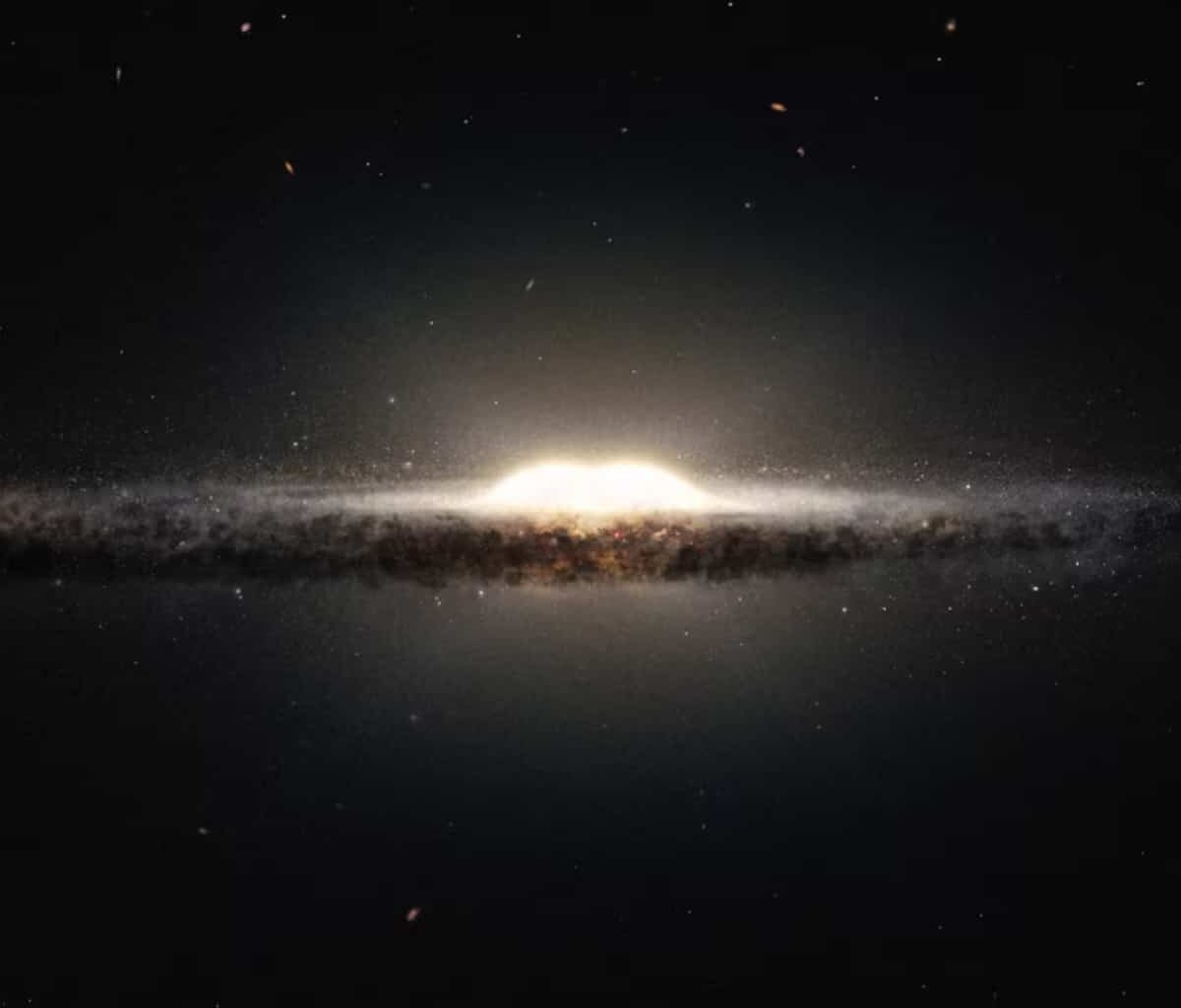
Using the unmatched power of the James Webb Space Telescope (JWST) and an extended observation window, astronomers have witnessed something never before seen around the supermassive black hole at the center of our Milky Way — and they’re still trying to explain it.
Normally, seeing bursts of light or brief flickers from the swirling gas and dust around a black hole — known as an accretion disk — isn’t surprising. But this time is different. “The black hole at the center of our galaxy seems to be unique in this respect,” says Farhad Yusef-Zadeh, an astrophysicist at Northwestern University. His team observed Sagittarius A* several times between 2023 and 2024 with the JWST. What they found left them speechless.
In their paper published in The Astrophysical Journal Letters, the team describes how Sagittarius A*’s accretion disk emits a constant stream of flares — with no downtime. Some are faint glimmers lasting just seconds, others are daily outbursts bright enough to blind instruments, and a few are subtle flickers that last for months. “Sagittarius A* is always bubbling with activity and never seems to reach a steady state. There’s always something new happening,” they report.
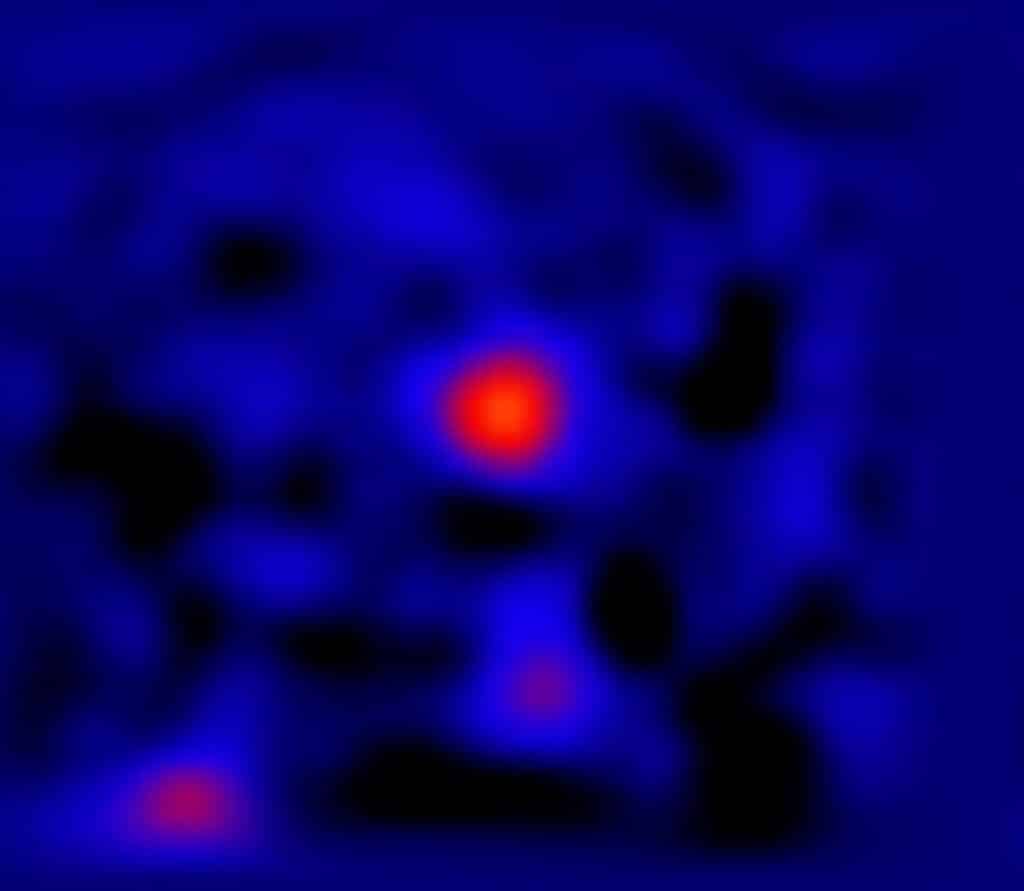
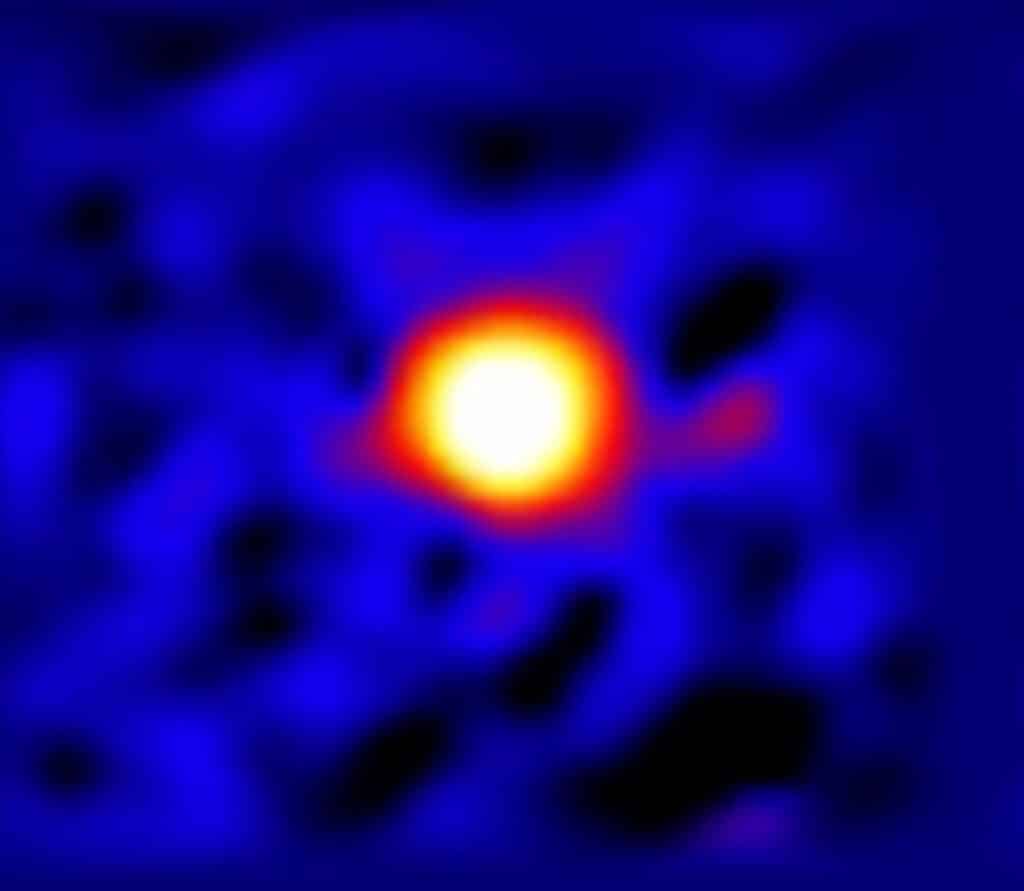
Thanks to the James Webb Space Telescope (JWST), astrophysicists at Northwestern University (USA) have obtained the longest and most detailed view to date of the supermassive black hole at the center of the Milky Way. They discovered that the black hole’s accretion disk emits a constant stream of eruptions without any resting periods. These are visible here in two images taken at 2.1 microns on April 7, 2024. © Farhad Yusef-Zadeh, Northwestern University
A never-ending light show captured in the near infrared
It was JWST’s near-infrared camera (NIRCam) that revealed this strange, restless behavior. The telescope was aimed at the galactic center for a total of 48 hours, broken into 8- to 10-hour sessions throughout the year — the longest and most detailed observation of Sagittarius A* ever conducted.
According to the team, the black hole’s accretion disk produces about five or six major flares every day, with several smaller ones in between. “We couldn’t find any pattern to it,” says Yusef-Zadeh. “The activity appears completely random.”
Still, the researchers think two different mechanisms could explain the mix of flares and flickers. Minor disturbances within the disk may cause weaker flashes, while more intense turbulence could compress plasma and create stronger radiation bursts.
“It’s a bit like what happens in the Sun’s magnetic field, which can produce solar flares,” they explain. Yusef-Zadeh suggests that the brightest outbursts might be magnetic reconnection events — when two magnetic fields collide and release enormous energy, accelerating particles to nearly the speed of light.
Save an extra 100% this #BlackFriday when you spend the day with #BlackHoleFriday⚫ instead! No Coupons, no codes, just all black holes all the time!
Space out to this data sonification of the center of our galaxy, including Sagittarius A*, our galaxy’s supermassive black hole. pic.twitter.com/3gmB0XaH5q
— Chandra Observatory (@chandraxray) November 29, 2024
A 24-hour watch to unlock the black hole’s secrets
By watching Sagittarius A* at two infrared wavelengths (2.1 and 4.8 microns) simultaneously — something JWST’s NIRCam makes possible — astronomers noticed something remarkable. Events at the shorter wavelength brighten slightly before those at the longer one. “It’s the first time such a time delay has ever been detected, ranging from a few seconds to about 40,” Yusef-Zadeh explains.
The team believes that as particles spiral around magnetic field lines, they lose energy faster at shorter wavelengths than at longer ones — exactly what these observations suggest. To verify this, they’ve requested even longer observing time with the James Webb telescope.
“If we could observe for 24 hours straight, we might uncover features invisible in shorter sessions,” the researchers say. “It would be amazing — and it could reveal whether these flares follow a pattern or are truly random.”

Nathalie Mayer
Journalist
Born in Lorraine on a freezing winter night, storytelling has always inspired me, first through my grandmother’s tales and later Stephen King’s imagination. A physicist turned science communicator, I’ve collaborated with institutions like CEA, Total, Engie, and Futura. Today, I focus on unraveling Earth’s complex environmental and energy challenges, blending science with storytelling to illuminate solutions.