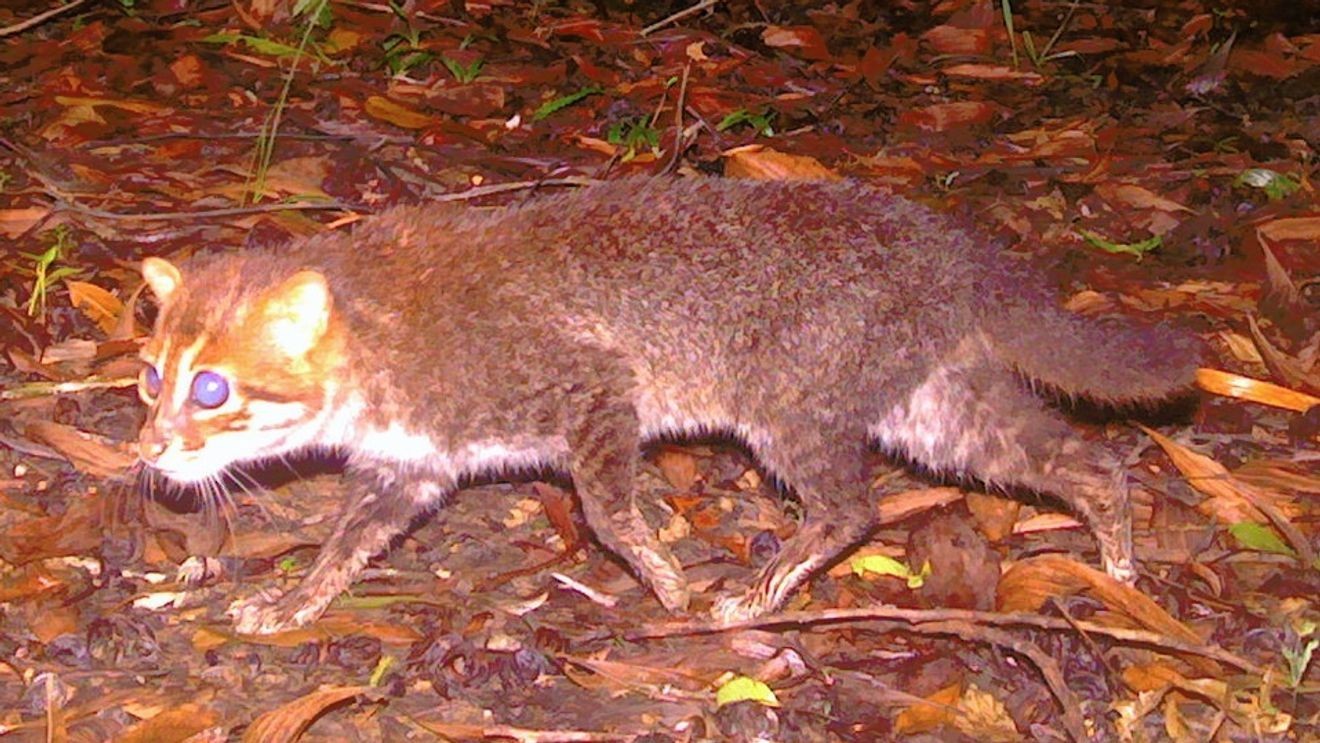
BANGKOK, Thailand (WKRC) – A wild cat that was considered “possibly extinct” by scientists for decades was once again found in the wild, proving to be a “significant win for conservation.”
The flat-headed cat, known scientifically as the Prionailurus planiceps, is a wild cat that is found on Sumatra, Borneo and on the Malaysian Peninsula and is classified as endangered. The animal used to live in Thailand as well, but the Thai flat-headed cats were thought to be “possibly extinct” by scientists after none had been officially observed for 29 years, according to the Cat Specialist Group.
Panthera, a conservation group dedicated to protecting wild cats around the world, announced on December 26 that the flat-headed cat had once again been spotted in Thailand for the first time since 1995. The organization attributed the lack of observations over a nearly 30-year period was attributed to the animal’s “elusive nature.”
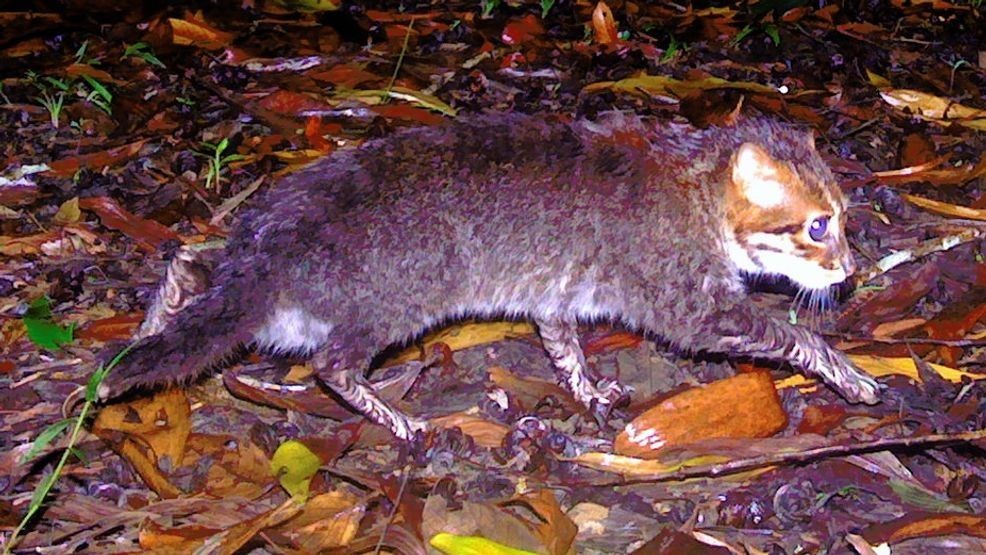
New images from Thailand’s DNP and Panthera prove the existence and rediscovery of one of the world’s most Endangered and least known wild cats, the flat-headed cat, in Thailand’s Princess Sirindhorn Wildlife Sanctuary. flat-headed cat, small wild cat, camera trap, southeast Asia, Thailand. (Credit: DNP/Panthera Thailand)
“The rarity of such detections underscores the species’ elusive nature: its small size, limited numbers, and nocturnal behavior make it exceptionally difficult to observe,” Panthera’s press release read. “Its preferred habitats —tropical rainforests, swampy and peat-swamp forests, marshes, lakes, streams, and riverine forests — further complicate research efforts due to dense and inaccessible terrain.”
There are only an estimated 2,500 adult flat-headed cats living around the world, making the observations a “landmark moment” and a “significant win for conservation,” according to Thailand’s Director General of the Department of National Parks, Wildlife and Plant Conservation Athapol Charoenshunsa.
“This is a landmark moment for Thailand and a powerful reflection of our long-standing commitment to conservation,” Charoenshunsa said. “For decades, the flat-headed cat has been classified as ‘likely extinct,’ but after years of sustained protection, strong scientific partnerships, and community stewardship, we can now celebrate its return to Thailand this National Wildlife Day… Rediscovery of the flat-headed cat in southern Thailand is a significant win for conservation in Thailand and the broader southeast Asia region where the species is still found.”
Panthera explained that the largest threats to the species’ existence include “human-induced habitat loss from land conversion, fishing, agricultural encroachment, hunting, pollution of waterways, and the spread of disease from domestic animals.”
“Even species thought to be lost can be rebuilt if we invest in protecting the habitats they depend on,” said Panthera Small Cat Conservation Science Director Dr. Wai Ming Wong. “Flat-headed cats’ persistence in Thailand suggests that these ecosystems still hold remarkable biodiversity but also underscores how urgently we must conserve and restore them before they vanish entirely.”
More information about Panthera’s conservation efforts, including a donation link, can be found on the organization’s website.