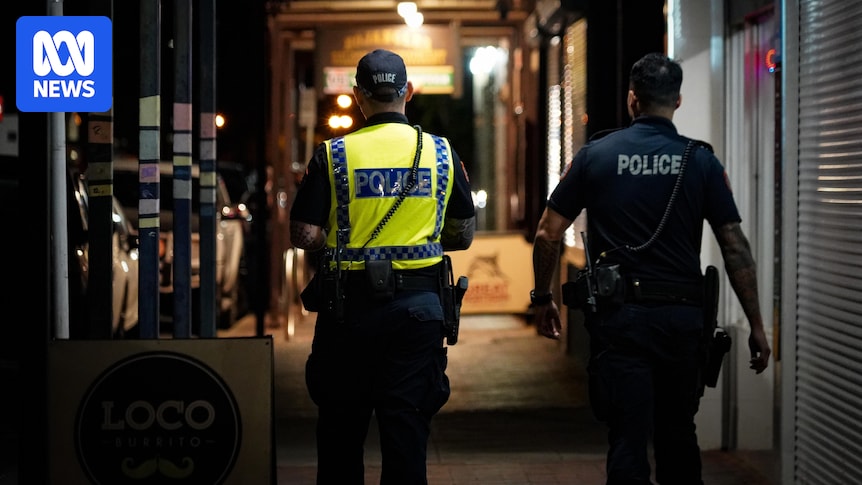
A Northern Territory town in the centre of Australia has long found itself in the middle of the national conversation about crime and anti-social behaviour.
At the beginning of 2023, a surge in violent crime and burglary in Alice Springs — home to about 33,000 people — brought the prime minister to town with a commitment to spend hundreds of millions of dollars addressing complex and deep-rooted social issues.
With him, came a media frenzy.

Crime in Alice Springs has been making headlines for years, with a particular focus on youth offending. (ABC News: Xavier Martin)
Young people were at the forefront of the debate about how to tackle crime in the Red Centre, with controversial youth curfews introduced twice in 2024 in a bid to stem the violence.
And at that year’s NT election, crime reduction was the cornerstone of a campaign that saw the Country Liberal Party (CLP) sweep into power after a nine-year stint in opposition.
“We will do whatever it takes to restore community safety,” Chief Minister Lia Finocchiaro said on election night.

Lia Finocchiaro campaigned heavily on law and order. (ABC News: Michael Park)
Now, about 16 months into its term, the CLP credits its tough-on-crime approach with a recent drop in offending across the NT, reflected in the latest NT Police Force crime statistics.
But the NT’s prison population has soared and the CLP’s punitive approach hasn’t been popular with justice advocates or youth organisations who argue the NT can’t jail its way out of a crime crisis.
In 2025, the headlines painted a picture of overpopulated, “inhumane” cell conditions, overflowing watch houses, legal aid services struggling to meet demand and rehabilitation programs being cancelled.
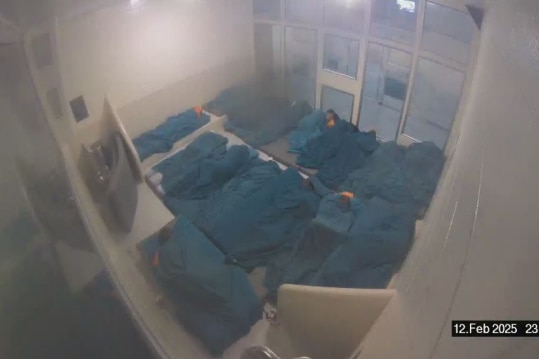
The government says most prisoners have been removed from watch houses, with just six remaining across the territory in December. (Supplied: NT Ombudsman )
Alice Springs property offences, assaults down
Monthly data published by the NT Police Force shows property offences in Alice Springs — including theft, burglary and property damage — was 20 per cent lower than the same period a year earlier.
At the same time, offences against the person — including assault, robbery and homicide — were down by 13 per cent compared to the same period a year earlier.
However, the figures remained steady for some offences, including sexual assaults.
While the NT’s prison population has been steadily increasing for the past nine years, the crime drop in Alice Springs coincides with the largest yearly increase in a decade — jumping by about 600 people between June 2024 and June 2025.
About 88 per cent of the prison population is Indigenous, prompting federal Indigenous Australians Minister Malarndirri McCarthy to single out the NT for its failure to meet national targets on Closing the Gap.
Advocates call for long-term solutions
On a Wednesday afternoon at the Gap Youth Centre, dozens of young people rush through the back doors towards the Hoops 4 Health basketball program, which runs two nights a week.
It also provides free meals, programs and a safe space for young people into the night in Alice Springs, supporting the children most vulnerable to ending up in the criminal justice system.

Children play at the Gap Youth Centre which runs an after hours drop-in program until 9:30pm every night. (ABC News: William Green)
Earlier this year, the NT government lowered the age of criminal responsibility from 12 to 10 — the age of many of the young people at the hub — and made it harder for them to access diversion programs.

Programs run at the Gap Youth Centre aim to create generational change for young people. (ABC News: William Green)
The centre’s chief executive Leon Tripp said although crime rates had fallen in Alice Springs, the government couldn’t expect long-term change without investment in prevention, diversion and ongoing rehabilitation.
“For these young people that may be offending, the circumstances that they come from are still there … this isn’t going to go away,” he said.
“You can’t actually arrest your way out of these sort of situations or just continue to lock people up.”

Leon Tripp has been working in Alice Springs for 15 years, starting his career as a youth worker in Hobart 35 years ago. (ABC News: Xavier Martin)
Mr Tripp said the centre’s core programs helped connect disengaged young people with school and its after hours drop-in program helped foster generational change.
“I’m really worried,” he said.
“I think the immediate thing is people feel safer, they think that it’s really good.
“But if nothing is done about the long-term solutions here, it’s not going to get any results.”

Gap Youth Centre provides a safe space and free meals for kids in Alice Springs. (ABC News: William Green)
Crime drop bolsters flailing housing market
The Real Estate Institute of the NT’s Lindsay Carey believes the decrease in crime in Alice Springs has boosted the town’s property market, which had been flailing in recent years.
“We’ve certainly seen an improvement in the market, it’s definitely not as bad as it was last year,” he said.

Lindsay Carey says security remains a major concern for home buyers in Alice Springs. (ABC News: Xavier Martin)
Mr Carey said the number of properties on the market at any one time and the length of time they were listed had reduced too — but people were still interested in home security.
“There seemed to be more need for having secure parking as well … security has been a stronger talking point,” he said.
“It is something you still get asked a lot when you’re dealing with new people to town.”
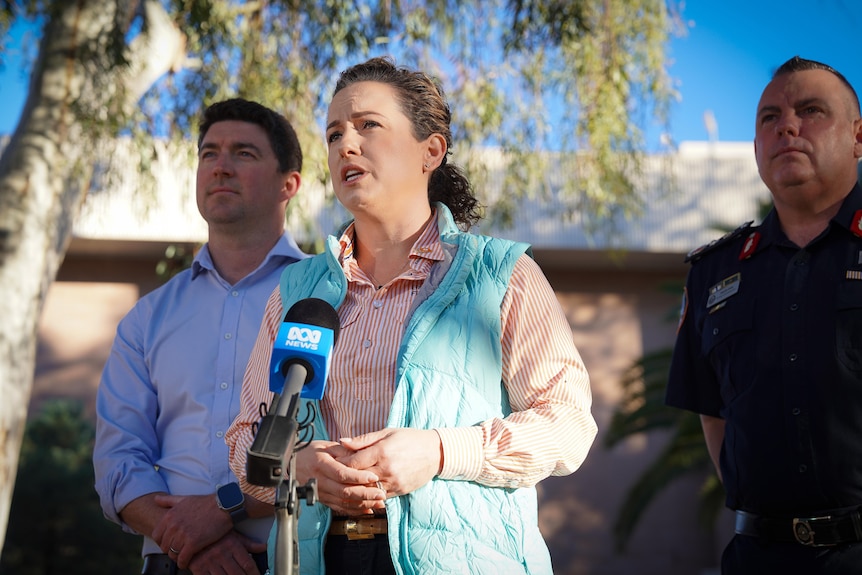
Lia Finocchiaro says there have been 1,117 fewer victims of crime in Alice Springs since the CLP came to power. (ABC News: Xavier Martin)
Ms Finocchiaro said the CLP had expanded court and prison capacity since coming to office, reduced remand times and sped up sentencing outcomes.
“We will continue to prioritise law and order through the lens of community safety, which we are now seeing a reduction in crime across the territory,” she said.
“And in our year of action, certainty and security we have seen in Alice Springs the number of victims of crime has dropped by 19 per cent — that’s 1,117 less victims.
“This focus will continue through 2026 as we address not only crime itself but the root causes behind it.”