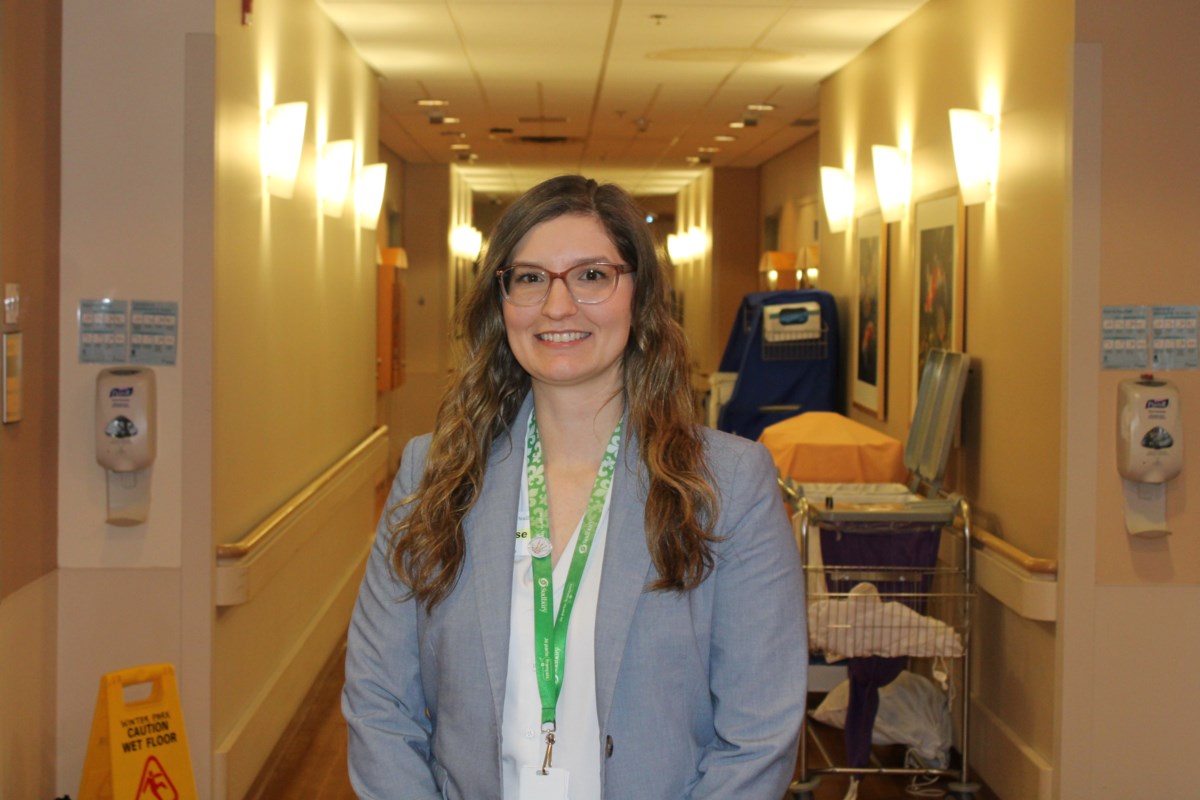
Led by Pioneer Manor resident care manager Marie-Lise MacLeod, the long-term care facility has drastically changed their approach to palliative care in recent years
SUDBURY — Where death used to be a more hushed topic, with Pioneer Manor residents brought out the back door after they died, the recently deceased are now given a grand exit out the front door.
When it’s OK with their families, staff call a “Code Butterfly,” which triggers a gathering of staff and residents at the front door as a resident passes through one final time.
“We take a moment to say our goodbyes,” Pioneer Manor Resident Care manager Marie-Lise MacLeod told Sudbury.com during a recent visit to the municipal long-term care facility.
“It’s really touching, too, to have everyone at the door say their goodbyes and send their respects.”
The following day, a rose and memorial card is placed at the resident’s spot in the dining room so their dinner mates know what happened.
“Beforehand, they’d go back to their table and not know what happened,” MacLeod said, adding that this sense of uncertainty and lack of acknowledgement left a gap in both residents’ grieving processes and might have sent the wrong message.
Residents may have been left thinking, “If I die will I be forgotten? Will it not matter?” MacLeod said.
Although she clarified this was never the case and that residents always mattered, Pioneer Manor’s shift to more openly recognize death helped affirm this notion among residents.
MacLeod helped lead the charge toward recognizing death and instating modern palliative care standards at Pioneer Manor during the past few years.
As “the experts for end-of-life care,” staff at Maison McCulloch Hospice served as their guiding light, MacLeod, and helped inspire what’s now taking place at Pioneer Manor.
“Everything they do is meant to improve that quality of life and that sense of well-being near the end, and to support residents and family, and we want to do the exact same thing here,” she said.
Residents typically enter a long-term care facility with a life-limiting illness and the understanding it will be their final home, MacLeod said, and with approximately 130 deaths per year at the 433-bed facility, there’s no getting around the fact that death takes place there.
Staff broach palliative care right out of the gate with newcomers, at least among those residents interested in having the conversation.
“It’s about focusing the conversation regarding goals of care and looking at what’s important to that person, and looking at making sure we have those conversations early on about what their illness looks like,” MacLeod said.
In the past, these conversations wouldn’t take place until there’d been a noticeable decline in a resident, she said, adding, “when a person starts declining, they might not be able to tell you what matters and how they see the journey going for them.”
Residents help map out what their end-of-life care will look like, including such things as whether to make another trip to the hospital or stay in their unit where they can be made comfortable.
All staff members have some palliative care training, and 14 have received extra training to become “palliative care champions,” MacLeod said.
During a resident’s final days, family members are welcome to spend as much time as they want next to their loved ones, with recliner chairs which go down to a bed available to be placed at a loved one’s beside. Snacks are available and residents are given palliative care baskets which include such things as lip balm and moisturizes alongside handmade pillows provided by Quilting Guild volunteers.
Pioneer Manor also purchased CADD pumps (Continuous Ambulatory Delivery Device) last year, which administer pain medication as prescribed and needed.
“It gives relief to the family to know, ‘my loved one is receiving the medication they need and they don’t need to worry about it too much’,” MacLeod said.
Then, when a resident does die, their final group of friends at Pioneer Manor join family members in bidding them a formal farewell during a Code Butterfly.
Proud of how far they’ve gotten in only a few years, MacLeod said staff are in continuous conversation with a resident and family council to determine how their approach to palliative care can be further improved upon.
“I’m very, very proud of the team we have here, and I’m proud of how engaged our staff were in trying to improve our palliative care program,” MacLeod said. “They really went all-in and welcomed this new approach.”
Tyler Clarke covers city hall and political affairs for Sudbury.com.