Image credit:
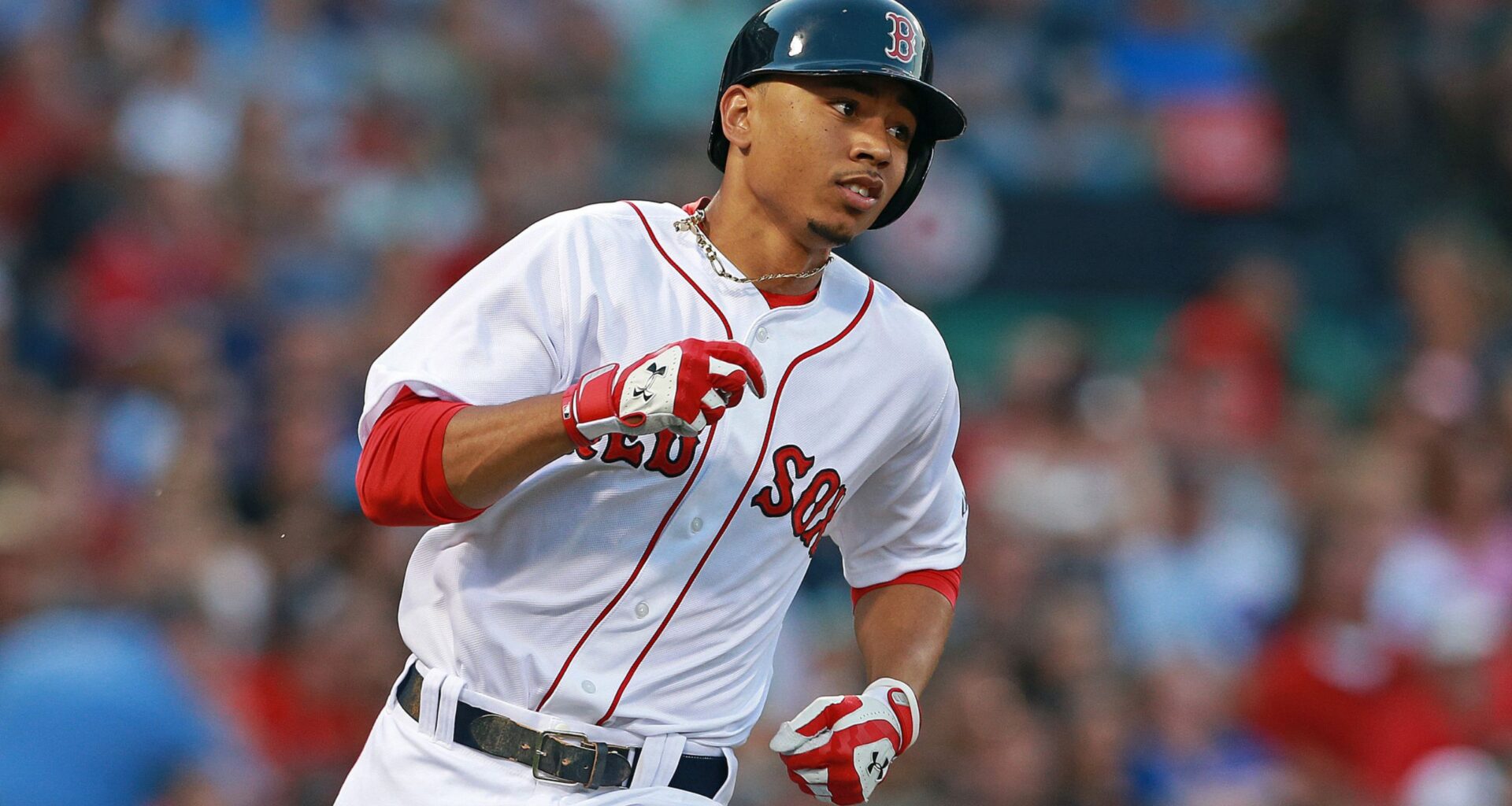
Mookie Betts (Photo by Matthew West/MediaNews Group/Boston Herald via Getty Images)
Today, we’re taking a look back at the 2011 draft class and using 15 years of hindsight to guide us in assigning players to the first 30 picks.
For the last few offseasons we’ve done these redraft exercises as a way to revisit old drafts, see what we can learn and figure out which teams did well and which did poorly. We also write that it’s impossible to grade a draft in the immediate days after, but 15 years gives us some pretty good runway to evaluate them with confidence.
The 2011 draft was the last before MLB established the bonus pool era that remains in place today. The rule was enacted in the name of parity, but in reality, it was a cost-cutting measure intended to keep bonuses in check. With that change on the horizon, teams went wild with draft signing bonuses and spent $228,009,050 on drafted players—an 8.9% increase from the 2010 draft.
The 2011 class was led by a group of six players atop a deep and talented draft class overall: Anthony Rendon, Dylan Bundy, Gerrit Cole, Danny Hultzen, Trevor Bauer and Bubba Starling. The top six ranked players went inside the first six picks, and three of those players—Cole, Rendon, Bauer—remain in our redraft today.
The 2011 class looks excellent and has produced more than 900 total bWAR among players who signed. The group includes multiple likely Hall of Famers, multiple Cy Young award winners and a number of excellent defenders at premium positions. Teams also acquitted themselves nicely with their forecasting: 12 of the 30 players in this redraft were originally drafted in the first round, while five others were supplemental first rounders.
No team can claim a better draft haul than the Red Sox, however, thanks to a fifth-round pick that landed them franchise-changer Mookie Betts.
As usual, for this exercise we’ve only included drafted players who signed, but late-round preps like Trea Turner (Pirates, 20th round), Aaron Nola (Blue Jays, 22nd round) and Carlos Rodon (Brewers, 16th round) are the most interesting “what ifs?”
1. Pirates — SS Mookie Betts
- Actual Pick: RHP Gerrit Cole
- Original Drafting Team (Round.Pick): Red Sox (5.172)
Drafting Betts in the fifth round is a monumental coup for the Red Sox, and it’s interesting to see the path of his defensive profile given his pre-draft evaluations as an infielder and outfielder. Betts is on an easy Hall of Fame track with eight all-star appearances, six Gold Glove awards, seven Silver Slugger awards, an AL MVP award, a batting title in 2018 and five World Series championships. Since the 2014 season—the first year Betts played in the majors—only four players have amassed more than 60 fWAR:
- Mike Trout, 66.3
- Mookie Betts, 62.6
- Aaron Judge, 61.6
- Francisco Lindor, 60.5
From his 2011 draft scouting report: “He could be a college difference-maker for his hitting ability, speed and solid athleticism, the last of which helped him be an all-conference basketball player and the state’s boys bowler of the year in 2010…Some scouts believe the speed will play better defensively and want to shift him to center field. Others believe his solid first-step quickness and quick-twitch athleticism give him a chance to stay in the infield, though more likely at second base than at short. He has some footwork issues to iron out to stay in the dirt. Betts has good hitting fundamentals and has excellent makeup and intangibles.”
2. Mariners — SS Francisco Lindor
- Actual Pick: LHP Danny Hultzen
- Original Drafting Team: Indians (1.08)
Lindor had some first-pick buzz at the time of the draft, but he ultimately fell to the Indians at eighth overall. He was the fourth high school player picked and the second high school hitter. Lindor boasted a well-rounded game at the time and 15 years later has established himself as one of the most consistent all-around stars in the sport. Excluding the shortened 2020 season, Lindor has never posted a season with less than 3.9 fWAR. He’s racked up 13,156.2 innings at shortstop—more than 1,000 more than Xander Bogaerts at No. 2—won a pair of Gold Gloves, been named to five all-star teams and won four Silver Slugger awards.
From his 2011 draft scouting report: “A baseball rat, Lindor has tremendous work ethic to go with above-average tools, and he plays the game with ease and passion. He’s a switch-hitter with a line-drive stroke from both sides of the plate, and he has excellent hands that work both at the plate and in the field. He has the tools to play shortstop well at the highest level, with smooth actions, fluidity, instincts and good fundamentals… Scouts haven’t scoffed at Omar Vizquel comparisons. Scouting directors said Lindor was a legitimate candidate for the No. 1 overall pick, but more likely he’ll slot in just behind that.”
3. Diamondbacks — RHP Gerrit Cole
- Actual Pick: RHP Trevor Bauer
- Original Drafting Team: Pirates (1.01)
Cole has largely lived up to his pre-draft billing and the hype that made him one of the top-ranked prospects in the class. He’s a bona fide ace with a Cy Young win to prove it in addition to five other top-five Cy Young finishes. He’s led the league in ERA twice, games started three times, strikeouts twice and ERA+ twice. He owns a career 3.18 ERA, 3.16 FIP, 28.6 K% and 6.4 BB%. He’s one of five pitchers with at least 2,000 strikeouts since 2013 as part of an absolute who’s who of modern frontline arms:
- Max Scherzer, 2,660
- Chris Sale, 2,276
- Gerrit Cole, 2,251
- Justin Verlander, 2,099
- Clayton Kershaw, 2,078
From his 2011 draft scouting report: “Cole had one of the best arms in the 2008 draft, when the Yankees drafted him in the first round, but he opted to attend UCLA. In three years with the Bruins, he has matured on and off the field, becoming a clubhouse leader as well as an ace for UCLA’s national runner-up team as a sophomore. This spring, he has consistently shown the best pure stuff of any pitcher in this draft, and he has pounded the strike zone, though he struggled to command the inner half during a rough three-outing stretch in April, leading to a fairly pedestrian 5-7, 3.27 mark for the season… Scouts think Cole could rocket to the majors as a closer throwing 98-100 mph, but the consensus is that he has all the makings of a frontline starter.”
4. Orioles — OF George Springer
- Actual Pick: RHP Dylan Bundy
- Original Drafting Team: Astros (1.11)
Springer ranked as one of the top hitters in the 2011 draft and more than lived up to those expectations. He was an arguable top 15 hitter in the game during his peak years from 2015-2020 and helped power the Astros to their (admittedly controversial) 2017 World Series victory. He had a resurgent 2025 season as a 35-year-old who helped power the Blue Jays lineup, and is a career .266/.353/.478 hitter with a 128 OPS+, 293 home runs and 129 steals.
From his 2011 draft scouting report: “At 6-foot-3 and 200 pounds, Springer has a skill set rarely seen among college players. He generates plus raw power with explosive bat speed. He has a plus arm and is a plus runner, and he’s a smooth defender in center field. He struggled early in 2011, when his hands were tight to his body and his stance was narrow, and he collapsed on his back side… He’s raw for a college first-round pick, but Springer may have the highest ceiling in the draft.”
5. Royals — SS Marcus Semien
- Actual Pick: OF Bubba Starling
- Original Drafting Team: White Sox (6.201)
Semien was an overlooked player at the time of the draft who didn’t rank on our top 200 draft list. He has far outshone his expectations and the questions about his offense. Since becoming a full-time regular in 2015, Semien has been one of the premier iron men of the game with 1,544 games played. Only Paul Goldschmidt (1,612), Manny Machado (1,605), Carlos Santana (1,554) Freddie Freeman (1,546) and Eugenio Suárez (1,545) can claim more. He’s a career .253/.321/.435 hitter with a 109 OPS+ and 253 home runs. He’s been an all-star three times, won a pair of Gold Glove and Silver Slugger awards, won a World Series and has finished third in AL MVP voting three times.
From his 2011 draft scouting report: “Semien is a steady defender with sure hands and some arm strength, though he may lack the first-step quickness to stay at shortstop. He’s an average runner. He hit well last year and in the Northwoods League last summer, but scouts have questions about his bat. He didn’t do anything to quell doubters this year, hitting .260/.357/.380.”
6. Nationals — 3B Anthony Rendon
- Actual Pick: 3B Anthony Rendon
- Original Drafting Team: Nationals (1.06)
The Nationals actually took Rendon with this pick originally, and the selection holds up quite well. Rendon was the top-ranked player in the class thanks to a tremendous offensive package and lofty big league comps. While he fell off sharply after reaching his age-31 season in 2021, Rendon’s six-year peak from 2014-2019 was excellent. In that span, he hit .293/.374/.500 with a 131 wRC+ and 28.9 fWAR—No. 9 among all hitters—with three top 10 MVP finishes, two Silver Sluggers and a 2019 World Series championship with the Nationals.
From his 2011 draft scouting report: “Rendon entered the season as the draft’s top-rated prospect and still sits atop our rankings, but his season hasn’t gone as planned…The 6-foot, 190-pounder has tremendous strength in his hands and wrists, uncanny hand-eye coordination and exceptional strike-zone discipline… His bat speed and ability to barrel balls give Rendon more usable power than any player in the draft, with scouts projecting the righthanded hitter to bat .300 with 25-30 homers a year in the major leagues. When healthy, Rendon is a gifted third baseman with above-average range and arm strength. He has drawn comparisons to Evan Longoria and Ryan Zimmerman, though he bears a closer physical resemblance to David Wright…As frustrating as his season has been, Rendon remains a strong candidate to go No. 1 overall. If Pittsburgh goes in another direction, it’s unlikely the Mariners would pass on him at No. 2.”
7. Diamondbacks — SS Trevor Story
- Actual Pick: RHP Archie Bradley
- Original Drafting Team: Rockies (1S.45)
Story ranked as the No. 40 prospect in the class and went just five spots after that to the Rockies. His tools across the board stood out, and those highest on his hitting chops turned out to be correct. In his 10-year career, Story is a .265/.329/.490 hitter with a 106 wRC+, 204 home runs and 160 stolen bases. He’s dealt with injuries, but when healthy, he’s always been productive—including a resurgent 2025 season with the Red Sox.
From his 2011 draft scouting report: “Story is one of the few quality, surefire shortstops in the 2011 draft, with a better chance to stick at the position than Javier Báez and Levi Michael. Scouts who believe in Story’s bat see him as close to a five-tool shortstop, so he could sneak into the end of the first round. He has smooth actions along with plus range and arm strength. He has shown a 90-92 mph fastball while occasionally closing games for Irving.”
8. Indians — LHP Blake Snell
- Actual Pick: SS Francisco Lindor
- Original Drafting Team: Rays (1S.52)
Snell ranked at the back of the top 200 on draft day, and his pure stuff at the time was viewed as modest at best. That ticked up during his time in the Rays system, to the point where he became one of the league’s best strikeout artists. Snell’s 30.1 K% makes him one of only five pitchers since 2016 with at least 1,000 innings and a strikeout rate north of 30%. He’s won two Cy Young awards—one in 2018 with the Rays and his second in 2023 with the Padres.
From his 2011 draft scouting report: “Snell is a long and lean 6-foot-4 and 190 pounds, but he has narrow, sloping shoulders and may always be skinny, and scouts don’t see anywhere to put a lot of added weight on his frame. His fastball sits between 88-92 mph, and he has touched 94 this season. While that grades out as an average fastball, scouts question whether he’ll be able to maintain that velocity over a full minor league season because of his frame. His curveball and changeup are just average at best.”
9. Cubs — RHP Sonny Gray
- Actual Pick: SS Javier Baez
- Original Drafting Team: Athletics (1.18)
Gray has become a common comp for shorter pitchers who have upside potential despite unconventional size for a big league pitcher. His draft report provides a window into an era in which downhill plane from a high release point was a strong positive. If Gray were a draft prospect in the current era, his shorter release height would be viewed in a much more positive light. Gray reached the majors quickly and has been one of the most consistent workhorse pitchers in the majors since 2013. His 1,918 innings since then are good for sixth in baseball. He owns a career 3.58 ERA, 24.2 K% and 7.8 BB%.
From his 2011 draft scouting report: “He has added plenty of polish, throwing higher-quality strikes with similar stuff as he showed as a high schooler. His fastball often gets better during games, sitting from 90-95 mph, touching 97 when he needs it. His size keeps him from getting tremendous plane on his fastball, but he has the velocity to pitch up in the zone. High fastballs help set up his best pitch, a power curveball at 82-84 with downer action. His changeup has come along but remains a distant third pitch. Scouts laud his preparation and competitiveness, so while he’s tempting as a closer for his two-pitch mix, many scouts expect him to remain a starter.”
10. Padres — OF Brandon Nimmo
- Actual Pick: 2B Corey Spangenberg
- Original Drafting Team: Mets (1.13)
Nimmo made draft history as the highest pick out of the state of Wyoming and still claims that title 15 years later. He’s less accomplished than other players in this redraft in terms of personal accolades, but he has been a rock-solid regular and above-average hitter for years. In his 10-year career, Nimmo is a .262/.364/.438 hitter with a 126 wRC+. Since his 2017 season, he hasn’t had a year with a wRC+ lower than 108.
From his 2011 draft scouting report: Simply getting drafted out of Wyoming is an accomplishment in itself—the state does not have high school baseball and has produced just two draft picks the past decade. Nimmo should become the state’s highest pick ever. With a lean, 6-foot-3 frame with projection remaining, he’s a good athlete and one of the best sprinters in the state… Nimmo has a pretty, efficient lefthanded swing. He’s short to the ball and has outstanding barrel awareness, consistently squaring balls up and shooting line drives to all fields.”
11. Astros — SS Javier Báez
- Actual Pick: OF George Springer
- Original Drafting Team: Cubs (1.09)
The 2011 class was strong on shortstops on draft day, and it continues to look great at that demographic in hindsight. Báez was originally drafted ninth overall and goes just two spots after that 15 years later. He typifies the electric, toolsy, bat-speed-oriented profile with approach questions. While Báez never really figured out how to rein in that approach, he did enough to produce excellent big league value in his peak years, including a second-place MVP season in 2018. He’s a career .252/.292/.434 hitter with a 91 wRC+, 193 home runs and 115 stolen bases. The only qualified hitter who has swung at pitches out of the zone more frequently than Báez (45.0%) from 2014-2025 is Salvador Perez (46.5%).
From his 2011 draft scouting report: “Báez matched up with fellow Puerto Rican native and Florida prep shortstop Francisco Lindor in February in the season’s most heavily scouted high school game, with as many as 100 scouts on hand. Báez and Lindor have more contrasts than similarities, though. Where Lindor is smooth and lauded for his makeup, Báez is explosive and scouts generally pan his makeup… His bat is too good to ignore, though, and offensively he has few peers in this year’s draft. He has the fastest bat in the draft, and while he has a dead-pull approach at times, he has the bat speed to let balls get deep in the zone… He plays with energy, but it’s not always positive, and he turns off some scouts with emotional outbursts and an off-field demeanor some describe as aloof.”
12. Brewers — RHP Kyle Hendricks
- Actual Pick: RHP Taylor Jungmann
- Original Drafting Team: Rangers (8.264)
Hendricks was one of the top Ivy League players in the 2011 draft, but he was not viewed as a top prospect by any means and signed for $125,000 with the Rangers in the eighth round. Since then, he’s become the model for soft-tossers everywhere. Despite a fastball that’s averaged just over 87 mph for his career—and only two seasons north of 90 mph—Hendricks has made 301 starts, thrown 1,745 innings and has a 3.79 ERA. He finished top 10 in Cy Young voting twice and led the league with a 2.13 ERA in 2016 with the Cubs.
From his 2011 draft scouting report: “A few Ivy League pitchers from the Upper New England region have a chance to get taken, headlined by Dartmouth’s Kyle Hendricks, a 6-foot-3, 190-pound righty from California. Hendricks was taken in the 39th round by the Angels in 2008, and he still shows the 90-95 mph fastball that piqued scouts’ interest, though the pitch doesn’t have much life. Hendricks has three offspeed pitches in his repertoire, including a curveball, hard slider and changeup. He could get taken in the top 15 rounds.”
13. Mets — RHP Trevor Bauer
- Actual Pick: OF Brandon Nimmo
- Original Drafting Team: Diamondbacks (1.03)
Off-the-field issues have ended Bauer’s big league career—and make him a tricky player to place here—but he was also a terrific starter across 10 seasons with front-of-the-rotation peak years. He won a Cy Young award in the shortened 2020 season and led the league with a 2.44 FIP in 2018. He owns a career 3.79 ERA and 25.9 K% across 212 starts and 1,297.2 innings.
From his 2011 draft scouting report: “Bauer is as unconventional as he is dominant. He takes an intellectual approach to his craft, studying advanced concepts like biomechanics, effective velocity and pitch tunneling. He is a long-toss devotee who works with rubber tubes before and during his starts. He idolizes and patterns himself after another slight righthander with electric stuff: Tim Lincecum… He has top-of-the-rotation upside and could move quickly, but he is adamant about continuing his own training regimen in pro ball, which will turn some clubs off.”
14. Marlins — RHP José Fernández
- Actual Pick: RHP Jose Fernández
- Original Drafting Team: Marlins (1.14)
Fernández’s tragic and untimely death in 2016 makes him hard to place in an exercise like this. For many scouts, Fernández was one of the most impressive pitching prospects they’d ever seen. He looked like a bona fide ace and a future star after his first four dominant major league seasons. He won Rookie of the Year in 2013, finished third in Cy Young voting and made the All-Star Game. Across 76 starts and 471.1 innings, he posted a 2.58 ERA with a 31.2% strikeout rate and 7.4% walk rate. Among starters since 2000 with at least 450 innings, Fernández ranks third in ERA (2.58), behind only Clayton Kershaw (2.54) and Jacob deGrom (2.58). He also ranks third in K-BB% (23.8%), behind only Chris Sale (25.2%) and deGrom (24.9%). He ranks first in FIP (2.44).
From his 2011 draft scouting report: “Even in a strong year in Florida last year, Fernández stood out, and opposing hitters were measured by how they fared against him. He almost didn’t get to pitch this season, as he was temporarily suspended pending an investigation into how much high school baseball he played in Cuba. It took two attempts for Fernández, his mother and his sister to escape the island nation, and he’s motivated on and off the field. One scout termed his demeanor as “high-level confidence.” Fernández has those who doubt his age, and he’ll be 19 before the mid-August signing date. He throws three swing-and-miss pitches: a fastball that sits 90-95 mph with heavy sink at times and a pair of breaking balls. Scouts aren’t sure if Fernández means to throw both a slider and a curve, but his slider can be sharp and his curve at times has 12-to-6 break. He’s shown flashes of a changeup as well and could wind up as a four-pitch workhorse.”
15. Brewers — 2B Kolten Wong
- Actual Pick: LHP Jed Bradley
- Original Drafting Team: Cardinals (1.22)
Wong is a more defensive-minded second baseman, but he still falls into the Brandon Nimmo mold of a steady, productive regular from this class. His draft report largely holds up, as his power peaked in the 10-15 home run range, and he’s provided value with great defense—including two Gold Gloves—and by being a smart baserunner.
From his 2011 draft scouting report: “At 5-foot-9 and 180 pounds, Wong will likely be the smallest first rounder this year. What he lacks in size, he makes up for in tools, with his hitting ability standing out the most. With a compact lefthanded swing and good bat speed, Wong profiles as an above-average hitter who will spray line drives from foul pole to foul pole… He’s also willing to do the little things–he can bunt for a base hit and hit-and-run with the best of them… He’s just as versatile defensively as he is with the bat. He profiles best at second base but could become a Chone Figgins type who moves around the field. He played center field as a freshman and has also started games at catcher and shortstop.”
16. Dodgers — RHP Chris Bassitt
- Actual Pick: LHP Chris Reed
- Original Drafting Team: White Sox (16.501)
Bassitt was something of a popup player in the 2011 draft, and he’s also one of the most impressive signings in hindsight. He’s the first player outside of the top 10 rounds to land in this redraft and was selected in the 16th round as the 501st pick. Bassitt was already 25 years old when he made his major league debut in 2014, but he’s had an excellent post-30 career. From 2019-2025 in his age-30-36 seasons, Bassitt owns a 3.60 ERA over 188 starts and 1,087.1 innings with a 22.8% strikeout rate and 7.3% walk rate. That stretch includes one all-star appearance and three top 10 Cy Young finishes.
From his 2011 draft scouting report: “Scouts didn’t know much about righthander Chris Bassitt prior to this spring, because he redshirted in 2008 and made just one appearance while focusing on academics in 2010. He’s no longer anonymous after posting a 1.42 ERA and averaging 11.4 strikeouts per nine innings as a fourth-year junior. The 6-foot-5, 195-pounder lives off his 90-93 mph sinker, which he delivers from a low-three-quarters arm angle. His second pitch is a slider, which grades as an average pitch at times.”
17. Angels — RHP Tyler Glasnow
- Actual Pick: 1B C.J. Cron
- Original Drafting Team: Pirates (5.152)
Glasnow was a projection righty who didn’t land on the draft 200 out of high school, but the Pirates still took a shot on him and signed him for $600,000 in the fifth round. He went from an upper-80s fastball to one that regularly gets into the upper 90s as a pro. While durability issues have prevented him from consistently logging 100-plus innings year after year, Glasnow pitches as a frontline starter at times when healthy. In his 10 seasons and 754 innings, Glasnow owns a 3.74 ERA, 30.9% strikeout rate and 9.4% walk rate.
From his 2011 draft scouting report: “Tyler Glasnow, a projectable 6-foot-7 righthander, comes from an athletic family. His mother was a gymnast at Cal State Fullerton and the gymnastics coach at Cal State Northridge, and his brother Ted is a decathlete at Notre Dame. Glasnow is still growing into his huge body, but he reportedly ran his fastball into the low 90s this spring, though scouts say his fastball ranged from 83-89 mph more often, sitting in the mid-80s. He flashes a curveball that has a chance to be average and the makings of a slider and a changeup, but he rarely uses the change. His command has a long way to go, and he is regarded as a high-risk prospect who could provide a high reward if he can harness his mechanics and command.”
18. Athletics — RHP Joe Musgrove
- Actual Pick: RHP Sonny Gray
- Original Drafting Team: Blue Jays (1S.46)
Musgrove used an excellent spring season to catapult himself up draft boards and ranked as the No. 90 player in the class as a prep righty out of California. Injuries threatened to derail his pro career early on, but he’s played parts of nine seasons, made 180 starts and thrown 1,056 innings with a strong power/command combination. Musgrove has a career 3.73 ERA, 23.9% strikeout rate and 6.0% walk rate. He was part of Houston’s 2017 World Series roster and made the 2022 All-Star Game.
From his 2011 draft scouting report: “Musgrove has improved his stock as much as any prep player in Southern California this spring… many scouts now regard him as the best high school righthander in the region’s thin crop… At his best, some scouts say they saw him touch 97-98, to go along with a hammer curveball in the 76-82 mph range. Usually, though, he throws a three-quarters slurve in the 77-80 range. Musgrove also mixes in a split-change. A former offensive and defensive lineman for the Grossmont football team, Musgrove is a tenacious competitor. He still has to work on repeating his delivery more consistently and fine-tuning his secondary stuff, but it’s easy to dream on him becoming a big league workhorse starter.”
19. Red Sox via Tigers — RHP Seth Lugo
- Actual Pick: RHP Matt Barnes
- Original Drafting Team: Mets (34.1032)
Lugo’s path to 10-year big leaguer is an impressive one. He was virtually unknown before the draft but popped for the Mets in a pre-draft workout. They took him in the 34th round and signed him as the 1,032nd overall pick. He then recovered from a spinal surgery that threatened his pitching career. From 2016-2025, Lugo has split time as a starter and reliever and thrown 993 innings. He owns a career 3.49 ERA, 23.3% strikeout rate and 6.7% walk rate. With the Royals in 2024, Lugo had the best year of his career, made the All-Star Game, won a Gold Glove award and finished second in the AL Cy Young voting.
From his 2016 Mets scouting report: “(Lugo) impressed the Mets at a pre-draft workout, and the club made him a 34th-round pick in 2011. Lugo missed the entire 2012 season after being diagnosed with the disorder spondylolisthesis, which necessitated a 10-hour surgical procedure to repair a displaced vertebra in his spine. Doctors warned him that he might not pitch again, but Lugo returned in the second half of 2013, then worked out of the bullpen in 2014. He returned to the rotation at Double-A Binghamton in 2015 and led the system with 127 strikeouts, thanks to the best breaking ball on the farm: a plus, mid-70s curveball with tight spin and late break… Lugo will be 26 years old in 2016 and could be positioned to assume a big league role, possibly in relief, if he pitches well at Triple-A Las Vegas.”
20. Rockies — LHP Tyler Anderson
- Actual Pick: LHP Tyler Anderson
- Original Drafting Team: Rockies (1.20)
Anderson is the third player in this redraft who’s making his original team look smart—along with the Nationals (Anthony Rendon) and Marlins (Jose Fernández). He was one of the most impressive pure pitchers at the time, and while he’s never been a big strikeout artist, he’s posted a 4.30 ERA over 223 starts and 1,259 total innings. He’s played for six different big league teams and was an all-star with the Dodgers in 2022 and the Angels in 2024.
From his 2011 draft scouting report: “Anderson came to Oregon from Spring Valley High in Las Vegas in 2009, the Ducks’ first season back after a 29-year hiatus, and stepped right into the rotation. He became Oregon’s all-time leader in strikeouts this season. He’s a good athlete who has gotten bigger and stronger and now stands 6-foot-4 and 215 pounds. Anderson’s biggest selling point is his feel for pitching… After being drafted in the 50th round in 2008 by the Twins, Anderson should be a first-rounder this time around and has the polish and work ethic to move quickly.”
21. Blue Jays — RHP Mike Clevinger
- Actual Pick: RHP Tyler Beede
- Original Drafting Team: Angels (4.135)
Clevinger overcame his amateur reliever/delivery questions to become an impact starter for the Guardians during his peak years in his late 20s. The Guardians acquired him in a deal that sent Vinnie Pestano to the Angels in 2014. From 2017-2019, Clevinger posted a 2.96 ERA in 74 starts and 447.2 innings, with a 28.3% strikeout rate and a 9.1% walk rate. While his peak was short-lived, he was arguably a top 20 starter in the game in that three-year stretch.
From his 2011 draft scouting report: “Clevinger racked up 52 strikeouts in 32 innings primarily using a 93-95 mph fastball and mixing in a slider that has swing-and-miss potential. Clevinger’s delivery is far from smooth and requires plenty of effort, and he had trouble repeating his delivery. He is 6-foot-4, 190 pounds and could be a summer follow, as he was expected to play in the Cape Cod League in the summer.”
22. Cardinals — OF Jackie Bradley Jr.
- Actual Pick: 2B Kolten Wong
- Original Drafting Team: Red Sox (1S.40)
Bradley had split-camp evaluations about his hitting chops, but no one doubted how dynamic he was as a defender, runner and thrower. Bradley’s defensive ability in center field meant he had all-star upside in years when he was an above-average hitter, but those years came in just three distinct seasons. In 11 seasons, Bradley hit .225/.303/.381 with an 82 wRC+ and 60 defensive runs saved. Among players with 4,000 defensive innings from 2013-2023, that ranks 26th overall and 10th among outfielders.
From his 2011 draft scouting report: “(Bradley) was the Most Outstanding Player of the College World Series and then played for USA Baseball’s college national team. Scouting directors saw him hit .318 and saw a premium defender in center field, with average speed but tremendous instincts, good routes and a plus arm… Supporters point to his track record because his lone plus tools are his defense and his arm. He lost his feel for hitting this spring as he sold out for power, employing an uppercut that helped drop his average to .259. His believers give him above-average hitting grades for his bat speed and approach. Bradley looked to be sliding, perhaps out of the first round.”
23. Nationals via White Sox — OF Kevin Pillar
- Actual Pick: RHP Alex Meyer
- Original Drafting Team: Blue Jays (32.979)
Pillar provided similar production to Jackie Bradley Jr.—with a bit more contact and offense and a bit less defense—but the Blue Jays got that value for just a $1,000 signing bonus in the 32nd round. Pillar was viewed as having a light toolset and difficult defensive profile, but he debuted as a 24-year-old in 2013 and has had a 13-year big league career with better defensive work in center field than expected. He’s a career .255/.293/.405 hitter with an 86 wRC+.
From his 2014 Blue Jays scouting report: “A $1,000 senior sign in 2011, Pillar has already exceeded expectations and made his major league debut in 2013. Pillar fits a tough profile as a righthanded-hitting outfielder without a plus tool or loud secondary skills, but his overall hitting skills and versatility give him a fourth outfielder profile, and his plus instincts and makeup could help him outstrip even those expectations… With average speed and an above-average arm, he can play all three outfield spots. He likely won’t be a plus defensive center fielder, but he has first-step quickness and covers enough ground to play there for some clubs.”
24. Rays via Red Sox — SS Nick Ahmed
- Actual Pick: RHP Taylor Guerrieri
- Original Drafting Team: Braves (2.85)
Ahmed was the third University of Connecticut product drafted in 2011, but in this redraft, he tops former teammate Matt Barnes. Ahmed has made a 12-year career for himself on the back of excellent glovework that exceeded pre-draft defensive evaluations saying there was “nothing fluid about his actions” at shortstop. He won back-to-back Gold Glove awards in 2018-2019, and from 2014-2025, his 75 defensive runs saved were good for 10th among players with 7,000 or more innings.
From his 2011 draft scouting report: “With the spotlight on UConn teammates George Springer and Matt Barnes this spring, Ahmed made the most of his opportunities. The more scouts saw of him, the more they liked him, especially his old-school approach to the game… He’s a good athlete, a plus runner and has a plus arm. There’s nothing fluid about his actions at shortstop, but he has average range and makes every play. There are questions about how his bat will play at the next level, and he struggled with Bourne in the Cape Cod League last summer, but he has improved his bat control and the way his hands work to the ball.”
25. Padres — RHP Michael Fulmer
- Actual Pick: RHP Joe Ross
- Original Drafting Team: Mets (1S.44)
Fulmer was overshadowed by fellow Oklahoma prep products Dylan Bundy and Archie Bradley—both of whom went inside the first 10 picks—but he edges both out in this redraft. The first two years of his career were his best. Fulmer won the 2016 AL Rookie of the Year award after posting a 3.06 ERA across 26 starts with the Tigers. He also finished 10th in Cy Young voting, then made the 2017 All-Star Game and posted a 3.83 ERA in 25 starts and 164.2 innings.
From his 2011 draft scouting report: “Oklahoma has its best high school pitching crop ever, highlighted by Dylan Bundy and Archie Bradley and featuring three other arms who could go in the first five rounds. Fulmer is the best of the second tier and has improved his stock to the point where he could be a top-50 selection. After pitching at 87-91 mph on the showcase circuit last summer, he has boosted his fastball to the mid-90s and topped out at 97 mph this spring.”
26. Red Sox via Rangers — 1B C.J. Cron
- Actual Pick: C Blake Swihart
- Original Drafting Team: Angels (1.17)
Cron showcased top-of-the-scale raw power and managed impressive in-game power production with Utah in one of the lightest eras ever for college offense. That led to a mid-first-round selection. While Cron falls a bit further than that in this redraft, he made an All-Star Game in 2022 with the Rockies and had four seasons with 25 or more home runs. In 10 years, Cron hit .260/.320/.471 with 187 home runs and a 109 wRC+.
From his 2011 draft scouting report: Power numbers are way down in college baseball this year because of less-potent bats, but don’t tell that to Cron, who hit .444/.522/.829 with 15 home runs in 187 regular-season at-bats for Utah. His father Chris played in the big leagues and has managed in the minor leagues since 1995, so C.J. has grown up around the game… He doesn’t move well at first base and is a bottom-of-the-scale runner, but that’s all right because he’s the best all-around hitter in the country and should have no problem producing the numbers teams expect from a first baseman. Cron has the unique combination of pure hitting ability and power. He projects to be an above-average hitter and has legitimate 80 raw power on the 20-80 scale that translates into at least above-average usable power.”
27. Reds — RHP Anthony DeSclafani
- Actual Pick: RHP Robert Stephenson
- Original Drafting Team: Blue Jays (6.199)
DeSclafani looked like a straight reliever prospect coming out of the draft, and after struggling early in his career, that pathway seemed likely at times. But he has pieced together 173 starts over 10 seasons, with a 4.24 ERA, 20.9% strikeout rate and 6.4% walk rate. His command has far exceeded his amateur expectations.
From his 2011 draft scouting report: “The 6-foot-2, 195-pound DeSclafani throws hard at 93-96 mph out of the bullpen with surprising feel for a slider. DeSclafani’s control is short and his fastball flattens out, and despite his big stuff and loose arm, he gets hit hard.”
28. Braves — RHP Blake Treinen
- Actual Pick: LHP Sean Gilmartin
- Original Drafting Team: Athletics (7.226)
Treinen’s amateur story is a compelling one. He had a winding collegiate career before the A’s signed him in the seventh round out of South Dakota State. From 2014-2025, Treinen’s 540.1 innings are good for No. 12 among all big league relievers. In that span, he’s posted a 2.90 ERA with a 25% strikeout rate and 9.4% walk rate. He’s won three World Series championships with the Dodgers and made an All-Star Game in 2018 with the A’s—a year he also finished sixth in AL Cy Young award voting.
From his 2011 draft scouting report: “Treinen’s story is the most improbable among Baseball America’s Top 200 Draft Prospects. He didn’t play in an official game in the first three years of his college career, which began in 2007 with a stint on the junior varsity team at Baker (Kan.), an NAIA program. He attended Arkansas but didn’t play baseball the next year, then had to sit out 2009 after transferring to South Dakota State. Treinen shocked scouts with his raw arm strength last spring, touching 94 mph, and has been even better in 2011. The 6-foot-4, 220-pounder has sat at 92-94 mph with his fastball, maintaining that velocity late into starts, and topped out at 97… He has a chance to become the highest-drafted player ever from the Dakotas, a distinction currently held by fellow South Dakota State righthander Wade Adamson, a Twins fourth-round pick in 1978.”
29. Giants — RHP Nick Martinez
- Actual Pick: SS Joe Panik
- Original Drafting Team: Rangers (18.564)
Martinez was far from a renowned draft prospect in 2011. The Rangers did an excellent job scouting him and signed him in the 18th round. He first appeared on Baseball America’s prospect radar in 2013, when he ranked at the back of the Rangers’ top 30 and looked like a safe backend starter. He’s pitched eight major league seasons with a four-year Japanese stint in the middle. Overall, Martinez has posted a 4.16 ERA as a starter and reliever in 940 total innings, with a 16.8% strikeout rate and 7.2% walk rate.
From his 2013 Rangers scouting report: “Martinez had pitched all of 26 relief innings in three years at Fordham when the Rangers made him an 18th-round pick in 2011. He spent most of his time as the Rams’ shortstop and No. 3 hitter, but Texas scouts correctly gauged that Martinez had the type of pitchability that would enable him to start in pro ball. He impressed club officials by precisely locating his 90-94 mph fastball in his pro debut, and he worked his way into the Hickory rotation during his first full pro season in 2012… Other young Rangers pitching prospects may have higher ceilings, but Martinez won’t have to improve much to profile as a safe No. 4 starter.”
30. Twins — RHP Zach Davies
- Actual Pick: SS Levi Michael
- Original Drafting Team: Orioles (26.785)
Davies was a lower-profile pitcher at the time of the draft, and he’s never thrown hard dating back to his amateur days. Despite throwing under 90 mph, Davies carved out a nine-year major league career and pitched as a reliable backend starter for the Brewers in his 20s. Overall, he posted a 4.36 ERA across 200 starts and 1,048.1 innings, with a 17.5% strikeout rate and 8.1% walk rate.
From his 2011 draft scouting report: Another Arizona State commit is righthander Zach Davies, who got multiple Mike Leake comparisons from scouts and college recruiters. Like Leake, Davies has a medium build at 6 feet and 165 pounds and shows good athleticism. When he’s not pitching, he plays shortstop. Davies doesn’t have huge stuff but knows how to pitch and has four pitches that should be at least average: fastball, curveball, slider and changeup. He doesn’t have Leake’s fastball movement, but the similarities with his athleticism and feel for pitching are obvious.
Below is a chart of each team’s total bWAR from the 2011 draft. I’ve also ranked each team’s draft class on the 20-80 scouting scale. To see details of each team’s draft class, you can view our draft database and filter for 2011 here.
- 80 — Red Sox
- 70 — Indians
- 65 — Pirates, White Sox
- 60 — Mets, Blue Jays, Rockies
- 55 — Astros, Athletics, Rangers
- 50 — Nationals, Diamondbacks, Cubs, Angels, Cardinals
- 45 — Rays, Marlins, Tigers, Braves, Orioles, Padres
- 40 — Giants, Mariners, Dodgers, Royals, Phillies
- 35 — Yankees, Reds
- 30 — Twins
- 20 — Brewers