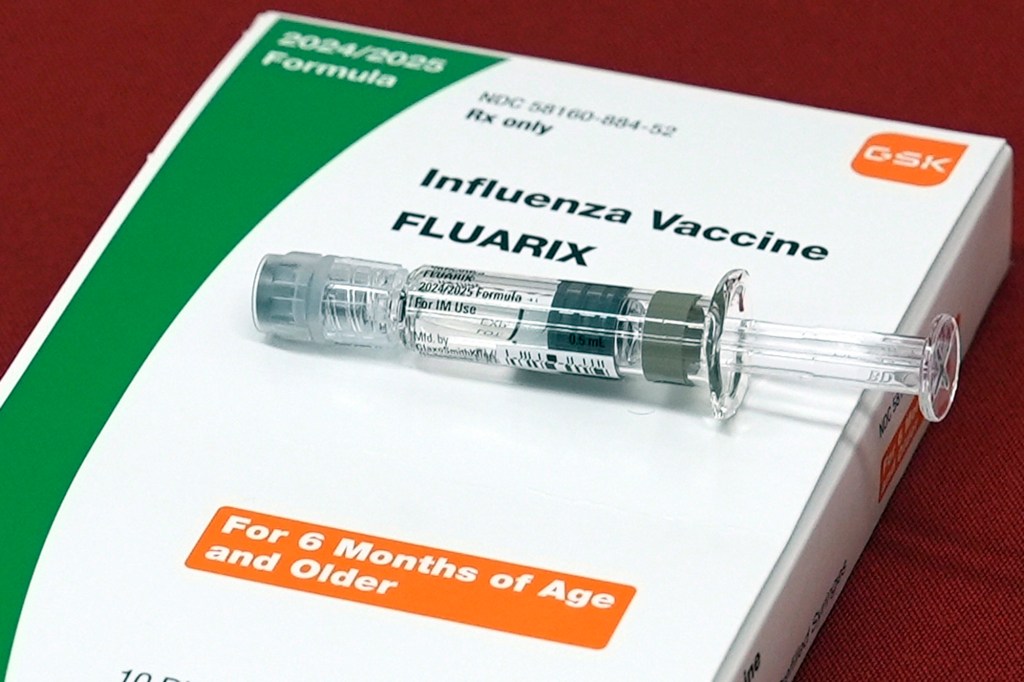
Recorded flu infections declined slightly in New York City in the most recent data, but similar numbers soared in New York State and throughout the nation, and public health experts believe flu season could still hit its peak in the coming months.
Within the five boroughs, about 22.2% of people at emergency rooms reported respiratory illnesses for the week ending Dec. 27, according to the city’s Health Department. That was down from 23.8% the previous week.
But nationwide, labs reported a 32.9% increase in flu infections during the same week, according to data from the Centers for Disease Control. Flu season typically peaks in late January and early February, so the numbers could climb even higher while the weather remains cold.
The most common flu strain most years is H3N2, which is also most common this season as well. However, a specific variant of the strain, called subclade K, is causing most of this season’s infections, according to public health experts.
Subclade K does not match up well with this year’s flu vaccine, potentially increasing the number of infections.
“The fact that we’ve seen steady increases over the last several weeks without much of a decline or even a flattening would suggest to me that we’ve got the peak ahead of us,” said Dr. Robert Hopkins, medical director of the National Foundation for Infectious Diseases.
Despite the mismatch, the vaccine is still effective at preventing serious infections, which can lead to hospitalization and death. However, the CDC and federal Health Department, led by Robert F. Kennedy Jr., changed the recommendation for childhood flu shots on Monday, no longer recommending them for every child but suggesting “shared clinical decision-making” before kids get the shot.
Already this season, the CDC estimates 5,000 people have died from flu infections and 120,000 people have been hospitalized.
With News Wire Services